


The best place to store baby clothes is a curated online shop that verifies its own supply chain, not a marketplace where anyone can list anything. Check for GOTS or OEKO-TEX Standard 100 certification, easy-dressing features like snap fasteners and envelope necks, solid GSM weight, and a fair returns policy before you buy. A family-run business since 2007, the shop embodies these quality checks.
TL;DR:
- Garments with higher GSM (around 180 to 220) and reinforced seams tend to last longer and are more cost-effective over time compared to fast fashion.
- Look for brands that clearly display both GOTS and OEKO-TEX certification badges for assurance of organic sourcing and tested safety.
- Focus on fasteners like nickel-free snaps and easy-dressing features, with envelope necklines and two-way zippers improving dressing ease.
- Always check fabric weight and seam quality with your own eyes before relying solely on certification, as durability depends heavily on construction.
- Verify sizing by actual weight and height, and prioritize brands with transparent manufacturing practices and explicit safety labels for nightwear.
Table of Contents
- What to look for when buying premium, ethical baby clothes
- Shopping checklist: quick checks before you buy
- How to buy online with confidence
- Age-appropriate clothing recommendations and developmental stage suitability
- Safety and compliance signals to check
- Ethical production beyond the certification stamp
- Style and seasonal considerations for baby clothing
- What actually matters when you cut through the noise
- Shop now: curated picks that match this guide
- Sources
- FAQ
What to look for when buying premium, ethical baby clothes
Two certifications do most of the heavy lifting when you’re assessing a baby clothing brand: GOTS and OEKO-TEX Standard 100. GOTS (Global Organic Textile Standard) covers organic fibre production plus the social and environmental conditions across the whole supply chain, from farm to finished garment. OEKO-TEX Standard 100 works differently. It tests the finished product for harmful substances, and Class I is the strictest tier, reserved for baby items. Brands that lean on both are usually combining organic sourcing with tested product safety rather than picking one and hoping nobody asks about the other.
Fabric choice matters just as much as the certification stamp. Organic cotton is breathable and well understood. Linen softens with every wash and suits warmer months. Bamboo is where things get murky: most “bamboo” baby clothing on the market is actually bamboo-derived viscose, and turning bamboo into viscose usually involves heavy chemical processing that undercuts the “natural fibre” pitch. Treat any bamboo claim as a question, not an answer, until you know whether it’s linen (mechanically processed) or viscose (chemically processed).
Construction tells you how long a garment will actually survive toddlerhood. Look at:
- GSM (grams per square metre): higher GSM combed cotton feels heavier and resists pilling better than thin, low-GSM knits.
- Seams and stitching: flat, reinforced seams at stress points (crotch, underarms) outlast single-stitched edges.
- Fasteners: nickel-free snap studs reduce skin irritation and hold up to hundreds of wash cycles better than buttons.
- Neckline and closures: envelope necks and two-way zips make dressing faster and gentler on a squirming baby.
Higher-GSM, certified garments tend to cost less per wear over their lifetime than cheap fast-fashion pieces, especially once you factor in hand-me-downs between siblings.
Pro Tip: Rub the fabric between your fingers on the product photo zoom, then check the GSM figure if it’s listed. A midweight bodysuit generally sits around 180 to 220 GSM. Anything noticeably lighter than that usually thins out within a few months of regular washing.
For sensitive or eczema-prone skin, seek out garments specifically flagged for sensitive skin suitability, since seam placement and fibre softness vary a lot between brands even within the “organic” label.
Shopping checklist: quick checks before you buy
Run through this before you add anything to your cart:
- Certification badges — GOTS, OEKO-TEX, or both, clearly displayed on the product page.
- Fibre content — listed by percentage, not just “eco-friendly cotton blend.”
- GSM or fabric weight — if it’s not stated, that’s a gap worth noting.
- Fastener and neckline type — snaps, envelope necks, two-way zips for ease of dressing.
- Size chart cross-check — match against your baby’s actual weight and height, not just age.
- Care instructions — machine washable, tumble-dry safe, or hand wash only.
- Customer comments on longevity — do reviews mention pilling, fading, or shrinkage after a few washes?
- Return policy and shipping cost — know both before you commit.
Do the price-per-wear maths before writing off anything as “expensive.” A bodysuit worn many times before it’s outgrown or handed down costs less per wear than a fast-fashion equivalent that survives fewer washes before the seams give out. Premium usually wins on the numbers, not just the ethics.
Be wary of vague marketing language. “Eco,” “natural,” and “sustainable” mean nothing on their own. Transparency, not adjectives, is the real marker of an ethical brand — look for disclosed factory locations, named certifications, or audit information instead of taking a label at its word.
How to buy online with confidence
Size charts are your best friend when you can’t try clothes on first. Buy by weight and height rather than age, since babies grow at wildly different rates, and leave a little room for growth rather than buying an exact fit that’s outgrown in three weeks.
Shipping and returns terms matter more online than in a physical shop, because you can’t feel the fabric before you commit. Shipping costs $7.95 Australia-wide, with free delivery over $97, plus 30-day easy returns and exchanges — so a size guess that misses the mark isn’t a financial headache.
Before trusting a certification badge, do a quick check:
- Search the certifying body’s website for the certificate number if one is listed.
- Look for a supplier or brand transparency page naming factories or audit partners.
- If nothing is disclosed, email the retailer and ask. A brand confident in its sourcing will answer quickly.
Pro Tip: Read the care label before you buy, not after. A garment that demands cold hand-washing only isn’t realistic for most households doing daily loads, no matter how ethical its fibre content.
Reviews are your best indirect evidence of real-world durability. A five-star rating that specifically mentions “still looks new after a year of washing” tells you more than any marketing copy on the product page.
Age-appropriate clothing recommendations and developmental stage suitability
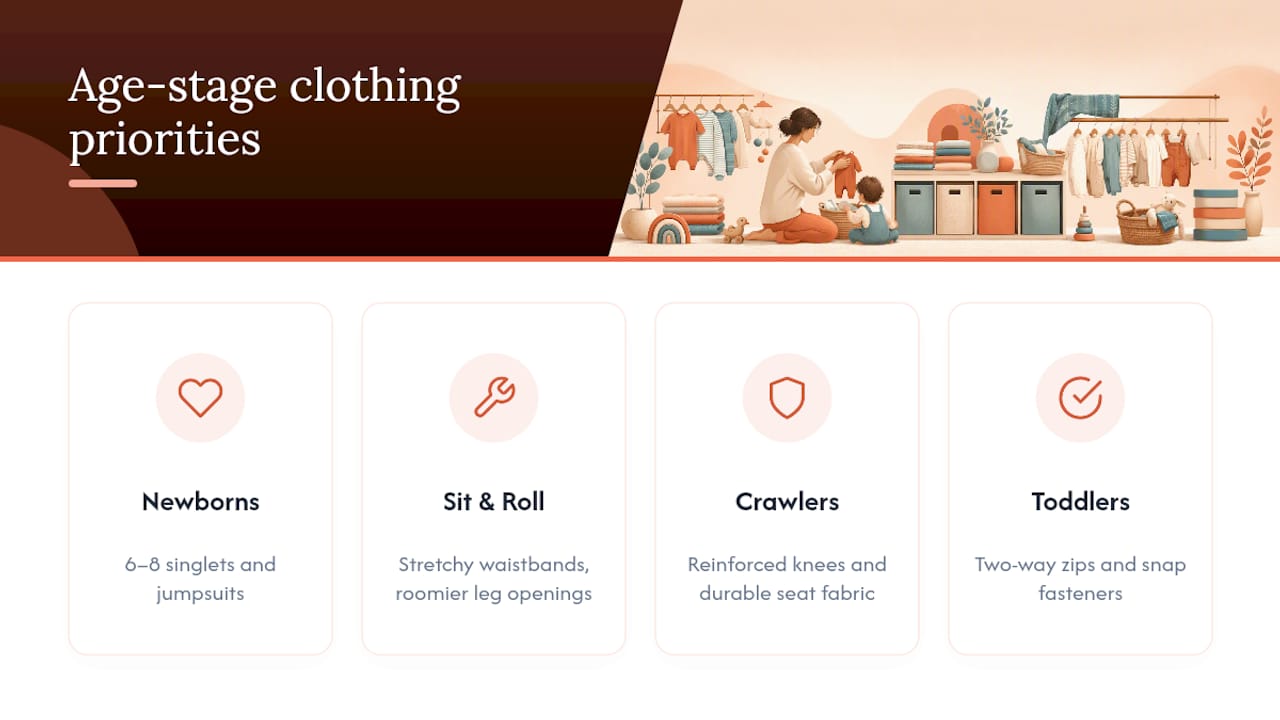
Newborns (0 to 3 months) need soft, minimal-fuss basics. CHOICE recommends starting with six to eight singlets and jumpsuits, prioritising easy fastenings like press-studs over anything fiddly, since newborns spend most of their time being changed and resettled.
Once babies hit the rolling and sitting stage (around 4 to 8 months), look for garments that don’t restrict movement. Stretchy waistbands and roomier leg openings matter more here than they did in the newborn stage, because a stiff seam that was fine for a swaddled baby becomes a genuine obstacle once they’re pushing up on their arms.
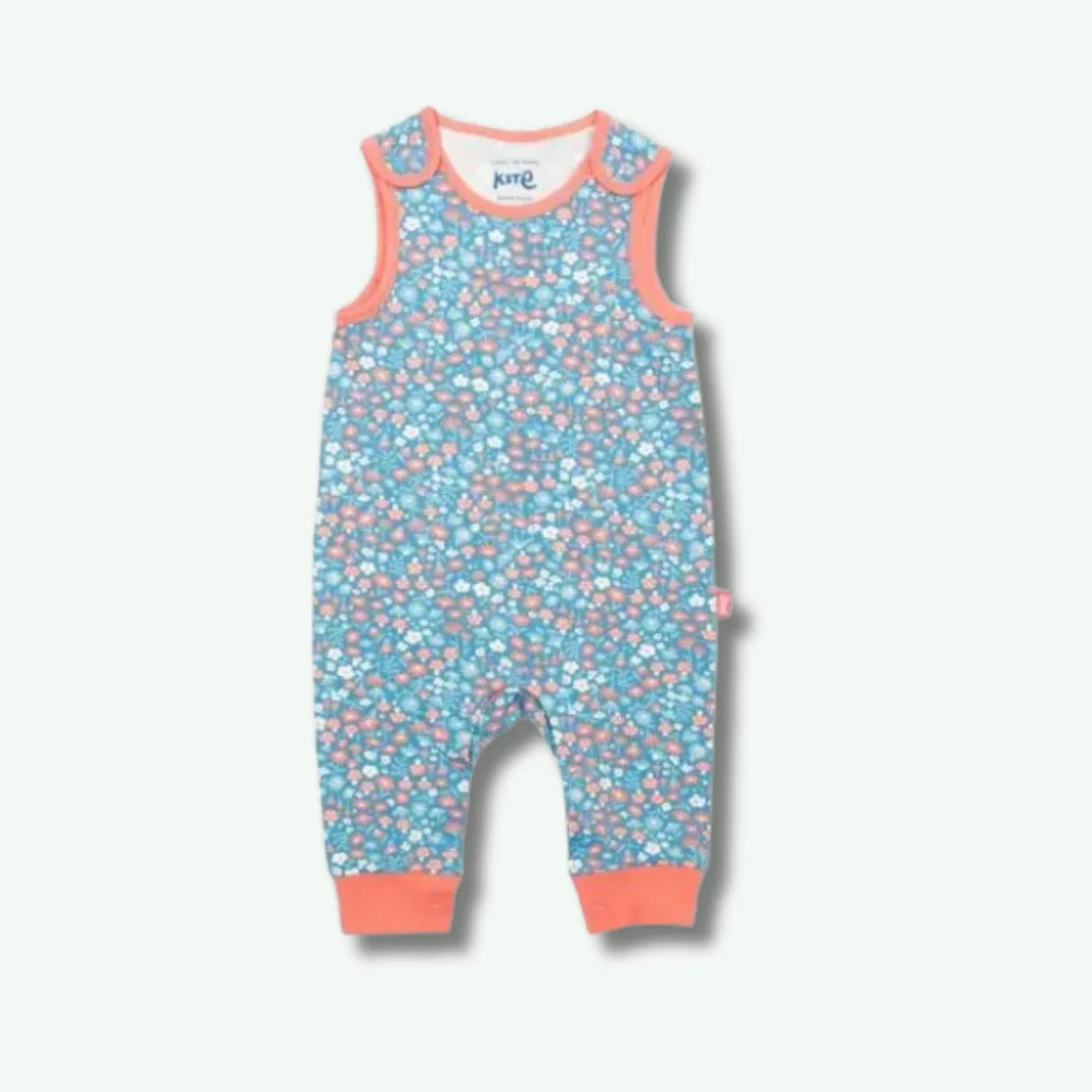
Crawlers and early walkers (9 months to 2 years) need reinforced knees and durable fabric at the seat, since that’s where the wear concentrates. This is where GSM and construction quality stop being abstract specs and start showing up as actual holes if you skimped. Dungarees and overalls work well at this stage because they layer easily and survive the crawling phase better than loose trousers that constantly slide down.
Toddlers (2 to 4 years) are dressing themselves, at least partly, so features that helped with nappy changes (two-way zips, snap fasteners) start mattering for independence instead. A toddler who can manage their own zip builds confidence, and clothing that supports that is doing more than looking good.
Safety and compliance signals to check
Fire safety and labelling compliance aren’t just fine print. Retailers supplying non-compliant children’s nightwear have faced ACCC enforcement action in Australia, which is a useful reminder that nightwear specifically carries fire-safety labelling requirements that everyday daywear doesn’t.
Check the care label and any attached safety tags before purchase, particularly for sleepwear. A compliant garment will carry clear labelling about fabric flammability category, and a retailer that can’t answer questions about where that information sits on the product isn’t one to trust with overnight wear.
Beyond nightwear specifically, general safety sense still applies: avoid loose ribbons or small detachable decorations on anything a baby might mouth, and check that snap fasteners are securely riveted rather than glued. For sleepwear specifically, matching the fabric weight to the season matters for both comfort and safety, since overheating risk is a genuine consideration for infant sleep.
None of this means you need to interrogate every seller like a customs officer. It means treating labelling and fire-safety information as a checklist item alongside fibre content and GSM, especially for anything your baby will wear to sleep.
Ethical production beyond the certification stamp
Certifications tell you part of the story. They don’t tell you whether the people making the garment were paid fairly or worked in safe conditions, which is a separate question from whether the cotton was grown organically.
Genuine ethical production means supply chain transparency: brands that can tell you, or show you, where a garment was made and under what conditions. That’s different from a brand that simply prints “ethically made” on a swing tag with nothing behind it. Fair labour practices, audited factories, and traceable supply chains are the parts of “ethical” that certifications like GOTS partially cover through their social criteria, but a brand that goes further and publishes factory details or partners with audited manufacturers is showing you more than the minimum.
This is where transparency becomes the real filter. A brand willing to answer direct questions about its manufacturing partners, or one that publishes that information without being asked, is operating differently to one that hides behind vague sustainability language. If a retailer’s answer to “where is this made?” is evasive, that’s worth noting regardless of what certification badge sits on the product page.
Style and seasonal considerations for baby clothing
Seasonal layering matters more for babies than adults, because infants can’t regulate their own body temperature as efficiently and can’t tell you when they’re too hot or cold. Lightweight organic cotton works for most of the year in temperate climates, but winter calls for heavier-GSM fabrics or layering pieces like dungarees that sit over a bodysuit.
Colour and pattern choices aren’t just aesthetic decisions. Vibrant, well-made prints tend to survive more washes without fading than cheap dye jobs, since better dye processes and higher-quality base fabric hold colour longer. If a garment’s colour looks patchy or uneven straight out of the packet, that’s often a sign of the fabric and dye quality more broadly.
Practically, plan your wardrobe by season rather than buying everything at once. A single winter dungaree set that layers over singlets does more work than five separate lightweight pieces bought without a season in mind. Think about what’s coming in the next three to four months rather than the full year, since babies grow out of sizes faster than most seasonal wardrobes turn over anyway.
What actually matters when you cut through the noise
Most buying guides treat certifications, fabric weight, and fastener type as equally weighted checklist items, and that’s where I think the conventional advice gets it slightly wrong. Certifications and construction quality aren’t equal. A GOTS badge on a poorly stitched garment still falls apart in six months. Meanwhile a well-constructed, high-GSM piece without formal certification might outlast a dozen wears of a certified but flimsy alternative.
The judgement I’d push back on is treating this as a checklist to tick rather than a hierarchy to weigh. Construction and fibre weight predict how long something survives contact with an actual baby. Certification predicts how it was made. Both matter, but if you’re choosing between a well-built uncertified piece and a certified piece with weak stitching, durability should usually win, because a garment that falls apart gets thrown out regardless of its supply chain credentials.
What I’d prioritise first: check the GSM and seam quality with your own eyes before you even look at the certification badges. The badge tells you about the process. The stitching tells you whether the process actually produced something worth owning.
— Daniel
Shop now: curated picks that match this guide
This retailer has curated a selection of garments aligned with this guide, so you don’t have to chase down certification numbers or GSM specs on your own. Three pieces worth a look:
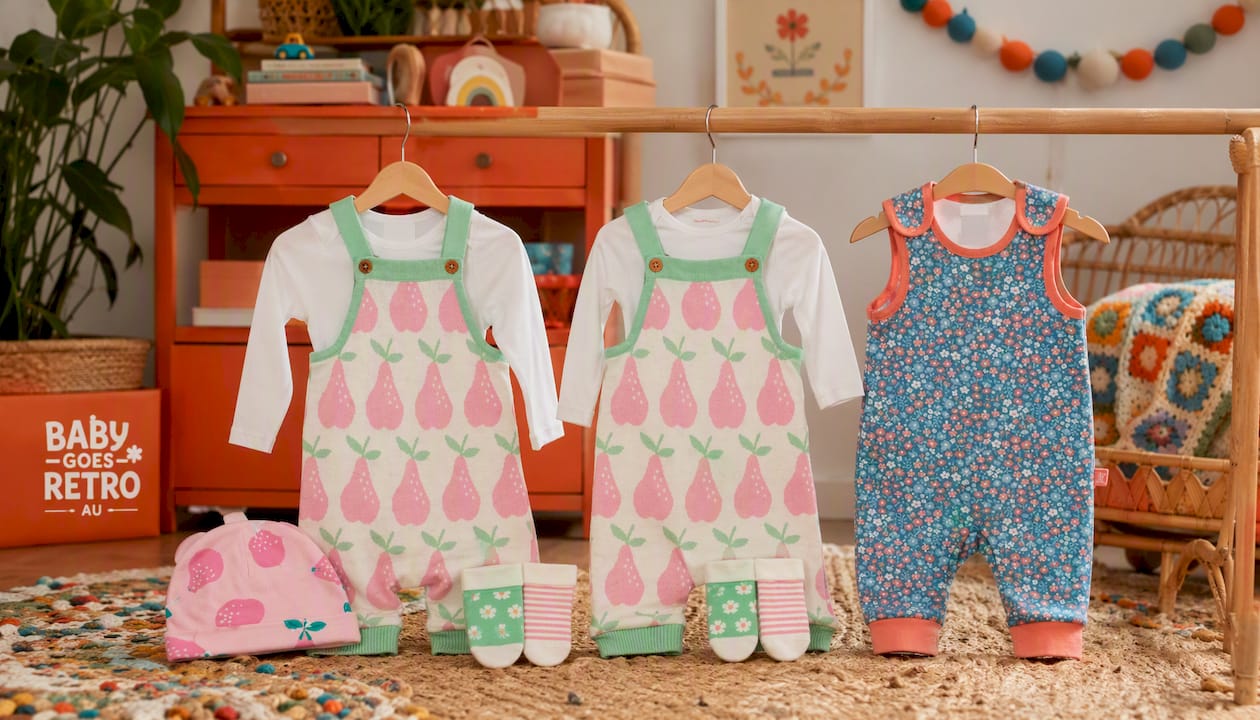
The Kite Pear-fect Dungaree Gift Bundle suits anyone shopping for a baby shower or newborn gift, with the easy-dressing features this guide flags built right in. For toddlers already on the move, the Kite Pear-fect Dungaree Toddler Bundle is cut for the crawling-to-walking stage, where reinforced knees and durable seams earn their keep. Heading into cooler months, the Kite Winter Woodland Dungarees layer easily over a bodysuit for exactly the seasonal approach covered above.
Shipping is a flat fee across Australia, free once you spend over a specified amount, backed by 30-day easy returns and exchanges if a size guess doesn’t land. Check the size chart against your baby’s weight and height before ordering, browse the full organic baby clothes range, and pick the piece that fits where your little one is right now.
Sources
For deeper reading on certification standards and buying advice, The Ethicalist covers GOTS and OEKO-TEX in detail, CHOICE offers independent Australian buying guidance, and Swaddlean’s checklist walks through cost-per-wear reasoning. For verifying ethical claims directly, The Precious Lamb’s guide is a practical starting point.
- Have we had the bamboo pulled over our eyes when it comes to this ‘natural’ fibre?
- How to buy the best baby clothes
- Sustainable baby clothing checklist for new parents
FAQ
What certifications should I check when shopping for baby clothes?
Look for GOTS, which covers organic fibre production and supply chain conditions, and OEKO-TEX Standard 100, which tests the finished garment for harmful substances. Class I OEKO-TEX certification specifically applies to baby products.
Is bamboo baby clothing actually eco-friendly?
Not always. Most “bamboo” garments are bamboo-derived viscose, and turning bamboo into viscose typically involves chemical processing that undercuts the natural-fibre pitch. Ask whether the product is mechanically processed bamboo linen or chemically processed viscose before assuming it’s the greener choice.
How many baby clothing items should I buy to start?
CHOICE recommends six to eight singlets and jumpsuits as a newborn starting point, prioritising easy fastenings like press-studs for frequent changes.
Does Baby Goes Retro offer returns if a size doesn’t fit?
Yes. Baby Goes Retro offers 30-day easy returns and exchanges, plus flat-rate shipping of $7.95 across Australia that becomes free on orders over $97.
What construction features make baby clothes last longer?
Higher GSM combed cotton, reinforced seams at stress points, and nickel-free snap fasteners all extend garment life. Certified organic and higher-GSM pieces often work out cheaper per wear than fast-fashion alternatives over their full lifespan.
댓글 0개