


Here’s a ready-to-use baby wardrobe checklist with suggested quantities so you can shop or set up your registry today. This baseline assumes you’re washing a few times a week, and it covers every core category without pushing you towards buying more than a newborn will ever wear.
- Bodysuits: 6-8
- Sleepers/footies: 3-4
- Pants or leggings: 3-5
- Hats: 1-3
- Socks: 4-6 pairs
- Swaddles: 2-3
- Sleep sacks: 1-2
- Outerwear: 1 bunting or light jacket, weather-dependent
The one sizing rule that saves you money: buy barely any newborn-size pieces and put most of your budget into 0-3 months. If you’re washing weekly rather than every few days, bump these numbers up towards double. Washing daily? You can comfortably halve them.
Key Takeaways
A well-built baby wardrobe checklist prioritises 0-3 month basics over newborn sizes, adjusts quantities for laundry frequency, and favours natural fabrics that hold up through repeated washing.
| Point | Details |
|---|---|
| Buy minimal newborn sizes | Most babies outgrow newborn clothing within weeks, so stock 0-3 months instead. |
| Adjust for laundry frequency | Double baseline counts if washing weekly; halve them if washing daily. |
| Prioritise versatile layers | Bodysuits, cardigans and leggings mix and match better than one-off outfits. |
| Match fabric to season | Cotton and bamboo suit warm weather; merino wool adds warmth without bulk. |
| Shop bundles for coverage | Baby Goes Retro’s Kite bundles cover core basics with $7.95 flat shipping, free over $97, and 30-day returns. |
Table of Contents
- Your baby wardrobe checklist by category
- Adjusting the checklist for the season your baby arrives in
- How much to buy per size, and how laundry changes the numbers
- Materials, safety and care that actually extend the life of baby clothes
- Why this checklist holds up
- How to organise your baby wardrobe so you can actually find things at 3am
- Adjusting the wardrobe once your baby moves past 6 months
- What the checklist gets right, and where most advice overdoes it
- Ready-made bundles that tick off your checklist in one go
- Sources
- FAQ
Your baby wardrobe checklist by category
A checklist is only useful if it matches how your household actually runs, so here’s the detail behind those baseline numbers, item by item.
- Bodysuits and rompers. Aim for 6-8, mixing short and long sleeve depending on the season your baby arrives in. Include 1-2 kimono-style or side-snap bodysuits for the first fortnight. They’re a small thing, but they matter while the umbilical cord stump is still healing and you want to avoid pulling fabric over your baby’s belly.
- Sleepers, footies and gowns. Three to six, depending on the season and whether you’re leaning on swaddles or sleep sacks for overnight warmth. Zip sleepers are worth the extra dollar or two. At 2am with a screaming newborn, fumbling with poppers is the last thing you want.
- Pants, leggings and cardigans. Three to five of each. These are your layering pieces, not your main event. A cotton bodysuit plus a lightweight cardigan does more for temperature regulation than one thick jumper, because you can peel a layer off the second your baby gets warm in the car or at the shops.
- Hats and socks. One to three hats and four to six pairs of socks. Newborns lose socks constantly, so buy more than feels reasonable. One safety note worth repeating: no hats during sleep or in a car seat, as Raising Children points out, because of overheating and suffocation risk.
- Swaddles and sleep sacks. Two to three swaddles plus one to two sleep sacks, matched to a TOG rating appropriate for your climate and the room temperature overnight. A 1.0 TOG sack suits most temperate nights; go lighter in summer, heavier in a cold snap.
- Outerwear and sun protection. One bunting suit or light jacket for cooler months, and a soft-brimmed sun hat if your baby’s early weeks fall in warmer weather. You genuinely don’t need more than this until they’re mobile.
- The extras. A coming-home outfit (often gifted, so don’t stress about buying one), one special-occasion piece if you’ve got a naming day or family gathering planned, and a couple of spare bibs and leggings for the inevitable blowout.
Pro Tip: Buy one size up in sleepers before you buy more in the current size. A baby who’s about to outgrow a 0-3 month sleeper needs a bigger one more than they need a fourth of the same size.
Recommended baseline counts like these track closely with what Babylist suggests for a first-time parent building a wardrobe from scratch. It’s a comfortable middle ground. Not so minimal you’re doing laundry every second day, not so generous that half the drawer never gets worn before it’s outgrown.
Adjusting the checklist for the season your baby arrives in
The season your baby’s born into shapes this checklist more than almost anything else, and it’s worth thinking a few months ahead too.
- Summer babies need breathable organic cotton or bamboo, short-sleeve rompers, a sun hat, and lighter sleepwear. Cut back on bulky layers. You’ll use far more short-sleeve bodysuits than sleepers in the first few months.
- Winter babies need merino or wool base layers, an extra sleeper or two, a bunting for prams and car trips, and a warm hat. Layering in the car seat needs extra care. A puffy jacket under the harness straps can stop it locking properly in a crash.
- Changeable climates call for a strict layering strategy: singlet, bodysuit, cardigan, all pieces you can add or remove without a full outfit change.
The trick most parents miss is mapping their due date forward. If your baby’s due in March and will hit the 3-6 month mark in June or July, you’re buying winter clothes in that size, not summer ones. Our seasonal newborn wardrobe guide and this seasonal wardrobe planning approach both work off the same logic: buy for the season the baby will actually be that size in, not the season they’re born in.
How much to buy per size, and how laundry changes the numbers
Overbuying newborn size is the single most common wardrobe mistake, mostly because newborn clothes fit such a narrow weight range that many babies are through them in a matter of weeks. Put most of your money into 0-3 months, buy a modest set in 3-6 months, and hold off on 6-12 months until you’ve got a clearer read on your baby’s growth curve.
| Size range | Bodysuits | Sleepers | When to buy |
|---|---|---|---|
| Newborn | 2-4 | 2-3 | Before birth (minimal only) |
| 0-3 months | 6-8 | 4-6 | Before birth (main stock) |
| 3-6 months | 4-6 | 3-4 | After birth, once growth is clear |
| 6-12 months | 2-3 | 2-3 | Wait, or buy as gifts |
Laundry frequency shifts every number on this table. Wash weekly and you’ll want close to double the baseline. Wash every day or two and you can comfortably run with half. If you’re registering for gifts, add a note asking for a spread across 0-3 and 3-6 months rather than everyone defaulting to newborn size, or just list the same item across two sizes so gift-givers have options.
Pro Tip: If you’re not sure how big your baby will be, buy 0-3 months over newborn. Most babies fit into it within the first month regardless of birth weight.
Materials, safety and care that actually extend the life of baby clothes
Organic cotton, bamboo and merino wool are the three fabrics worth prioritising, and each earns its place for a different reason. Cotton breathes well and washes reliably. Bamboo has a soft handle that suits sensitive newborn skin. Merino regulates temperature in both directions, which makes it useful across more of the year than most parents expect.
- Wash everything before first wear, using a fragrance-free detergent to cut down on skin irritation.
- Cold or warm washes handle most everyday marks; save a hot wash for genuine stains, and always check the care label first.
- Natural fibres tend to sit more gently on sensitive skin than synthetics, and pre-washing measurably reduces residual chemicals left over from manufacturing.
- Secondhand is a perfectly reasonable way to fill out sizes your baby will barely wear, as long as it’s washed thoroughly before use.
- Check for loose buttons, ribbons or drawstrings on any secondhand pieces. They’re a choking risk regardless of how gorgeous the fabric is.
Why this checklist holds up
This checklist draws on Daniel’s work at Baby Goes Retro, where he writes on minimalist baby wardrobes and seasonal checklists for families figuring out what to actually buy.
- Baby Goes Retro has curated European organic baby clothing since 2007, run as a family business from day one.
- Every recommendation here reflects what holds up through repeated washing, not just what looks good on a shelf.
- Shipping runs at a flat $7.95 AUD, free over $97, with 30-day returns if a size or style doesn’t work out.
How to organise your baby wardrobe so you can actually find things at 3am
A wardrobe full of the right pieces is worthless if you can’t lay hands on a clean sleeper in the dark. Sort by size first, not by item type. A drawer of “0-3 months, everything” beats a drawer of “all the sleepers, mixed sizes” every time, because you’ll be dressing your baby by size long before you’re hunting for a specific garment.
Within each size, group by function: bodysuits together, sleepers together, outerwear on a separate shelf or hook. Fabric bins or shallow drawer dividers work better than deep drawers, where anything at the bottom might as well not exist. If you’ve got the wall space, a set of labelled baskets by the change table keeps the next few days’ rotation within arm’s reach, so you’re not walking to a wardrobe mid-change.
Keep the next size up somewhere visible but out of the daily rotation. A labelled tub on a shelf works fine. The goal is to notice, a week or two out, that your baby’s about to outgrow what’s in the drawer, rather than discovering it the morning nothing fits. Donate or pack away outgrown sizes as you go rather than letting three sizes pile up in one drawer. It makes the whole system self-cleaning, and it means the next parent to inherit your hand-me-downs gets a wardrobe that’s already sorted for them.
Adjusting the wardrobe once your baby moves past 6 months
Everything changes once a baby starts sitting up, rolling, and eventually crawling. Rompers and dungarees with sturdy poppers at the crotch make nappy changes faster than pull-on styles, and they hold up better to a baby who’s suddenly moving in ways they weren’t a month ago. Knees take a hammering once crawling starts, so look for pieces with reinforced knee panels or just accept that some knees will wear through faster.
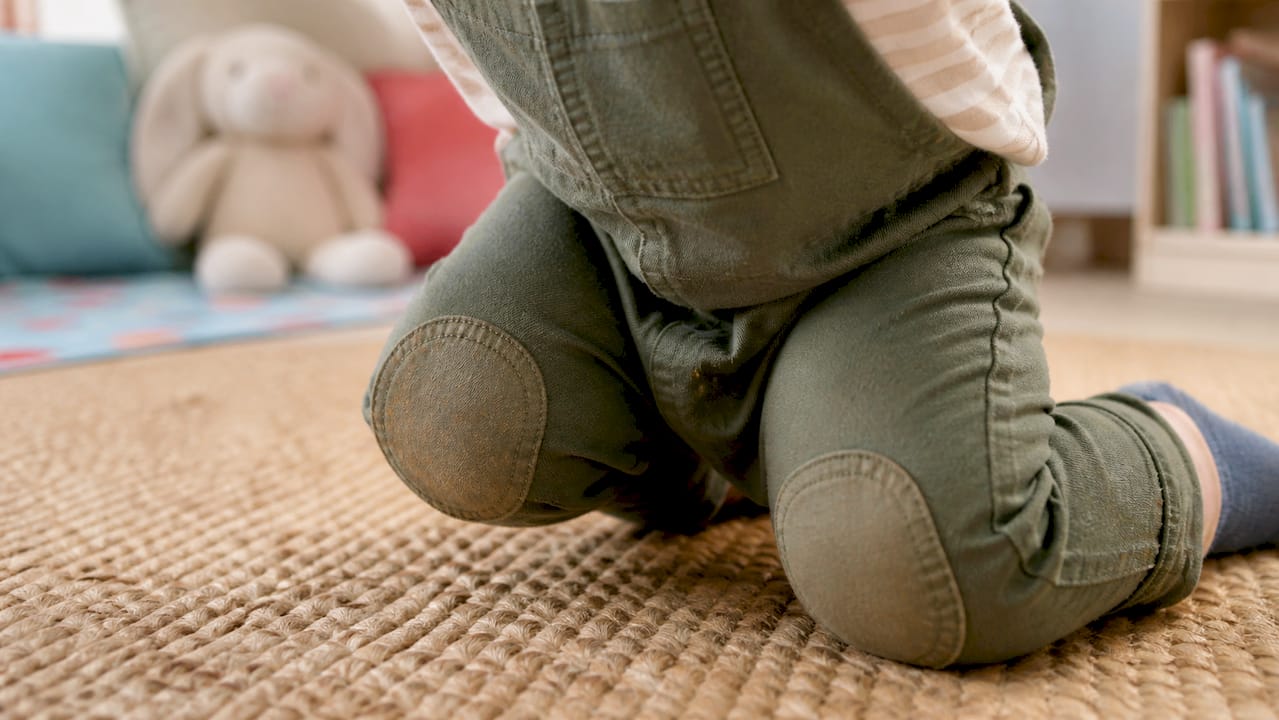
Sizing also gets less predictable after 6 months. Growth spurts aren’t as linear as they were in the newborn stretch, so it’s worth checking fit every few weeks rather than assuming a size will last the “expected” three months. Buy less far ahead in this stage. A drawer of 9-12 month clothing bought at 6 months might not fit the same way you’d planned, depending on your baby’s own curve.
This is also the point where a smaller, more versatile wardrobe starts to pay off. Mix-and-match basics in neutral or coordinating colours mean fewer total pieces cover more outfit combinations, which matters once you’re also managing solid food stains, outdoor play, and a baby who can now pull socks off themselves. A capsule-style approach tends to serve families better here than continuing to round up new outfits at every size change.
What the checklist gets right, and where most advice overdoes it
Most baby wardrobe advice online is built to maximise registry totals, not to reflect what a baby actually wears. The truth is a newborn cycles through the same four or five favourite pieces regardless of how many outfits sit in the drawer, because parents gravitate towards whatever’s easiest to get on and off at 3am.
Where conventional advice falls short is treating every category as if it needs the same generous buffer. Bodysuits get worn through constantly and deserve a healthy stock. Special-occasion outfits get worn once, maybe twice, and don’t need three backups. The laundry-frequency adjustment gets skipped in most guides too, yet it’s the single easiest way to right-size a registry without guessing.
If I had to prioritise one thing for a first-time parent, it’s this: buy fewer newborn items than feels comfortable, and put that saved budget into well-made 0-3 month basics in versatile colours. A smaller wardrobe of pieces that mix and match, wash well, and fit for longer beats a bursting drawer of newborn outfits that get worn twice each.
Ready-made bundles that tick off your checklist in one go
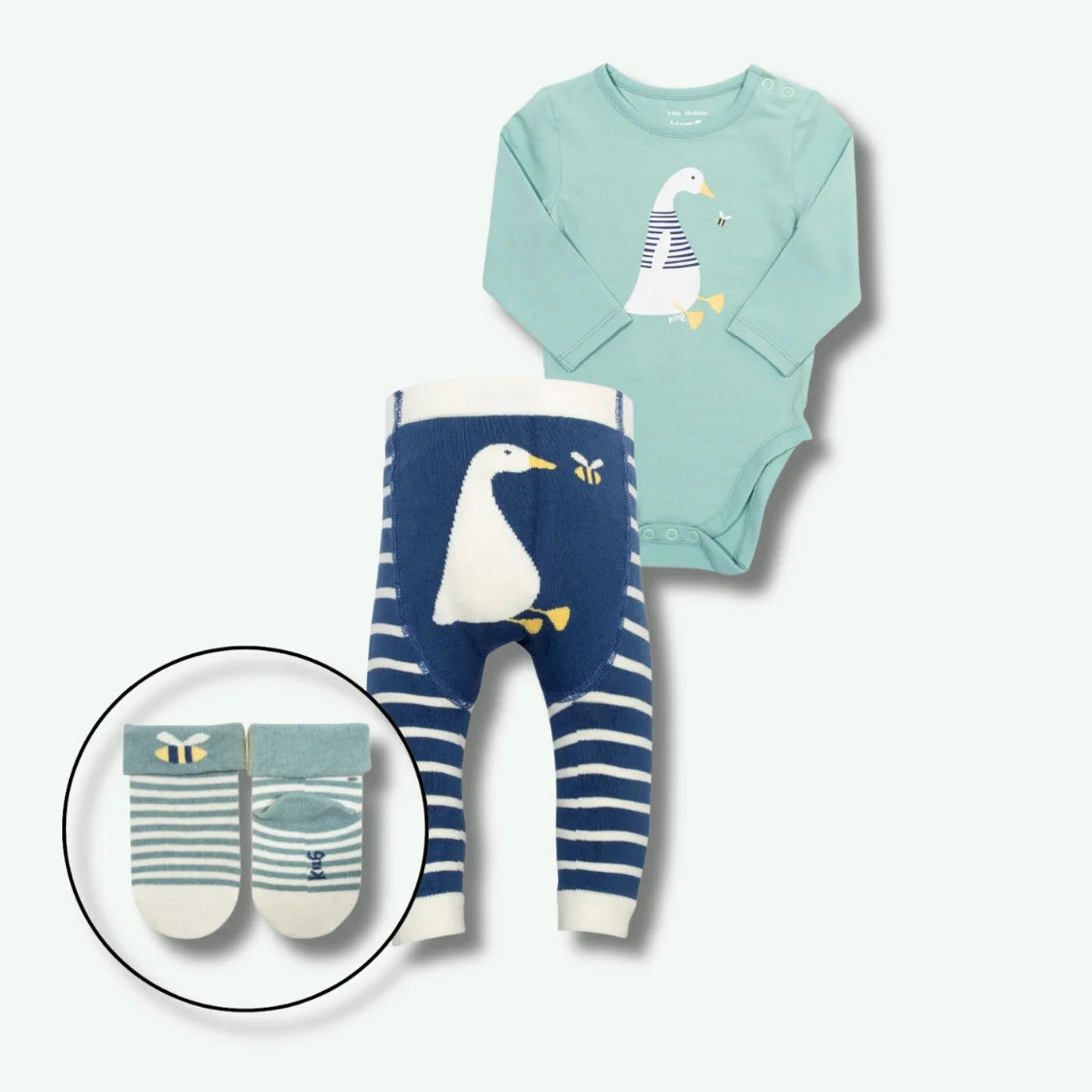
If reading through category counts and TOG ratings feels like more admin than you signed up for, Baby Goes Retro’s gift bundles are built to shortcut a chunk of this list in one purchase. The Kite Pear-fect Dungaree Gift Bundle pairs a dungaree with coordinating bodysuits, covering your layering and rompers categories in one order. For families planning ahead into the toddler years, the Kite Pear-fect Dungaree Toddler Bundle covers the 6-12 month stretch this checklist flags as the one to buy for gradually. The Kite Little Goose Baby Gift Bundle rounds out the core basics if you’re after one gift-ready set that does the heavy lifting.
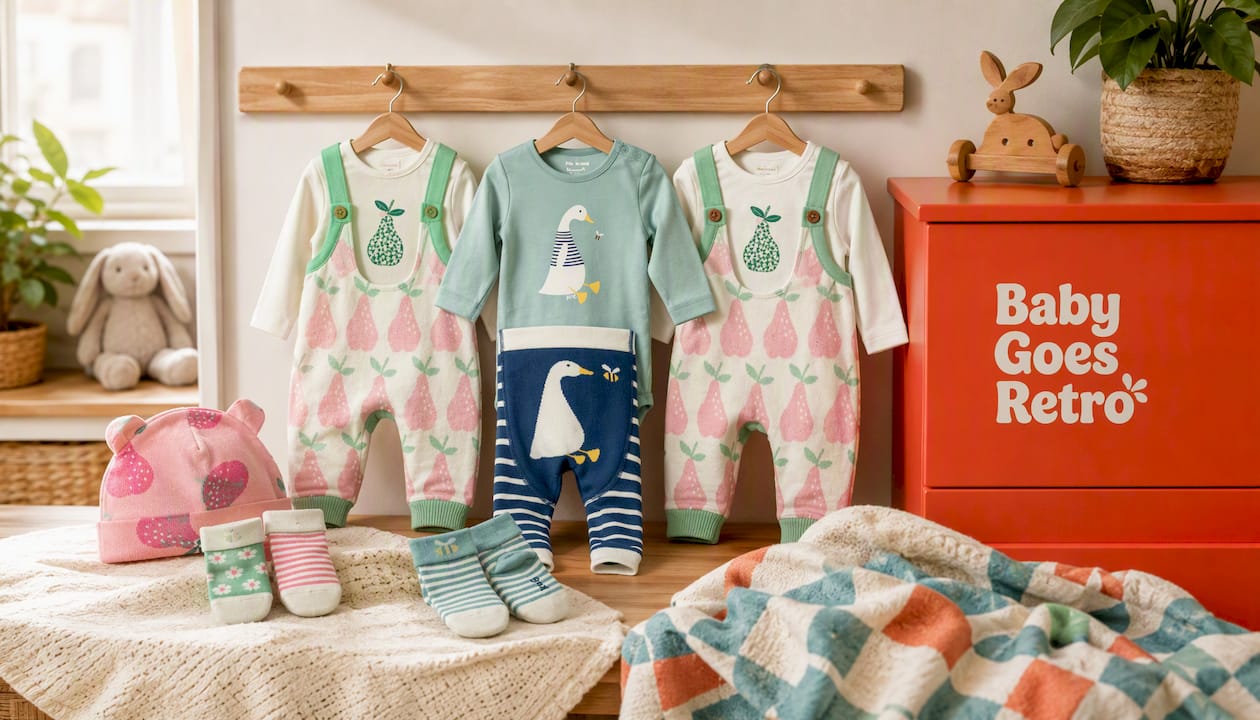
Every bundle ships for a flat $7.95 AUD, or free once your order passes $97, and comes with 30-day returns if a size doesn’t land right. All pieces are organic and made to survive the wash cycles a real baby wardrobe goes through. Have a look through the current bundle range and pick the one that covers the gaps still sitting empty on your list.
Sources
- How Many Baby Clothes Do I Need? | Babylist
- How to dress a newborn & choose newborn clothes: tips | Raising Children
- Newborn clothing essentials: complete checklist | Babysential
- PMC article on textiles and skin (source for fabric suitability)
- Seasonal wardrobe guide for babies and toddlers | TeachMama
FAQ
Is there a 40-day rule for newborns?
The “postpartum recovery and bonding period” refers to a time some cultures follow, not a wardrobe guideline. It has no bearing on how many clothes you need, though it does mean most of a baby’s first weeks are spent at home in simple, easy-change bodysuits.
What month is the hardest with a baby?
This varies by family, but many parents report the second or third month as the toughest as sleep deprivation compounds and growth spurts hit hardest. A wardrobe with easy zip sleepers and quick-change bodysuits makes those particular weeks noticeably less stressful.
What should I be buying for a newborn’s wardrobe?
Focus on 6-8 bodysuits, 3-4 sleepers, 3-5 pants or leggings, a couple of hats, several pairs of socks, and 2-3 swaddles, buying most of it in 0-3 months rather than newborn size. Baby Goes Retro’s gift bundles cover several of these categories in a single order.
How many 0-3 month onesies do I need?
Six to eight is a comfortable baseline if you’re washing a few times a week, based on the common quantity guidance most parenting resources recommend. Wash weekly and you’ll want closer to double that; wash daily and you can get by with half.
0 comments