


Cardigans are usually the better pick for newborns because they open at the front, so you never have to wrestle a squirmy baby’s head through a neckline. Pullovers and sweaters run warmer and suit older babies who can handle a bit of head-first dressing, plus colder days out in the pram. One safety rule sits above both choices: never leave a baby to sleep in loose knitwear. Save that job for a TOG-rated sleep sack.
TL;DR:
- Cardigans are preferable for newborns because their front opening reduces dressing stress and allows quick removal during nappy changes.
- Pullovers provide better insulation and are suitable for older babies with head control, especially in colder weather or outdoor outings.
- Fabrics such as merino wool, organic cotton, and bamboo viscose offer better temperature regulation and durability compared to synthetic blends.
- Never leave a baby to sleep in loose knitwear; instead, use a TOG-rated sleep sack matched to room temperature for safety.
- Choose garments based on developmental stage and convenience, prioritizing easy dressing and proper layering over style or warmth alone.
Table of Contents
- What is a baby sweater or pullover, and when should you use one?
- What is a baby cardigan, and why do most parents reach for one first?
- Cardigan vs sweater for babies: the practical differences that matter
- Fabrics, fit and care: buying knitwear that actually lasts
- Safe dressing and sleep rules every parent should know
- How to choose a baby cardigan or sweater: a quick shopping checklist
- Why trust this advice on cardigans and sweaters for babies
- The real problem with most cardigan vs sweater advice
- Cardigans, pullovers and complementary pieces worth adding to the wardrobe
- Sources
- FAQ
What is a baby sweater or pullover, and when should you use one?
A pullover goes on over the head, no fastenings required. Baby versions come in a few shapes, and the differences matter more than the name suggests.
- Classic pullover — a snug crew or round neck, best once your baby has decent head and neck control.
- Sweater romper — a pullover top attached to a bottom, popular for its no-gap warmth on wriggly babies.
- Hooded knit — extra warmth for the head, though best avoided for very young infants who need a clear line of sight and easy positioning.
Pullovers generally trap more warmth than an equivalent cardigan because there’s no front opening letting draughts in. That makes them a solid layer for cold-weather prams, chilly outings, or extra insulation under a pram blanket. Design details change how workable they are day to day: shoulder snaps or a stretchy neckline make head-first dressing noticeably easier and cut down on the fussing that comes with tight crew necks.
What is a baby cardigan, and why do most parents reach for one first?
A cardigan opens down the front, fastened with snaps, a zip, or buttons, so it slips on and off without ever going near your baby’s head.
- Snap-front cardigans — the fastest on and off, ideal for newborns and nappy changes.
- Button cardigans — a classic look, though buttons need checking regularly for security.
- Zip cardigans — quick for cold-weather layering, best kept away from delicate chins.
That front opening solves a real problem. Newborns have next to no neck control in the first weeks, so avoiding the pull-over-the-head manoeuvre reduces startling and makes nappy-bag changes far less stressful. The trade-off is a little more wind gets through the front seam, and every fastening needs a quick once-over before use. Many parents also find a cardigan gets far less use overnight than expected, leaning on blankets and sleep sacks instead and saving the cardigan for daytime layering.
Pro Tip: Snap fastenings beat buttons for anyone dressing a baby one-handed while holding a bottle in the other. Buttons look lovely in photos; snaps win at 6am.
Cardigan vs sweater for babies: the practical differences that matter
Once you strip away the styling, four factors decide which garment wins for your situation.
- Warmth — pullovers usually insulate better because there’s no open seam, though knit density and fibre matter more than the style itself. A loosely knit pullover can lose to a tightly knit cardigan.
- Ease of dressing — cardigans remove the head-pull entirely, which matters most for newborns and any baby having an off day.
- Layering role — cardigans work best as an outer layer you add and remove through the day; pullovers work best as the main layer of warmth underneath a jacket or pram cover.
- Age suitability — very young infants do best in front-opening garments, while older babies with steadier head and neck control can handle pullovers without a fuss.
A layering guide from Swaddlean’s temperature chart suggests adding a breathable cotton layer once it drops below roughly 20°C during the day, a useful rule of thumb rather than a rigid rule. Sleep is a different story entirely, and TOG-rated sleep sacks take over from there, covered properly a little further down.
Reality check: neither style is “better” in isolation. A cardigan on a two-week-old and a pullover on a ten-month-old are both the right call, and the deciding factor is almost always the baby’s stage, not a parent’s preference for one shape over the other.
Fabrics, fit and care: buying knitwear that actually lasts
The fabric matters more than the silhouette when it comes to comfort and safety. Merino wool regulates temperature well and resists odour, though it needs gentler handling. Organic cotton breathes easily and suits sensitive skin. Bamboo viscose feels silky and cool against the skin, a good pick for warmer climates or babies prone to overheating. Acrylic and other synthetic blends are cheaper but trap heat unevenly, which can trigger a cold sweat cycle as your baby heats up then chills.
- Check the fit first. Roomy shoulders and gentle cuffs matter more than a snug, tailored look.
- Avoid tight necklines that need forcing over the head, and check trims for anything that could catch small fingers or press on a car seat strap.
- Wash on a gentle or hand-wash cycle with a baby-safe detergent, and lay knits flat to dry rather than tumble drying, which shrinks and stiffens natural fibres fast.
- Skip bulky hoods on newborns, since a separate knit hat is generally more flexible and safer than a hood that interferes with lying flat or sitting in a car seat.
Pro Tip: Natural fibres cost more upfront but usually survive more wash cycles without pilling, which makes them cheaper per wear once you’ve been through a few winters.
Safe dressing and sleep rules every parent should know
The single most important rule in this whole guide: don’t let a baby sleep in a cardigan or sweater. Red Nose Australia’s guidance is clear that loose knitwear has no place in the cot. Use a TOG-rated sleep sack instead, matched to the room temperature, every single night.
- Follow the +1 rule: dress your baby in roughly one more layer than you’d be comfortable in yourself.
- Check warmth at the neck or back, never the hands or feet, which are unreliable indicators of core temperature.
- Remove bulky cardigans or sweaters before buckling a car harness, since thick layers stop the straps sitting snugly.
- Choose front-opening layers for outings, so you can strip off a layer fast without disturbing a sleeping baby in the pram.
That neck-and-back check matters more than most parents realise. Cold hands are completely normal on a well-dressed baby, and stripping off a layer because of chilly fingers is one of the most common overdressing mistakes new parents make.
How to choose a baby cardigan or sweater: a quick shopping checklist
Work through this in order, and the right garment becomes obvious fast.
- Decide the job first. Daytime layering and quick nappy changes point to a cardigan; a cold outing or pram trip points to a pullover.
- Match the age. Newborns and babies with limited neck control do best in front-opening styles.
- Pick the fastening. Snaps for speed, zips for quick removal, buttons if you’re happy checking them regularly.
- Choose the fabric. Merino or organic cotton for temperature regulation and skin comfort.
- Buy a size up. Babies grow fast, and a slightly roomy knit gets more wear out of every wash.
- Check washability. Gentle cycle, baby-safe detergent, lay flat to dry.
- Round out the wardrobe. A long sleeve bodysuit underneath and a proper TOG-rated sleep sack for night cover both the gaps knitwear leaves.
| Decision factor | Cardigan | Pullover / sweater |
|---|---|---|
| Best for (age/use) | Newborns, nappy changes, quick outings | Older babies, cold-weather outings |
| Warmth | Good, slightly less than a pullover | Usually higher insulation |
| Ease of dressing | Easiest, no head-pull needed | Easier with shoulder snaps or stretch necks |
| Fabric/skin sensitivity | Best in merino or organic cotton | Same, avoid rough acrylic blends |
| Care and durability | Check fastenings regularly, gentle wash | Gentle wash, lay flat to dry |
Why trust this advice on cardigans and sweaters for babies
Baby Goes Retro has been dressing Australian babies in European organic knitwear since 2007, and that’s not a marketing line, it’s just how long the family business has been sorting cardigans from pullovers for real customers.
- Family-run since 2007, with a focus on ethically made, European organic pieces.
- Flat-rate shipping of $7.95, free once your order hits $97, and 30-day easy returns and exchanges on every purchase.
- Author Daniel writes regularly on infant knitwear and seasonal dressing for the Baby Goes Retro blog, tracking which styles actually survive an Australian winter.
- Product recommendations here follow the same safe-sleep and fabric guidance covered above, not the other way around.
The real problem with most cardigan vs sweater advice
Most guides treat this as a style question. It isn’t. It’s a stage-of-development question dressed up as a shopping decision, and that framing leads parents to buy the wrong thing for entirely reasonable reasons.
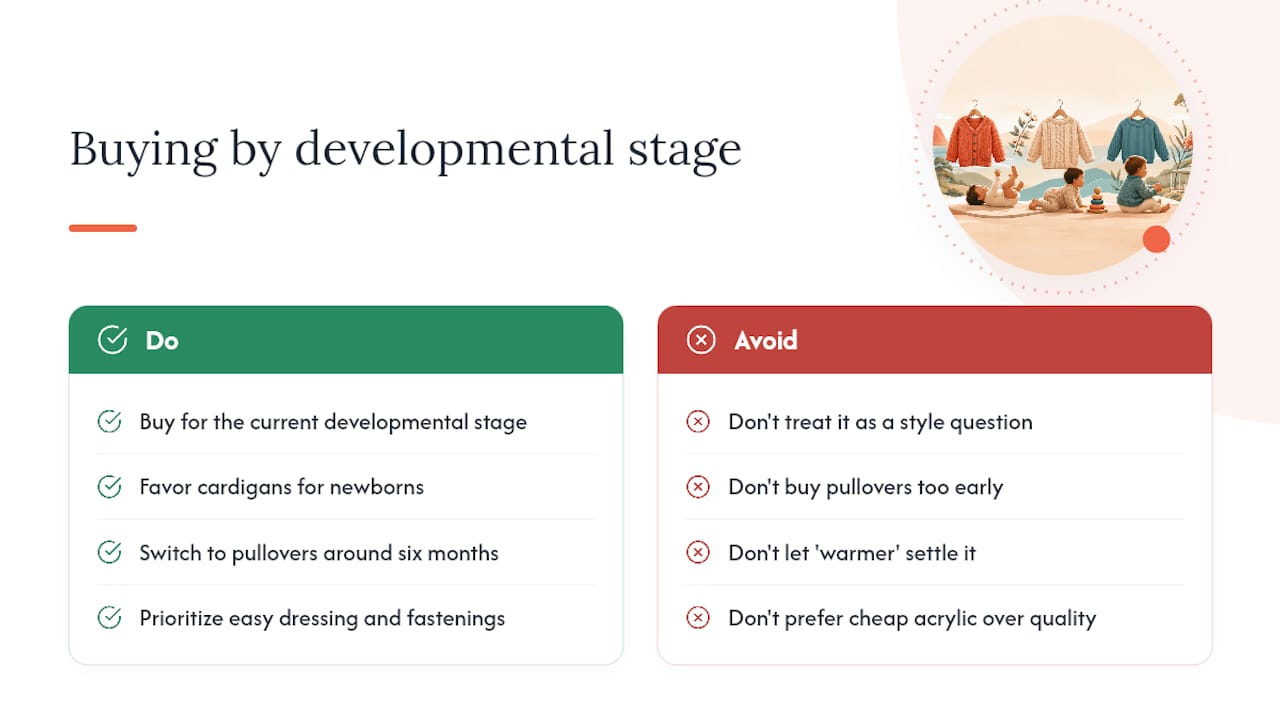
The conventional wisdom skips straight to warmth comparisons, as if a pullover being “warmer” settles the argument. It doesn’t. A baby who can’t yet hold their own head steady doesn’t care how warm a garment is if getting it on means five minutes of distress every single time. Ease of dressing isn’t a nice extra, it’s the deciding factor for the first several months, and warmth becomes the bigger question later.
What I’d tell any parent standing in front of a rack of both: buy for the stage you’re in right now, not the stage you’re heading towards. A newborn wardrobe should lean heavily cardigan, a six-month-old’s wardrobe can start leaning pullover, and buying “up” too early just means a beautiful knit sitting unworn in a drawer. Fabric and fastenings matter more than most parents assume too. A cheap acrylic pullover in the right size will lose to a well-made organic cardigan every time it counts.
— Daniel
Cardigans, pullovers and complementary pieces worth adding to the wardrobe
If a cardigan is the right call for your newborn right now, a snap-front style takes the guesswork out of quick changes, and it pairs naturally with a soft base layer underneath.
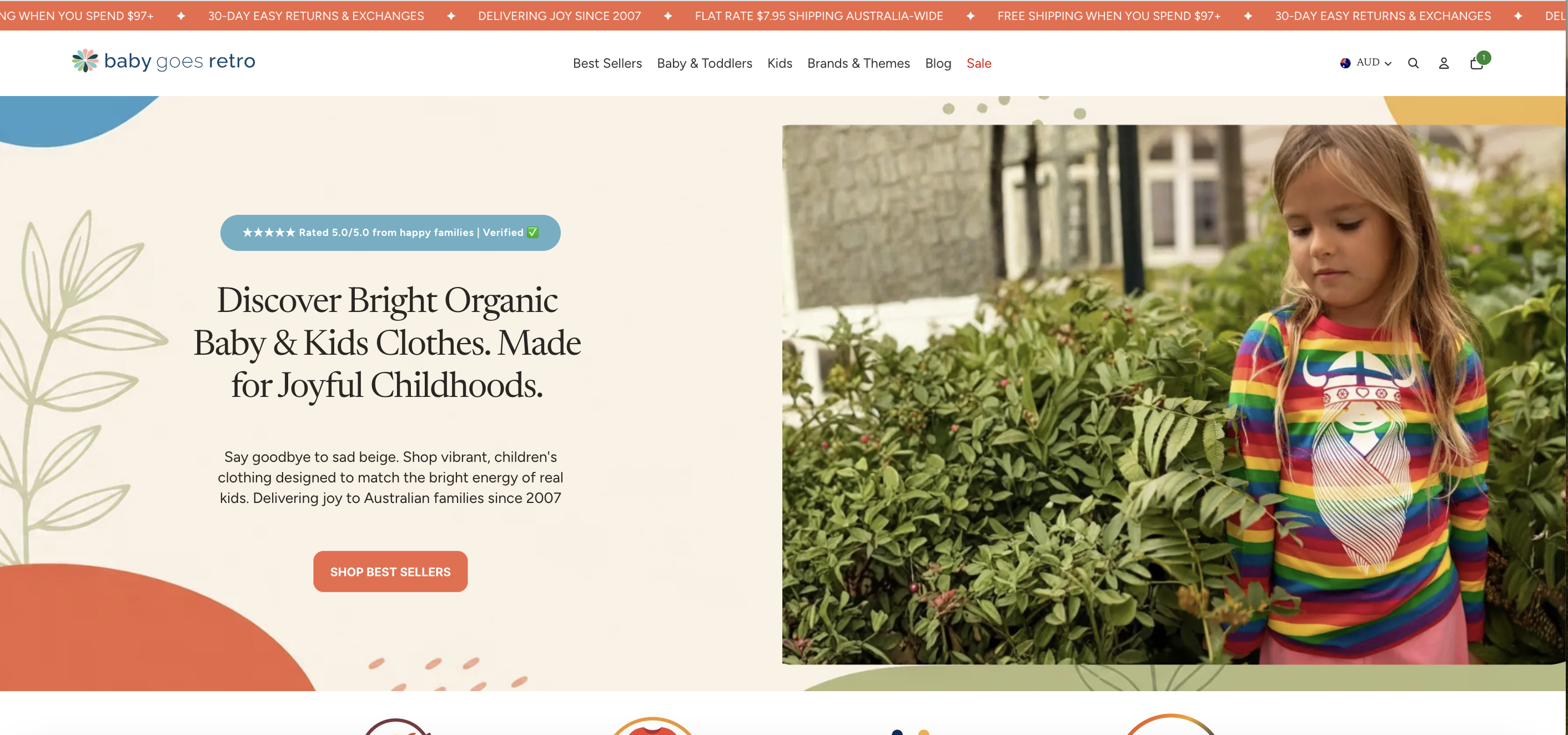
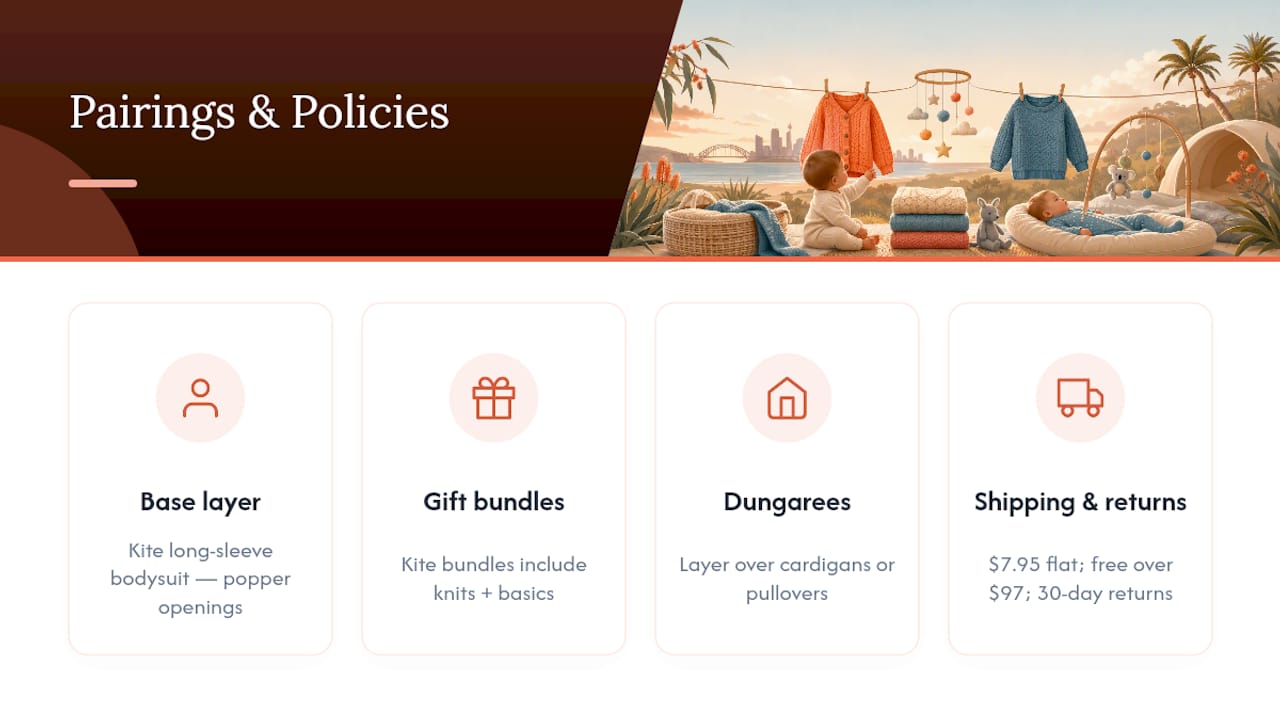
Baby Goes Retro’s Kite Pig Pannage Long Sleeve Bodysuit works as that base layer, with popper openings that follow the same easy-dressing logic as a good cardigan. For a ready-made head start, the Kite Koala Time Baby Gift Bundle and Kite Little Goose Baby Gift Bundle bundle knits with complementary basics, while the DUNS Sweden Clover Bodysuit in Capri Blue is a good example of the organic cotton and merino blends covered earlier in this guide. Once your baby is on the move, the Kite Pear-fect Dungaree Toddler Bundle and DUNS Sweden Clover Dungarees in Capri Blue pair well over any of the cardigans or pullovers above, and the Kite Little Goose Toddler Gift Bundle rounds out a full outfit for older babies.
Every order ships for a flat $7.95, free once you spend $97, and comes with 30 days to return or exchange if the size or style isn’t quite right. Browse the full range at Baby Goes Retro and find the piece that suits your baby’s stage right now.
This article is general information, not a substitute for advice from a qualified doctor. Consult a qualified healthcare professional about your own circumstances before acting on anything here.
Sources
- How to dress baby for sleep — Red Nose Australia
- Holding and tummy time — Child and Adolescent Health Service (WA)
- Types of baby sweaters — Swaddlean
- Will my baby need a cardigan? — BabyCenter Australia forum thread
FAQ
Is there a difference between a sweater and a cardigan?
Yes. A sweater or pullover goes on over the head with no fastenings, while a cardigan opens down the front with snaps, buttons, or a zip, making it easier to put on a baby who can’t yet manage a garment going over their head.
At what age can babies start wearing cardigans?
Cardigans suit babies from birth, since the front opening avoids any pulling over the head, and they remain useful through toddlerhood as an easy-on, easy-off layer.
Why do Australians call a sweater a jumper?
“Jumper” is the common Australian term for a pullover-style knit, and both words describe the same head-over garment, so you’ll see them used interchangeably in Australian baby clothing stores.
When should babies wear sweaters?
Pullovers work best once a baby has some head and neck control, typically making dressing easier, and they suit colder outings or extra insulation under a pram blanket rather than sleep, where a TOG-rated sleep sack is the safer choice.
0 comments