


Care for merino wool kids’ clothing comes down to one routine: wash it less often than you think, use a cold gentle wool cycle or a quick handwash, dry it flat, and store it clean. That’s it. Merino’s natural lanolin means most mid‑layers only need a wash every 3 to 5 wears, so the real skill is knowing when to skip the machine altogether. At Baby Goes Retro we’ve built our merino range around exactly this kind of low‑fuss care, because busy parents don’t need another chore.
- Machine option: wool or delicate cycle, cold water, inside out, gentle spin.
- Handwash option: cool water, mild wool wash, gentle squeeze, no wringing.
Key Takeaways
The most reliable way to care for merino wool kids’ clothing is to wash it infrequently on a cold gentle cycle, dry it flat away from sun, and store it clean.
| Point | Details |
|---|---|
| Wash less often | Air garments between wears and save the machine for every 3 to 5 wears. |
| Keep it cold | Use a wool or delicate cycle at 30°C or below, or handwash in cool water. |
| Skip harsh products | Use a pH‑neutral liquid wool wash and avoid enzyme powders, bleach and softener. |
| Dry flat, reshape damp | Lay flat in the shade and pull seams back into place before it fully dries. |
| Shop pieces built for this care | Baby Goes Retro’s DUNS Sweden Clover playsuits are made to handle this exact wash‑day routine. |
Table of Contents
- How often should you wash kids’ merino clothing?
- How do you wash merino wool the right way?
- Which detergents work best for merino baby clothing care?
- How do you remove stains from merino without damaging it?
- What’s the right way to dry and reshape merino?
- How should you store merino and manage pilling?
- Your wash‑day checklist for merino kids’ clothing
- Why merino care matters more than you’d think
- Give your child’s wardrobe merino that’s built to last
- Sources
- FAQ
How often should you wash kids’ merino clothing?
Air it out before you wash it. Merino’s lanolin content naturally resists odour and mould, so a garment that just smells like a day at daycare usually needs nothing more than a night hanging inside out near an open window, not a trip through the machine. Most mid‑layer pieces, like a merino jumper or long‑sleeve tee, only need a real wash after 3 to 5 wears.
The exceptions are obvious: visible food, bodily fluids, or a mud bath from the backyard call for an immediate wash, not another airing session.
Before you load anything, run through three quick checks:
- Close all zips and poppers so they don’t snag the fibres.
- Spot check for stains that need pre‑treating.
- Sort by colour, since bright dyes can bleed in a warm wash.
Pro Tip: Hang the garment inside out overnight before deciding it needs a wash. Nine times out of ten, airing alone gets rid of the smell and buys you another day or two of wear.
How do you wash merino wool the right way?
You’ve got two safe options: a cold wool or delicate cycle in the machine, or a gentle handwash in cool water. Both work well when you follow the details, and higher‑grade, machine‑washable merino is processed specifically to resist felting, unlike cheaper untreated wool that shrinks the moment it meets warm water.
Machine washing, step by step:
- Turn the garment inside out.
- Select the wool or delicate cycle, water temperature no higher than 30°C.
- Pop small items like socks or bibs into a mesh bag.
- Set the spin to gentle, ideally no more than around 800 rpm.
- Remove the load as soon as the cycle finishes and reshape immediately.
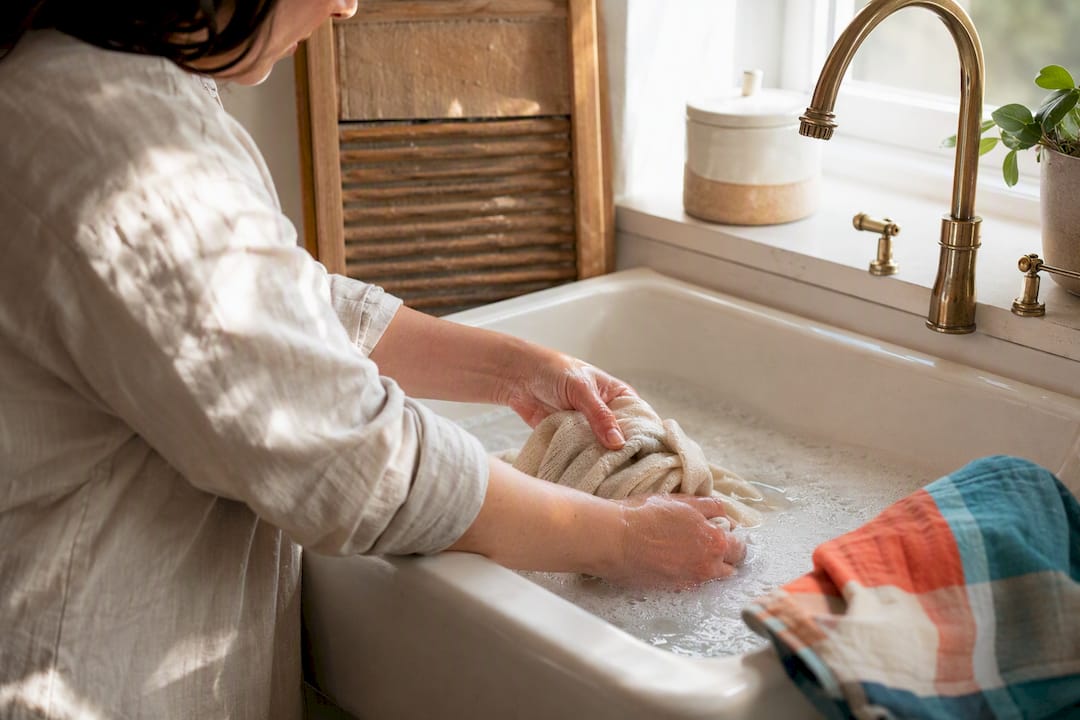
Handwashing, step by step:
- Fill a basin with cool water and a splash of wool wash.
- Submerge the garment and squeeze gently, never twist or wring.
- Rinse thoroughly until the water runs clear.
- Press between two towels to remove excess water.
- Lay flat to dry straight away.
Warm or hot water is the single biggest cause of shrunk, felted merino, and once fibres felt together there’s no reversing it. If you’re chasing tips on how to unshrink merino wool after a hot‑wash mistake, the honest answer is that prevention beats cure almost every time.
Avoid soaking merino for long periods, skip enzyme‑based powders entirely, and never subject it to heavy agitation or high heat.
| Method | Best for | Key setting |
|---|---|---|
| Machine wash | Everyday jumpers, playsuits, larger loads | Cold, wool/delicate cycle, gentle spin |
| Handwash | Delicate knits, first wash, small items | Cool water, gentle squeeze, no wringing |
Pro Tip: Wash a brand new merino piece once before your child wears it. This clears manufacturing residues and, according to The Sleep Store’s care guidance, washing within the first three wears also helps reduce early pilling.
Which detergents work best for merino baby clothing care?
Reach for a pH‑neutral liquid wool or delicates wash, the kind sold as products like Eucalan or Woolite, or a formulation such as ecostore’s Eucalyptus Wool & Delicates wash. These are designed to clean without stripping the lanolin that gives merino its odour resistance.
Steer clear of:
- Enzyme‑boosted laundry powders.
- Bleach or oxygen brighteners.
- Fabric softener (it coats the fibres and kills breathability).
- Nappy‑specific cleansers like Napisan.
Residue from the wrong detergent doesn’t just wreck the wool, it can sit against sensitive baby skin for hours. Choosing a gentle, purpose‑built wool wash protects both the garment and the child wearing it.
Pro Tip: Keep a small bottle of liquid wool wash next to your regular laundry detergent so you’re never tempted to grab the enzyme powder out of habit.
How do you remove stains from merino without damaging it?
Treat stains gently and fast. Soaking merino in harsh stain removers does more damage than the stain itself. For protein‑based marks, cool water and a dab of mild soap is enough. For anything greasy, blot rather than rub, and use only a small amount of wool‑safe prewash if needed.
- Chocolate or food stains: scrape off excess, then dab cool water and a drop of wool wash from the back of the fabric to push the stain out, not through.
- Mud or dirt: let it dry completely, brush off the flakes, then treat the remaining mark with cool water and gentle soap.
- Milk or nappy leaks: rinse in cool water immediately, apply a small amount of wool wash, and always test on an inside seam first.
Rubbing aggressively felts the fibres before you even get the stain out. Patience and a light touch do more work here than elbow grease ever will.
Never reach for Napisan or bleach on merino. If a stain is stubborn, handwash the affected area, then run the whole garment through a normal cold wool cycle. Our guide to tackling everyday baby clothing stains has more detail if you’re dealing with a particularly messy day.
What’s the right way to dry and reshape merino?
Reshape it while it’s still damp, then dry it flat in the shade. Direct sun fades colour fast, and high tumble heat is the fastest route to a jumper that fits your child’s teddy bear better than your child.
- Remove the garment from the machine or basin straight away.
- Gently pull sleeves, hems, and seams back into their original shape.
- Roll it in a dry towel to squeeze out extra moisture.
- Lay it flat on a drying rack, away from direct sunlight.
- Only tumble dry on low if the care label explicitly allows it, similar to the low‑heat approach covered in our dryer safety guide for baby clothes.
Pro Tip: Press a finger into the thickest part of the garment, like a cuff or collar. If it feels cool and slightly damp rather than wet, that’s your cue to do the final reshape before it dries completely stiff.
How should you store merino and manage pilling?
Store it clean, folded, and in something breathable, and deal with small holes or bobbling as soon as you spot them. Never pack merino away dirty; body oils and food residue attract moths, even in a sealed cupboard.
- Fold rather than hang, so shoulders and necklines don’t stretch.
- Use cotton storage bags instead of plastic, which traps moisture.
- Add cedar blocks or lavender sachets as a natural deterrent.
- Freeze a garment for 48 hours first if you suspect moth eggs are already present.
Pilling is simply a sign of shorter fibres rubbing together. A fabric shaver or a gentle wash alongside a coarser fabric can knock most of it off. Small holes are easy to darn with a needle and matching wool thread. Loop it through the edges of the hole a few times, then weave back and forth until it’s closed.
Pro Tip: Always wash before storing, even if the garment looks clean. It’s the single biggest thing you can do to keep moths away over a long off‑season stretch.
Your wash‑day checklist for merino kids’ clothing
Stick this on the laundry cupboard door and you’ll never second‑guess a wash again.
- Check if it actually needs washing, or just airing.
- Turn the garment inside out.
- Close zips and poppers, pop small items in a mesh bag.
- Choose cold water on a wool or delicate cycle (or handwash).
- Use a pH‑neutral liquid wool wash, skip powders and softener.
- Dry flat in the shade and reshape while damp.
- Fold clean into breathable storage once fully dry.
Why merino care matters more than you’d think
I’ve watched plenty of quality merino pieces get ruined in a single hot wash, and it’s almost always avoidable; understanding how recycled and durable fibres perform in kidswear can help extend garment life as explained in How Recycled Fibers Work in Kids’ Clothing – CZT. The families who get the most wear out of their kids’ merino are the ones who treat wash day as five minutes of care rather than a load‑and‑forget chore. That mindset is exactly why Baby Goes Retro has stuck with European organic and ethically made pieces since 2007, because durability only counts if the garment is looked after properly at home. With flat‑rate shipping at $7.95 (free over $97) and 30‑day returns, there’s little excuse not to try a piece and see how it holds up.

Give your child’s wardrobe merino that’s built to last
There are cheaper fibres out there, but none match merino’s ability to bounce back wash after wash when you follow the routine above. Baby Goes Retro stocks pieces designed with exactly this kind of longevity in mind, sourced from ethical European makers who build garments to survive childhood, not just look good on a hanger.
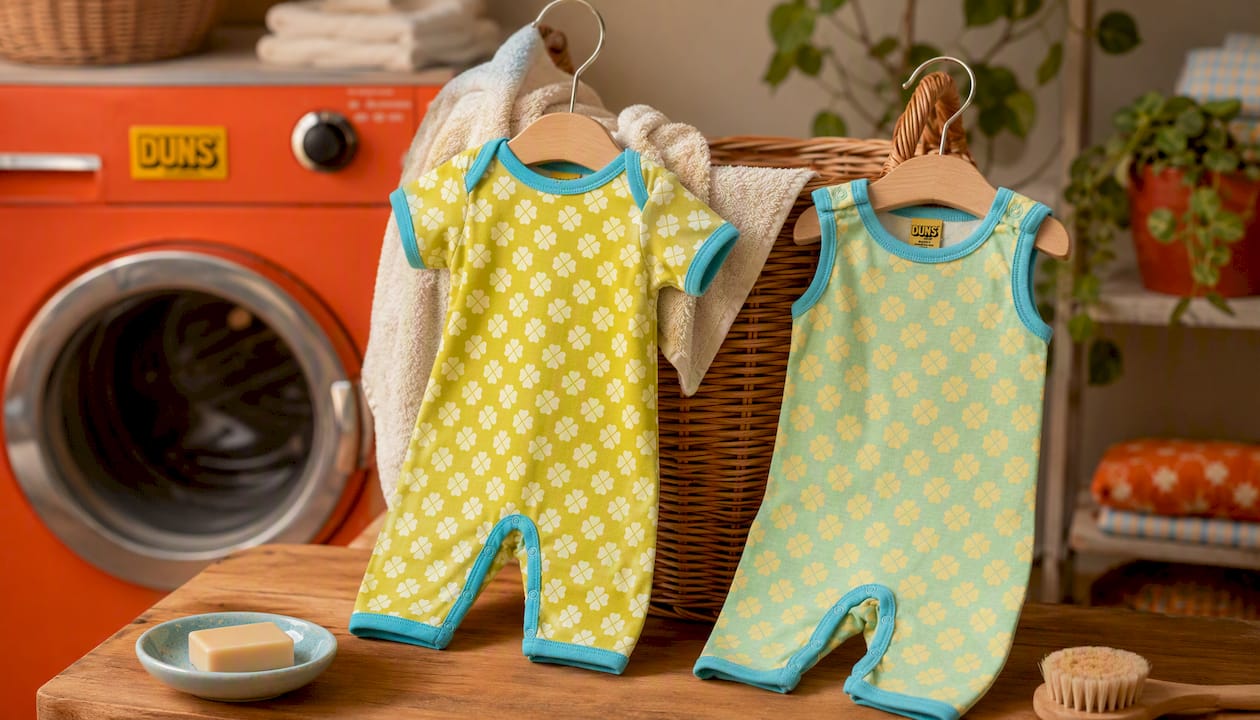
If you’re after a piece to put this care routine into practice, the DUNS Sweden Clover Playsuit in Sulphur Green and the DUNS Sweden Clover Playsuit in Green Ash are both currently in stock and make a great everyday layer for toddlers on the move. Every order ships for a flat $7.95 Australia‑wide, or free once you spend over $97, and if the fit isn’t right you’ve got 30 days to return or exchange it, no fuss. Browse the full merino and organic kidswear range and find the next piece your child will actually want to wear on repeat.
Sources
FAQ
How often should I wash my child’s merino clothing?
Most merino mid‑layers only need washing every 3 to 5 wears, with airing between wears to keep them fresh.
Can I put merino wool in the washing machine?
Yes, as long as the garment is labelled machine washable. Use a cold wool or delicate cycle with a gentle spin, and always turn it inside out first.
How do I unshrink merino wool if it’s already felted?
Once merino felts from hot water, it generally can’t be fully restored, which is why prevention with cold washing matters more than any fix afterwards.
What detergent is safe for merino baby clothes?
A pH‑neutral liquid wool or delicates wash, such as an ecostore Eucalyptus Wool & Delicates style product, cleans safely without stripping natural lanolin.
Is Baby Goes Retro merino kidswear machine washable?
Baby Goes Retro’s DUNS Sweden merino pieces are designed for everyday family life, so following the cold wool cycle routine outlined above will keep them soft and well shaped over time.
0 comments