


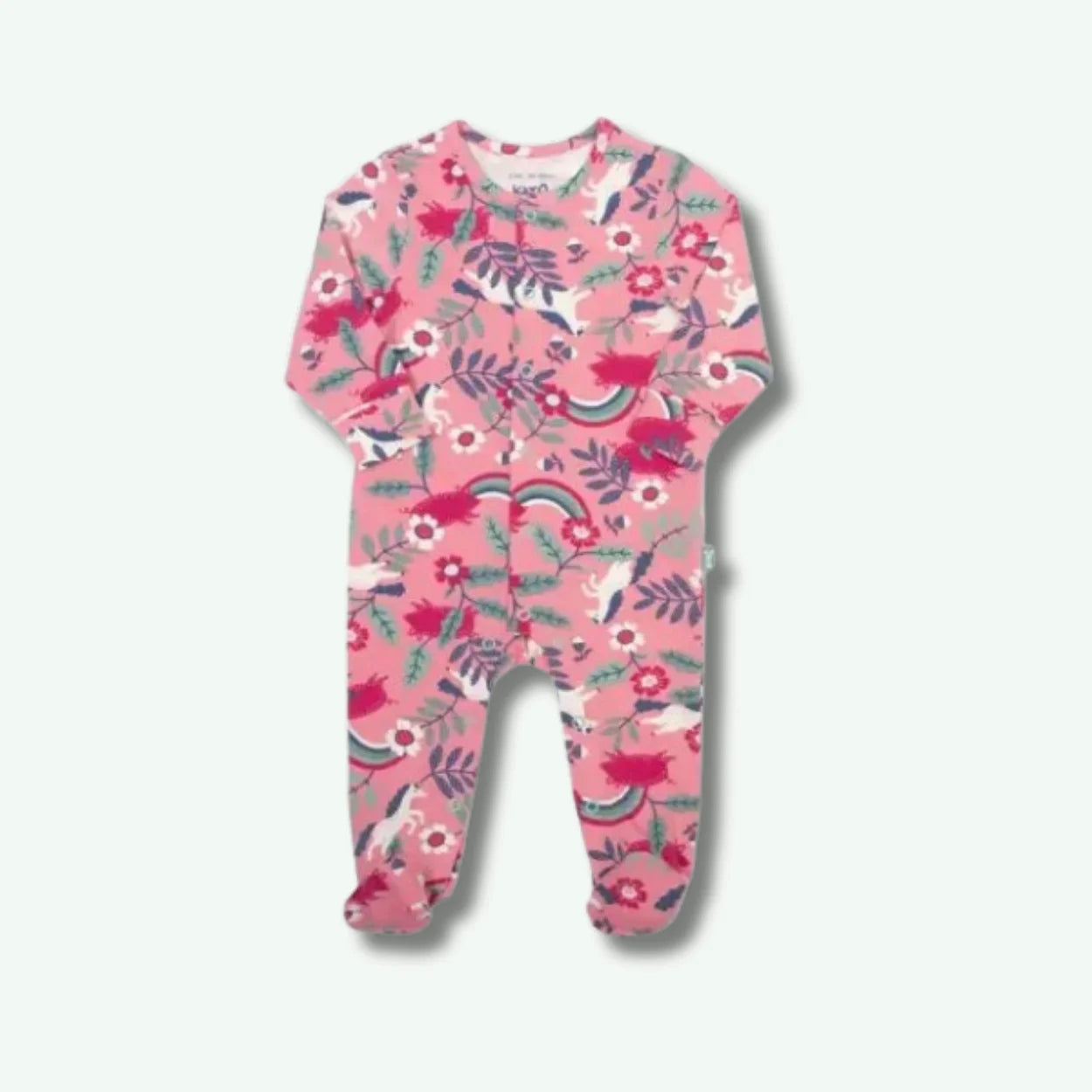
You don’t need special clothes for cloth diapers. Choose looser silhouettes and stretchy fabrics and most standard babywear will fit just fine. Look for harem or drop-crotch pants, snap-crotch onesies, and elastic-waist joggers over anything skinny or rigid. The Kite Pig Pannage Long Sleeve Bodysuit is a good example already sitting in Baby Goes Retro’s catalogue, built with the room and stretch a cloth bum needs.
TL;DR:
- Looser silhouettes, stretchy fabrics, and adjustable fastenings are essential for comfortable fit over cloth diapers, especially during growth spurts.
- Tight clothing, particularly skinny jeans and snug leggings, can cause leaks and discomfort by compressing the diaper or leaving red marks on the baby’s skin.
- Clothing with elastic waistbands, drop-crotch designs, or easy-access snaps reduces fuss during diaper changes and accommodates bulky nappies better.
- Breathable natural fibers like organic cotton, jersey, and wool are preferable for mobility, temperature regulation, and skin comfort in cloth diapering situations.
- Sizing up or using extender accessories can prevent tightness, leaks, and skin irritation, especially when dealing with bulkier, one-size cloth diaper systems.
Table of Contents
- Clothing styles that fit well over cloth diapers
- What to avoid and why (fit, leaks and comfort)
- How to dress by age and season
- Shopping, fit and sizing tips for a cloth-diaper wardrobe
- Why Baby Goes Retro stock suits cloth-diaper families
- A quick parent-tested checklist
- Get the fit right with the Kite Pig Pannage Bodysuit
- Sources
- FAQ
Clothing styles that fit well over cloth diapers
Cloth diapering compatible wear isn’t a special category of baby clothes. It’s just baby clothes with a bit more give in the seat and waist. The trick is knowing which cuts naturally have that room built in, and which ones fight against a fluffy bum from the first wear.
Harem pants and drop-crotch joggers are the easiest win. Their whole design already sits low and loose through the crotch, so a bulky cloth nappy simply fills the space it was cut for. Snap-crotch onesies and two-way zip sleepsuits matter just as much, because easy access for nappy changes saves you from wrestling a squirming baby out of a full-body zip at 3am.
Dungarees and overalls work surprisingly well too, largely thanks to adjustable straps that let you compensate for extra bulk without needing a bigger size everywhere else. Dresses are diaper-friendly by default, since there’s nothing gripping the waist or legs at all. For older, more mobile babies, two-piece sets with an elastic waistband give you the room of dungarees with a lot less fuss at change time.
Fabric matters as much as cut. Stretch cotton, jersey, and organic cotton move with a nappy instead of resisting it, and they’re gentler on skin that’s already working hard under extra layers. In warmer climates, a light breathable wool option can help regulate temperature without adding bulk.
Good staples to build around:
- Harem pants or drop-crotch joggers with elastic or drawstring waists
- Snap-crotch bodysuits and two-way zip sleepsuits
- Dungarees or overalls with adjustable straps
- Loose dresses or skirted rompers
- Two-piece sets in stretch cotton or jersey for babies on the move
What to avoid and why (fit, leaks and comfort)
Tight clothing is the real enemy here, not cloth nappies themselves. When fabric compresses a cloth diaper, it squeezes moisture sideways and up, and that’s exactly how compression leaks happen rather than the diaper simply “not working.”
Skinny jeans are the classic culprit. Non-stretch woven pants run a close second, and tight leggings with snug waistbands round out the list of items worth skipping entirely for a baby in cloth. Beyond leaks, tight waistbands can leave red marks and general discomfort, which nobody wants on a baby who can’t tell you why they’re grizzly.
The fixes are simple:
- Size up one size in anything with a fixed waist
- Use a onesie extender to buy a few extra weeks out of a bodysuit
- Choose “bum pants” cut specifically roomier through the seat
- Roll cuffs on pants that run long once you’ve sized up
One sizing quirk worth knowing: some One Size cloth nappy systems run bulkier at their smallest setting, so a sized nappy system can sometimes solve a fit problem before you even touch the wardrobe. When shopping, favour breathable natural fibres and check standard fire-safety labelling on sleepwear the same way you would for any baby garment.
How to dress by age and season
What works changes fast in that first year, and cloth diapering compatible wear needs to keep pace with it.
- Newborns. Knotted gowns are brilliant here, since there’s no waistband to fight and no legs to wrangle during a 2am change. Snap-crotch bodysuits are the other newborn staple, opening fully at the base for quick access without undressing the whole baby.
- Mobile babies. Once crawling or walking starts, elastic-waist pants, dungarees, and two-piece sets earn their keep by giving hips and knees full range of movement while still holding a nappy’s bulk comfortably.
- Night-time. Two-way zip sleepsuits are the standout pick, because opening from the bottom only means less disturbance during overnight changes. Layer breathable cotton underneath rather than bundling in one thick piece, which helps avoid overheating.
- Warm weather. Lighter cotton fabrics and sun-safe coverage matter more than cut. Loose rompers breathe better than anything snug.
- Cold weather. Breathable wool or a couple of thinner cotton layers beat one heavy layer, since a baby in cloth already runs warmer through the nappy area than one in a slim disposable.
Shopping, fit and sizing tips for a cloth-diaper wardrobe
Checking fit properly saves you from buying the same size twice. Sit the baby down in their usual cloth nappy and look at three things: does the seat sit full without straining the fabric, does the leg opening sit comfortably without a red line, and does the waistband sit flat rather than digging in?
If the answer is “it’s tight,” you’ve got two honest options. Size up if there’s real growing room ahead, or add a onesie extender if the rest of the garment still fits well. Stretchy waists and drawstrings buy you the most flexibility across nappy changes and growth spurts alike, which is why community-tested advice for cloth diapering compatible wear keeps circling back to the same handful of cuts.
A workable capsule for a cloth-diapered baby:
- Several snap-crotch bodysuits
- Several pairs of elastic-waist pants or dungarees
- A couple of two-way zip sleepsuits for nights
- A couple of loose dresses or rompers for warmer days
Pro Tip: Wash new organic cotton pieces once before the first wear. It softens the fabric and gives you a truer sense of how much stretch you’ll actually get once a nappy’s in place.
Why Baby Goes Retro stock suits cloth-diaper families
Selecting stock for cloth-diaper families comes down to three things: soft organic fabric, a cut with real give, and stitching that survives the wash cycles cloth nappies demand. Cloth-diapered babies go through more laundry than most, so a garment either holds up or it doesn’t.
The Kite Pig Pannage Long Sleeve Bodysuit is a solid example. Its popper opening runs the full length needed for quick nappy changes, and the stretch organic fabric moves with a fluffy cloth bum instead of pulling tight against it.
A few practical facts worth knowing before you shop:
- Prices are shown in AUD across the whole Baby Goes Retro catalogue
- Shipping is a flat $7.95, free once your order passes $97
- Every purchase comes with 30 day easy returns and exchanges
We’ll keep adding real family feedback and fit notes as more cloth-diapering parents share what’s worked for them.
A quick parent-tested checklist
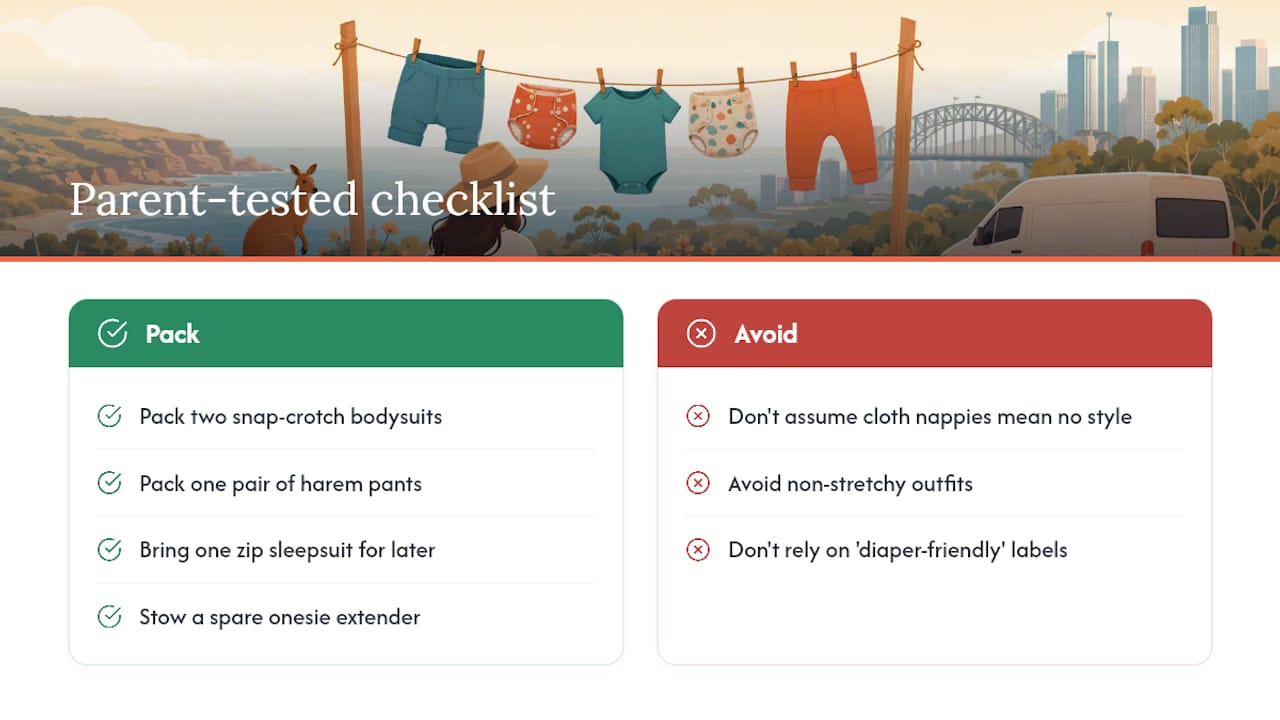
Here’s what I’d pack and what I’d put a baby in today, based on everything above: two snap-crotch bodysuits, one pair of harem pants, one zip sleepsuit for later, and a spare onesie extender in the nappy bag just in case.
I’ve watched plenty of parents assume cloth nappies mean giving up on cute outfits, then quietly discover that a stretchy jersey romper does the job better than anything marketed as “diaper-friendly.” Style and cloth nappies aren’t in competition. Loose, stretchy, well-fastened clothing does both jobs at once.
— Daniel
Get the fit right with the Kite Pig Pannage Bodysuit
Baby Goes Retro built its catalogue around exactly the fabrics and cuts this guide keeps pointing to, so you’re not hunting through generic baby stores hoping something happens to fit over a cloth nappy.
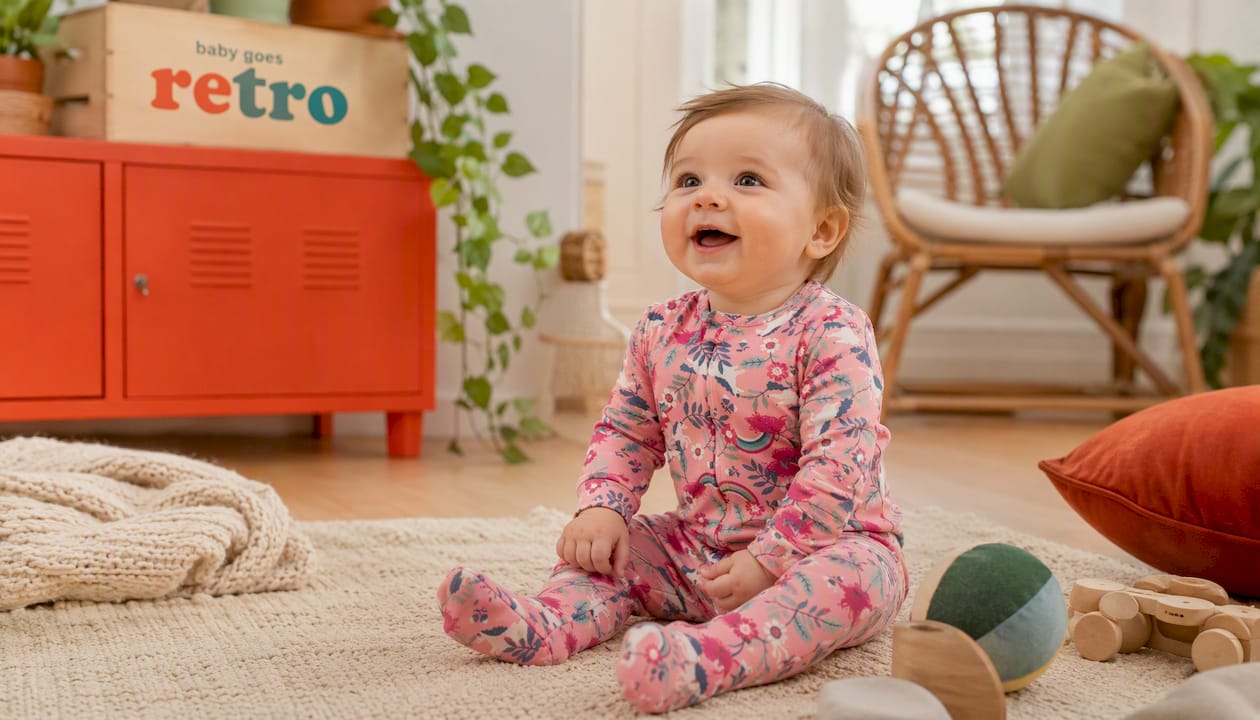
The Kite Pig Pannage Long Sleeve Bodysuit pairs a full popper opening with stretch organic cotton, so nappy changes stay quick and the fit stays comfortable through a full growth spurt. That combination matters most for cloth-diapered babies, where bulk and frequent changes put ordinary bodysuits to the test daily. Prices are listed in AUD, shipping is a flat $7.95 (free over $97), and every order carries 30 day easy returns and exchanges if the fit isn’t quite right. For more roomy staples, the organic baby clothes collection and the dungarees and overalls range are both built with the same cloth-friendly cuts in mind. Have a look through the bodysuit’s product page and see whether the size on hand today needs sizing up or is ready to wear.
Sources
- Do I need special clothes for cloth diapers? — Cloth Diapers for Beginners
- Best clothes for cloth bums — That Liz and Those Boys
- How to buy the best baby clothes — Choice
FAQ
What fabric is best for cloth diapers?
Soft, stretchy natural fibres work best, particularly organic cotton and jersey, since they move with a nappy’s bulk instead of compressing it. Breathable wool is a good option in cooler weather when you want warmth without added bulk.
What are the downsides of using cloth diapers?
The main downsides are more frequent laundry and the need for slightly roomier clothing than you’d buy for disposables. Neither is a dealbreaker once you’ve settled on a handful of go-to cuts like harem pants and snap-crotch bodysuits.
How do I avoid diaper rash with cloth diapers?
Avoiding tight, compressive clothing is a big part of it, since compression can push moisture back against the skin instead of letting it wick away. Breathable fabrics and timely changes matter more than any particular brand of nappy.
Are cloth diapers eco-friendly?
Cloth nappies are widely considered a lower-waste option than disposables because they’re reused rather than thrown out after a single wear. Pairing them with durable, well-made organic clothing extends that same ethos to the rest of the wardrobe.
Do I need to buy clothes labelled specifically for cloth diapers?
No. Most standard baby clothes in breathable natural fibres with functional fastenings will fit a cloth nappy fine, as long as you’re choosing looser cuts over anything skinny or rigid.
0 comments