


Reactive-dyed organic cotton and well-finished synthetics hold colour longest, hands down. The single habit that protects that colour more than any other is washing cold and drying in shade, every single time.
- Cold wash, gentle cycle, shade-dried garments last visibly brighter than hot-washed, tumble-dried ones.
- Treat new brights as bleeders for their first one to three washes.
- Baby Goes Retro stocks a curated range of colour-retentive organic pieces, from bodysuits to dungarees, chosen with exactly this durability in mind.
Key Takeaways
Colourfast kids’ clothing depends more on dye chemistry and finishing than on brand marketing, and cold washing with shade drying protects that investment every time.
| Point | Details |
|---|---|
| Dye type drives durability | Reactive-dyed organic cotton bonds pigment into the fibre, outlasting surface-printed synthetics. |
| Cold wash is non-negotiable | Cold, gentle cycles with shade drying prevent the fading hot water and dryers cause. |
| New brights need isolation | Wash new colourful garments separately for their first one to three washes. |
| Detergent dosing matters | Overdosing leaves residue that stiffens fibres and dulls colour over time. |
| Baby Goes Retro stocks proven options | Pieces like the DUNS Sweden Clover range and Kite bundles use reactive-dyed organic cotton built for active play. |
Table of Contents
- What makes clothes colorfast anyway?
- How do I set up a laundry routine that stops fading?
- How do I choose durable, colorfast kids’ clothing when shopping?
- Why trust this advice on durable kids’ clothing?
- How do I test fabric for colorfastness at home?
- Which brands or labels are known for colorfast kids’ clothing?
- How do I stop colour bleeding between mixed fabrics?
- Does sunlight fade kids’ clothes, and how do you stop it?
- What does the evidence actually tell parents to prioritise?
- Featured colorfast picks from Baby Goes Retro
- Sources
- FAQ
What makes clothes colorfast anyway?
The dye matters more than the fabric colour you see on the hanger. Reactive dyes form an actual chemical bond with cotton fibres, locking pigment into the fibre structure rather than sitting on top of it. That covalent bond is why reactive-dyed organic cotton shrugs off wash after wash while a cheaper pigment-printed tee starts looking tired within a month.
Surface or pigment prints work differently. They’re essentially painted or stamped onto the fabric surface, which is why they crack, peel, or fade fast under friction and heat. Fibre-reactive dyeing penetrates the yarn itself, so there’s no surface layer to wear away. If you’ve ever noticed a graphic tee’s print flaking after a dozen washes while a solid-coloured shirt from the same wash load still looks new, that’s the difference between a print finish and a true dye.
Good factories also pre-wash and finish fabric before it ever reaches a garment. This step strips out excess loose dye that hasn’t bonded properly, which is exactly why a well-made garment doesn’t bleed all over your washing machine on its first spin. Cheaper manufacturing often skips this, leaving unfixed dye sitting in the fibre waiting to run.
For everyday kids’ items, this technical detail has real consequences:
- Bodysuits and long-sleeve tops get stretched, stained, and washed constantly, so dye penetration matters more than a flashy print.
- Dungarees see knee-scuffing and repeated washing from mud and food, so reactive dyeing on sturdy cotton blends holds up where lighter prints won’t.
- Swimwear needs synthetic fibres engineered to resist chlorine and salt fade, which is a different challenge to cotton dyeing altogether.
Pro Tip: Check the fabric composition tag before the colour. A reactive-dyed organic cotton in a “boring” navy will outlast a rainbow-printed poly blend every time.
How do I set up a laundry routine that stops fading?
A few consistent habits do more for colour retention than any specialty product ever will. Here’s the routine worth building into your week.
- Sort new brights separately for the first one to three washes. New garments shed the most unfixed dye early, and separating whites, colours and delicates protects everything else in the load.
- Wash cold, on a gentle cycle, with a measured amount of detergent. Overdosing is more common than people think, and excess detergent leaves residue that stiffens fibres and dulls colour over time.
- Turn garments inside out and do up zips and poppers before they go in. This reduces the friction that scrapes dye off the fabric surface during agitation.
- Wash full loads, not overloaded ones. Full but not crammed loads reduce mechanical wear, according to textiles technician Leah Giblin from UNSW’s Making Centre, whose work focuses on how fabric structures respond to everyday wear.
- Treat stains the moment you see them. A quick cold-water soak beats a week-old stain that needs hot water and scrubbing to shift, both of which damage colour.
- Air-dry in shade, ideally indoors or under cover. Skip the dryer’s high heat where colour retention is the priority.
Two smaller loads genuinely beat one giant one when it comes to preventing dye loss through friction, an easy trade-off to forget on a busy laundry day.
Swimwear and school uniforms need their own small adjustments. Rinse swimmers in plain water straight after a chlorinated pool, since chlorine left sitting in synthetic fibre accelerates fading fast. For school uniforms, spot-treat stains rather than washing the whole garment after every wear. CHOICE’s laundry advice backs this in, recommending washing sparingly and treating marks early to stretch uniform life across a school term.
Pro Tip: A splash of white vinegar in the rinse cycle is an old trick some parents swear by for setting dye in brand new garments. Test it on a hidden seam first, since not every dye responds the same way.
How do I choose durable, colorfast kids’ clothing when shopping?
Reading a product page properly saves you from buying something that looks vivid in the photo and grey by week three. Here’s what actually matters.
Start with the fabric content line. Organic cotton with a reactive-dye process or a mention of pre-washing is a strong sign the brand has thought about longevity, not just the photo shoot. For swimwear specifically, look for synthetic blends built to resist chlorine and UV, since cotton simply isn’t suited to pool or beach wear.
Care labels tell you more than most parents realise. A cold-wash instruction alongside a “colourfast” or “pre-washed” note on the tag usually means the manufacturer tested for dye bleed before the garment ever left the factory. If a care label is vague or missing entirely, treat that as a small red flag.
Construction is worth a second look too. Reinforced seams, quality poppers or zips, and fabric that already feels pre-washed and soft (rather than stiff with sizing) all point to a garment built for real wear, not just a rack display.
- Look for organic cotton plus reactive-dye or pre-wash finishing claims.
- Prefer clear, specific care labels over generic “machine washable” tags.
- Check seams and fastenings for reinforcement, especially on knees and cuffs.
- Save premium spend for pieces your child will wear constantly; budget options are fine for short-lived seasonal items like a single swim carnival costume.
| Best for | Fabric | Colour vibrancy retention | Care instructions | Price range |
|---|---|---|---|---|
| Everyday wear, active play | Organic cotton, reactive dyed | High, dye bonds into fibre | Cold, gentle wash, shade dry | Mid to premium |
| Swim and pool days | Synthetic blends (chlorine resistant) | Moderate to high with proper rinsing | Rinse after chlorine, cold wash | Mid range |
| Newborn essentials | Soft organic cotton blends | High with gentle first washes | Cold wash, avoid tumble dry | Mid to premium |
Why trust this advice on durable kids’ clothing?
Baby Goes Retro has spent years since 2007 sourcing European organic baby and kids’ clothing chosen specifically for how well it survives real childhood. Blog contributor Daniel writes regularly on mess-friendly kidswear and playground-proof style, drawing on years of watching which fabrics and dyes actually hold up to paint, mud, and spaghetti bolognese.
As a family-run business, quality assurance isn’t an afterthought here. Every piece is chosen to be ethically sourced and built to withstand the rigours of childhood, not just look good in a catalogue photo.
- Australian shipping is a flat $7.95, free over $97.
- Every order comes with 30-day easy returns and exchanges.
- Products are selected with fading and durability specifically in mind, not just style.
How do I test fabric for colorfastness at home?
A simple test before the first proper wash can save you a laundry disaster. Dampen a cotton ball or white cloth with cold water, then rub it firmly against a hidden seam or inside hem of the new garment. If colour transfers onto the cloth, the dye hasn’t fully set and the item needs separate washing for its first few cycles.
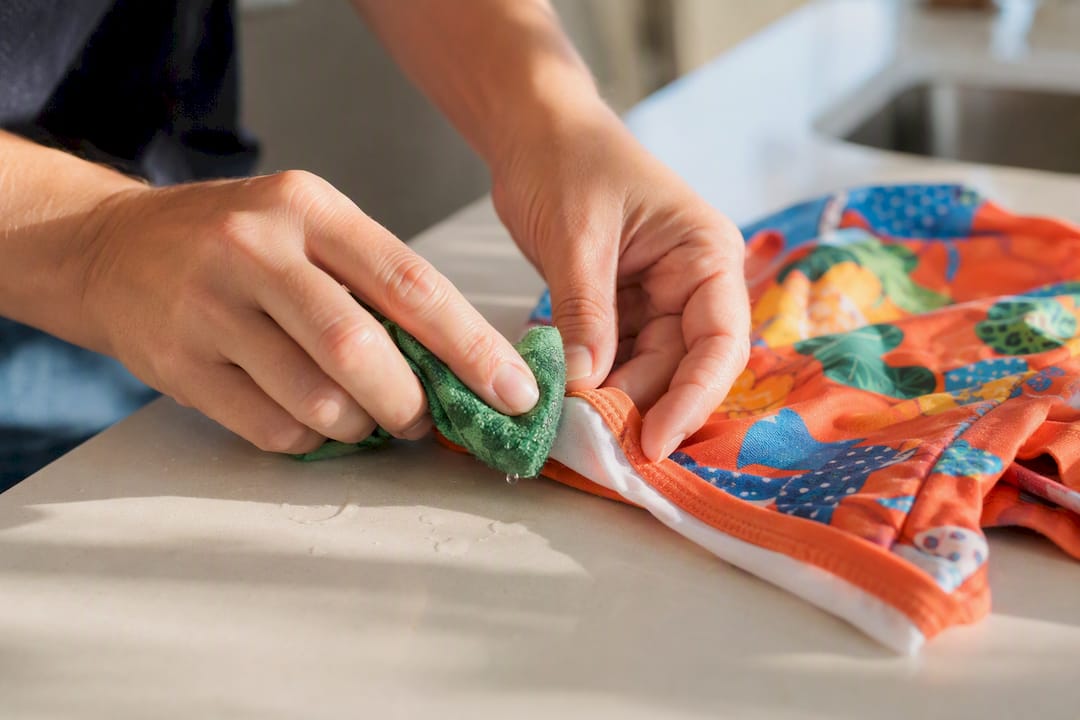
You can run the same test with a drop of mild detergent solution instead of plain water, which more closely mimics an actual wash. Some parents go a step further and soak a hidden corner in cold water for ten minutes, checking whether the water tints at all.
This matters most for deeply saturated colours like reds, navys, and blacks, since these dyes are notoriously prone to running in the first few washes even on quality garments. Bright multi-coloured prints with contrasting panels deserve the same check, since one colour bleeding onto a lighter panel in the same garment ruins the whole piece before it’s even been worn out.
If a garment fails the test, don’t panic and don’t return it automatically; it simply means giving it a solo cold wash or two before it joins the family laundry pile. Once a garment stops transferring colour in this quick test, you can wash it with confidence alongside similarly coloured items.
Which brands or labels are known for colorfast kids’ clothing?
European organic kidswear brands built their reputation partly on getting this dye problem right, which is exactly why they’ve become the go-to for parents chasing durable, vibrant colour. Brands using organic cotton with reactive dyeing processes and proper pre-washing tend to outperform fast-fashion kids’ lines on colour retention by a wide margin, wash after wash.
Look for brands that state their dyeing method on the product page rather than just listing “100% cotton.” A brand willing to specify reactive dyeing, GOTS-certified organic cotton, or pre-washed fabric is signalling that colour testing happened before the garment reached shelves. Baby Goes Retro’s curated selection of bright, organic infant clothing leans on exactly these details when choosing which European labels to stock.
Price point is a rough but useful signal too. Genuinely reactive-dyed organic cotton costs more to produce than a cheap pigment-printed synthetic blend, so a suspiciously low price on a “vibrant, durable” claim is worth a second look at the fabric and care label before you buy. It’s not a hard rule, since some budget brands do get the basics right, but it’s a decent filter when you’re short on time and scrolling through options.
How do I stop colour bleeding between mixed fabrics?
Colour bleeding almost always happens in the first few washes, before a garment’s dye has fully settled, which is exactly why sorting new brights separately matters as much as it does. Once a garment has been through three or four washes without transferring colour, the bleeding risk drops sharply.
Mixed-fabric garments need extra caution. A dungaree with a contrast trim, or a bodysuit with a printed panel against a plain background, can bleed one colour onto the other even after the rest of the garment has settled. Wash these items inside out and on their own for an extra wash or two beyond what you’d do for a solid-colour piece.
If bleeding does happen, act fast rather than letting the stained item dry, since heat sets a colour stain permanently. A cold soak with a stain-specific pre-treatment, applied while the fabric is still damp, lifts far more colour transfer than trying to fix it after the dryer’s had a go. Baby Goes Retro’s guide on clever care tips for tiny clothes covers stain response in more depth if you’re dealing with food or grass on top of a bleed.
Never mix a brand new dark item with pale garments in the same load, no matter how tempting it is to save time on laundry day. That single habit prevents most household bleeding incidents before they start.
Does sunlight fade kids’ clothes, and how do you stop it?
UV exposure breaks down dye pigment at a molecular level, which is why a garment left drying on a sunny line for a full afternoon fades faster than one dried in shade over several days. This applies to reactive-dyed cotton just as much as printed synthetics, though reactive dyes generally hold up somewhat longer under the same exposure.
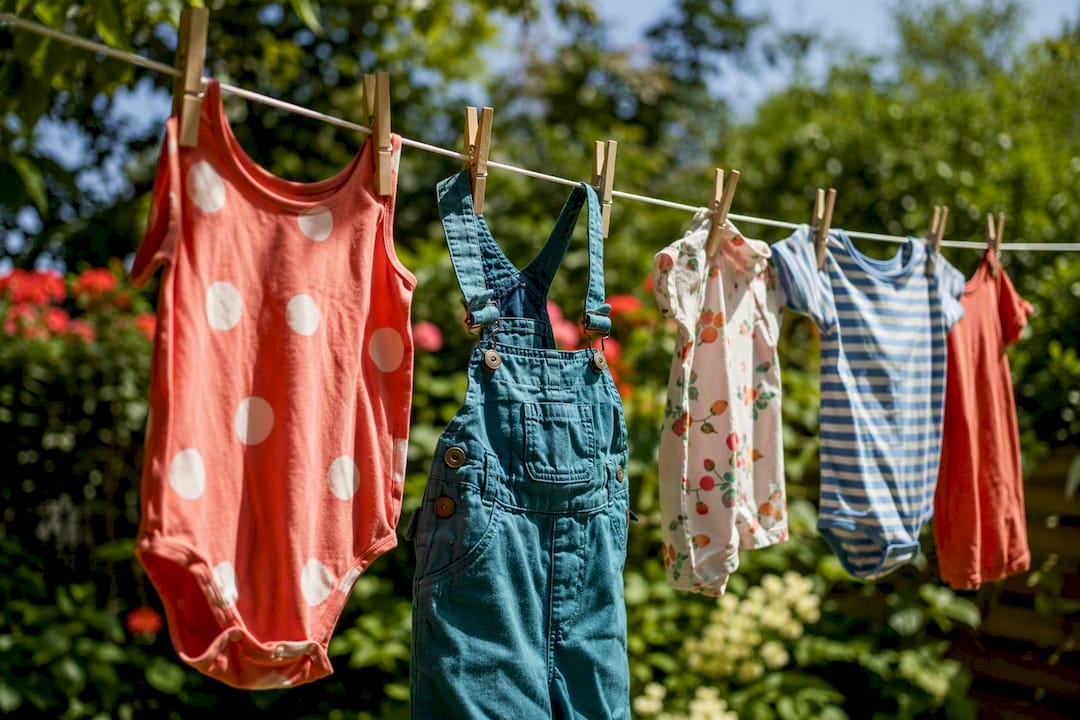
Darker and more saturated colours tend to show sun fade first, since they contain more pigment to break down. A bright red or navy dungaree left drying in direct sun repeatedly will visibly dull well before a pastel item shows the same wear.
The fix is straightforward: dry garments in shade, under a covered line, or indoors near airflow rather than in direct sun. If a covered drying spot isn’t available, drying garments inside out at least protects the outward-facing colour from direct UV, even if the fabric itself still takes some exposure. For frequently worn play clothes that live outdoors half the day anyway, accept that some gradual fade is inevitable and focus your protective effort on the pieces you want to last, like special-occasion outfits or hand-me-downs.
What does the evidence actually tell parents to prioritise?
Most colourfast advice online gets buried under specialty gadgets and colour-catcher sheets that treat the symptom, not the cause. The research behind this guide points somewhere simpler: the dye process baked into a garment before it ever reaches you matters more than anything you do in the wash afterwards.
That’s an uncomfortable truth for anyone hoping a clever laundry hack will rescue a poorly dyed garment. It won’t, not reliably. What you can control is buying reactive-dyed organic cotton or well-finished synthetics in the first place, then backing that choice with cold washing, sorted loads, and shade drying.
If I had to pick one habit to fix first, it’s overloading the machine. Parents chase efficiency by cramming in a week’s washing at once, not realising that friction from an overstuffed load does more colour damage than almost any other single factor. Wash smaller, wash cold, and buy garments made to last in the first place.
Featured colorfast picks from Baby Goes Retro
Choosing well at the point of purchase saves you the laundry headaches later, and a few pieces in the Baby Goes Retro range are worth calling out for exactly the reasons covered above.
The DUNS Sweden Clover Bodysuit in Pompeian Red uses organic cotton with a reactive-dye process, which is exactly why that deep red holds its saturation instead of turning pink after a season of washing. Cold wash, shade dry, and it’ll outlast plenty of pricier basics. The DUNS Sweden Clover Dungarees in Capri Blue share the same fabric approach in a sturdier weight built for knee-scuffing and playground crawling.
For toddlers who go through outfits fast, the Kite Pear-fect Dungaree Toddler Bundle and matching Kite Pear-fect Print Swimsuit pair cotton dungarees for everyday wear with a chlorine-resistant swimsuit fabric for pool days, covering both fabric categories in one order. If you’re shopping for a newborn or gifting a bundle, the Kite Koala Time Toddler Gift Bundle, Kite Little Goose Baby Gift Bundle, and Kite Pear-fect Dungaree Gift Bundle all use the same organic, reactive-dyed cotton approach across mix-and-match pieces. The Kite Pig Pannage Long Sleeve Bodysuit rounds things out as a solid, everyday layering piece with popper fastenings that hold up to quick changes.
Every order ships for a flat $7.95 across Australia, free once you spend over $97, and comes with 30-day returns if a fit or colour isn’t quite right. Have a browse through the full range of colourful, organic kidswear and pick pieces that’ll still look vibrant well after the tags come off.
Sources
- UNSW making centre — Leah Giblin
- Bounty Parents — how to keep your kids’ clothes looking new and stain-free
- CHOICE — laundry tips to save your clothes
- Murchison Hume — are you using too much detergent
FAQ
Does cold water really stop kids’ clothes from fading?
Yes. Cold water reduces the heat-driven dye breakdown that causes fading, and modern cold-water detergents still handle most everyday stains effectively.
How many washes before a new bright garment stops bleeding?
Most garments stop transferring colour after several separate cold washes, though deeply saturated reds and navys can occasionally take longer.
Can I tumble dry colourfast kids’ clothes?
Air-drying in shade preserves colour and fibre integrity far better than tumble drying, which uses heat that accelerates fading over repeated cycles.
What’s the biggest mistake parents make with colourfast clothing?
Overloading the washing machine. A cramped load creates friction that strips dye from fabric faster than almost any other laundry habit.
Are Baby Goes Retro garments colorfast?
Baby Goes Retro selects European organic pieces, including the DUNS Sweden and Kite ranges, made with reactive-dyed organic cotton chosen specifically for colour retention through active play.
0 comments