


Pick one calm neutral base, add one colourful star piece, then repeat a single accent colour somewhere else in the outfit, like socks or a bonnet. That’s the whole formula. Everything else in colourful kids outfit ideas is really just variations on this rule, and once you’ve got it, you can build a whole week of bright, coordinated looks without standing in front of the wardrobe every morning. Below are ready-to-copy outfits, palette templates, and a few publisher picks to get you started.
TL;DR:
- Keeping a neutral base, a bright star piece, and a small color repeat creates versatile, coordinated outfits suitable for all occasions and ages.
- Using a capsule wardrobe with three neutrals, two accents, and one wildcard helps streamline morning routines and offers easy mix-and-match options.
- Organic cotton, mid-weight denim, and seersucker are recommended fabrics for durability and color retention through frequent washing.
- Ready-made bundles like the Kite Koala Time Gift Bundle simplify the process of building colorful outfits without guesswork.
- Kids’ color preferences evolve from high contrast for babies to bold primary shades for toddlers, and more personalized choices by preschool age.
Table of Contents
- 12 quick colourful outfit combinations parents can copy
- Simple colour-palette strategies: the 3-2-1 method and four ready palettes
- How to build a mix-and-match capsule for busy mornings
- Outfits by occasion: playground, school, party and swim days
- Materials, care and durability: fabrics that keep colour and survive play
- Baby Goes Retro: curated colourful picks and how to style them
- Getting kids involved in choosing their own colours
- Age-appropriate colour combinations by development stage
- Where to buy: quick shopping paths and a soft next step
- Why colour in kids’ clothes matters more than fashion
- Sources
- FAQ
12 quick colourful outfit combinations parents can copy
Bright kids’ fashion doesn’t need a stylist. It needs one standout piece and a plan for what goes around it. Each of these looks follows the anchor-plus-accent method, and each one has survived actual play, not just a photoshoot.
- Baby, everyday play: Kite Pig Pannage Long Sleeve Bodysuit as the star piece, paired with plain cream leggings. The pig print does the talking; organic cotton means it can go straight in the wash after lunch.
- Baby, gift-worthy outfit: the Kite Koala Time Baby Gift Bundle gives you a matched top and bottom in one go, which is handy when you want colour coordination without the guesswork.
- Toddler, muddy playground day: Kite Pear-fect Dungaree Toddler Bundle over a striped long-sleeve tee. Dungarees hide stains well and the drop-crotch cut survives a lot of climbing.
- Toddler, gift set styling: the Kite Koala Time Toddler Gift Bundle pairs koala print with plain khaki, a good example of one loud piece plus one calm piece.
- Toddler, cool morning: Kite Little Goose Toddler Gift Bundle dungarees with a plain white bodysuit underneath, finished with striped socks for a colour echo.
- Preschool, park day: plain denim shorts, a bright red tee, and Slugs & Snails Drop Print Tights peeking out under the shorts for texture and colour.
- Preschool, birthday party: a rainbow-striped dress with plain white sandals. Keep the shoes neutral so the dress stays the hero.
- Baby, bonnet weather: plain white onesie, DUNS Sweden Tucan Bonnet: Vanilla Custard as the accent, and cream booties.
- Toddler, beach or pool: the Kite Pear-fect Print Swimsuit as a standalone star piece, no need for anything else except a hat for shade.
- Preschool, school photo day: navy pants, a mustard jumper, and one bright hair clip or badge for colour without chaos.
- Toddler, rainy day inside: grey leggings, a rainbow jumper, and mismatched but colour-linked socks for a playful, low-effort look.
- Preschool, weekend errands: khaki overalls, an orange long-sleeve tee, and a striped beanie tying the whole thing together.
The trick across all twelve: one calm base, one loud piece, one small colour repeat. That’s the anchor-piece technique in action, and it works whether you’re dressing a baby who can’t argue about outfits yet or a four-year-old who absolutely will.
Simple colour-palette strategies: the 3-2-1 method and four ready palettes
Colour theory sounds fancy until you break it down for a toddler’s wardrobe. The version that actually works is the 3-2-1 capsule method: three base neutrals, two accent colours, and one wildcard piece for personality. The neutrals (think cream, grey, navy) do the heavy lifting. The two accents give you flexibility. The wildcard, a loud print or a bold colour, is the piece that makes the outfit memorable.
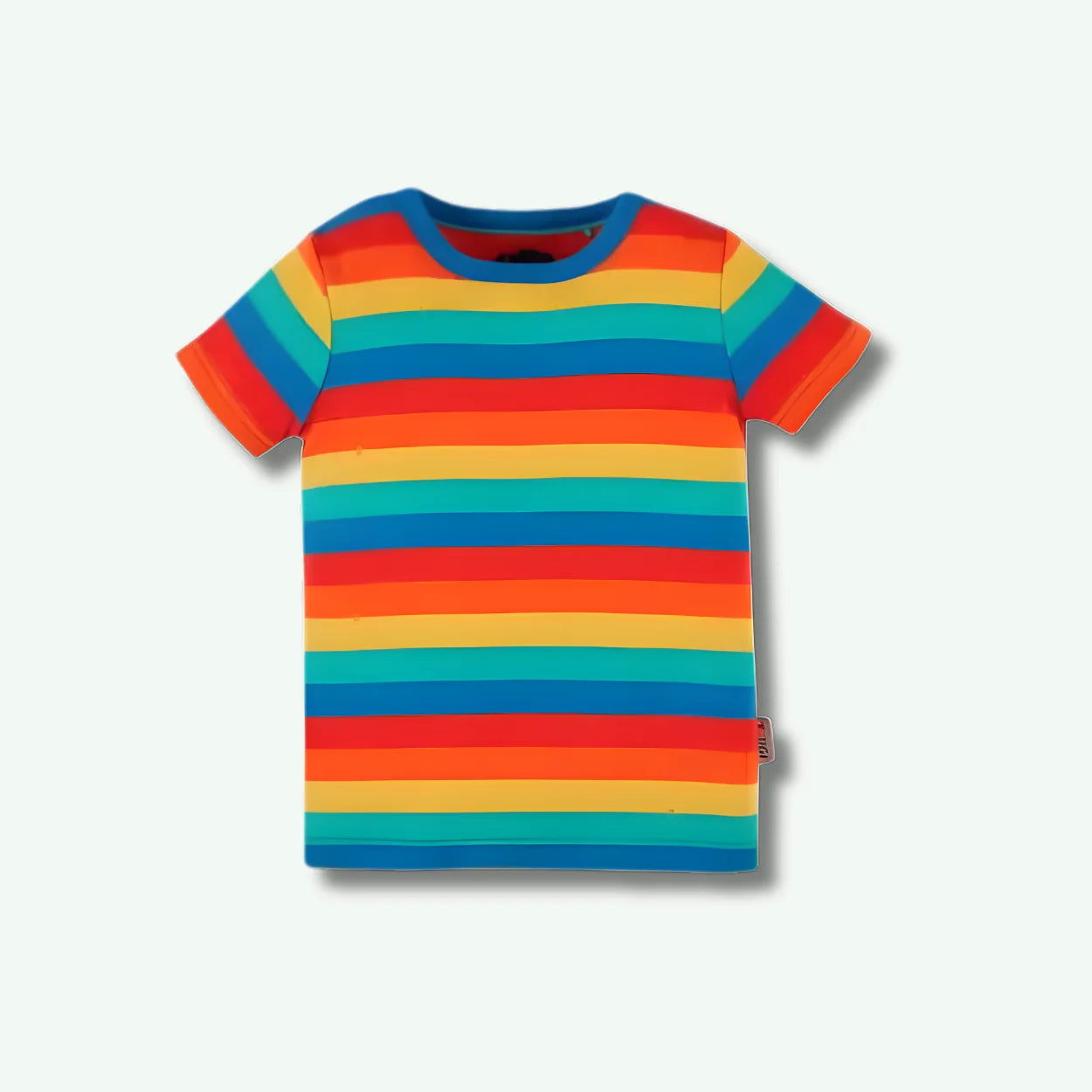
Four palettes to try include bright playful, pastel calm, earthy neutral, and rainbow punctuation, each defined by a calm base, accent colours, and one wildcard piece to add personality.
Pro Tip: Repeat one colour from your wildcard piece somewhere small, like socks or a hair tie. It ties the whole look together and makes even a bold print feel intentional rather than random.
How to build a mix-and-match capsule for busy mornings
A capsule wardrobe isn’t about owning less. It’s about owning pieces that all talk to each other, so any two items you grab actually work.
- Pick three base colours (cream, navy, grey are safe starting points) for bottoms and layering pieces.
- Add two accent colours that show up in tops, dresses, or dungarees, something bright enough to lift the base pieces.
- Choose one wildcard piece per season — a loud print or standout colour that isn’t meant to be worn every day.
- Apply a shopping rule: before you buy anything new, check it works with at least three pieces already in the wardrobe. If it doesn’t, skip it.
Starter capsules by age:
- Baby (0 to 2): bodysuits in two accent colours, cream leggings, one printed bundle like the Kite Little Goose Dungaree Gift Bundle for the wildcard slot.
- Toddler (2 to 4): dungarees in navy and khaki, two bright tees, one statement swimsuit or dress.
- Preschool (4 to 6): denim shorts and pants as bases, striped and solid tees as accents, one loud jumper or dress as the wildcard.
For organising, preparing three ready outfits at the start of the week cuts morning arguments dramatically. Hang them on a low rail your child can reach, and let them choose from the three rather than the whole cupboard.
Outfits by occasion: playground, school, party and swim days
Different days call for different priorities, but the colour rule stays the same.
- Playground: stretch-cotton leggings, a bright tee, and shoes with real grip on the sole. Wash-hardy fabric matters more than fashion here.
- School: a plain jumper over a striped shirt, finished with one colourful accessory, like a badge or hair clip, that survives being pulled off mid-lesson.
- Party: a rainbow dress or bold-print romper paired with plain shoes, so the outfit reads as festive without being fussy to move in.
- Swim days: the Kite Pear-fect Print Swimsuit works as a standalone outfit. Add a wide-brim hat for sun coverage and slip-on sandals that dry fast.
Across all four, footwear should prioritise grip over style, and any accessory near the face (hats, bonnets) needs to survive a wash cycle without losing shape or colour.
Materials, care and durability: fabrics that keep colour and survive play
Not every bright fabric holds its colour through a school term of washing. Organic cotton, mid-weight denim, and seersucker are the three fabrics worth building a colourful wardrobe around, chosen for 2026 because they’re breathable and durable enough for daily wear.
- Stain removal: treat the mark while damp, cold water first, then wash inside-out to protect the print.
- Wash and dry: wash on a cool cycle and dry away from direct sun, which is what actually causes colour fade over time.
- Save delicate pieces (sequins, metallics, heavy embellishment) for parties rather than daily wear.
Trend reports for 2026 also suggest keeping bold prints and metallics as accents rather than full outfits, which lines up neatly with the anchor-plus-accent approach already covered above.
Baby Goes Retro: curated colourful picks and how to style them
A selection of six pieces are featured below, each serving a specific role in a colourful capsule wardrobe:
- Kite Pig Pannage Long Sleeve Bodysuit — organic cotton, playful print, works as the star piece for baby outfits.
- Kite Koala Time Baby Gift Bundle — matched colour set, takes the guesswork out of gifting or dressing from birth.
- Kite Pear-fect Dungaree Toddler Bundle — durable dungarees built for climbing, sliding, and everything toddlers do.
- Kite Pear-fect Print Swimsuit — a standalone colour statement for pool and beach days.
- DUNS Sweden Tucan Bonnet: Vanilla Custard — a small accent piece that ties a whole outfit together.
- Slugs & Snails Drop Print Tights — proof that even socks and tights can be the colour repeat your outfit needs.
Shipping within Australia is available with flat fees and options for returns if needed.
Getting kids involved in choosing their own colours
Handing over some control makes outfit choices go faster, not slower, once you’ve set up the system properly.
Try laying out two or three pre-approved outfits (all following your anchor-plus-accent rule) and letting your child pick between them, rather than opening the whole wardrobe. This keeps the choice manageable while still giving them ownership over the final look. For toddlers who love a specific colour, build a whole capsule around it, using that colour as the repeated accent across multiple pieces, so “I want to wear purple” doesn’t derail your whole system.
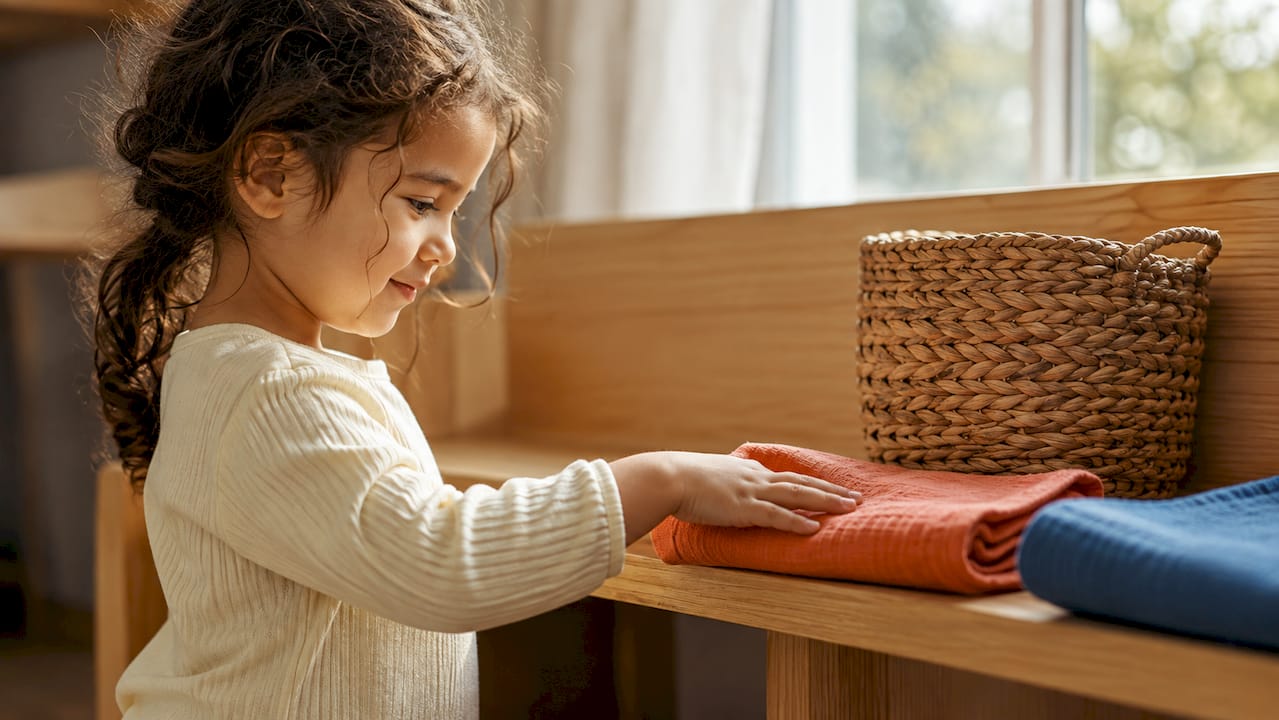
Older preschoolers can help sort laundry by colour family, which doubles as a colour-recognition activity and makes them more invested in how the pieces go together. Some kids will gravitate towards clashing combinations that look chaotic to adult eyes but delight them, and there’s a reasonable case for letting minor clashes go, especially for casual days at home. Save the coordinated capsule looks for school, parties, or days out, and let backyard time be a little wilder.
Age-appropriate colour combinations by development stage
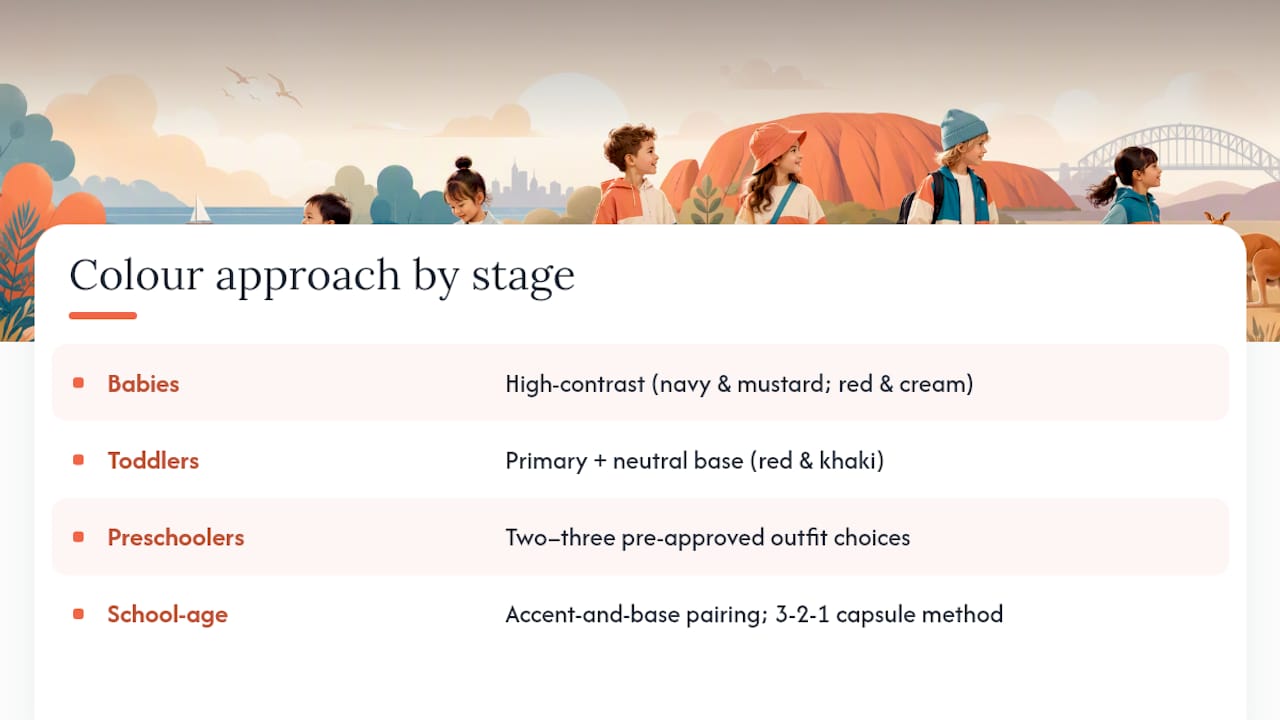
Babies respond strongly to high contrast, so bold pairings like navy and mustard, or red and cream, tend to catch their attention more than muted pastels. This is less about fashion and more about what infants can actually perceive clearly in their first year.
Toddlers, once they start expressing preferences, often gravitate to primary colours: red, yellow, blue. Building outfits around one dominant primary with a neutral base (a red tee with khaki dungarees, for instance) satisfies that pull towards bold colour while keeping the rest of the outfit easy to match.
Preschoolers start developing genuine colour opinions and can be surprisingly firm about them. This is the age where offering the two or three pre-approved outfit choice becomes most useful, since it respects growing independence without handing over the entire wardrobe decision. By school age, most kids can manage a simple accent-and-base pairing themselves, especially if their capsule wardrobe was built with the 3-2-1 method from the start.
Where to buy: quick shopping paths and a soft next step
If you’ve read this far, you already know the formula: neutral base, colourful star piece, one repeated accent. The fastest way to put it into practice is to start with a bundle rather than piecing together separate items, and Baby Goes Retro’s Kite Koala Time Baby Gift Bundle or the Kite Pear-fect Dungaree Toddler Bundle both do the colour-matching work for you.
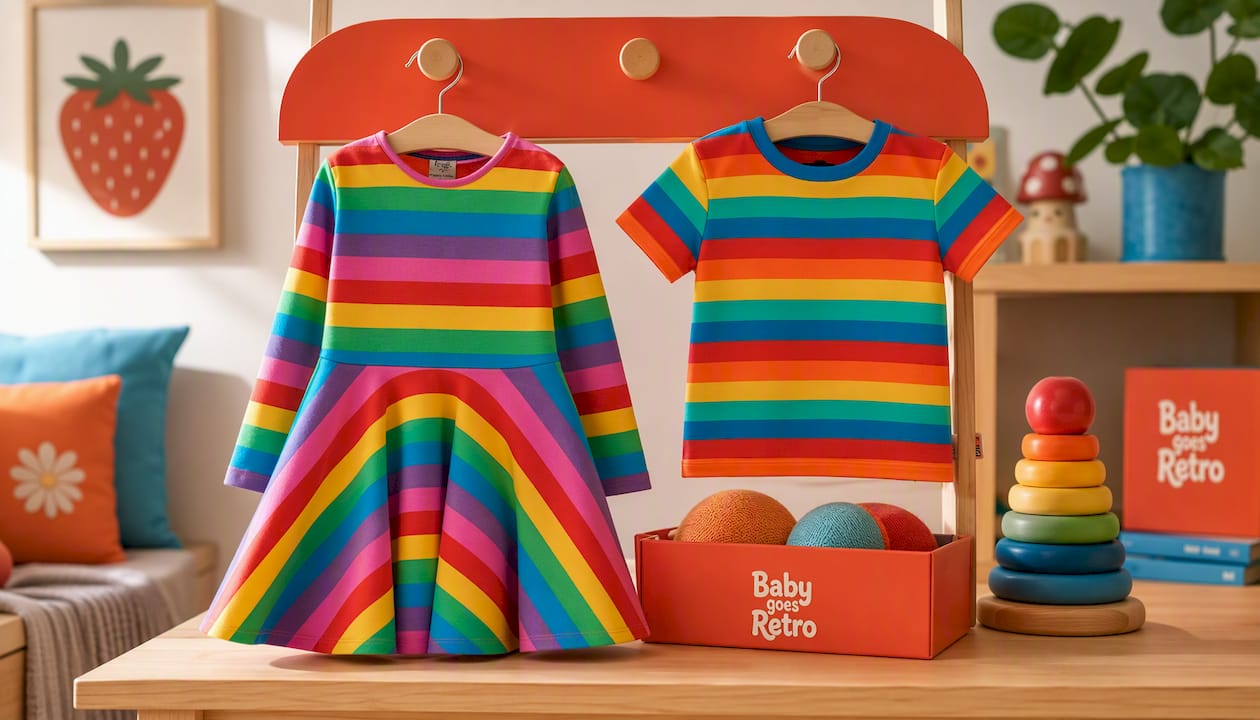
Shipping is a flat $7.95 anywhere in Australia, free once your order passes $97, and every piece comes with 30-day easy returns and exchanges if a colour, print, or size doesn’t work out. For toddlers ready for a full capsule refresh, browse the kids clothes 3-9 years range or start with the rainbow kids clothes collection to find your first star piece. Add the DUNS Sweden Tucan Bonnet: Vanilla Custard or a pair of colourful kids’ socks as your colour-repeat accent, and you’ve got a complete outfit sorted in one order.
Why colour in kids’ clothes matters more than fashion
My own take, after years of watching what actually gets worn versus what sits in the drawer, is that colour in kids’ clothes is rarely about fashion. It’s about confidence and play. A child in a bright, comfortable outfit tends to move differently, climb more readily, and sit for photos without a fuss, because the clothes aren’t fighting them.
The practical takeaway: buy fewer, brighter pieces that mix easily, rather than a wardrobe full of one-outfit wonders. Baby Goes Retro has built its whole approach around that idea since 2007, sourcing ethically made, colourful pieces that are meant to survive real childhood rather than a single wear.
— Daniel
Sources
- Smart Tips for Mixing and Matching Kids’ Clothes
- Color theory for kids’ wardrobes: how to build a palette that mixes without clashing
FAQ
What is the 3-3-3 rule for clothes?
The 3-3-3 rule usually refers to building a small wardrobe from three tops, three bottoms, and three extra pieces that all coordinate. For kids, the 3-2-1 method works similarly, using three base neutrals, two accents, and one wildcard piece.
What are kids’ fashion trends heading into 2026?
Trend coverage for 2026 points to breathable, durable fabrics like seersucker and organic cotton, with bold prints and metallics kept as accent pieces rather than full outfits.
What colours are popular for kids right now?
Primary colours (red, yellow, blue) and rainbow combinations remain the most requested, especially paired with a neutral base like cream, navy, or khaki to keep outfits wearable day to day.
What are some good colour ideas for outfits?
Start with one calm base colour, add one bright star piece, then repeat that colour somewhere small, like socks, a hair clip, or a bonnet such as the DUNS Sweden Tucan Bonnet: Vanilla Custard. This anchor-and-accent approach works for babies through to preschoolers.
0 comments