


Dress your child in a breathable, easy-change outfit with no fiddly bits, and pack several spare sets for infants and multiple for toddlers in the middle of toilet training. Label everything, tuck in a small comfort item, and check the centre’s clothing policy before you leave the house. Baby Goes Retro has spent years fitting out Aussie kids for exactly this morning, and the rest of this guide walks through why these choices matter.
TL;DR:
- Infants should wear popper bodysuits with fastenings down both legs for quick diaper changes on the first day.
- Toddler clothing must include elastic waistbands and pull-on options to support independence during toilet training.
- Avoid clothing with drawstrings, dangly trims, or loose slip-on shoes that can pose safety hazards during active play.
- Pack multiple spare outfits, a wet bag, and a small family photo to help educators settle the child more easily.
- Label everything with laundry-safe, durable tags inside collars and waistbands to prevent loss in shared cubby spaces.
Table of Contents
- Daycare first day outfit ideas by age and mobility
- What to leave in the drawer: outfit choices that cause problems
- The cubby checklist: how much to pack for the first day
- Getting the fabric and fit right for a full day of play
- Labels, rotation, and keeping the cubby under control
- Why these picks work for daycare mornings
- Shop picks for a first day that actually goes smoothly
- A father’s honest checklist for the night before
- Sources
- FAQ
Daycare first day outfit ideas by age and mobility
The right outfit changes as fast as your child does. A newborn who spends the day being carried and changed needs something completely different from a toddler who’s climbing, crawling, and testing every boundary in the room.
For infants (0 to 12 months): A popper bodysuit under a simple romper is close to unbeatable for a first day. Poppers at the crotch mean educators can manage nappy changes in seconds without wrestling a onesie over a wriggling head. Look for a bodysuit with poppers running down both legs, not just three snaps at the base.
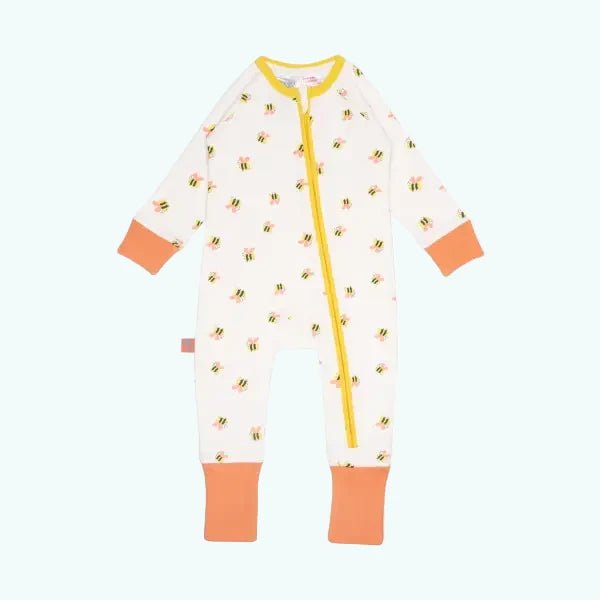
For crawlers and early walkers: Soft dungarees or elastic-waist pants give knees room to move without denim scraping raw skin during floor play. Skip anything with a fitted waistband that needs undoing. A dungaree bib front also protects singlets during an entire morning of finger paint and porridge.
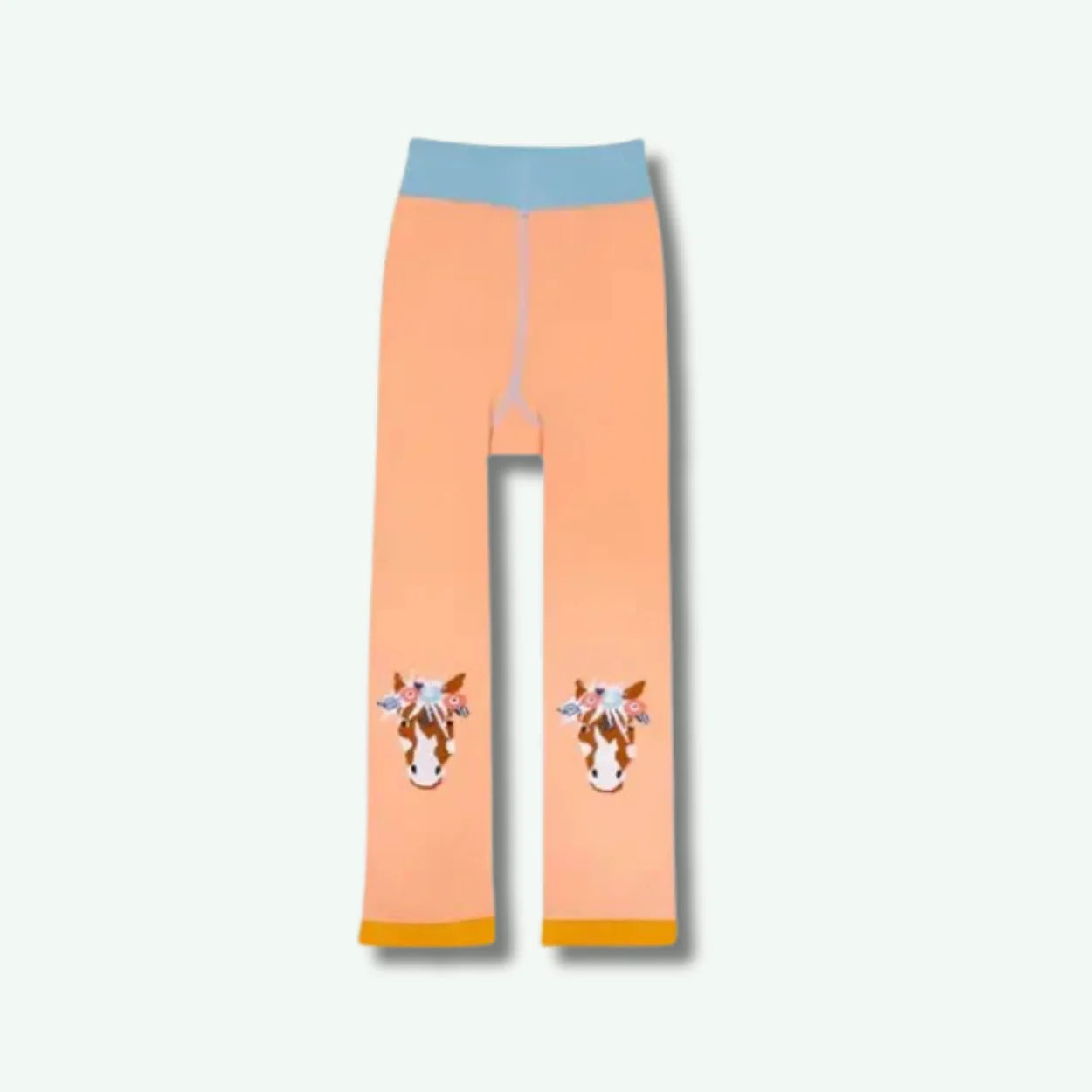
For toddlers in the thick of toilet training: Elastic-waist pants, pull-on dresses, and shorts they can manage themselves are worth their weight in gold. This is the age StartingBlocks specifically flags for building independence through clothing choices — a child who can pull their own pants down gets to the toilet faster and feels proud of doing it solo.
A few things to keep in mind across every age:
- Choose breathable natural fabrics over synthetic blends, especially for full-day wear in warmer months.
- Layer with a light cardigan or vest rather than one heavy jumper, so educators can adjust for air-conditioned rooms or sunny yards.
- Avoid anything that needs two hands and full concentration to fasten. Educators are managing a whole room, not just your child.
What to leave in the drawer: outfit choices that cause problems
Some clothing looks fine at home and becomes a genuine hazard by 10am at daycare. Drawstrings on hoods or waistbands can catch on climbing equipment, and dangly trims on shoes turn into trip risks the second your toddler starts running.
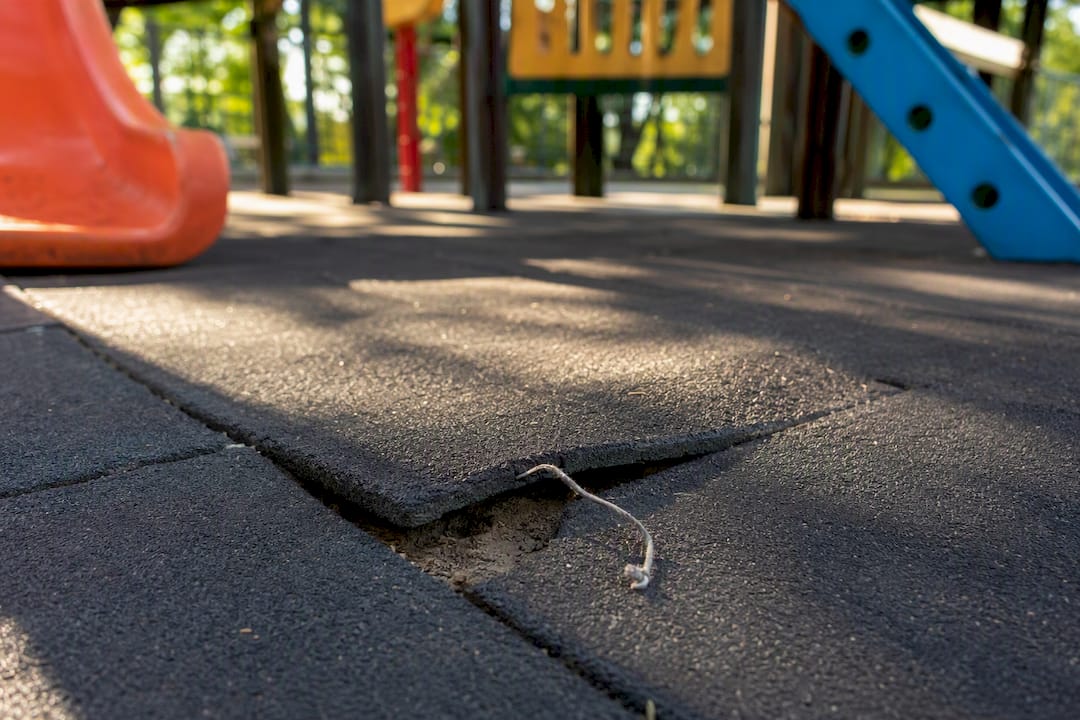
Footwear trips up more parents than anything else, especially during active outdoor play where choosing from outdoor toys for kids encourages movement and requires suitable clothing. Thongs and loose slip-ons fall off during active play and offer zero grip on ramps or steps. Swap them for closed-toe shoes with a velcro strap, which your toddler can eventually manage independently and educators can refasten in seconds.
Sun policy catches people out too. Most centres run a strict “no hat, no play” rule, and many enforce sun-safe clothing that rules out singlets and encourages sleeved tops with collars. A few quick swaps:
- Drawstring hoodie → zip-front jacket with no cords
- Slip-on sandals → velcro sneakers or sturdy sandals with a back strap
- Singlet on its own → sleeved top or singlet layered under a light shirt
- Wide-brimmed hat forgotten at home → one packed in the bag every single day, rain or shine
Check your centre’s own dress code before day one. Some have specific rules on hat style or discourage certain fabrics for allergy reasons, so a quick email to the director saves a scramble at drop-off.
The cubby checklist: how much to pack for the first day
Cubby space is small and centre routines are unforgiving, so pack with intention rather than stuffing in everything you own.
- Spare outfits, sorted by age. Infants need two to three full changes; toddlers deep in toilet training need multiple, since most centres request at least a few full changes and this age group goes through them fastest. Preschoolers who are fully toilet trained can usually get away with one or two.
- A wet bag for the trip home. Centres expect soiled or wet clothes sealed in a bag rather than laundered on site, so a dedicated wet bag in the cubby saves an awkward plastic-bag scramble.
- First-week extras. A small laminated family photo and a short written note on your child’s routine (nap times, feeding cues, comfort words) genuinely help educators settle a child faster in the first days.
- Paperwork. Medical forms, allergy details, and emergency contacts, checked and signed before day one so nothing holds up your drop-off.
Pro Tip: Socks are the single most commonly forgotten item in daycare bags. Toss in two spare pairs even if you think the outfit doesn’t need them. They vanish faster than anything else in the cubby.
Getting the fabric and fit right for a full day of play
Natural fibres like organic cotton do a better job regulating body temperature than synthetic blends, which matters for a child who’ll nap, run, and sit through craft time all in the same outfit. Cotton also tends to sit more gently against sensitive skin, which is worth thinking about if your child deals with eczema or general irritation.
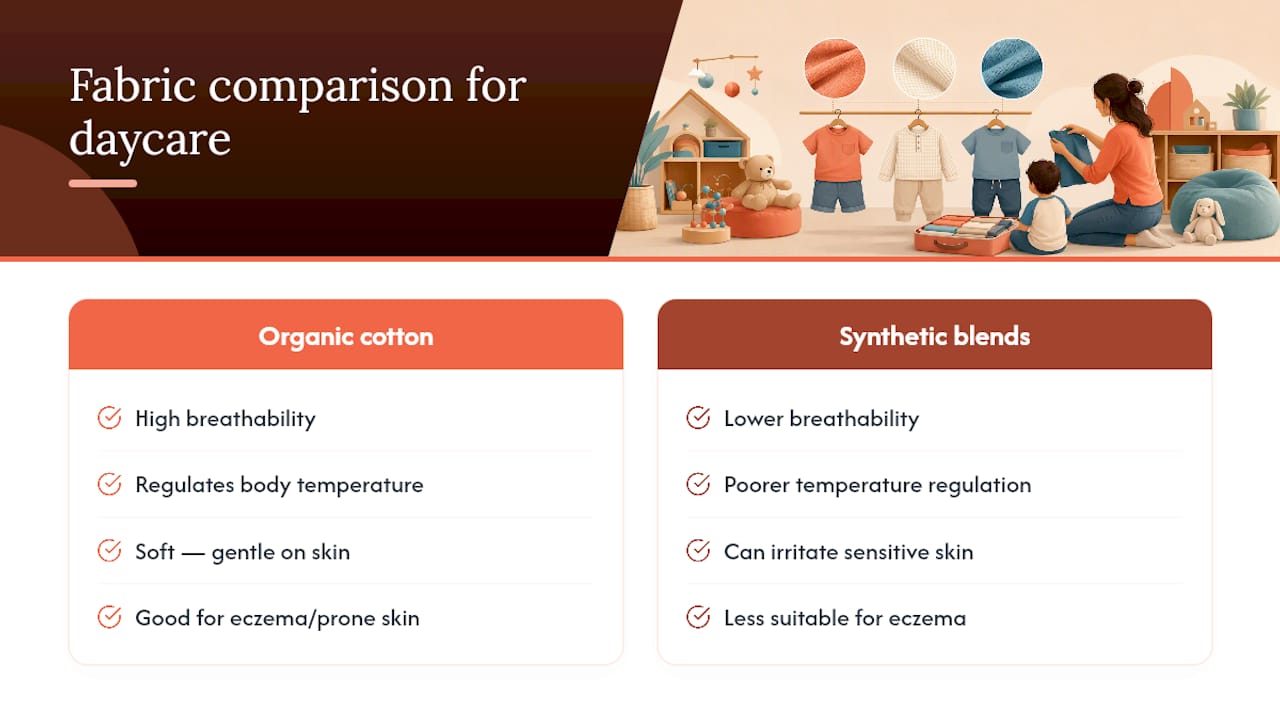
Layering solves the indoor-outdoor problem every daycare day presents. A breathable base layer, a light cardigan for air-conditioned rooms, and a jacket for the yard let educators adjust for the weather without a full outfit change.
Fastenings decide how fast changes happen. Poppers and zips work well for infants because a carer can manage them one-handed while holding a wriggling baby. For toddlers, elastic waists and velcro straps support the “I did it myself” moments that matter for their confidence. Stiff denim, by contrast, is genuinely hard to manage during a rushed nappy change, so save it for pick-up day outfits rather than drop-off.
Labels, rotation, and keeping the cubby under control
A durable label beats a temporary one every time. Laundry-safe stamps and iron-on labels survive the wash cycle far better than sticky labels, which peel off within a fortnight of daily use. Stitch or stamp names inside collars and waistbands where they won’t fade from friction.
Parents who build a habit around durable labelling and wet bags report it cuts lost-item headaches roughly in half through the first term, which says a lot about how often unlabelled items simply vanish into a shared laundry pile.
A few habits worth locking in:
- Check the cubby weekly for outgrown items or missing socks.
- Rotate spare sets seasonally, swapping shorts for leggings as the weather turns.
- Keep one “one size up” emergency outfit in the bag for sudden growth spurts.
- Always send a spare sealed bag home ready for the next soiled-clothes situation.
Why these picks work for daycare mornings
Every recommendation above points to the same shopping list: easy fastenings, breathable natural fabric, and pieces that survive a genuine daycare day. That’s the exact brief Baby Goes Retro has worked to since 2007, sourcing organic European brands built for kids who don’t sit still.
- Popper bodysuits for infants mean a carer can manage a change in seconds without a fight.
- Dungarees with elastic waists hold up through crawling, climbing, and finger painting without restricting movement.
- Organic cotton fabrics suit sensitive or eczema-prone skin, since soft breathable fibres are widely recommended over scratchy synthetics.
| Daycare need | What to look for |
|---|---|
| Fast nappy changes | Popper or zip fastenings, not buttons |
| Independent dressing | Elastic waists, velcro shoes |
| Sensitive skin | Organic cotton, no harsh dye treatments |
| Full day of play | Reinforced knees, breathable layers |
As a family-run Australian business, Baby Goes Retro ships flat rate for $7.95 or free over $97, with 30-day easy returns if sizing runs off. Daniel, who writes on outfit practicality for the Baby Goes Retro blog, leans on years of watching what actually survives a daycare floor versus what looks good on a hanger.
Shop picks for a first day that actually goes smoothly
Once you know the checklist, the shopping part is quick. Here are pieces that map straight onto everything above, drawn from Baby Goes Retro’s own organic European range.
The Kite Pig Pannage Long Sleeve Bodysuit is built with popper openings down both legs, which makes it a genuinely fast option for infant nappy changes on a busy first morning. For a ready-to-go bundle, the Kite Koala Time Baby Gift Bundle covers several outfit needs in one order, and the Kite Little Goose Baby Gift Bundle does the same for parents who’d rather not piece together separate items.
Toddlers heading into active play or toilet training do well in the Kite Pear-fect Dungaree Toddler Bundle, with an elastic waist that supports independent dressing, or the Kite Little Goose Toddler Gift Bundle, which comes with matching socks already sorted. For families wanting a European organic staple in a soft colourway, DUNS Sweden Clover Dungarees in Capri Blue and the matching DUNS Sweden Clover Bodysuit in Capri Blue are worth a look for skin that needs gentler fabric. For warmer months, the Kite Pear-fect Print Swimsuit is handy for centres running water play into their daily program. For more everyday layering pieces, the full range at Baby Goes Retro covers independent dressing options beyond this shortlist.
Check the size chart before you buy since European sizing can run differently to what you’re used to, and label everything the moment it arrives. Shipping is a flat $7.95 Australia-wide, free once your order passes $97, and every purchase comes with 30-day easy returns and exchanges if something doesn’t fit right. Head to the shop, pick two or three pieces from the checklist above, and get the first-day bag sorted tonight.
A father’s honest checklist for the night before
I’ve spent enough time thinking about daycare mornings to know the outfit is never really the hard part. It’s everything around it. Lay the outfit out the night before, pack and label the bag, tuck a small family photo into the front pocket, write a two-line note for the educators about naps or comfort words, and keep a backup outfit in the car for the inevitable surprise. Then check your centre’s specific clothing policy one more time, because they do vary. If you’re still unsure about anything on settling-in morning, ask the educators directly. They’ve seen every version of this nervous first day and they will tell you exactly what helps.
— Daniel
Sources
- Little Learners daycare centre clothing policy
- Sun protection policy and procedure — Early Learning Victoria
- What children wear to early childhood education and care — StartingBlocks
- First day of daycare: special packing list — ChildcarePath
- What to bring to childcare — Milestones
FAQ
How many spare outfits do I need to pack for daycare?
Infants generally need several full spare sets, while toddlers in toilet training need multiple, and most centres request at least one to three changes as a minimum.
What should I avoid dressing my child in for daycare?
Skip drawstrings, dangly trims, singlets on their own, and thongs or loose slip-on shoes, since centres enforce sun-safe clothing and safer footwear rules.
Do I need to pack a hat every day?
Yes. Most centres run a strict “no hat, no play” policy, so a wide-brimmed hat needs to go in the bag daily regardless of the forecast.
What extra items help on the first day besides clothes?
A small laminated family photo and a short written note on your child’s routine both help educators settle a child faster during the first week.
Which fastenings are easiest for daycare educators to manage?
Poppers and zips suit infants for quick nappy changes, while elastic waists and velcro straps work best for toddlers learning to dress themselves, as poppers on pieces like the Kite Pig Pannage Bodysuit show.
0 comments