


If you want to donate baby clothes Australia families will actually treasure, the smartest move in 2026 is gifting new, premium organic garments rather than sourcing secondhand pieces yourself. Baby Goes Retro’s Kite Koala Time Baby Gift Bundle and Kite Dino Day Baby Gift Bundle are the two standout picks: both are European organic cotton, both ship fast around Australia, and both land as a genuinely useful gift, not clutter.
Here is why these two bundles top the list:
- Organic European cotton that’s gentle on newborn skin and built to survive a toddler’s worst days
- Complete gift sets, so there is no last-minute scrambling for singlets or socks
- Backed by Baby Goes Retro’s returns, in case sizing needs a swap
Jump to the promo section below when you are ready for direct links to both bundles.
TL;DR:
- Organic European cotton garments are more durable and better for newborn skin, making them a cost-effective gift over time.
- The Kite Koala Time bundle suits parents who prefer neutral tones, while the Dino Day bundle caters to families wanting playful designs.
- Check fastenings like full-front press-studs and ensure there are no loose threads before purchasing or donating baby clothes.
- Properly washing, sorting by size and season, and including the recipient’s due date enhances the likelihood your donation is usable.
- Buying high-quality organic clothes supports sustainability by reducing waste, as these items can be handed down multiple times and last through many washes.
Table of Contents
- Why premium organic baby clothes make a meaningful gift in Australia
- What to buy: Kite Koala Time and Kite Dino Day bundles
- How to buy and send a Baby Goes Retro gift in Australia
- Safety, fabric and care checks before you buy or gift baby clothes
- Sustainability and impact: buying quality reduces waste
- Where and how to donate used baby clothes in Australia
- Making sure your donated clothes meet the charity’s criteria
- Packaging and shipping baby clothing donations safely
- Why “buy less, buy better” beats the donation guilt cycle
- Get Kite Koala Time and Dino Day bundles delivered fast
- Key Takeaways
- Sources
- FAQ
Why premium organic baby clothes make a meaningful gift in Australia
A baby gift only really lands when it gets worn, and that comes down to fabric. Organic cotton breathes and wicks moisture far better than many synthetic blends, which matters for a newborn who cannot regulate body temperature well on their own, according to organic cotton guidance aimed at parents choosing baby fabrics. Choice’s own buying guide for baby clothes backs the same principle: softness and breathability should sit at the top of any parent’s checklist, ahead of pattern or brand name.
There is a practical payoff too. Quality organic garments tend to survive more washes, more wriggling toddlers, and more hand-me-down cycles than cheaper synthetics, which stretch and pill fast.
- Softer against sensitive, newborn skin
- Fewer replacement purchases over the first year
- A well-presented bundle feels like a proper gift, not an afterthought
Baby Goes Retro has been curating exactly this kind of European organic clothing since 2007, which is long enough to know which fabrics actually hold up.
What to buy: Kite Koala Time and Kite Dino Day bundles
Both bundles solve the same problem. A new parent or gift-giver needs a ready-made set of gorgeous, wearable basics without spending an afternoon comparing sizing charts across five different brands.
- Kite Koala Time Baby Gift Bundle suits parents who want something gender-neutral and calm. Its palette leans toward soft, earthy tones, making it a safe pick for a baby shower where you do not know the sex of the baby yet, or for parents who prefer understated colours over loud prints.
- Kite Dino Day Baby Gift Bundle works for the family who wants playful and a bit cheeky. It suits toddlers heading into a more active stage, and it makes a fun “welcome to the world” gift when the parents already have a personality picked out for their kid’s wardrobe.
Both bundles list their size range and contents on the product page itself, so check that against the recipient’s age and current growth before you buy. Babies grow fast in the first year, and sizing up slightly is usually the safer bet than sizing to the day they were born.
On price: expect these bundles to sit in the mid-range for premium organic sets, reflecting the European sourcing and organic certification behind the fabric rather than mass-produced basics. That price buys longevity. A garment that survives three or four wears a week for a year, then gets passed down, works out cheaper per wear than a $10 singlet from a discount rack that pills after a month.
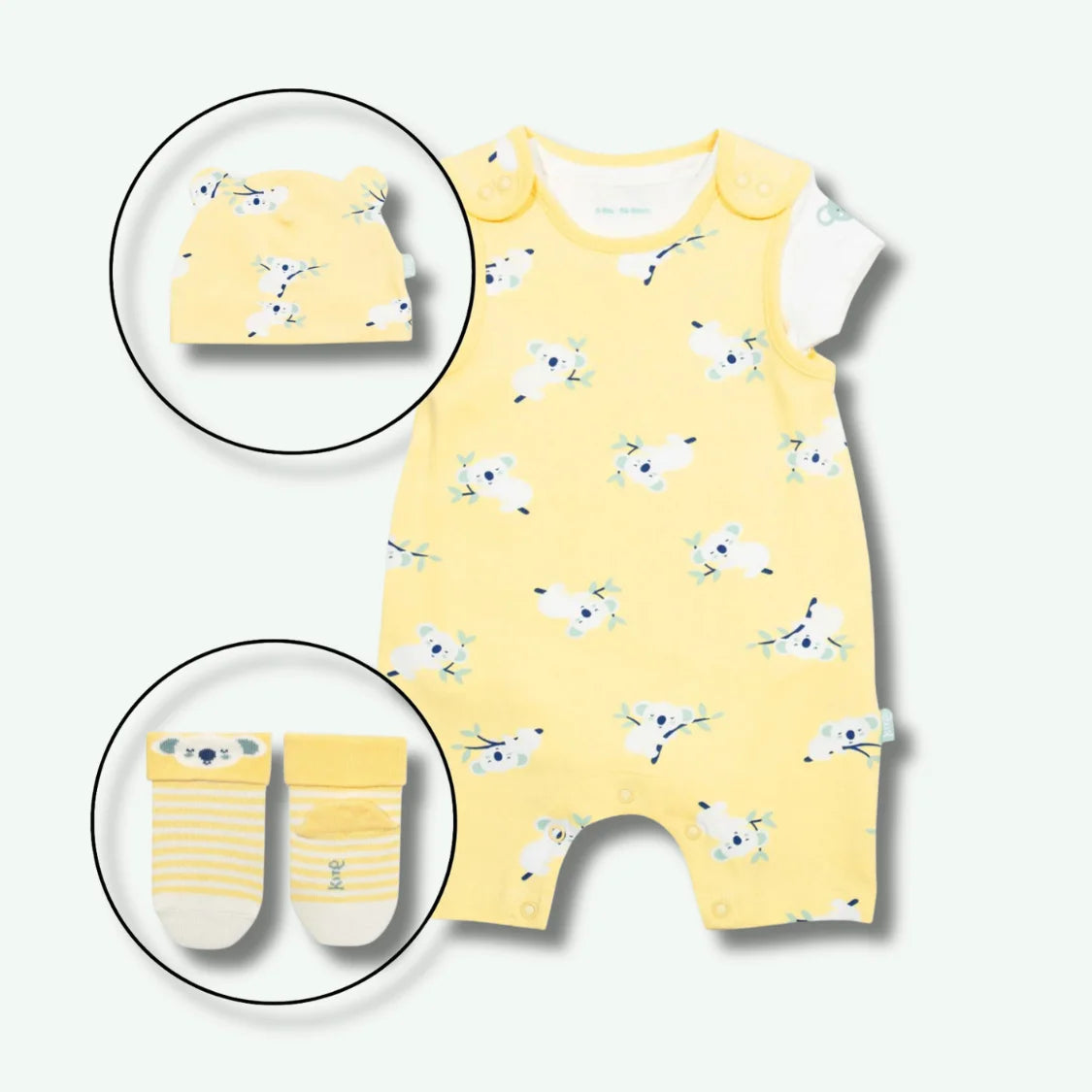
Statistic callout: Organic cotton’s natural fibres wick moisture more effectively than many synthetic alternatives, a material advantage that matters most for newborns still learning to regulate their own body heat, per greenactivefamily.com’s organic cotton guide.
How to buy and send a Baby Goes Retro gift in Australia
Buying for someone else’s baby should not require a spreadsheet. Here is the process, start to finish:
- Pick the bundle and size. Match the size to the baby’s current age or, if they are very young, size up slightly for growing room.
- Add a gift note or wrapping if offered at checkout. A short personal message turns a parcel into a proper gift.
- Choose shipping. Australian delivery is $7.95 flat rate, or free once your order passes $97, so bundling two gifts together can save you the shipping cost entirely.
- Confirm the total in AUD before you pay, including any gift-wrap add-ons.
- Track the parcel once it ships, so you know it will land before the baby shower or hospital visit.
If sizing turns out wrong once the baby arrives (which happens more often than you’d think), Baby Goes Retro’s returns and exchanges policy covers the recipient, not just you. That means a mismatched size is not the end of the gift.
Pro Tip: Add the recipient’s due date or birthday to your calendar and set a reminder to send a short “the parcel is on its way” message. It builds anticipation and means someone is home to receive the delivery.
Safety, fabric and care checks before you buy or gift baby clothes
Not every cute outfit is a safe outfit, so a quick check before purchase saves headaches later. Choice’s guidance notes that synthetic fabrics can be slower to catch fire but may melt and stick to skin, which is a real consideration for sleepwear and anything worn near heaters or open flames, per Choice’s baby clothing buying guide.
A few practical checks matter more than brand reputation:
- Full-front press-studs make nappy changes faster and reduce fiddly middle-of-the-night fumbling
- Check inside socks and patterned clothing for long, loose threads that can catch on tiny toes or fingers, a detail Choice specifically flags
- Avoid anything with buttons or beads that could come loose near a mouthing infant
For care, gentle machine washing without fabric softener keeps organic fibres performing as intended, and a quick repair of a loose seam extends a garment’s life well past the first owner.
Statistic callout: A baby’s skin is thinner and more permeable than an adult’s, which is one reason parents lean toward organic, minimally treated fabrics for anything worn against the skin for hours at a stretch.
Sustainability and impact: buying quality reduces waste
The environmental case for a premium bundle is simple. A garment that survives multiple wears, multiple washes, and often multiple children ends up in landfill far less often than a cheap piece that falls apart after a season.
- Fewer replacement purchases means less fabric waste over a baby’s first two years
- Organic cotton generally involves lower pesticide and chemical exposure in growing and processing, per greenactivefamily’s organic cotton research
- Look for certifications like GOTS or Oeko-Tex on product pages as a general cue toward lower-chemical processing, though always check the specific listing rather than assuming
Baby Goes Retro’s curated organic kidswear leans on European brands chosen specifically for how well they hold up to hand-me-downs, resale, and repeated washing, which matters if you want the gift to have a second life with a younger sibling or cousin.
Where and how to donate used baby clothes in Australia
Once your own baby has outgrown a wardrobe of well-loved organic basics, passing them on is worth doing properly rather than just bagging them up. Most major charities across Australia, including Vinnies, the Salvation Army, and Anglicare, accept clean, gently used baby and children’s clothing at their retail stores and donation bins. Local shelters and family support services, particularly women’s refuges and community centres, often take baby clothing directly and can put it to immediate use for families in crisis.
Before you drop off a bag, check the specific organisation’s guidelines. Some charity stores only accept clothing in saleable condition, meaning no stains, rips, or missing buttons, because they rely on retail sales to fund their programs. Shelters and crisis services, on the other hand, are often more flexible on cosmetic wear and tear since the clothing goes straight to a family rather than onto a shop rail.
A few practical pointers:
- Wash everything before donating, even if it looks clean, since most organisations will not put unwashed items on the floor
- Sort by size and season so volunteers do not have to guess what is in the bag
- Call ahead if you have a large volume of baby clothes, particularly bulky items like winter onesies or bundles of newborn wear, as some smaller charity branches have limited storage
Donating used clothing well is really about respecting the time of the volunteers sorting it and the dignity of the family who will eventually wear it.
Making sure your donated clothes meet the charity’s criteria
Every organisation has slightly different standards, and matching your donation to them saves the charity time and increases the chance your clothes actually get used rather than binned. The starting point is always condition. Clothing should be clean, dry, and free of significant stains, holes, or broken zips and press-studs. A missing button on an otherwise good bodysuit is often fine for a shelter but might get rejected by a retail-focused op shop.
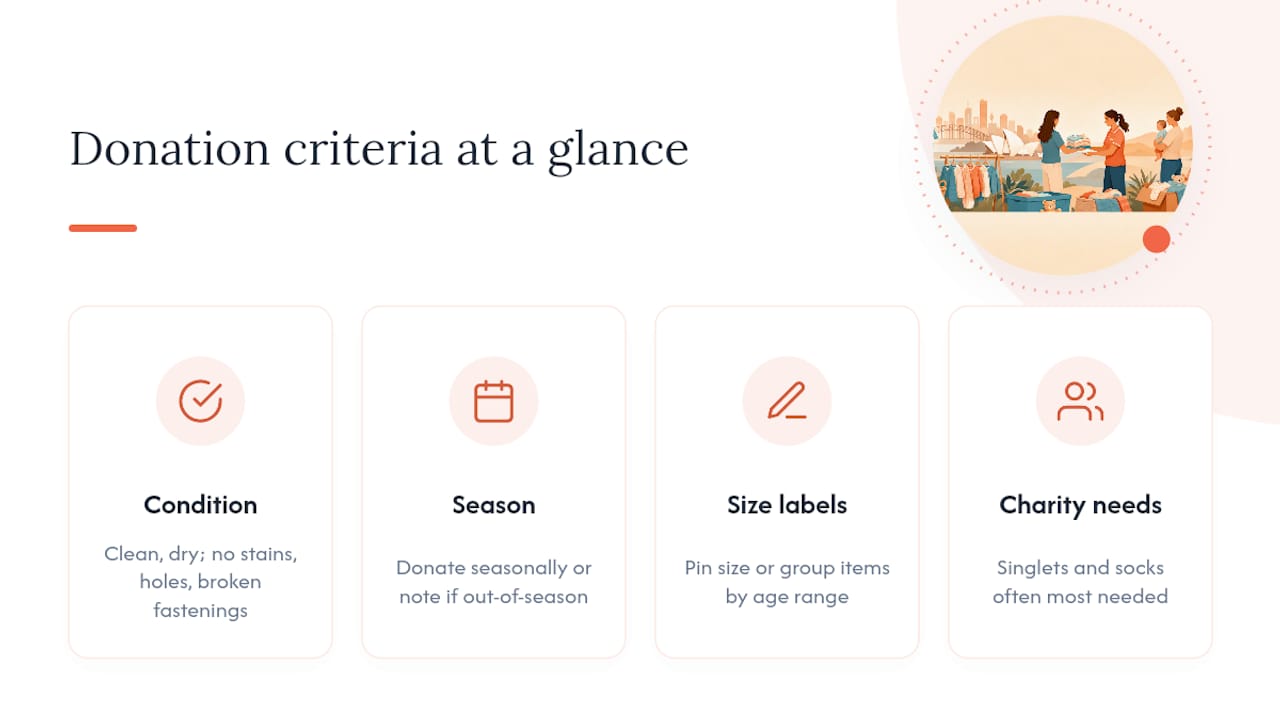
Season matters more than people expect. Charities frequently receive a glut of summer rompers in winter and vice versa, so if you are donating out of season, mention it or hold onto items until closer to the right time of year if the organisation allows advance drop-offs.
Size labelling helps enormously. If tags have faded or come off, a quick note pinned to the item, or grouped into a labelled bag by age range, means volunteers do not have to guess whether something fits a newborn or a two-year-old. Some organisations, especially smaller shelters, will also specify what they need most: singlets and socks are almost always in demand, while formal wear or costume-style outfits are usually not.
If you are ever unsure, a short phone call to the donation centre beats guessing. Most charities publish accepted-items lists on their websites, and a five-minute check before you drop off a car boot full of clothes means nothing comes back rejected.
Packaging and shipping baby clothing donations safely
If you are posting donations rather than dropping them off in person, whether to a regional charity, a shelter without local pickup, or a family member collecting for a community drive, a bit of care in packing goes a long way. Clean everything first. Wash items in a fragrance-free or gentle detergent where possible, since heavily perfumed laundry powders can trigger reactions in babies with sensitive skin.
Pack by size and type rather than throwing everything into one bag. Use clear plastic bags or small boxes labelled by age range (0 to 3 months, 3 to 6 months, and so on) so whoever receives the donation is not left unpacking and re-sorting a jumbled mess. Seal bags properly to keep clothing dry and free of dust or pests during transit, particularly if the parcel is travelling any distance or sitting in storage before distribution.
Avoid mixing damaged or stained items in with good ones “just in case.” It is tempting to include everything and let the charity sort the wheat from the chaff, but it shifts unpaid labour onto volunteers and can mean good items get missed among the rejects. A little sorting on your end, a clean box, and a clear label make the whole donation chain faster and more dignified for everyone involved, including the family who eventually receives the clothes.
Why “buy less, buy better” beats the donation guilt cycle
The conventional advice around baby clothing sustainability tends to focus almost entirely on what to do with old clothes: donate here, recycle there, avoid landfill. That is worthwhile, but it skips the more useful question, which is what you buy in the first place. A cheap synthetic onesie that pills after six washes was never going to make a great donation anyway. Nobody wants it, including the charity sorting through bags of stretched, bobbly fabric.
The overlooked nuance is that buying well is itself a form of giving. A durable, organic bundle that survives a first child, gets handed down or donated in genuinely good condition to a second family, and holds its shape through a dozen washes does more good over its lifetime than three cheap sets bought and binned in succession. If eco-conscious Australian parents want their impact to compound, the priority should be quality at the point of purchase, not just good intentions at the point of disposal. Fewer, better garments beat a bigger pile of donations that were barely wearable to begin with.
— Daniel
Get Kite Koala Time and Dino Day bundles delivered fast
Baby Goes Retro has been sourcing premium European organic baby and kids’ clothing since 2007, and the family-run approach means every bundle is picked for how it wears, not just how it photographs. That is the real difference here: you are not gambling on an unfamiliar overseas seller or guessing at fabric quality from a product photo. Every piece is chosen by a team that has been doing this for close to two decades.
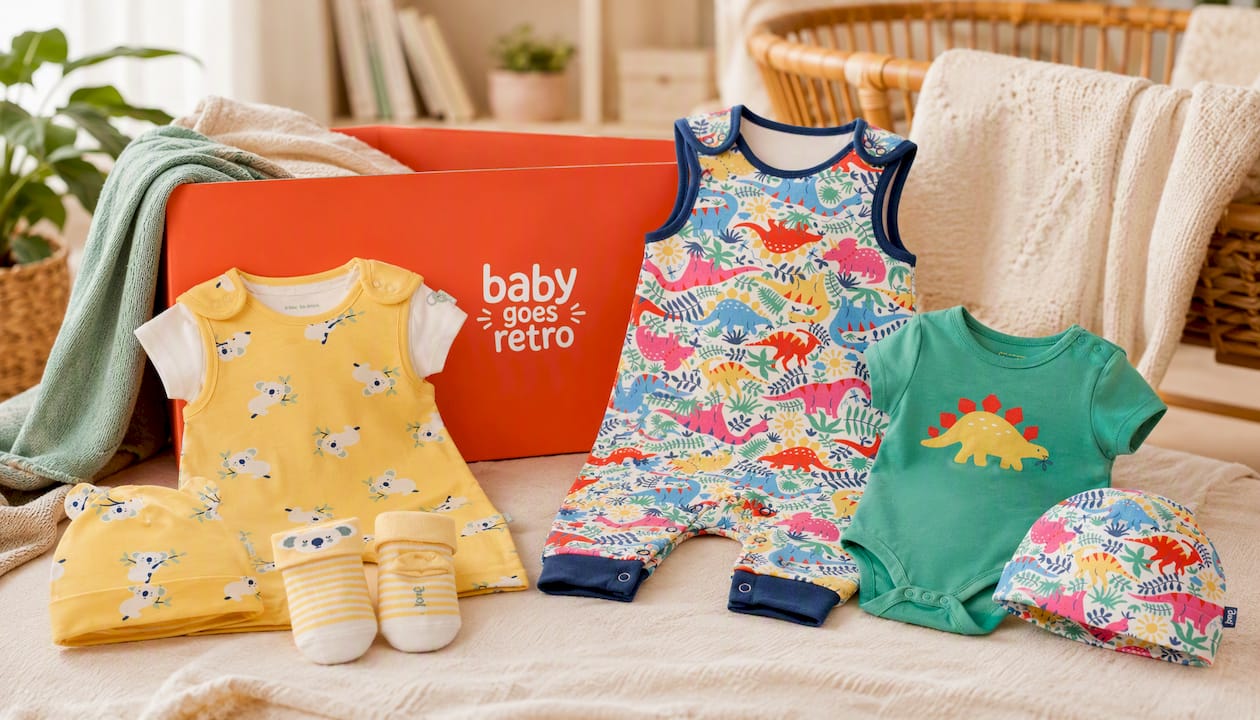
Checkout is straightforward. Prices are in AUD, shipping across Australia is a flat $7.95 or free once your order hits $97, and every purchase comes with 30-day returns and exchanges if sizing needs adjusting. Browse the Kite Koala Time Baby Gift Bundle for a gender-neutral, calm palette, or the Kite Dino Day Baby Gift Bundle if the family you are buying for loves a bit of personality. Add your gift note at checkout, confirm your size, and it is on its way.
Key Takeaways
Buying a premium organic bundle from Baby Goes Retro solves the gifting problem better than sourcing secondhand pieces, while donating your own outgrown clothes well makes the secondhand system work for everyone else.
| Point | Details |
|---|---|
| Choose organic cotton first | Organic cotton wicks moisture and breathes better than most synthetics, which suits newborn skin. |
| Pick the right bundle | Kite Koala Time suits neutral gifting; Kite Dino Day suits playful, personality-driven gifts. |
| Check fastenings and threads | Favour full-front press-studs and check inside socks for loose threads before buying or gifting. |
| Wash and sort before donating | Clean, size-sorted, season-appropriate clothing gets used faster by charities and shelters. |
| Shop with confidence | Baby Goes Retro offers $7.95 flat shipping, free over $97, and 30-day returns on every order. |
Sources
- How to buy the best baby clothes (Choice)
- Is Organic Cotton Better for Babies? What Parents Need to Know in 2026
FAQ
What is the best way to donate baby clothes in Australia?
Wash items first, sort by size and season, and check the specific charity’s accepted-items list, since retail-focused op shops and community shelters often have different condition standards.
Which Baby Goes Retro bundle should I buy as a gift?
Choose the Kite Koala Time Baby Gift Bundle for a gender-neutral, calmer palette, or the Kite Dino Day Baby Gift Bundle for a playful, characterful gift.
How much does shipping cost with Baby Goes Retro?
Shipping across Australia is a flat $7.95, or free on orders over $97.
Can I return a Baby Goes Retro gift if the size is wrong?
Yes, Baby Goes Retro offers a returns and exchanges policy that covers gifts if the recipient needs a different size…
Do charities accept all baby clothing donations?
No, most charities require clean, gently used clothing free of significant stains or damage, while shelters and crisis services are often more flexible on cosmetic wear.
0 comments