


Run full cold loads, hang everything you can on the line, and spot-clean small stains instead of starting a whole new cycle. That is the entire eco laundry routine for families in one sentence. Everything else in this article is just the detail that makes those three habits work for your specific household, your machine, and your kids’ clothes.
TL;DR:
- Washing full loads in cold water twice a week significantly reduces energy use and environmental impact, especially when combined with minimal laundry frequency.
- Using a labelled alarm to immediately transfer loads from washer to line minimizes re-washes and saves water and energy.
- Natural fibers for kids’ clothing and resilient, organic garments withstand repeated washing, lowering replacement frequency and waste.
- Line-drying, with indoor alternatives in wet weather, costs nothing and dramatically cuts carbon emissions while protecting clothes from UV damage.
- Proper handling of detergent containers and ingredient transparency ensures safety around children and reduces packaging waste.
Table of Contents
- Building a weekly laundry schedule that fits family life
- Washing habits that cut water, energy, and microplastics
- Air-drying and dryer strategies that protect clothes
- Spot-cleaning and garment care that means fewer washes
- Low-effort systems that actually stick for busy parents
- Practical baby and kids’ garment advice from Baby Goes Retro
- Detergent containers: safe handling and what’s actually in the bottle
- The take: what actually moves the needle
- Kit that makes the eco routine easier
- Sources
- FAQ
Building a weekly laundry schedule that fits family life
Most families fail at laundry not because they lack good intentions, but because they never decided when laundry actually happens. A vague plan to “do it when it piles up” guarantees half loads, forgotten wet washing, and an extra midweek cycle nobody wanted to run.
Two structures work well for households with kids. Some families run two shorter sessions a week (say Sunday and Wednesday), which keeps piles manageable and prevents a mountain of washing from building up before school photo day. Others prefer one bigger laundry day, batching towels, bedlinen and kids’ clothes into two or three full loads back to back. The second option uses less water and energy overall, because washing less often and always running fuller loads is the single most effective way to cut laundry’s environmental footprint, and most of that footprint comes from heating water rather than the wash cycle itself.
A simple weekly system might look like this:
- Sunday night: sort into three piles only. towels/bedlinen, kids’ everyday clothes, and delicates or new dark items that might bleed.
- Monday morning: run the biggest load (towels/bedlinen) before the school run, so it can go on the line while you’re out.
- Wednesday: run the kids’ clothes load, spot cleaning anything mildly dirty instead of adding it to the wash.
- As needed: delicates only when there’s a genuine full load, not a half tub.
Tie the start of each load to something you already do, like making morning coffee, so the habit rides on an existing routine instead of needing willpower.
Washing habits that cut water, energy, and microplastics
Cold water is the highest leverage change most families can make, because heating water accounts for the bulk of a washing machine’s energy draw. Switching a regular load from hot or warm to cold can meaningfully cut your machine’s running cost without touching cleaning performance for everyday grime.
Detergent choice matters less than most parents assume. CHOICE testing shows eco-labelled detergents vary in how well they actually clean, and load size, correct dosing, and pre-treating stains before the wash matter more than the brand on the bottle. Overdosing is common and wasteful. it doesn’t get clothes cleaner, it just means more product going down the drain. ABC News reporting on eco detergents found that plant-based formulas can be inconsistent on heavy grease or oil stains, so keep expectations realistic and pre-treat anything tough rather than hoping a “green” label will do the heavy lifting.
Practical habits worth adopting:
- Fill the machine to the recommended level. A half-empty drum wastes water proportionally.
- Use the eco or cold cycle as your default, saving hot cycles for genuinely soiled loads like cloth nappies.
- Front-loading machines generally spin faster and extract more water than top-loaders, which shortens drying time and is gentler on natural fibres.
- Add a microfibre filter bag or an external lint-capture filter for loads with synthetic activewear or fleece.
Statistic callout: Fine filters, roughly 160 microns, catch a meaningful share of the microplastic fibres synthetic fabrics shed in the wash before they reach wastewater. For kids’ clothes specifically, favouring natural fibres over synthetics from the start reduces how much of this problem you’re dealing with each wash.
Air-drying and dryer strategies that protect clothes
Line-drying is close to a free win. it costs nothing to run, uses no energy, and switching from a dryer to the line regularly can save a significant amount of CO2 equivalent. Sunlight also acts as a natural whitener and mild disinfectant, which is handy for cloth nappies, bibs, and anything with a stubborn milk or food stain that didn’t fully lift in the wash.
- Swap plastic pegs for stainless steel or sustainably sourced wooden pegs to cut plastic waste over the peg’s lifetime.
- If you must use a dryer, spin the load on high first so the dryer has less water to remove.
- Use the eco or low-heat setting and pull items out slightly damp, then finish them on a rack. this protects elastic and printed designs on kids’ clothes.
- Clean the lint filter every load. A clogged filter makes the dryer work harder and burns more energy.
- In wet weather, dry indoors on a rack with a window cracked or a fan running rather than defaulting straight to the dryer.
Pro Tip: Hang kids’ clothes inside out on the line. it protects prints and colours from UV fading while you still get the sun’s odour-busting benefit.
Spot-cleaning and garment care that means fewer washes
The fastest way to reduce laundry volume is to stop washing clothes that only have one small mark. A quick spot-clean workflow keeps items in rotation without a full cycle.
- Act immediately. blot (don’t rub) fresh stains, and rinse under cold water before it sets.
- For greasy or oily marks (think bolognese or coconut oil), work a stain bar or paste directly into the fibres and let it sit for ten minutes before a targeted soak.
- For set-in stains on white or light fabrics, oxygen bleach in a soak is a safer option than chlorine bleach and works well on organic cotton.
- Wash baby and kids’ natural-fibre garments on gentle, cooler cycles, and skip fabric softener. it coats fibres, reduces absorbency, and shortens the life of towels and organic cotton alike.
- Rotate garments through the wardrobe rather than always reaching for the same three outfits, and mend small tears before they become “throw it out” moments.
Full step-by-step guidance on tackling specific marks like berries, grass, and formula sits in Baby Goes Retro’s clever care tips for tiny clothes, which is worth bookmarking for the messier weeks.
Low-effort systems that actually stick for busy parents
The single highest-value habit in any eco laundry routine isn’t the wash cycle you choose, it’s remembering to move the load before it sits and needs rewashing. Set a labelled alarm, literally titled “move the washing,” the moment you press start, so the transfer isn’t relying on memory alone. This one habit does more for reducing rewashes (and the water and energy that go with them) than almost any detergent choice.
Minimal sorting also helps. Wash mixed loads on cold as your default, and only separate out true delicates or brand-new dark items that might bleed onto lighter clothes. Trying to sort by five different categories every laundry day is a system most families abandon within a fortnight.
- Use bins instead of a hamper. One for “wash now,” one for “handwash or delicate.”
- Skip folding where you can. Hang-then-go systems (shirts and dresses straight onto hangers from the line) save time and still keep clothes wrinkle-free.
- Keep a “clean basket” that items go into straight from the dryer or line. it’s not tidy, but it’s clean, and that’s the goal on a Tuesday night.
- If a load sits damp for a day and starts to smell musty, a quick rinse-and-spin cycle rescues it without a full rewash.
Pro Tip: A perfectly folded linen cupboard is not the win condition. a system you’ll actually repeat every week beats an ideal routine you abandon after ten days.
For families juggling more than laundry, a family-friendly wardrobe planning guide can help simplify outfit choices too, so laundry piles stay smaller and less chaotic to begin with.
Practical baby and kids’ garment advice from Baby Goes Retro
Daniel and the team at Baby Goes Retro have been sourcing organic European kids’ clothing since 2007, and a few care habits come up again and again from families using their pieces daily.
- Blowouts and food stains respond best to an immediate cold rinse before any detergent touches the fabric.
- Check the safe dryer settings for baby garments before tumbling anything with prints, snaps, or delicate trims.
- Durable, organic garments built to grow with your child survive more wash cycles before wearing out, which means fewer replacement purchases and less fabric ending up in landfill overall.
Buying fewer, tougher pieces is itself a form of laundry sustainability. clothes that hold their shape and colour after 100 washes need replacing far less often than fast-fashion basics.
Detergent containers: safe handling and what’s actually in the bottle
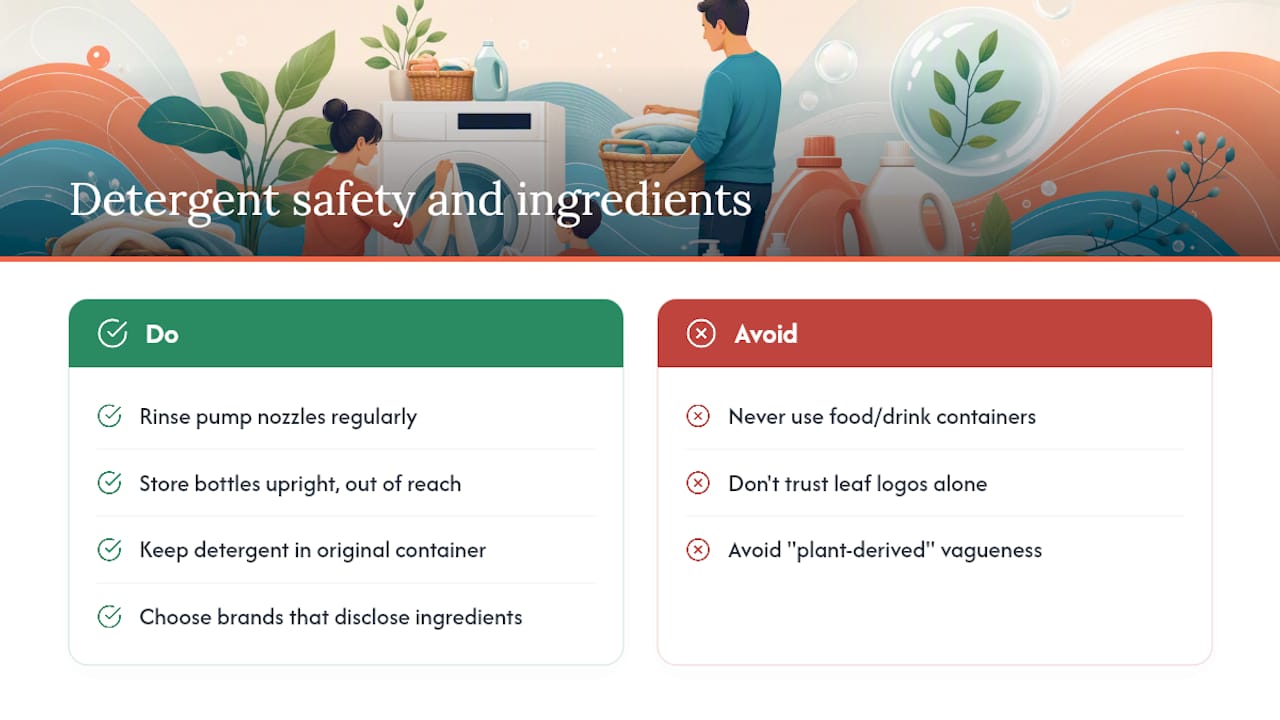
Reusable detergent bottles and refill pouches cut packaging waste, but they need basic hygiene care to stay safe around kids. Rinse pump nozzles and bottle necks with hot water every few refills, since concentrated detergent residue can build up and irritate skin on contact, particularly for babies who touch everything within reach.
Store bottles upright, out of reach of toddlers, and never transfer detergent into a container that previously held food or drink. it’s an easy label mix-up waiting to happen in a busy kitchen or laundry cupboard.
Ingredient transparency is where things get murkier. Consumer reporting on eco-labelled detergents notes that “natural” and “eco” claims on packaging aren’t independently regulated the way food labelling is, so a product can carry green branding without disclosing its full surfactant list. Look for brands that publish a full ingredient breakdown online rather than just a marketing summary, and favour plant-based surfactants over vague “plant-derived” wording, which can mean very little. For families with sensitive-skinned kids, a short, disclosed ingredient list is more useful than any leaf logo on the front of the bottle.
The take: what actually moves the needle
Most eco laundry advice buries the two things that matter most under a pile of minor tips about detergent brands and wool balls. Load size and wash frequency do more heavy lifting than any product swap. A family running full cold loads twice a week, with a labelled alarm to catch the transfer, will out-perform a household obsessing over which “green” detergent to buy while running half-empty loads on warm.
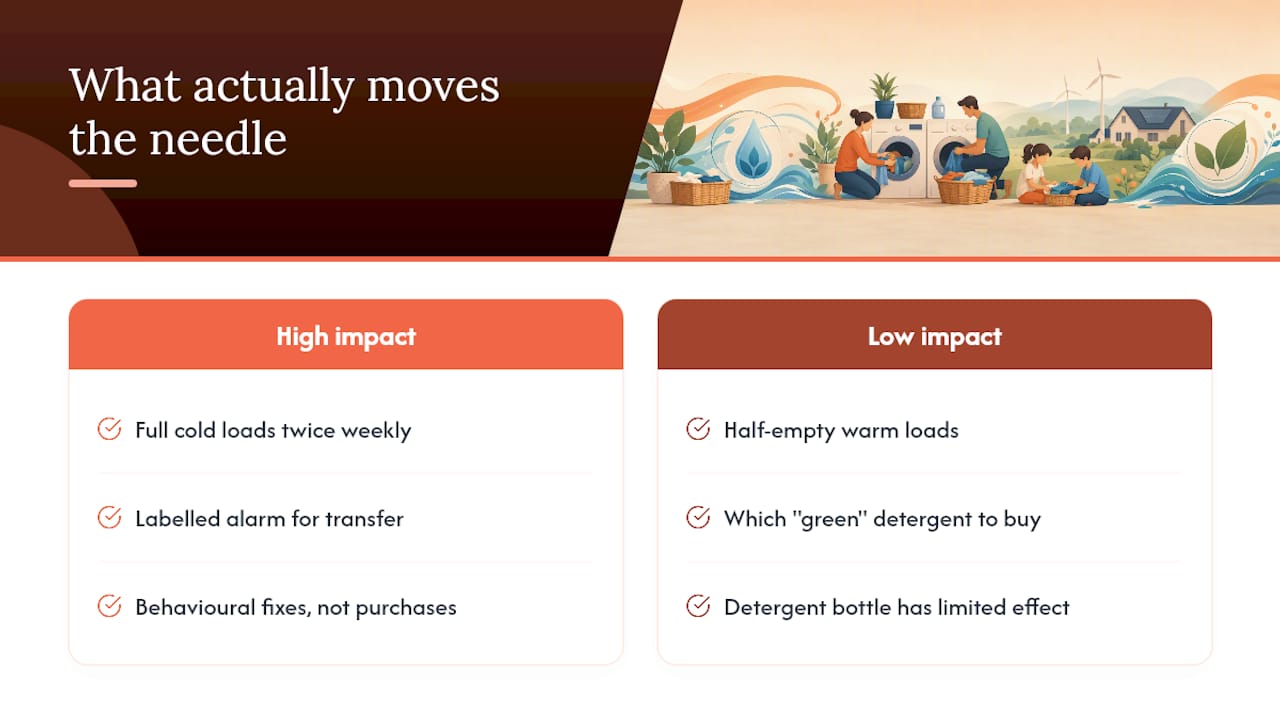
The conventional advice also overstates what detergent choice can achieve. CHOICE’s own testing shows the routine around the detergent (dosing, load size, pre-treating) matters more than the bottle itself. That’s good news for busy parents. it means the fix is behavioural, not another purchase decision to research.
Where I’d push back hardest: don’t chase a perfect folded-linen-cupboard routine. Buy garments that survive the wash cycle count you’ll actually put them through, hang what you can, and treat the rest as good enough. That’s the routine that lasts past week three.
— Daniel
Kit that makes the eco routine easier
Baby Goes Retro’s clothing is chosen with exactly this routine in mind: pieces that hold their colour and shape through repeated cold washes and line-drying, so you’re not replacing wardrobes every season.
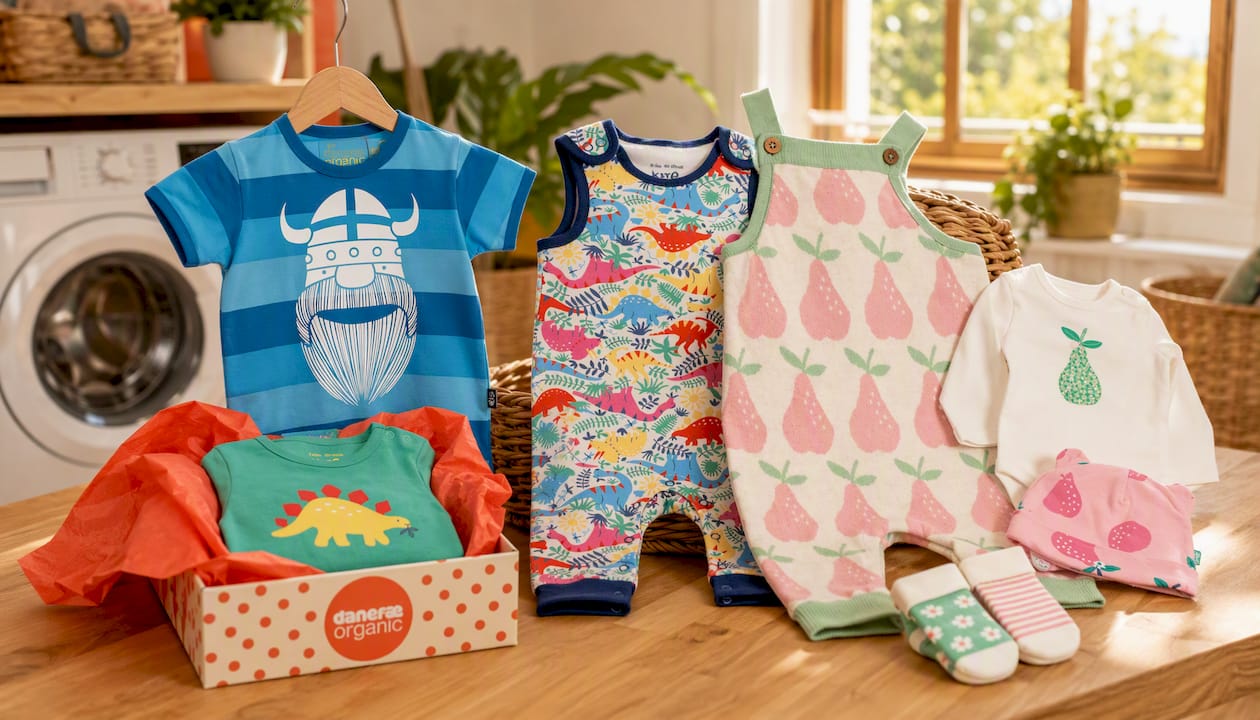
The Danefae Open Ocean Print Tee is organic cotton through and through, built to handle the twice-weekly cold-wash cycle without the print cracking or the colour fading out. If you’re setting up a newborn’s wardrobe from scratch, the Kite Dino Day Baby Gift Bundle gives you a set of natural-fibre basics that go straight into the same load as everything else, no special sorting required. For toddlers in that hard-on-clothes phase, the Kite Pear-fect Dungaree Gift Bundle is cut from sturdy organic cotton that shrugs off grass stains and repeated washing far better than fast-fashion equivalents.
Shipping is a flat $7.95 Australia-wide, free once your order passes $97, and every piece comes with 30-day easy returns if sizing doesn’t work out. Browse the full range of organic baby and kids’ clothing and build a wardrobe that’s built to survive your actual laundry routine, not an idealised one.
Sources
- Greener washing: how to reduce the carbon and climate impact of your laundry — The Guardian
- How to make your laundry routine more eco-friendly — CHOICE
- Do eco-friendly laundry detergents actually work? — ABC News
FAQ
What’s a good daily laundry system for a family of five?
Run one full load most days rather than several half loads, sort into just two or three piles (towels/bedlinen, kids’ clothes, delicates), and use a labelled alarm to move each load from washer to line the moment it finishes.
Why do people with ADHD struggle with laundry specifically?
Laundry involves multiple delayed, easy-to-forget transfer steps (start, move, dry, fold, put away), and each gap is a place the process can stall. a labelled alarm at each transition point removes the memory burden and prevents rewashes.
What is the 30-minute laundry rule?
It’s a habit of setting aside a fixed 30-minute window to fully finish one load, transfer to drying, and deal with the previous day’s dry load, rather than letting laundry tasks spread out unpredictably across the day.
How often should families really be doing laundry?
There’s no fixed number that suits every household, but running full loads two to three times a week, rather than frequent half loads, uses less water and energy while still keeping up with a busy family’s needs.
0 comments