


For organic fibres, look for GOTS. For chemical safety on skin-facing garments like babywear, look for OEKO‑TEX Standard 100. For recycled content, check GRS or RCS. For labour standards, look for Fairtrade or Fair Wear Foundation. For a whole-lifecycle assessment, Cradle to Cradle or the EU Ecolabel cover more ground than a single-issue mark. Each label guarantees something different: fibre origin, chemical residue limits, recycled input percentage, or factory conditions. Before you trust any logo, ask the brand for a transaction certificate or check the certifying body’s own lookup tool.
Key Takeaways
Verifying an ethical fashion certification means matching the label to your actual concern and confirming a Transaction Certificate, not just a logo, backs the specific product.
| Point | Details |
|---|---|
| Match label to concern | Use GOTS for organic fibres, OEKO‑TEX for chemical safety, GRS for recycled content, Fairtrade or Fair Wear for labour. |
| TC beats SC every time | A Scope Certificate shows a facility is authorised; only a Transaction Certificate proves a specific batch was certified. |
| Watch chain-of-custody wording | “Made with organic” (70%) and “organic” (95%) under GOTS mean different things on the same swing tag. |
| Lifecycle labels answer a different question | Cradle to Cradle and EU Ecolabel assess whole-of-life impact, useful when comparing brands rather than single garments. |
| Buy from retailers who check paperwork | Baby Goes Retro verifies supplier certification documents before listing GOTS and OEKO‑TEX relevant products, backed by $7.95 flat shipping (free over $97) and 30‑day returns. |
Where to verify certificates yourself
- OEKO‑TEX label check and 2026 substance updates
- GOTS certificate database and key features
- Textile Exchange standards and chain-of-custody lookups
- EU Ecolabel official verification page
- Transaction Certificate verification guidance
Table of Contents
- What material and fibre certifications actually guarantee
- Do labour certifications audit factories or entire companies?
- Why does OEKO‑TEX matter more for baby clothes?
- When do lifecycle and company-level labels matter more than product marks?
- How do you verify a certificate instead of just trusting the logo?
- What should you ask before buying a “certified” garment?
- Do certifications differ by country or region?
- Are newer certifications as trustworthy as the established ones?
- What’s changing in ethical fashion certification right now?
- Sources
- FAQ
What material and fibre certifications actually guarantee
GOTS (Global Organic Textile Standard) is the benchmark for organic fibre claims, and it works on a threshold system rather than an all-or-nothing rule. A product labelled “organic” under GOTS needs at least 95% certified organic fibre. Products using the “made with organic” wording only need 70%. That gap matters. Two garments can carry similar-sounding language on the swing tag and mean genuinely different things about what is inside them.
GOTS also requires independent audits and chain of custody transaction certificates covering every stage from farm to finished garment, with more than 12,800 certified facilities operating globally. That’s a real supply chain paper trail, not a marketing promise.
Animal-derived materials sit under a different framework. The Responsible Wool Standard (RWS) and Responsible Down Standard (RDS) trace fibre back to farms that meet defined animal welfare criteria and follow the material through processing. Better Cotton and Cotton made in Africa work differently again. They aim to lift farming practices at scale, but both typically operate on a mass balance model, meaning certified cotton is mixed with conventional cotton in the supply chain rather than physically segregated. A shirt can carry a Better Cotton reference without every fibre in that specific garment being traceable to a certified farm.
When you’re reading a product page, watch for these distinctions:
- “GOTS organic” (95% threshold) versus “made with organic materials” (70% threshold)
- “Certified” language (segregated, traceable) versus “sourced from” or “supports” language (often mass balance)
- Whether the claim covers the whole garment or just the main fabric
Do labour certifications audit factories or entire companies?
This is where a lot of shoppers get tripped up, because “ethical” labour claims come in two very different shapes. Some certifications audit a specific factory against a checklist. Others certify an entire company’s membership in a values-based trading model. They’re not interchangeable, and knowing which one you’re looking at changes what the label actually promises.
Fairtrade operates mostly at the product and ingredient level, common in cotton sourcing, with defined pricing floors and community development premiums built into the standard. Fair Wear Foundation works differently again. It’s a membership model where brands commit to a code of labour practice and Fair Wear audits factories in the brand’s supply chain over time, publishing performance reports rather than issuing a simple pass or fail badge. SA8000 is a facility-level management standard, independently audited, that checks specific conditions:
- No forced or child labour
- Freedom of association and the right to collective bargaining
- Health and safety management systems
- Working hours and wage documentation against local law
The World Fair Trade Organization (WFTO) certifies whole organisations rather than single products, which suits smaller cooperative-style brands but doesn’t always scale to larger manufacturers.
The common shortcoming across all of these: an audit is a snapshot, and improvement plans depend on ongoing membership rather than a one-off tick. If a brand claims Fair Wear or SA8000 backing, a reasonable question is simple. Ask them for the most recent published audit or performance report, not just the logo.
Why does OEKO‑TEX matter more for baby clothes?
Chemical safety standards test what’s actually left in the finished fabric, which is a different job to checking how the fibre was grown. For baby and sensitive-skin garments, this is arguably the most practical certification of the lot, because it’s testing the thing touching the skin.
OEKO‑TEX Standard 100 tests finished garments against limits for more than 100 harmful substances under its 2026 updates, covering everything from certain dyes to formaldehyde residues. MADE IN GREEN goes a step further, linking that same product-level testing to audited production sites, so the certificate traces back to where the garment was actually manufactured rather than just the finished item in isolation. bluesign takes a broader industrial-process angle, focusing on reducing hazardous chemical inputs and improving resource use across a factory’s operations rather than testing single products.
Pro Tip: If you’re buying anything worn directly against a baby’s skin, chemical safety testing tells you more than an organic claim alone. A garment can be grown organically and still be treated with dyes worth checking.
When do lifecycle and company-level labels matter more than product marks?
Some purchasing decisions need more than a single-issue certificate, and that’s where lifecycle and whole-business schemes come in. Cradle to Cradle Certified assesses a product across five categories: material health, product circularity, clean air and climate protection, water and soil stewardship, and social fairness. Products earn a level from Basic through to Platinum, so it’s a graded scorecard rather than a binary pass.
The EU Ecolabel takes a similar lifecycle view, third-party verified, assessing environmental impact from raw material through to end of life rather than isolating one input.
Company-level schemes sit in a different category entirely:
- B Corp certifies the whole business against social and environmental performance, not a single product line
- EcoVadis scores supplier sustainability performance for corporate buyers rather than consumers directly
- Neither tells you whether a specific garment is organic or chemically tested, but both signal whether the business behind the label is structured to keep improving
Use a lifecycle or company score when you’re choosing between brands with similar product-level claims. Use a material or chemical certificate when you’re checking a specific garment.
How do you verify a certificate instead of just trusting the logo?
A logo on a swing tag proves almost nothing on its own. The document that actually matters is the certificate behind it, and there are two very different types worth knowing apart. A Scope Certificate (SC) shows that a facility is authorised to work with a given standard. A Transaction Certificate (TC) is the only document that proves a specific shipment or product batch was actually certified. A brand can hold a valid SC while a particular garment never touched certified material.
Here’s the practical verification sequence:
- Ask the brand or retailer for the Transaction Certificate tied to the specific product, not just a scope document
- Check the certificate number against the certifying body’s own database, such as Textile Exchange’s lookup for GOTS and GRS or the OEKO‑TEX label check
- Confirm the certificate hasn’t expired, since scope certificates run on renewal cycles
- Match the volume or batch reference on the TC against the product you’re actually buying
Watch for red flags: a logo displayed with no certificate number, an expired scope, mismatched product categories, or “mass balance” language used to imply segregated, fully traceable material. Industry checks have found that a meaningful share of certificates lapse or get misused in factory documentation, which is exactly why a live database check beats a static PDF every time.
Pro Tip: Ask for the certificate number and check it yourself. Most reputable schemes, including GOTS-certified organic baby clothing suppliers, will hand this over without hesitation. Hesitation itself is a signal.
What should you ask before buying a “certified” garment?
Match your actual concern to the right certification rather than treating every eco-label as interchangeable:
- Worried about chemical residues on skin? Prioritise OEKO‑TEX Standard 100 or MADE IN GREEN
- Want organic fibre content? Look for GOTS and check whether it’s the 95% or 70% threshold
- Care about recycled materials? Check for GRS or RCS and ask about the chain-of-custody model
- Focused on factory conditions? Ask specifically about Fairtrade, Fair Wear, or SA8000, not just “ethically made”
Once you know which certification matters to you, ask three quick questions: does the brand have a Transaction Certificate or a live lookup link, does the certification cover the finished garment or just one component, and has the scope expired. A brand that answers all three without dodging is one worth trusting again.
Do certifications differ by country or region?
Most of the certifications covered so far, GOTS, OEKO‑TEX, Fairtrade, operate as global standards with the same criteria whether the garment was made in Bangladesh, Portugal, or India. But regional variation still shows up in a few practical ways worth knowing.
Government-backed eco-labels tend to be geography-specific. The EU Ecolabel only applies within the European Union’s regulatory framework, and similar national schemes exist in other markets, each with its own scope and audit body. A garment made in the EU might carry that label alongside a global standard like GOTS, and the two aren’t competing, they’re covering different things: one is a government-recognised lifecycle mark, the other an independent organic textile standard.
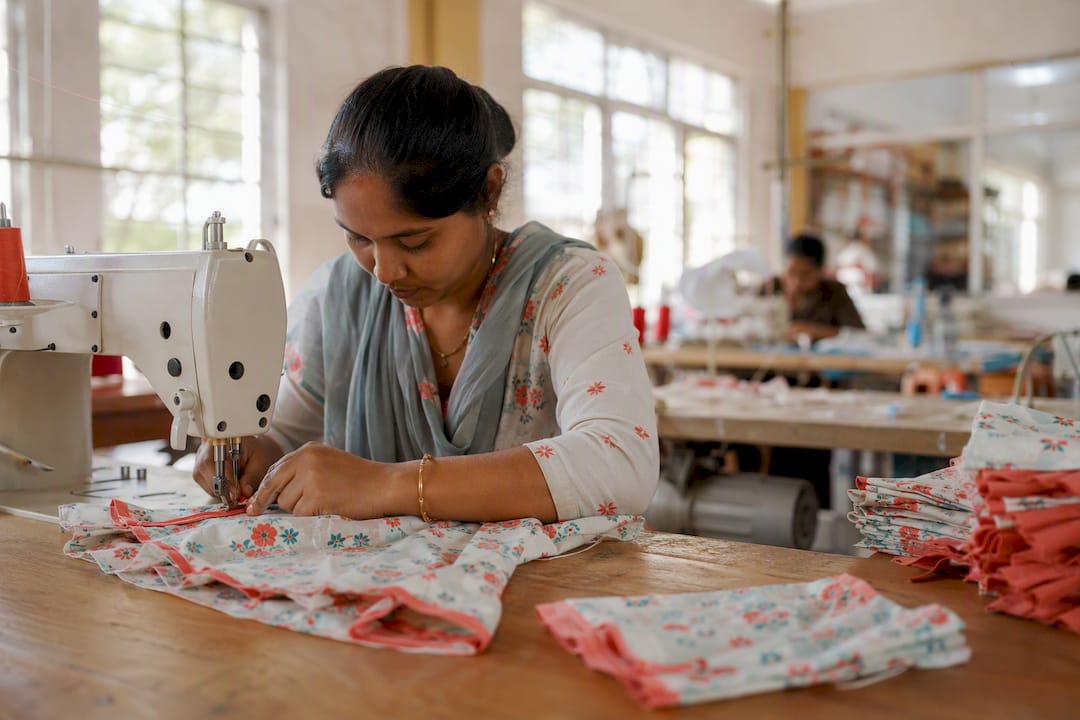
Cotton-growing regions also tend to develop their own sourcing initiatives layered on top of global frameworks. Cotton made in Africa is a clear example, built specifically around African cotton farming conditions rather than being a universal standard. These regional schemes can be genuinely useful for tracking improvement in a specific growing region, but they’re not always as rigorous on chain of custody as a global standard with mandatory transaction certificates.
For shoppers, the practical takeaway is straightforward: a regional or country-specific label adds useful context about where and how a fibre was grown, but it shouldn’t be read as a substitute for a global standard’s verification requirements. If a product only carries a regional mark and nothing else, it’s worth asking the retailer what independent audit sits behind it.
Are newer certifications as trustworthy as the established ones?
New standards keep entering the market, and it’s fair to ask whether a certification launched in the last few years deserves the same trust as GOTS or OEKO‑TEX, which have been operating for decades with large audited networks behind them.
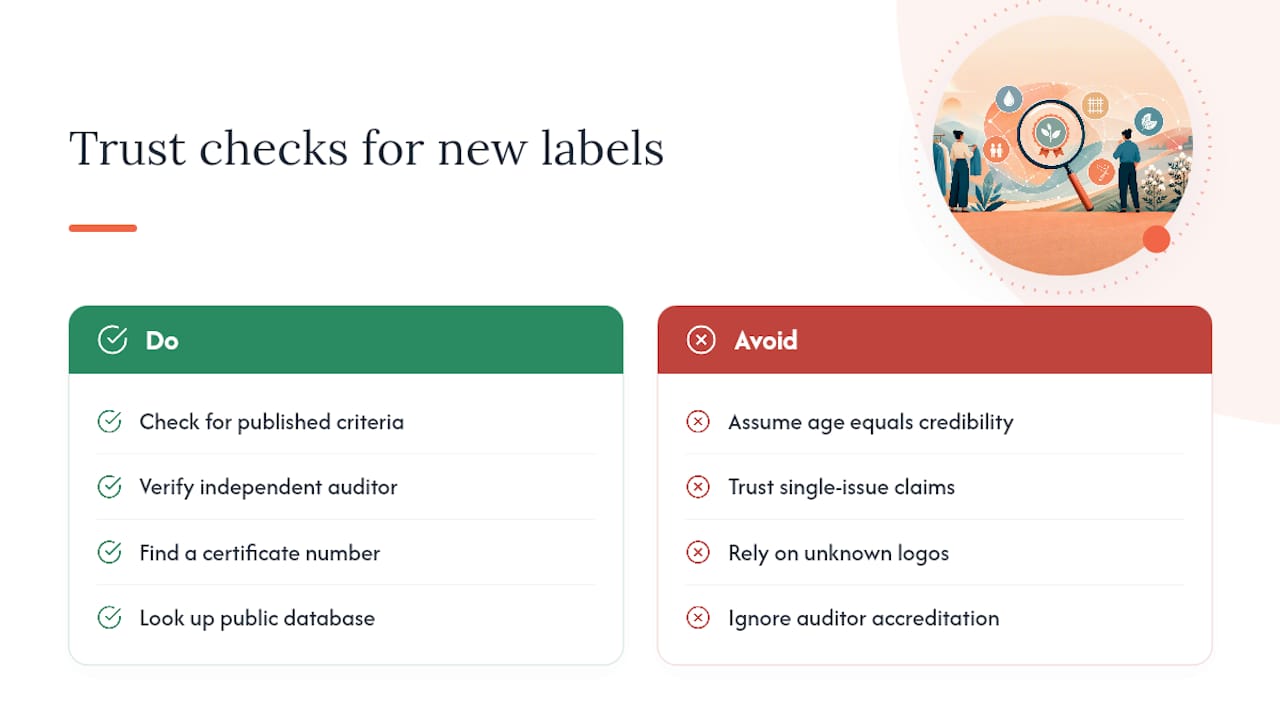
The honest answer is that credibility comes down to governance, not age. A newer standard that publishes its criteria, uses independent third-party auditors, and issues verifiable transaction certificates can be just as reliable as an established one, even without decades of history. What tends to separate a credible emerging standard from a weak one is whether it has real teeth: published thresholds, an accredited body doing the checking, and a public way to verify a specific claim.
The bigger risk with newer marks is scope. Many emerging certifications cover a narrower slice of the supply chain, one process, one material, one region, and get marketed as if they mean something broader. A brand-new label focused solely on dye-house water use is a genuinely good thing, but it doesn’t tell you anything about labour conditions or fibre origin. Established, ISEAL-aligned standards tend to have gone through more scrutiny simply because more auditors, journalists, and competitors have had the chance to test their claims over time.
If you come across an unfamiliar logo, the same verification rule applies regardless of how new it is: ask whether there’s a certificate number, an independent auditor, and a public database to check it against. If those three things exist, age matters less than you’d think.
What’s changing in ethical fashion certification right now?
The certification landscape isn’t static, and one of the clearer shifts underway is consolidation. Textile Exchange is unifying several of its existing material standards into a single Materials Matter Standard, aiming to cut down on the alphabet soup of overlapping fibre marks that has made this space genuinely confusing for years.
Chemical safety testing keeps expanding too. OEKO‑TEX’s 2026 updates widen the list of substances tested in finished garments, reflecting growing regulatory pressure and consumer demand for proof rather than promises on anything touching skin.
At the same time, scrutiny of vague claims is increasing. Fewer than 5% of garments globally carry a credible third-party sustainability certification, and regulators in several markets are starting to crack down on unsubstantiated “eco” or “green” wording that isn’t backed by an actual audit. That pressure is pushing more brands toward the harder, auditable standards rather than soft self-declared claims, simply because the reputational risk of getting caught out has gone up.
For shoppers, the trend line is encouraging: verification tools are getting easier to use, standards owners are simplifying overlapping schemes, and testing regimes are getting stricter rather than looser. The gap that remains is awareness, most people still don’t know a Scope Certificate from a Transaction Certificate, which is exactly the gap this guide is here to close.
A note from Daniel on how we handle certification claims
At Baby Goes Retro, we check supplier documentation, including GOTS and OEKO‑TEX paperwork, before we list a product, and we back every purchase with $7.95 flat-rate shipping (free over $97) and 30-day returns. If you want a certificate number for a specific item, ask us. We’d rather show you the paperwork than just the logo.
— Daniel
Shop garments we’ve checked, not just ones that carry a logo
Since 2007, our family-run team has been going through supplier paperwork line by line, not just taking a logo at face value, before anything goes up on our shelves. Baby Goes Retro stocks GOTS and OEKO‑TEX relevant pieces, including everyday basics like the Kite Pig Pannage Long Sleeve Bodysuit, a soft, skin-friendly staple for the youngest wardrobes.
Beyond bodysuits, our range covers the everyday wardrobe rotations parents actually need: the Kite Koala Time Baby Gift Bundle for newborn gifting, the Kite Pear-fect Dungaree Toddler Bundle and matching Kite Pear-fect Print Swimsuit for warmer months, the Kite Little Goose Toddler Gift Bundle, sun protection with the Kite Coco Palm Print Sun Hat, everyday layers like Slugs & Snails Drop Print Tights, and the Kite Pear-fect Dungaree Gift Bundle for a ready-made outfit. Every order ships for $7.95 flat, or free once you spend over $97, and if anything doesn’t fit or feel right, you’ve got 30 days to return or exchange it. Browse the full range and check the product page for the certification details behind each piece.
Sources
FAQ
What’s the most important certification for baby clothes?
OEKO‑TEX Standard 100 matters most for garments worn against a baby’s skin, since it tests finished products against limits for over 100 harmful substances. Pair it with GOTS if organic fibre content is also a priority.
What’s the difference between a Scope Certificate and a Transaction Certificate?
A Scope Certificate confirms a facility is authorised to handle a standard, while a Transaction Certificate proves a specific shipment or batch was actually certified. Only the TC is proof for the exact product you’re buying.
Does GOTS mean 100% organic fibre?
Not necessarily. GOTS uses two thresholds: “organic” requires 95% certified organic fibre, while “made with organic materials” only requires 70%.
Is Baby Goes Retro’s range certified?
Baby Goes Retro checks supplier documentation, including GOTS and OEKO‑TEX paperwork, before listing products, and shares certificate details with customers on request. Read more in the GOTS certified organic baby clothes guide.
Why do so few garments carry a real certification?
Label proliferation and vague marketing claims are widespread, and fewer than 5% of garments carry a credible third-party sustainability certification. Always ask for a certificate number rather than trusting the wording alone.
0 comments