


Use your child’s height in centimetres to pick the right EU size. European sizing runs on centimetre bands, not age, so a “size 110” fits a child up to about 110 cm tall. If your child sits between two EU numbers, or has a broader build, go with the larger size.
Three rules cover almost every purchase:
- Measure first, shop second — a height in cm beats a guess based on age every time.
- Between sizes? Size up — European cuts run closer to the body, so extra room costs you nothing.
- Get it wrong? No stress — Baby Goes Retro ships Australia wide for a flat $7.95 (free over $97), and every order comes with 30 days to return or exchange.
Key Takeaways
Getting EU vs AU kids sizes right comes down to one habit: measure your child’s height in centimetres and match it to the EU number before you look at age labels at all.
| Point | Details |
|---|---|
| EU sizes are height-based | A size 110 fits a child up to roughly 110 cm tall, not a specific age. |
| AU sizing is age-based | Australian, US, and UK sizes use age brackets, which vary more between kids of the same age. |
| Size up between numbers | EU sizes step in roughly 6 cm increments; choose the larger size if your child falls between two. |
| Fabric and season affect fit | Stretch fabrics forgive tight sizing; non-stretch and winter layers call for sizing up. |
| Baby Goes Retro supports the swap | Australian shipping is $7.95 flat (free over $97), with 30 days to return or exchange if the size is wrong. |
Table of Contents
- EU vs AU kids sizes: how the two systems actually differ
- EU size to Australian size conversion chart
- How to measure your child for EU sizes
- What to check before you buy European kids’ clothes online
- Matching EU sizes to Australian age groups
- Babies’ sizing vs kids’ sizing: what changes
- Fabric stretch and the seasons: two things the chart won’t tell you
- Why European cuts are worth the extra care
- Sizing help and easy exchanges from Baby Goes Retro
- Sources
- FAQ
EU vs AU kids sizes: how the two systems actually differ
European sizes are built around height, not birthdays. A garment marked “104” is cut to suit a child up to roughly 104 cm tall, regardless of whether that child is two or four. Australian sizing (like the US and UK systems) leans on age brackets instead. This shorthand is handy at a glance, but it wobbles badly in practice, because kids grow at wildly different rates.
That difference matters more than it sounds:
- Height-based sizing removes the guesswork. Once you know your child’s height, the EU number does the work for you, rather than forcing you to guess whether your “tall for her age” three-year-old needs a 2T or a 4T.
- Age-based sizing assumes an average child. Half of all kids are, by definition, off that average, which is why an AU “size 3” can vary noticeably between two different brands.
- European cuts tend to run slimmer and more tailored. If your child is solidly built or very active, favour the larger of two close EU sizes for comfort and movement.
None of this means one system is “better” outright. It means European sizing gives you a more reliable input, provided you actually measure your child rather than reaching for their age.
EU size to Australian size conversion chart
EU sizes typically step up in consistent centimetre increments (https://www.size.ly/conversion-charts/childrens-international-size-conversion-chart), which is why the jump from one number to the next can feel bigger than expected. Here’s how the common bands line up against Australian age labels.
| EU Size (cm) | Height Band | Closest AU Size/Age |
|---|---|---|
| 80 | 80 cm | 9–12 months |
| — | 81–— cm | 12–18 months |
| 92 | 88–92 cm | 2 years |
| 98 | 93–98 cm | 2–3 years |
| 104 | 100–104 cm | 3–4 years |
| 110 | 110 cm | 4 years |
| 116 | 116 cm | 6 years |
| — | 122–— cm | 7 years |
| 140 | 134–140 cm | 9 years |
| 152 | 152 cm | 12 years |
Every EU number is a maximum height, not a target. A size 104 is designed for a child up to 104 cm, so if your child measures 101 cm and is due for a growth spurt, sizing up to 110 buys you months of extra wear.
Treat this chart as a starting point, not gospel. Always cross-check the brand’s own size chart, and factor in fabric stretch, because a stretchy cotton bodysuit forgives a lot more than a woven cotton dungaree.
How to measure your child for EU sizes
Getting the measurement right is the whole game. Skip the tape measure and you’re back to guessing, which defeats the purpose of height-based sizing in the first place.
- Stand your child barefoot against a flat wall. Heels, bottom, and shoulder blades should all touch the wall, with their head level (not tilted up or down).
- Mark the top of the head with a book or ruler held flat, then measure straight down to the floor with a tape measure or ruler.
- Measure chest width at the widest point, usually just under the armpits, keeping the tape snug but not tight. For fitted or stretch items like bodysuits and swimwear, chest measurement often matters more than height; for trousers, dungarees, and outerwear, height stays the primary guide.
- If your child falls between two EU sizes, size up — particularly for non-stretch fabrics, or for kids who are constantly climbing, crawling, or otherwise testing the seams.
Online tools that ask for height (and sometimes weight) tend to give a more accurate size suggestion than ones that only ask for age, so use those measurements whenever a product page offers a calculator.
Pro Tip: Measuring a wriggly toddler solo is nearly impossible. Get them to stand against a doorframe while “helping” hold the ruler, or measure while they’re distracted watching something, and you’ll get a far steadier reading. Baby Goes Retro’s sizing guide for kids aged 3 to 9 has more worked examples if you want to see the process in action.
What to check before you buy European kids’ clothes online
A few minutes of checking before checkout saves a return trip to the post office later.
- Find the brand’s own size chart first. European labels vary slightly, so match your child’s height in cm to that specific chart rather than relying on a generic EU number.
- Read the fit notes. “Slim,” “regular,” or “roomy” descriptions tell you whether to trust the chart as-is or size up a notch.
- Check the fabric. A stretch cotton jersey forgives a snug fit; a woven fabric with no give does not.
- Confirm shipping and returns before you commit. Baby Goes Retro offers $7.95 flat rate shipping Australia wide, free once your order passes $97, and a 30 day window to return or exchange if the size isn’t right.
- Buying a gift? Ask for a gift receipt where possible, so the recipient can swap sizes without any hassle. If a gift does arrive in the wrong size, there’s a straightforward way to sort it out.
None of this is complicated, but skipping it is exactly how “surely it’ll fit” turns into a drawer full of unworn clothes.
Matching EU sizes to Australian age groups
Height is the most reliable input, but most parents still think in terms of age when they shop, and that’s fine as a rough sorting tool. Newborn to 12 months generally maps to EU sizes 50 through 80, moving through 56, 62, 68, and 74 as babies grow. Toddlers from one to three years typically sit in the 80 to 98 range, while pre-schoolers from three to five land around 98 to 116.
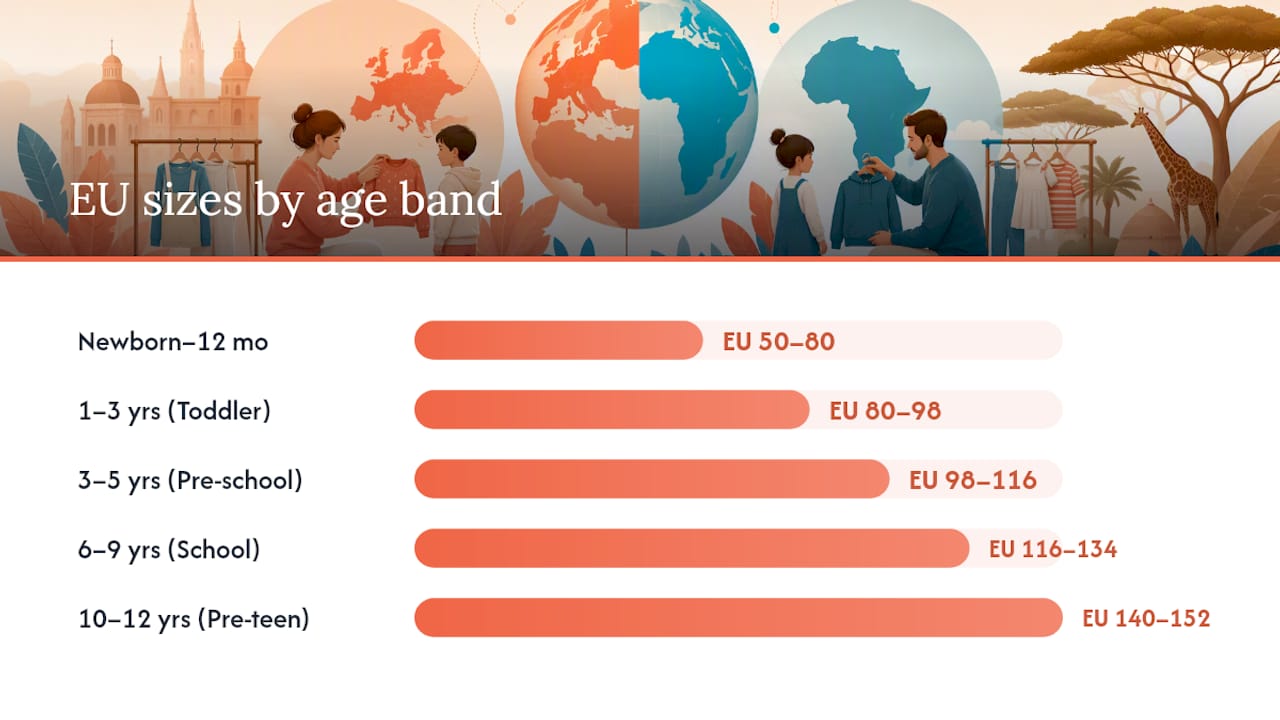
School-age kids from six to nine usually fall between EU 116 and 134, and pre-teens from ten to twelve sit around 140 to 152. These age bands are a useful sanity check when you’re scrolling a product page, but they’re only ever a starting point. A tall four-year-old might already need a 116, while a smaller six-year-old could still be comfortable in a 116.
The practical approach: use the age band to narrow your search, then confirm with the actual height measurement before adding to cart. Brands themselves lean on this same logic. When Baby Goes Retro curates European baby and kids’ brands for the Australian market, each label’s size chart is built around height first, age second, because that’s simply how the European system was designed from the outset.
If your child’s height and age band point to different sizes, trust the height. It’s the number the garment was actually cut to.
Babies’ sizing vs kids’ sizing: what changes
Baby sizing and kids’ sizing aren’t just smaller versions of the same system. In both Europe and Australia, baby sizes below roughly 24 months are usually labelled by age in months (0-3, 3-6, 6-9, 9-12) as well as by height in cm, because newborns and infants grow so fast that a single scale doesn’t hold up for long.
Once a child moves past the toddler stage, most European brands switch to a pure height-in-cm system and drop the month labels almost entirely. Australian sizing follows a similar pattern, shifting from month-based baby sizes to age-based kids’ sizes (2, 3, 4, and so on) around the same point.
The tricky zone is the overlap between the two, roughly 18 months to 3 years, where a baby-style month label and a toddler-style age label can both technically apply. This is exactly where a lot of sizing frustration happens, because a baby who’s tall for their age might already need a toddler cut, even though they’re still technically in nappies. If your child sits right on that line, there’s specific guidance for dressing babies between two close sizes worth reading before you order. When in doubt at this stage, height in cm is still the more dependable number to shop against, even for baby-labelled items.
Fabric stretch and the seasons: two things the chart won’t tell you
A size chart only tells you half the story. Fabric behaviour is the other half, and it’s easy to overlook when you’re comparing numbers on a screen.
Stretch fabrics, like cotton jersey used in bodysuits, leggings, and tights, forgive a size that runs slightly small. A snug 92 in jersey will often stretch comfortably to fit a child who measures 93 or 94 cm. Non-stretch woven fabrics, common in dungarees, structured jackets, and some dresses, offer none of that give. If a chart puts your child right on the boundary between two sizes, treat woven items with more caution and stretch items with a little more flexibility.
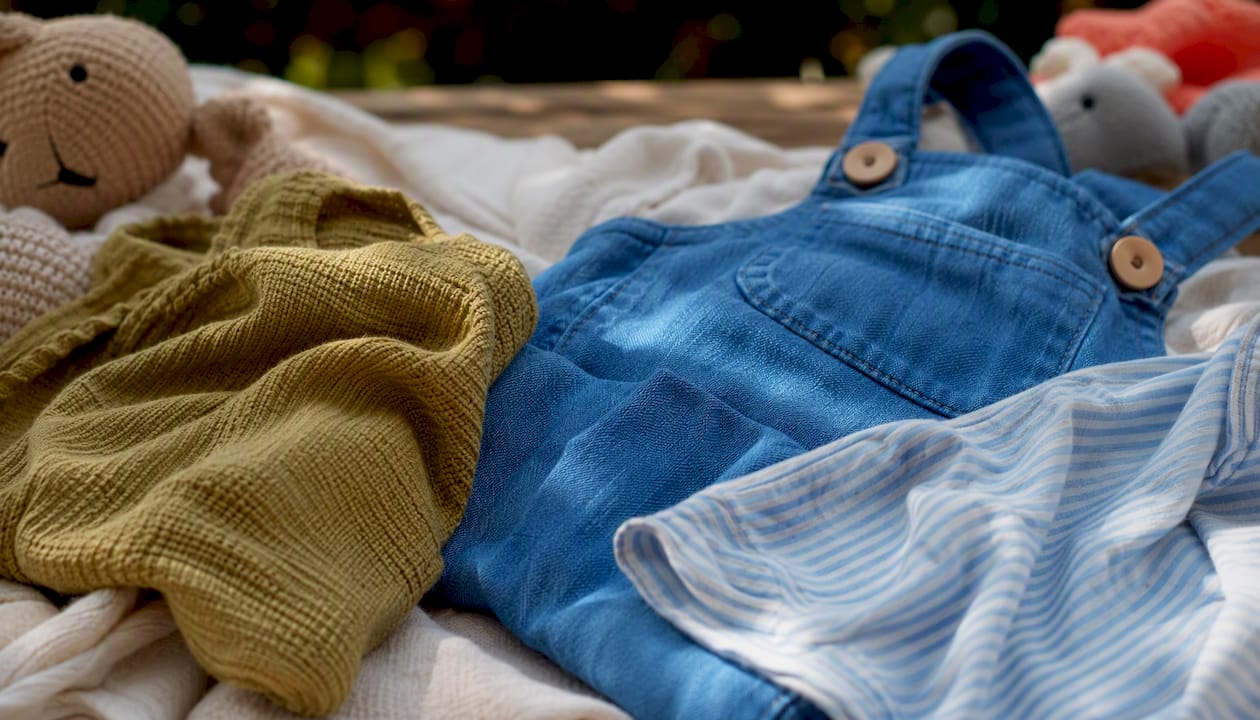
Season matters just as much. A European size chart assumes a single layer of clothing underneath, which works fine in an Australian summer but gets tight fast once you add a jumper or a base layer for a Melbourne winter morning. If you’re buying autumn or winter pieces, especially outerwear, sizing up slightly gives room for layering without your child looking swamped.
Australia’s seasons also run opposite to Europe’s, so watch release timing: a “winter collection” from a European brand often lands in the Australian store ahead of our own winter, which is useful, but double-check the fabric weight matches what you actually need for the season ahead rather than the season the garment was designed for overseas.
Why European cuts are worth the extra care
European brands tend to use organic fabrics and tailored patterns that hold their shape wash after wash, which is exactly why the fit runs slimmer than what Australian parents are used to. It’s a trade worth making for most families, provided you size up for kids who are broader or constantly on the move.
Baby Goes Retro has spent years curating brands that get this balance right for Australian conditions. If you measure first and lean larger when in doubt, the slimmer European fit stops being a guessing game and starts being a genuine upgrade in quality and longevity.
Sizing help and easy exchanges from Baby Goes Retro
Getting the size right shouldn’t take the joy out of shopping for your kids. Baby Goes Retro is a family-run Australian store that’s been curating European organic kids’ clothing since 2007, and every product page carries a size chart built around height in cm, so you’re never left converting numbers on your own.
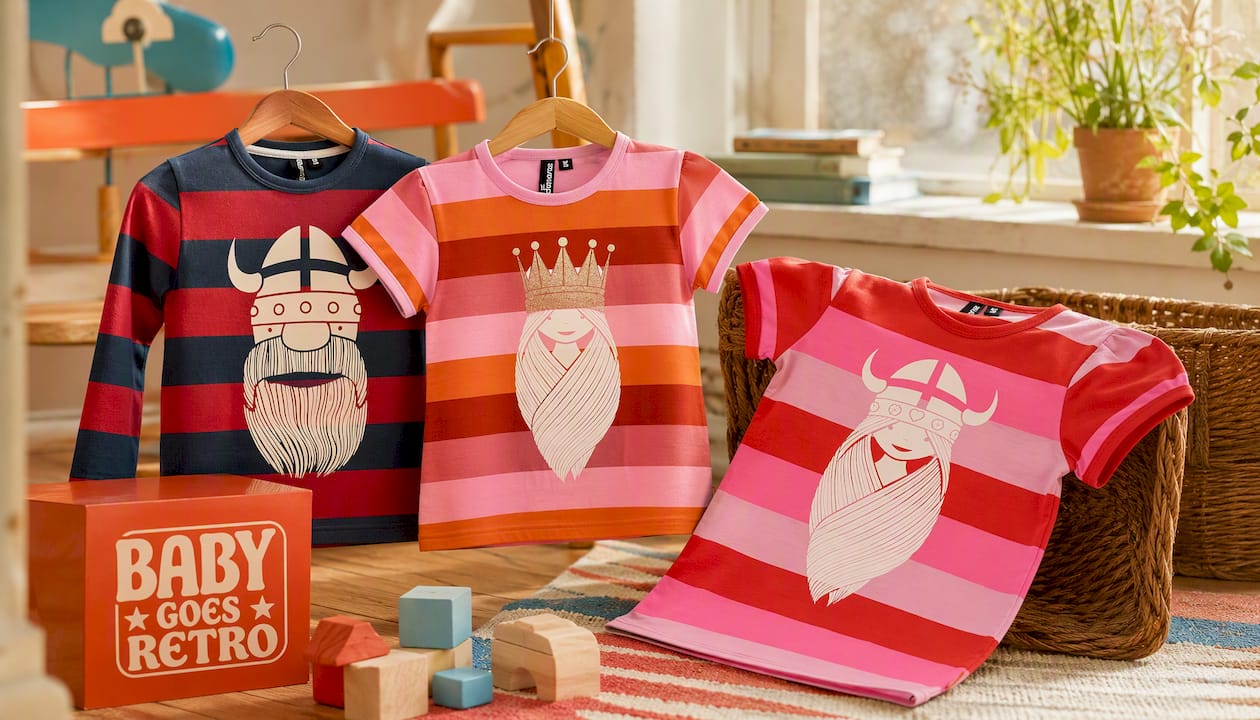
Start with a piece where sizing is straightforward, like the Kite Pig Pannage Long Sleeve Bodysuit, or the Pear-fect Print Swimsuit, both stretch-friendly fits that forgive a size right on the border. For growing toddlers, the Kite Pear-fect Dungaree Toddler Bundle and Kite Little Goose Toddler Gift Bundle suit kids who need a little extra room to move. Layer up with the Danefae Dordogne Long Sleeve Tee or the Slugs & Snails Drop Print Tights, and gift-givers can go straight to the Kite Koala Time Baby Gift Bundle or Kite Koala Time Toddler Gift Bundle knowing exchanges are simple.
Every order ships Australia wide for a flat $7.95, free once you spend $97, with 30 days to return or exchange if the size isn’t quite right. Browse the full range at Baby Goes Retro and measure your child once before you shop, it’ll save you a return trip later.
Sources
- Childrens International Size Conversion Chart
- Kids’ clothing sizes - International sizes
- Kids Clothing Size Converter | US, UK, EU & AU
FAQ
What Does an EU Kids’ Size Number Actually Mean?
It represents the maximum height in centimetres the garment is designed to fit, so a size 98 suits a child up to about 98 cm tall.
Is EU Sizing Bigger or Smaller Than Australian Sizing?
Neither, exactly. EU sizing uses height in cm while Australian sizing uses age brackets, so the two only line up once you know your child’s actual height.
What Should I Do if My Child Is Between Two EU Sizes?
Choose the larger size, especially for non-stretch fabrics or active kids who need room to move.
Does Baby Goes Retro Offer Returns if the Size Is Wrong?
Yes, Baby Goes Retro offers 30 day returns and exchanges Australia wide, alongside $7.95 flat rate shipping that’s free over $97.
Should I Measure Height or Chest for Baby Clothes?
Use height for most garments, but check chest measurement first for fitted items like bodysuits and swimwear where stretch fabric needs a snugger starting point.
0 comments