


The dominant story in European kidswear for 2026 is craft over flash: folk embroidery, richer nature-inspired colours, and materials built to outlast a single season. Trade floors and market data both point the same way, toward durability and transparency as new status symbols. A number of retailers have spent years sourcing this kind of European organic clothing, with GOTS-certified pieces sitting at the centre of the trend.
TL;DR:
- Durability and sustainability are central, with a focus on GOTS-certified organic fabrics, reinforced seams, and repairable design features for longer garment lifespan.
- Crafts like folk embroidery, small florals, and natural earth tones replace loud graphics and neon hues, emphasizing heritage and nature-inspired aesthetics.
- Seasonal color palettes favor warm reds, terracotta, moss, and dusty pastels that better hide stains and suit regional European climates.
- Younger children’s clothing shifts toward polished-casual silhouettes with organic cotton and recycled polyester, tailored for outdoor resilience and washability.
- The trend towards circular fashion and longer-lasting garments will persist past 2026, making durability a key consumer expectation over fast fashion.
Table of Contents
- What are the main European kids fashion trends 2026?
- Colours and prints to try in 2026 (practical palette guide)
- Silhouettes and fabrics: what fits and what performs
- Sustainable and circular choices parents should prioritise
- How to build a 2026 wardrobe on a budget
- Why Baby Goes Retro curates European styles for 2026
- How does cultural diversity across Europe shape kids fashion?
- Are smart textiles and wearable tech showing up in kids fashion?
- How do seasonal trends differ across European regions?
- Where is kids fashion heading after 2026?
- What parents get wrong about chasing kids fashion trends
- If you like these trends: a shop suggestion from Baby Goes Retro
- Sources
- FAQ
What are the main European kids fashion trends 2026?
Three trend clusters explain almost everything you will see on European racks this year, and each one answers a specific parent frustration: boring basics, harsh synthetic colours, and clothes that fall apart after one wash cycle.
The first cluster is craft and nostalgia. Folk-inspired embroidery, hand-drawn florals, and jacquard knits replaced the flat graphic prints that dominated the last few seasons. At Playtime Paris, brands including Minimalisma, MarMar Copenhagen and Gray Label leaned hard into this territory for their AW26 collections, pairing heritage details with modern cuts rather than reproducing vintage patterns wholesale.
The second cluster is the colour shift. Muted, earthy tones are pushing neon athleisure hues off the shelf, a move documented in seasonal trend forecasts for 2026/27. Think warm terracotta jumpers, moss green cords, and clay-toned rompers instead of fluorescent orange or acid yellow.
The third, and arguably most consequential, cluster is sustainability pressure baked into design itself. The European Union’s Ecodesign for Sustainable Products Regulation is pushing brands toward garments that last longer and get repaired rather than binned, according to CBI’s analysis of the European childrenswear market. That regulatory nudge is reshaping fabric choices, seam construction, and even how brands market a garment’s expected lifespan.
Three visual cues you will spot everywhere this year:
- Small-scale floral embroidery on collars, cuffs, and pocket trims rather than oversized front prints
- Corduroy and brushed cotton in warm neutrals replacing bright synthetic fleece
- Convertible or roll-cuff details that let one garment fit a child across two growth stages
None of this is really about fashion for fashion’s sake. It is about parents wanting clothes that photograph beautifully, wash well, and do not end up in landfill after a single winter.
Colours and prints to try in 2026 (practical palette guide)
Warm reds, terracotta, moss and olive green, and muted dusty pastels are the palette to build around this year, replacing the high-contrast primary colours that ruled kidswear for the past decade. These tones share a practical advantage: they hide grass stains, food splatters, and general toddler chaos far better than white or pastel pink ever did.
Print-wise, tiny florals, artisan-style borders, and nature motifs (think leaves, mushrooms, and woodland creatures) are replacing loud licensed characters, a shift retail trend roundups have tracked closely across European kids’ fashion coverage. Pair a terracotta romper with a moss cardigan, or a floral-border dress with plain olive leggings, and you get an outfit that reads as considered rather than mismatched.
- Warm red or brick, best for one statement outerwear piece
- Terracotta and clay, easy to pair with denim or neutral knits
- Moss and olive green, forgiving for outdoor play
- Muted dusty pink or blue, softer alternative to primary pastels
Pro Tip: Buy one printed piece per outfit and keep everything else plain. Two busy prints together fight for attention; one print plus a neutral top or bottom always looks pulled together.
Silhouettes and fabrics: what fits and what performs
The silhouette moving through European collections this year is polished-casual: boxy tops, tapered or straight-leg bottoms, and neater shoulder lines that read tidier than the oversized streetwear shapes of recent seasons. Fashion trade analysis of AW26 collections notes this shift toward richer colours and composed silhouettes, a move away from ultra-relaxed athleisure toward something that still survives a playground.
Fabric choice depends heavily on age and use. For babies and toddlers, GOTS-certified organic cotton and bamboo blends stay next to sensitive skin without irritation. For outerwear on older kids, recycled polyester delivers weatherproofing where performance matters more than softness. Tencel and modal blends bridge the two, offering durability for mixed indoor-outdoor wear.
- Organic cotton or bamboo for anything touching a baby’s skin directly
- Recycled polyester for jackets, puddle suits, and rain gear
- Tencel or modal blends for everyday layers that need to survive daycare
- Taped seams and reinforced knees for genuine outdoor performance
Look for machine-washability and reinforced stitching at stress points (knees, cuffs, underarms) before you look at print or colour. A gorgeous romper that pills after three washes was never actually a good buy.
Sustainable and circular choices parents should prioritise
GOTS certification and repairable construction are the two checks worth applying to almost every purchase this year, because they signal a garment was built to survive more than one child. GOTS covers the organic status of the fibre and restricts harmful chemical processing, while OEKO-TEX testing checks for residual substances in the finished fabric. Beyond certification, look for convertible features: roll-up cuffs, adjustable waistbands, and popper extensions that let a garment grow with a child across sizes.
The regulatory backdrop matters here too. The EU’s push toward Digital Product Passports and a ban on destroying unsold clothing stock is forcing brands to design for a longer lifecycle rather than a single season, a shift CBI’s market analysis links directly to growth in the premium childrenswear segment.
- GOTS certification for organic fibre integrity
- OEKO-TEX testing for chemical safety in the finished fabric
- Reinforced knees, cuffs, and seams for genuine second-child durability
- Grow-with-me features like adjustable waists and roll cuffs
Statistic Callout: Buyer forecasts suggest close to 40% of childrenswear collections could incorporate recycled materials in 2026, a sharp jump in performance-fabric presence across outerwear and everyday basics.
Baby Goes Retro’s organic baby clothing range and its GOTS certification guide both walk through exactly what to check before buying, if you want the detail without the guesswork.
How to build a 2026 wardrobe on a budget
You do not need to replace an entire wardrobe to catch this year’s trends. Spend where it counts and save where it does not.
- Invest in one quality outerwear piece and two or three core basics in the season’s neutral tones. These get the most wear and the most washing.
- Buy printed or seasonal pieces cheaply, since they date faster and matter less to long-term durability.
- Mend small tears and replace poppers rather than retiring a garment. A well-made piece with one repair still has resale value.
- Shop the tail end of a season (late autumn for winter stock, late spring for summer stock) when European-inspired ranges discount ahead of new arrivals.
Pro Tip: Anchor your child’s capsule wardrobe around one rich neutral, like brick red or navy, plus two supporting neutrals. It multiplies outfit combinations and hides the inevitable stains.
Why Baby Goes Retro curates European styles for 2026
Some specialty retailers have been sourcing vibrant, organic European kidswear for many years, focusing on durability and colour alongside seasonal styles.
The Kite Winter Woodland Dungarees capture this year’s craft-and-nature mood in a hardwearing organic cotton build, while the Kite Dino Day Toddler Gift Bundle shows how retro-inspired prints work beautifully packaged as a curated set rather than piecemeal purchases. Both map directly onto the trend clusters covered above.
How does cultural diversity across Europe shape kids fashion?
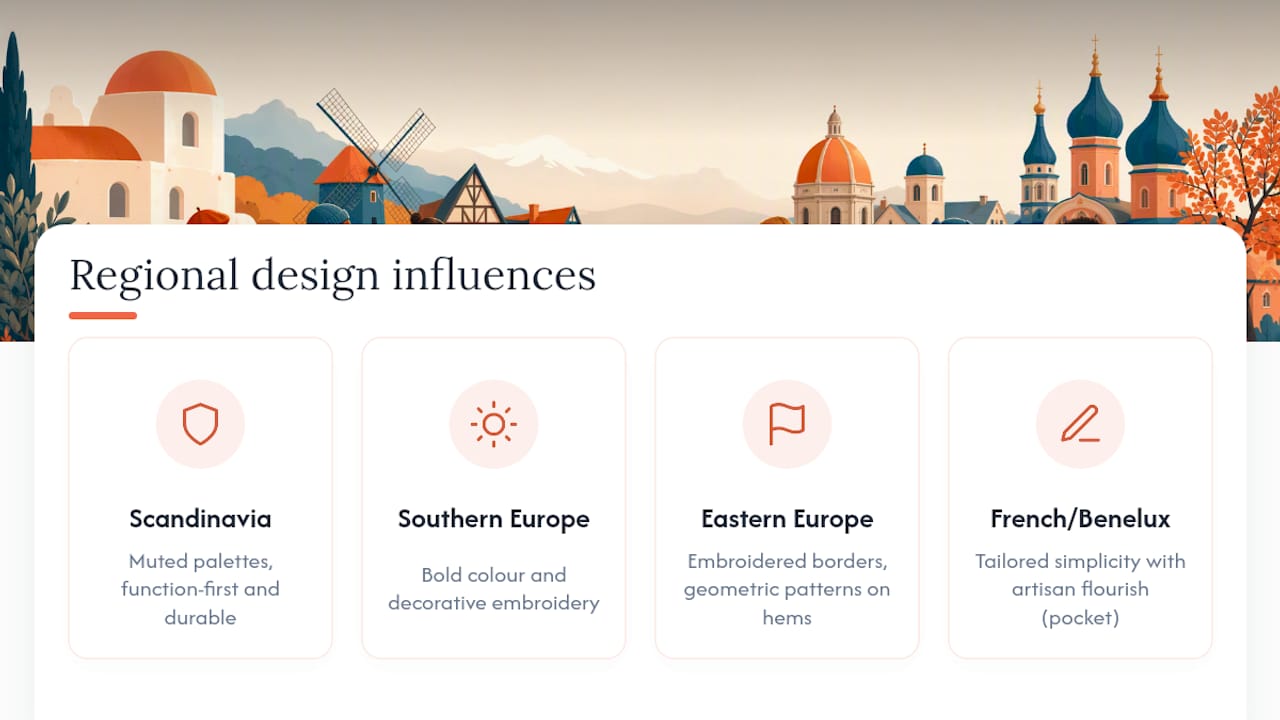
Europe is not one fashion market, it is a patchwork of regional identities that all feed into the trends landing on shelves this year. Scandinavian brands lean into minimalist palettes and function-first design, favouring muted tones and clean lines that suit long dark winters and daycare durability. Southern European labels, particularly from Italy and Portugal, bring bolder colour and more decorative embroidery, reflecting a culture where children’s clothing doubles as everyday celebration wear.
Eastern European folk traditions are having a visible moment too, with embroidered borders and geometric patterns drawn from Slavic and Baltic textile heritage showing up on collars and hemlines across multiple labels. French and Benelux brands sit somewhere in between, favouring tailored simplicity with the occasional artisan flourish, like a single embroidered pocket on an otherwise plain romper.
This diversity is exactly why a single “European style” tag on a garment tells you less than the details themselves. A brand’s actual country of origin, and the textile traditions it draws from, shapes whether you get bold Mediterranean colour blocking or restrained Nordic neutrals. For parents shopping outside Europe, this matters practically: it means you can build a wardrobe with genuine variety just by choosing pieces from different regional design traditions rather than sticking to one brand’s aesthetic.
The result is a kids fashion landscape more textured than a single trend forecast can capture, and that variety is part of the appeal for families wanting their child’s wardrobe to feel considered rather than mass-produced.
Are smart textiles and wearable tech showing up in kids fashion?
Not in any meaningful way for mainstream European kidswear in 2026, and that is arguably the more interesting story. While adult activewear and some niche baby-monitoring products experiment with embedded sensors and temperature-regulating fabrics, the trend clusters dominating trade shows this year are almost entirely analogue: embroidery, organic fibres, and traditional construction techniques.
Where technology does show up, it is in fabric performance rather than digital features. UPF-rated sun protection woven directly into swimwear and outerwear, moisture-wicking blends for active kids, and improved dye processes that hold colour through hundreds of washes without fading are the real “tech” story in 2026 childrenswear. These are chemistry and textile engineering improvements, not wearables.
Smart clothing with actual electronics, think temperature sensors or GPS trackers woven into fabric, remains largely confined to specialty baby products like sleep monitors rather than everyday kidswear. Cost, washability concerns, and parent scepticism about tracking devices on young children have kept this segment small.
The practical takeaway for parents is that you are unlikely to see genuine wearable tech dominating European kids fashion racks this year. The innovation is happening in fibre science and production transparency, not in circuit boards, and that is a trend line worth watching rather than a gap worth worrying about.
How do seasonal trends differ across European regions?
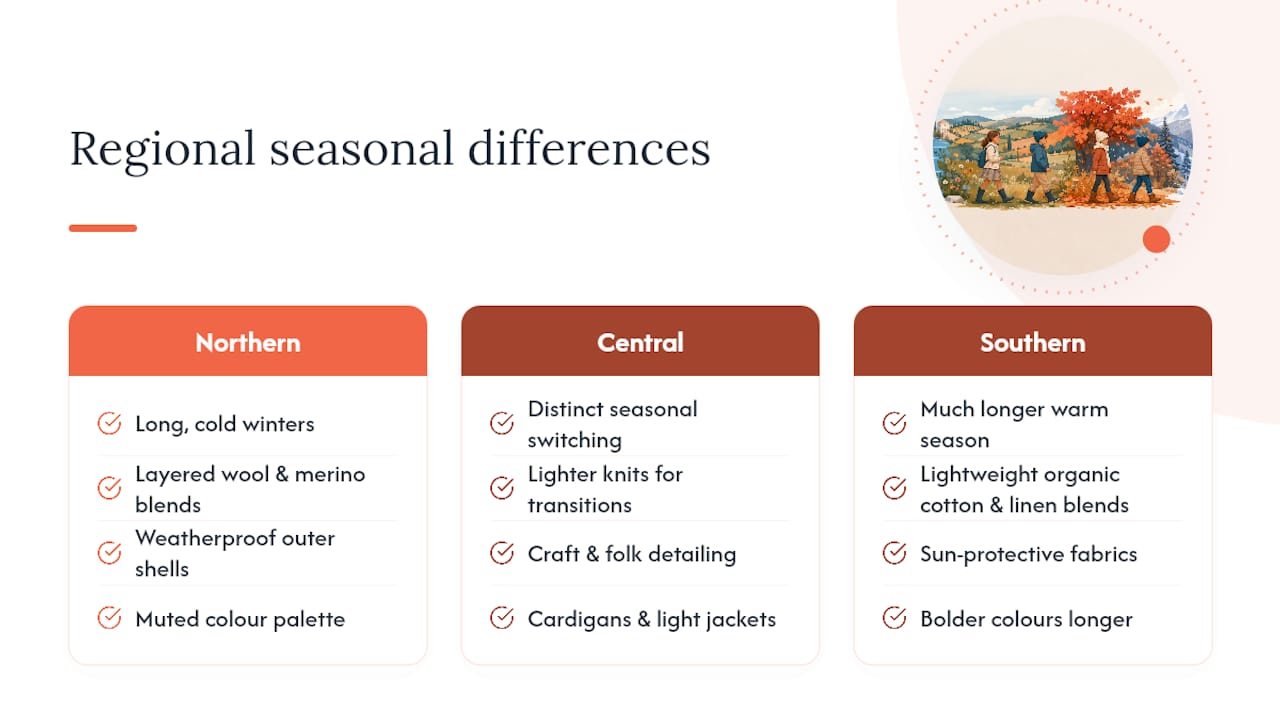
Northern Europe (Scandinavia, the Baltics) plans wardrobes around long, cold winters, favouring layered wool and merino blends, weatherproof outer shells, and muted colour palettes that work under grey skies for months at a time. Rain gear and puddle suits are treated as everyday essentials rather than occasional buys.
Central Europe, including France, Germany and the Benelux countries, sees more distinct seasonal switching, with a genuine spring/autumn transition wardrobe built around lighter knits, and this is where the craft and folk detailing tends to show up most heavily on transitional pieces like cardigans and light jackets.
Southern Europe (Italy, Spain, Portugal, Greece) runs a much longer warm season, so lightweight organic cotton, linen blends, and sun-protective fabrics dominate for a bigger stretch of the calendar. Colour tends to stay bolder for longer here too, since there is less need for heavy layering that mutes visible print and colour choices.
For parents shopping European-inspired kidswear from outside Europe, this regional variation is useful shopping intelligence. A Nordic-designed puddle suit will genuinely outperform on wet, cold days regardless of where you live, while a Mediterranean-inspired lightweight romper suits a hot climate summer far better than a heavier Central European design. Matching the design’s original climate intent to your own conditions, rather than just chasing the aesthetic, gets you more wear out of every purchase.
Where is kids fashion heading after 2026?
The trajectory beyond 2026 points toward deeper circularity rather than a swing back to fast fashion basics. Regulatory pressure from the EU’s Ecodesign for Sustainable Products Regulation is not a one-year blip, it is a multi-year shift that will keep pushing brands toward repairable construction, resale-friendly design, and transparent material sourcing, as CBI’s market analysis makes clear.
Expect the craft and nostalgia thread to keep strengthening too, rather than fading as a one-season trend. Trend forecasters recommend building wardrobes around two or three anchor pieces in richer tones that extend across multiple outfit combinations, a capsule approach that suits both sustainability goals and household budgets, and this logic will likely keep spreading through the industry for several years yet.
Material innovation will probably keep favouring fibre science over digital features, given how slowly wearable tech has penetrated everyday kidswear. Recycled polyester, improved organic cotton processing, and better natural dye retention are realistic near-term advances, while smart textiles remain a niche specialty category rather than a mainstream shift.
If 2026 marks anything specific in the broader evolution, it is the point where durability stopped being a niche selling point and became the baseline expectation. Parents increasingly ask how long a garment will last before they ask what it looks like, and the market is responding accordingly.
What parents get wrong about chasing kids fashion trends
The mistake I see most often is treating trend reports like a shopping list instead of a filter. Parents read that terracotta and moss green are “in” for 2026 and buy pieces in those colours without checking construction quality, then wonder why the garment looks tired after six weeks of daycare and washing machine cycles.
The craft and nostalgia trend gets misread too. It is not really about looking vintage, it is about valuing visible construction quality, embroidery you can feel, seams that hold, fabric with actual weight to it, over flat printed graphics that were cheap to produce and cheap to look at within a season. Chasing the aesthetic without understanding what is driving it (parents wanting things that last, made by people paid fairly to make them) misses the point entirely.
If you take one thing from the trend data, prioritise fabric and construction over colour matching. A GOTS organic cotton romper in last year’s colour will outlast and out-hide-stains a synthetic blend in this year’s perfect terracotta every time. Buy the trend where it aligns with genuine quality, skip it where it is just colour dressed up as innovation.
— Daniel
If you like these trends: a shop suggestion from Baby Goes Retro
Certain curated online stores aim to simplify shopping by filtering pieces for durability and craft details aligned with current trends, removing the need to cross-reference certifications and trade-show notes yourself.
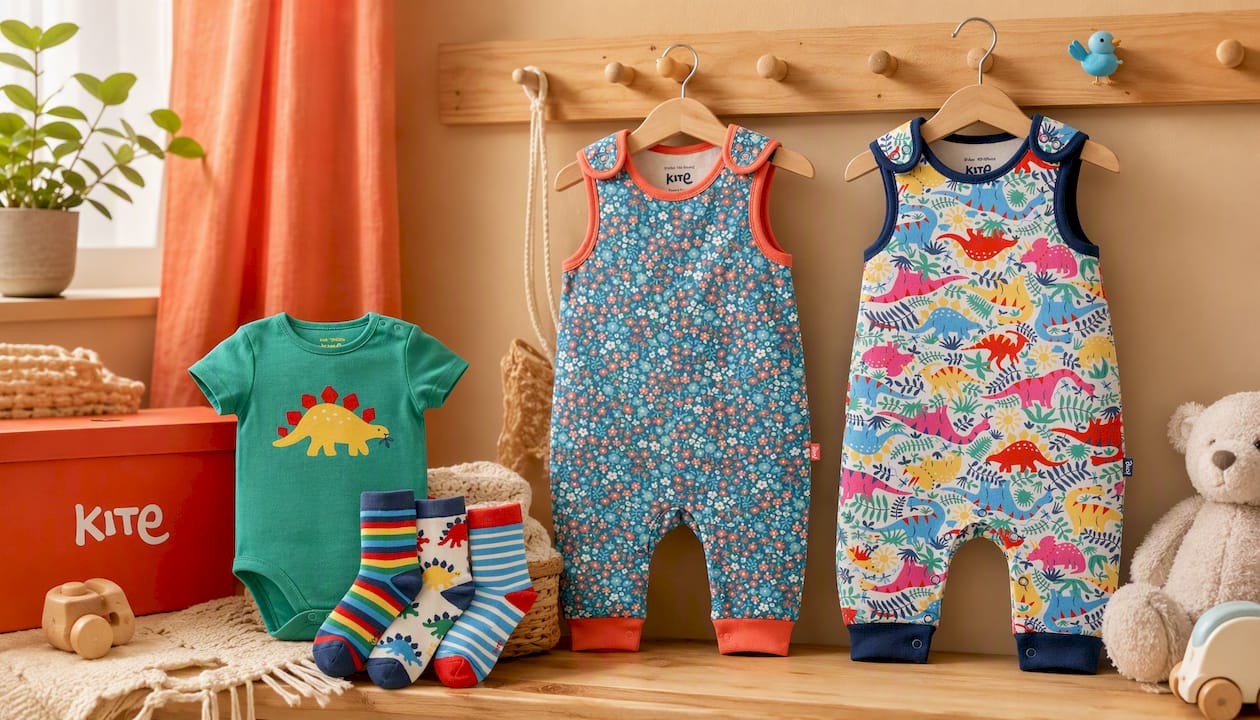
If the folk and nature palette covered above caught your eye, the Kite Winter Woodland Dungarees deliver that exact aesthetic in a hardwearing organic build, while the Kite Dino Day Toddler Gift Bundle packages retro-style prints as a ready-made gift set. Prices are listed in AUD on each product page. Shipping across Australia has a standard fee, with free shipping available over a certain order amount, and every purchase offers a 30-day easy returns and exchanges policy if the fit or feel is not quite right. Have a browse and see which piece fits your child’s wardrobe first.
Sources
- CSR drives desirability in kidswear market: Playtime 2026 insights
- European childrenswear market: opportunities and trends (CBI)
- TREND BIMBO 103 — Kidswear trends SS/2026–27 (Pitti Immagine / trend radar)
- 2026 Children’s Clothing Trends: A Seasonal Guide for Buyers | Zeynep Giyim A.Ş.
FAQ
What is the new trend in 2026 for kids?
Craft-inspired detailing, folk embroidery, and richer earth-toned colours are the defining trend, replacing the neon athleisure look of recent years, according to trade show reporting.
What are the cool kids wearing in 2026?
Boxy tops, tapered bottoms, corduroy in warm neutrals, and small-scale floral or folk embroidery on collars and cuffs, paired with muted rather than bright colours.
What fashion trends are out for 2026?
Loud neon athleisure, oversized front-print graphics, and fast-fashion synthetic basics are fading in favour of durable, GOTS-certified organic fabrics and craft-led design.
What are the trendy colours for kids in 2026?
Warm reds, terracotta, moss and olive green, and muted dusty pastels dominate, chosen partly because they hide everyday stains better than bright primaries.
Where can I buy European-inspired organic kids clothing?
Baby Goes Retro curates GOTS-focused European kidswear, including pieces like the organic winter dungarees featured above, with Australian shipping available on every order.
0 comments