


For timeless newborn photos, choose soft neutrals, simple silhouettes, and tactile natural fabrics so the baby stays the visual focus. Three choices you can grab right now:
- Neutral onesie + swaddle: A cream or oatmeal cotton onesie tucked under a gauze or muslin swaddle. Clean, classic, and works in any setting.
- Wrap only: A soft knit or linen wrap with nothing underneath. Some of the most beautiful newborn portraits are this simple.
- Knit set: A snug ribbed romper or two-piece knit set in warm white or dusty blue. Adds texture without any fuss.
Why these three work every time:
- No bright colours to cast unflattering light onto newborn skin
- No busy patterns to pull the eye away from tiny features
- Natural fibres that stay soft, breathable, and comfortable throughout the session
Key takeaways
Soft neutrals, tactile natural fabrics, and well-fitted pieces keep the baby as the focus and make newborn photos look timeless for years to come.
| Point | Details |
|---|---|
| Colour palette | Choose cream, oatmeal, soft grey, dusty blue, or muted sage; avoid bright or neon tones that cast colour onto skin. |
| Texture over pattern | Use knits, linen, waffle, and ribbed weaves for visual interest; synthetic fabrics create shiny highlights under studio lighting. |
| Fit and sizing | Pick pieces that skim the baby’s body; oversized garments hide tiny features and affect how hands and faces read in frame. |
| Pack spares and prep skin | Bring two spare outfits, loosen nappies 20–30 minutes before the session, and keep the room at around 25–28°C. |
| Baby Goes Retro | Stocks organic European baby and kids’ clothing with $7.95 flat-rate shipping and 30-day returns across Australia. |
Table of Contents
- Which colours and textures photograph best for newborn shots?
- What should your newborn actually wear for photos?
- What should mum, dad, and siblings wear?
- How to coordinate outfits without everyone matching
- Ready-to-use outfit combos by setting
- Photographer-style checklist: what to pack and when
- The outfit is the last thing that matters
- Outfit-ready pieces from Baby Goes Retro
- Sources
- FAQ
Which colours and textures photograph best for newborn shots?
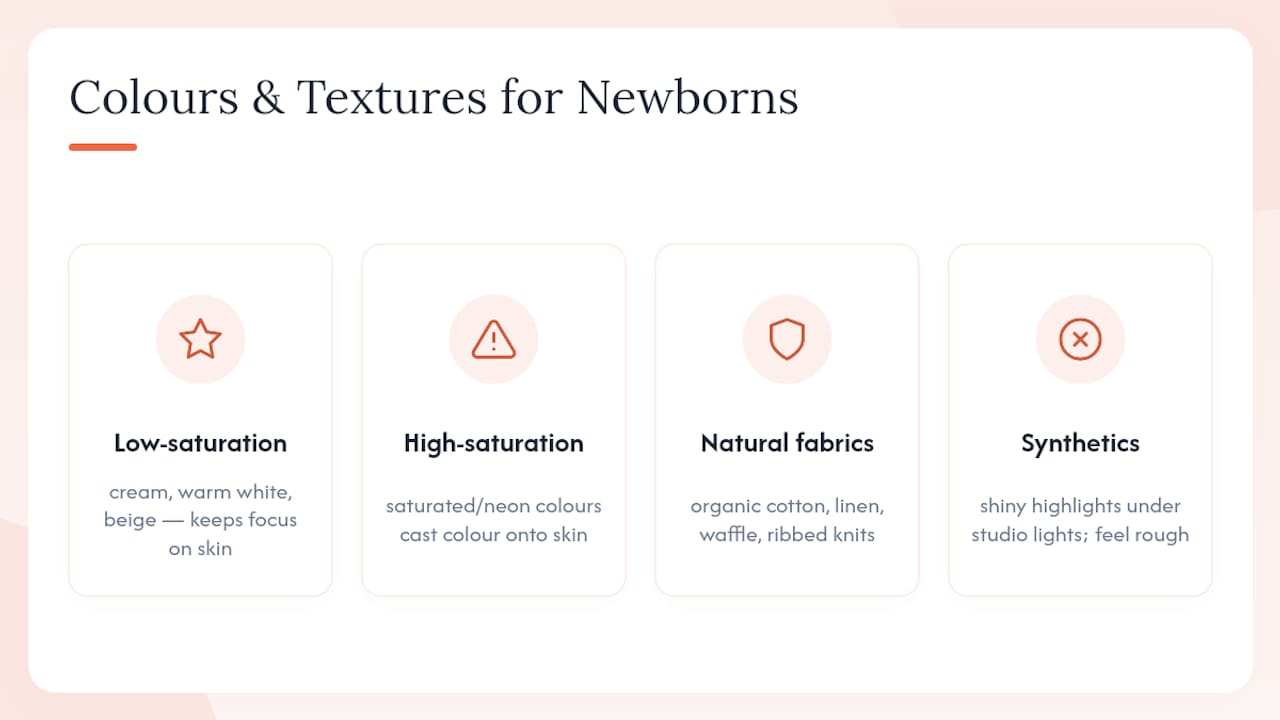
Photographers consistently recommend a palette of cream, warm white, oatmeal, beige, soft grey, dusty blue, muted sage, and dusty pink for newborn sessions. These low-saturation tones keep the focus on the baby’s skin, expressions, and tiny details rather than the clothing.
Saturated and neon colours create a real problem in-camera. They bounce colour onto the baby’s skin, making editing harder and the final image look busy. A red onesie, for instance, can cast a pink-red glow across a newborn’s face in close-up shots.
Texture is the answer when you want visual interest without pattern. Natural fabrics like organic cotton, linen, waffle weave, and ribbed knits photograph with a beautiful softness and depth. Synthetic materials, by contrast, can produce shiny highlights under studio lighting and feel rough against delicate skin. A chunky knit bonnet or a linen swaddle adds dimension to a flat frame without competing with the baby’s face.
Pro Tip: Build your palette from the baby outwards. Start with the lightest, softest tone on the baby, then choose parent and sibling colours one or two shades deeper. Photographers call this the three-layer cake rule, and it keeps the baby as the luminous centre of every shot.
What should your newborn actually wear for photos?
Practical pieces that photograph well and keep baby comfortable:
- Soft onesie or bodysuit: Organic cotton in a neutral tone. Fits snugly, stays put, and shows the baby’s shape.
- Snug romper: A ribbed or waffle-knit romper in newborn sizing. Avoid anything with stiff collars or structured seams.
- Lightweight wrap or swaddle: Gauze, muslin, or a soft knit. Doubles as a prop and a comfort item.
- Knit bonnet or minimal headband: Adds a sweet detail without overwhelming a tiny face. Keep it loose and soft.
- Nappy-only shots: Some of the most striking portraits are baby in just a swaddle or nappy. Don’t skip these.
Sizing matters more than most parents expect. Choose pieces that skim the baby’s body rather than oversized garments that swallow tiny features. Sleeve length and neckline placement directly affect how hands and faces appear in the frame. A “0000” label is a starting point, not a guarantee — hold the piece up and check whether it will sit close to the body.
For fabrics, organic cotton, linen, and soft knits are the clear picks. They breathe well in Australian summers and layer easily in cooler months. Avoid shiny polyester, stiff denim, and anything with scratchy embellishments.
One quick safety note: remove any loose detachable items before the shoot, including buttons that aren’t securely sewn, clip-on bows, and decorative pins. Nothing that could come free should be near a newborn during posing.
What should mum, dad, and siblings wear?
For mum, comfort comes first and it shows in photos. Flowy wrap dresses, soft knit tops, and nursing-friendly pieces with button fronts or wrap access photograph beautifully and make feeding between shots easy. Avoid tight structured blazers or anything that restricts movement when you’re holding the baby. Neutral tones, blush, warm white, and sage all coordinate naturally with newborn palettes.
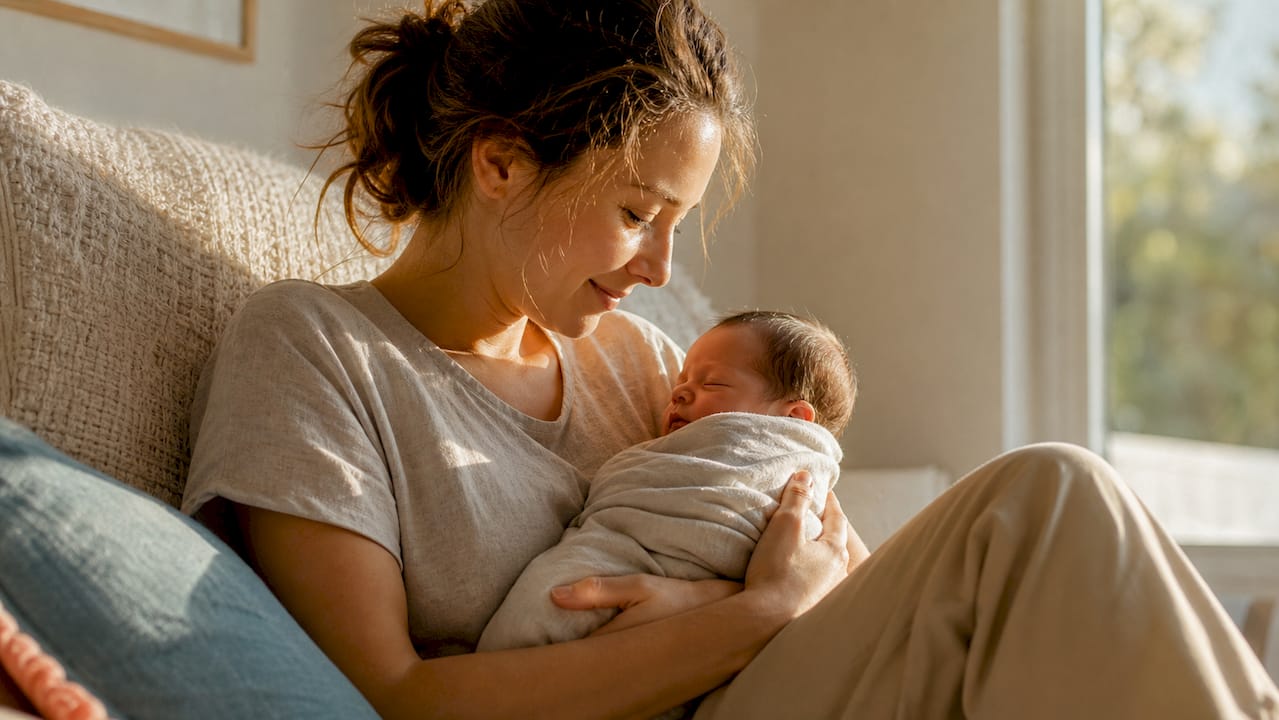
For dad, a simple linen shirt or a plain neutral tee in oatmeal, grey, or navy does the job. Large logos, bold stripes, and graphic prints pull focus. The goal is to look put-together without competing with the baby.
For siblings, comfortable solids in breathable fabrics are the practical choice. A toddler in a soft sage top or a dusty pink dress coordinates without looking staged. Pack a spare outfit — toddlers and spills are a reliable combination. Minimal graphics and no scratchy fabrics keep everyone relaxed.
Pro Tip: If mum is nursing, plan the session around a feed. A well-fed, drowsy baby is far easier to pose and style than a hungry one. Bring a light cardigan or wrap for mum to swap into between shots if she wants a slightly different look without a full outfit change.
How to coordinate outfits without everyone matching
Matching outfits look dated in photos within a few years. Coordinating, on the other hand, creates a cohesive image that feels timeless. Here’s a simple method that works for families of two to four people:
- Start with the baby. Choose the baby’s outfit first in the lightest, softest tone of your palette.
- Add parents one shade deeper. If baby is in cream, mum wears warm white or oatmeal, dad wears a soft tan or grey linen.
- Bring siblings in with a subtle accent. A sibling in dusty blue or muted sage adds a gentle colour note without clashing.
- Check the whole group together. Lay the outfits flat side by side before the shoot. If one item jumps out, swap it for something quieter.
Building the palette from the baby outwards keeps the newborn as the natural focal point in every frame.
Palette ideas for common Australian settings:
- Studio: Cream, warm white, oatmeal, soft grey. Clean and classic.
- In-home lifestyle: Warm neutrals, linen textures, dusty pink or sage accents.
- Beach at golden hour: Sandy beige, soft white, pale blue. Light linen layers for everyone.
- Native bush or park: Warm oatmeal, muted sage, terracotta accents. Earthy tones blend beautifully with Australian greenery.
For summer sessions, reach for lightweight linen and cotton. Winter calls for soft knit layers and warm neutrals that photograph richly without looking heavy.
Ready-to-use outfit combos by setting
Studio:
- Baby in a cream ribbed romper + gauze swaddle. Mum in a warm white wrap dress. Dad in an oatmeal linen shirt.
- Baby wrapped in a dusty blue knit. Mum in a blush soft-knit top. Dad in grey.
At-home lifestyle:
- Baby in a white onesie + muslin wrap. Mum in a sage linen dress. Dad in a neutral tee and tan chinos.
- Nappy-only baby shot with a chunky cream knit swaddle. Parents in relaxed linen.
Beach:
- Baby in a pale blue linen romper. Mum in a flowy white dress. Dad in a white linen shirt and beige shorts.
- Wrap-only baby in a sandy gauze swaddle. Family in soft white and beige.
Bush or park:
- Baby in a warm oatmeal knit set. Mum in a terracotta wrap dress. Sibling in muted sage. Dad in a tan linen shirt.
Quick swap options when things go sideways:
- Baby spits up: have a second identical or tonal onesie ready. A muslin swaddle can cover a lot.
- Toddler tantrum: let them hold a favourite toy for a few shots, then swap back to the planned look once they’ve settled.
- Overheating: remove the outer layer and shoot in just the base piece. A simple onesie often photographs better anyway.
For accessories, keep it minimal. A soft knit bonnet, a plain headband, or a pair of tiny socks add a sweet detail. Check that everything fits loosely and remove anything that could detach during posing.
Photographer-style checklist: what to pack and when
Pack list:
- Two spare outfits for baby (same or tonal)
- One spare outfit for each sibling
- Two swaddles or wraps (one for posing, one backup)
- Nappies, wipes, and a small towel
- Feeding supplies (bottle, breast pump if needed, snacks for mum)
- A soft muslin for draping and propping
- Light layers for parents to remove during close-contact shots
Timing: Schedule the session during the baby’s natural sleepy window, usually 1–2 hours after a morning feed. Allow at least 90 minutes so there’s no rush between outfit changes and feeds.
Comfort and skin prep: Keep the room at around 25–28°C for posed newborn shots. Loosen the baby’s nappy and clothing some time before the session to allow any red marks from elastic to fade. Smoother skin in close-up shots means less editing and a more natural result.
Pro Tip: Ask your photographer whether they offer a client wardrobe. Many Australian studios keep a selection of neutral wraps, dresses, and baby pieces on hand so you don’t need to buy anything new. Baby Goes Retro also stocks organic newborn and infant pieces that suit photo shoots and everyday wear.
The outfit is the last thing that matters
Here’s an opinion worth sitting with: the parents who stress most about newborn photo outfits tend to produce images that look the most staged. The session documents a season of life, not a magazine spread. Photographers consistently note that comfortable, authentic clothing allows natural movement and genuine connection, and those are the images families return to for decades.
The three-layer cake rule, the texture-over-pattern principle, the fit guidance — all of it exists to get the clothing out of the way so the baby and the family can be the story. A perfectly coordinated palette means nothing if mum is tugging at an uncomfortable neckline or dad is sweating through a stiff shirt.
Pick soft, simple pieces you already own or can buy without overthinking it. Trust your photographer for styling help on the day. And if the toddler refuses to wear the planned outfit ten minutes before you leave the house, a plain white tee will photograph just as well.
Outfit-ready pieces from Baby Goes Retro
Getting the outfits sorted before the shoot is one less thing to think about on the day. Baby Goes Retro has been delivering premium European organic baby and kids’ clothing to Australian families since 2007, and two bundles work particularly well for photo sessions.
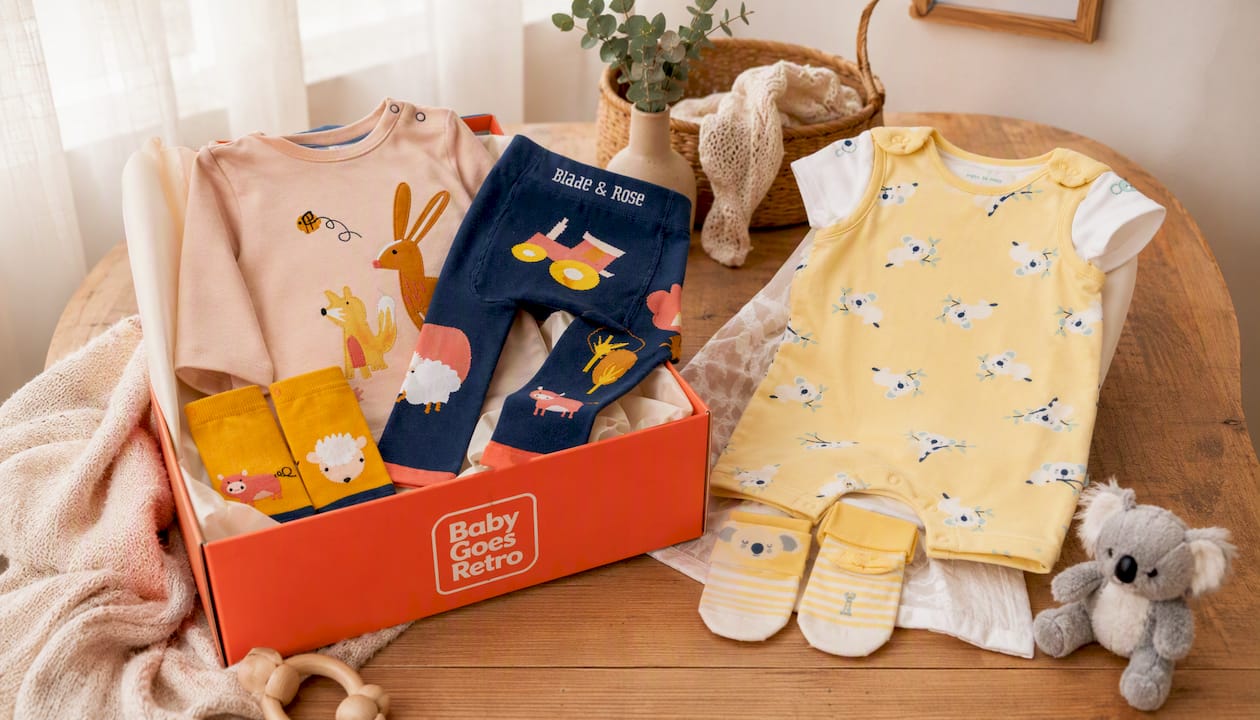
The Blade & Rose Meadow Farmyard Gift Bundle features soft, photogenic prints with warm neutral accents that sit beautifully against natural backdrops. The fabrics are gentle on newborn skin and the tones coordinate easily with a cream or oatmeal family palette.
For sibling shots, the Kite Koala Time Toddler Gift Bundle brings soft fabrics and a playful design that photographs well alongside newborn neutrals without competing for attention.
Flat-rate shipping is $7.95 across Australia, free on orders over $97, with 30-day easy returns. Browse the full range and find pieces that work for the shoot and long after it at Baby Goes Retro.
Sources
- What Should My Baby Wear for Newborn Photos? | Simple Guide
- How to Choose Newborn Photo Outfits for Adorable Shots
- How to prepare newborn photoshoot
- How to Choose Newborn Photo Outfits for Adorable Shots
FAQ
What are the best colours for newborn photo outfits?
Soft neutrals photograph best: cream, oatmeal, warm white, dusty blue, muted sage, and soft grey. Avoid bright or neon colours, which can cast unflattering tones onto newborn skin.
How do I coordinate family outfits without everyone matching?
Start with the baby’s outfit in the lightest tone, then choose parent colours one or two shades deeper. Siblings can add a subtle accent colour. Coordinating tones look more natural and timeless than identical outfits.
What size should I choose for newborn photo clothing?
Choose pieces that skim the baby’s body rather than oversized garments. Sizing labels vary between brands, so check that sleeves and necklines sit at the right length to keep hands and faces visible in the frame.
How do I prepare my baby’s skin for close-up shots?
Loosen the baby’s nappy and clothing 20–30 minutes before the session so red marks from elastic have time to fade. Keep the room at around 25–28°C so the baby stays comfortable during posing.
Do I need to buy new outfits for a newborn photo shoot?
Not necessarily. Many photographers offer a client wardrobe of neutral wraps and baby pieces. If you prefer to buy, soft organic pieces in neutral tones from Baby Goes Retro work well for the shoot and everyday wear after.
0 comments