


The best potty training clothes for Australian toddlers are elastic-waist bottoms that a child can pull up and down independently, paired with reusable training pants at home and disposable pull-ups for outings. That combination gives your child the wetness feedback they need to learn, while keeping accidents manageable when you’re away from home.
Here’s what to look for at a glance:
- Elastic waistbands with no buttons, zips, or poppers — the child must be able to do it themselves
- Breathable, lightweight fabric (cotton or organic cotton) so accidents are less uncomfortable
- Reusable training pants for home use — they feel wet, which teaches cause and effect
- Disposable pull-ups for long outings, car trips, and night sleeps until night dryness arrives
- Simple single-layer outfits — dresses, shorts, or track pants rather than dungarees or overalls
Babygoesretro stocks easy-on/off organic toddler bottoms from European ethical brands, with flat-rate shipping of $7.95 (free over $97) and 30-day returns.
Key takeaways
Elastic-waist bottoms and reusable training pants at home, combined with disposables for outings, give Australian toddlers the fastest, least stressful path through toilet training.
| Point | Details |
|---|---|
| Clothing rule | Choose elastic-waist bottoms with no buttons or zips — your child must manage them alone. |
| Training pant mix | Use reusable pants at home for wetness feedback; switch to disposable pull-ups for outings and night. |
| Readiness signs | Look for staying dry two-plus hours, following simple instructions, and pulling pants up and down. |
| Pack for outings | Bring two full outfit changes, a wet bag, wipes, and a spare pull-up every time you leave home. |
| Babygoesretro | Stocks organic elastic-waist toddler bottoms with $7.95 flat shipping and 30-day returns across Australia. |
Table of Contents
- What are potty training clothes and what types will you find in Australia?
- Do training pants actually work?
- How do you use training pants in a daily routine?
- When should you start? Australian readiness signs and age guidance
- What should your toddler wear during potty training?
- How many training pants do you need, and what goes in the outing bag?
- How do you wash and care for reusable training pants?
- When should you pause training or get professional advice?
- Australian expert tips, including advice for sensory-sensitive children
- What the potty training process taught me about getting the basics right
- Babygoesretro’s easy-on/off picks for the training phase
- Sources
- FAQ
What are potty training clothes and what types will you find in Australia?
The term “potty training clothes” covers any garment designed to make toilet training easier — from the bottoms your child wears every day to the absorbent undergarments that sit between nappies and regular underwear. They are not a single product category; they are a practical wardrobe strategy.
Training pants sit between nappies and regular underwear: less absorbent than a nappy, so a child can feel when they’re wet, but still able to contain a small accident. Pull-ups are more absorbent and tend to feel more like a nappy, which is why many parents reserve them for travel and sleep.
The main types
- Reusable cloth training pants — washable, absorbent enough to catch a small accident, and designed to feel noticeably wet. Best for home use and the fastest for teaching wetness awareness.
- Disposable pull-ups — convenient for outings and nights, but the high absorbency can reduce the sensation of wetness that drives learning.
- Absorbent underwear with a liner — a middle ground: looks like regular underwear but has a thin absorbent layer. Good for children transitioning toward full underwear.
- Waterproof covers — worn over cloth training pants to protect clothing and furniture during the early weeks.
| Type | Wetness sensation | Best use case | Environmental footprint | Washable |
|---|---|---|---|---|
| Reusable cloth training pants | High — child feels wet quickly | Home training, day use | Low (reusable) | Yes |
| Disposable pull-ups | Low — absorbs wetness away | Outings, long trips, night | High (single use) | No |
| Absorbent underwear/liner | Moderate | Transition to underwear | Low (reusable) | Yes |
Pro Tip: Size training pants by your child’s weight and build, not their age. A snug but comfortable fit prevents leaks and lets them move freely — a pair that gaps at the leg will leak before the learning happens.
Do training pants actually work?
Yes, with one important caveat: they work best as a transitional tool, not a permanent substitute for underwear. The key is choosing the right type for the right moment.
Reusable training pants give children immediate tactile feedback. When a child feels wet, they connect the sensation to what just happened — and that connection is what drives learning. Highly absorbent disposable pull-ups, by contrast, can mask that feedback entirely, which is why clinical reviews support consistent, stepwise parent-led approaches rather than relying on any single product to do the work.
Benefits of training pants:
- Easier for toddlers to pull up and down independently than a nappy
- Reusable versions provide wetness feedback that reinforces learning
- Contain small accidents without a full outfit change every time
- Build confidence — they look and feel more like “big kid” underwear
Common drawbacks:
- Pull-ups used all day can slow progress because they feel too much like a nappy
- Reusable pants mean more laundry, especially in the early weeks
- Some children become reliant on the security of training pants and resist switching to underwear
Staying calm during accidents matters as much as the pants themselves. Australian child health guidance consistently recommends positive reinforcement over any reaction to accidents — praise the attempt, not just the success.
Pro Tip: Use reusable training pants at home where accidents are easy to manage, and switch to a disposable pull-up for shopping trips or long drives. You get the learning benefits at home without the stress of a soaked car seat on the highway.
How do you use training pants in a daily routine?
The most effective approach is simple: reusable pants at home to teach wetness awareness, disposables for travel, and clothing your child can manage entirely on their own. Peer-reviewed behavioural research supports routine-based training over ad hoc attempts, and the practical difference is noticeable within days.
A routine parents can copy
- Morning: Put your child in reusable training pants and easy-pull-down bottoms as soon as they wake up. Sit them on the potty or toilet before breakfast.
- Every 1–2 hours: Prompt a toilet sit at regular intervals — after meals, before naps, and before leaving the house. Keep the potty in the same spot so it becomes predictable.
- Pulling practice: Spend two minutes each morning practising pulling pants up and down before they’re needed urgently. This builds the motor skill separately from the pressure of needing to go.
- Accidents: Change promptly and calmly. Name what happened (“You felt wet — next time we’ll try the potty”) without fuss or disappointment.
- Outings: Switch to a disposable pull-up. Pack two full outfit changes regardless.
- Bedtime: Use a nappy or pull-up until night dryness is consistent — that’s a separate developmental milestone.
The 10–10–10 check: A practical variant used by some Australian families involves checking for dryness every 10 minutes during heavy play, praising a dry nappy or pants, and prompting a toilet sit. The exact interval matters less than the consistency — what you’re building is a habit loop, not a timer.
Pro Tip: Teach the full sequence as separate skills: pull pants down, sit, wipe, flush, wash hands. Occupational therapists recommend breaking toilet training into these small steps so no single moment feels overwhelming for the child.
Outing checklist:
- Disposable pull-up on the child
- Two spare pairs of underwear or training pants
- Two full outfit changes in a zip-lock bag
- Small pack of wipes
- Waterproof wet bag for soiled items
- Portable potty seat if your child is not yet comfortable on a full toilet
When should you start? Australian readiness signs and age guidance
Most Australian children show readiness signs somewhere between 2 and 3 years of age, though the range is genuinely wide. Starting before a child is ready tends to lengthen the process, not shorten it.
Continence Health Australia identifies these key readiness signs:
- Staying dry for at least two hours during the day
- Showing awareness of a wet or soiled nappy (pulling at it, telling you)
- Being able to follow simple two-step instructions
- Pulling pants up and down independently, or nearly so
- Showing interest in the toilet or in wearing “big kid” underwear
Readiness signal: A child who can stay dry for two hours and pull their own pants up and down is physiologically and physically ready to begin — those two signs together are more reliable than age alone.
Healthdirect Australia also notes that warmer months make training easier because there are fewer clothing layers to manage. If your child is showing readiness signs in late spring or summer, that’s a practical window worth using.
What should your toddler wear during potty training?
The single most useful clothing rule: if your child cannot pull it down in under five seconds, it will cause accidents. Speed matters more than style at this stage.
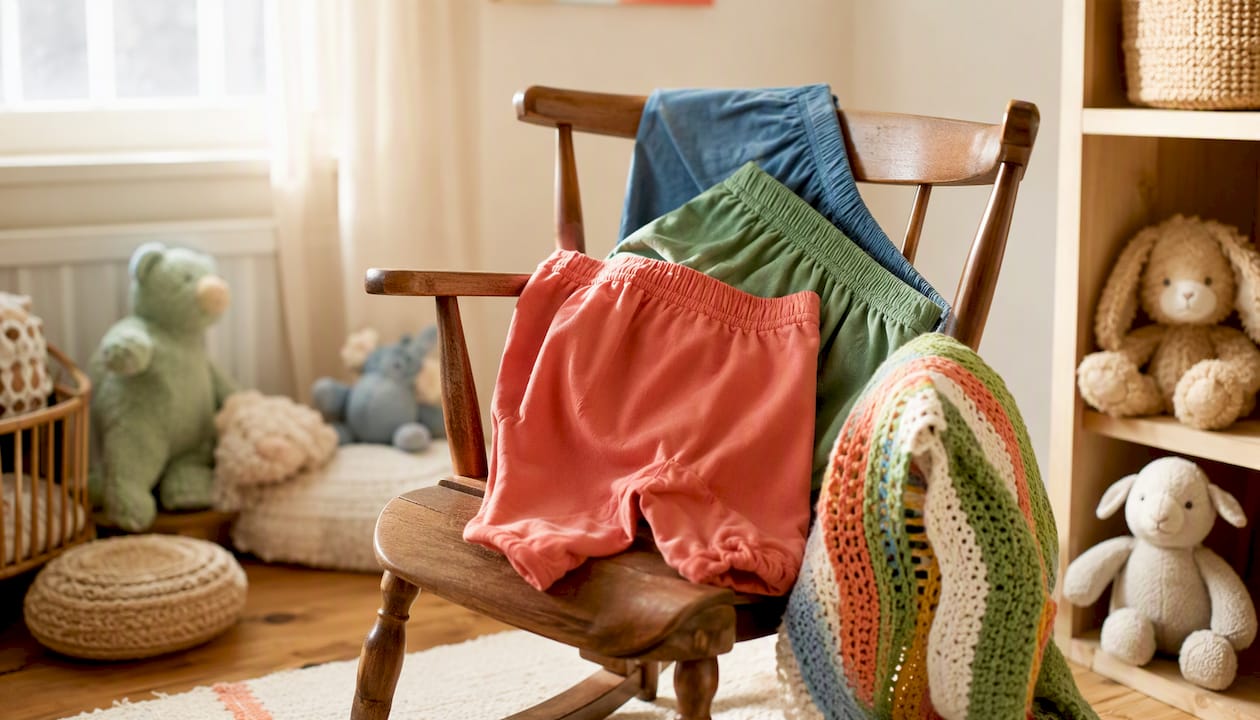
Australian guidance specifically recommends elastic-waist trousers and notes that simpler clothing reduces the barrier to independent toileting. Occupational therapists reinforce this — clothing that supports each sub-skill (adjusting clothing, sitting, hygiene) makes the whole sequence more manageable.
Do:
- Elastic-waist track pants, shorts, or leggings
- Loose-fitting dresses or skirts (for girls who prefer them — easy to lift)
- Lightweight cotton or organic cotton — comfortable when wet, dries fast
- Easy-on/off daycare-style outfits your child can manage independently
Don’t:
- Dungarees or overalls with shoulder clips
- Jeans with stiff waistbands or button flies
- Onesies or bodysuits that snap at the crotch
- Belts, tight waistbands, or anything requiring two hands and fine motor skill
Seasonal tip: Australian summers are genuinely the easiest time to train. At home, many families let toddlers wear just a training pant and a t-shirt — fewer layers, faster response time. For outdoor play, lightweight sun-safe clothing that still pulls down quickly keeps sun protection and toilet access both covered.
Babygoesretro’s range of organic elastic-waist bottoms — including Toby Tiger stripe joggers in soft organic cotton — are exactly the kind of garment that makes toilet trips faster and less stressful. Flat-rate shipping is $7.95, free over $97, with 30-day returns if the fit isn’t right.
Pro Tip: Buy one size up in training-phase bottoms. A slightly roomier waistband is much easier for small hands to grip and pull, and the extra length won’t matter once your child is managing independently.
How many training pants do you need, and what goes in the outing bag?
A practical starting quantity for daytime training is multiple pairs of training pants or underwear. That covers a full week of daytime use with daily washing, and gives you enough buffer on high-accident days without running out mid-afternoon.
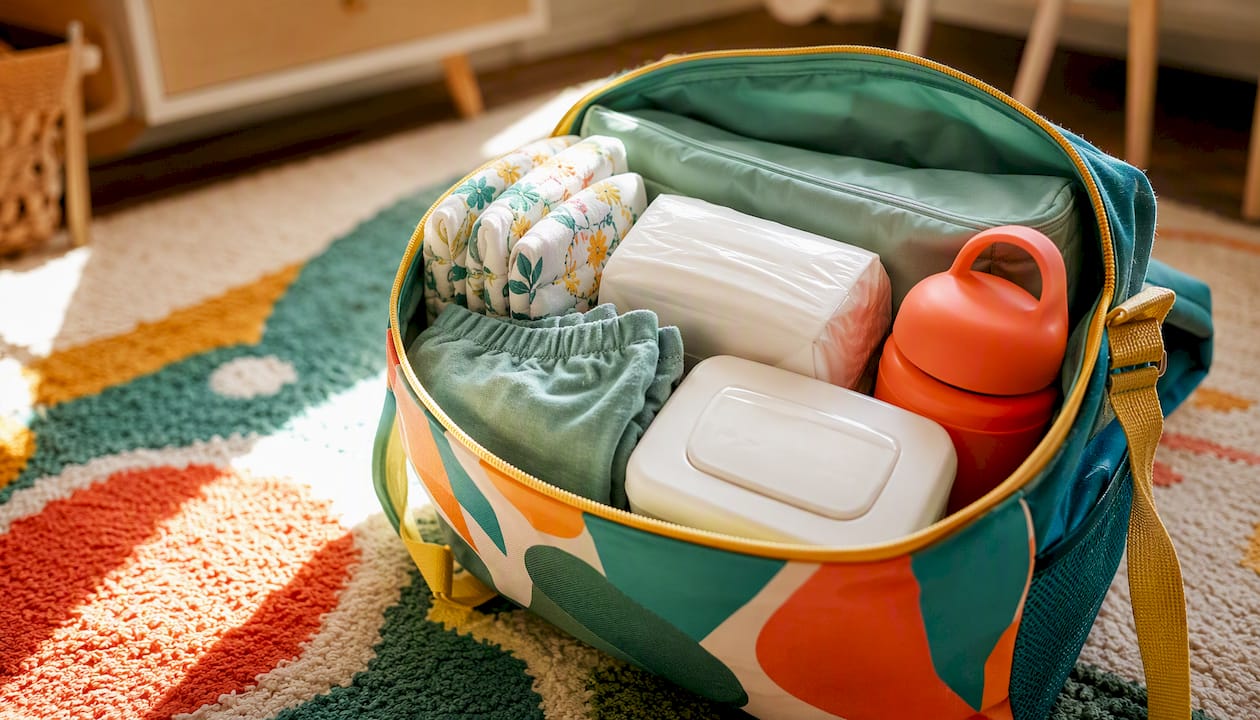
CAHS Child Health guidance recommends using underpants or training pants during the day and nappies for longer trips or night sleeps until night dryness is established. Night dryness typically follows daytime dryness by months, sometimes longer — they are separate milestones.
Quantity guide:
- At home: 8–10 pairs of reusable training pants for daytime use
- Outings: 3–4 disposable pull-ups per week for trips and errands
- Night: Continue with nappies until your child wakes dry consistently
What to pack when you leave the house
- One disposable pull-up on the child
- Two spare pairs of training pants or underwear in a zip-lock bag
- Two complete outfit changes (top and bottom)
- A waterproof wet bag for soiled clothing
- Travel pack of wipes
- Portable toilet seat insert if your child is not yet comfortable on a standard toilet
For long road trips or flights, a nappy is the sensible call — there’s no learning benefit to a soaked car seat, and the stress of an unavoidable accident can set confidence back.
How do you wash and care for reusable training pants?
Reusable training pants stay hygienic and absorbent longest when you handle them promptly and wash them correctly. Leaving soiled pants to sit for hours reduces absorbency over time and makes stains harder to shift.
- Pre-rinse immediately — rinse under cold water to remove solids and reduce staining before the wash.
- Machine wash on a warm cycle (40°C is typically sufficient; follow the manufacturer’s label). Hot washes above 60°C can degrade elastic and reduce the life of the garment.
- Use an enzyme-based detergent — it breaks down organic matter more effectively than standard detergents.
- Skip the fabric softener. Softener coats absorbent fibres and reduces how well the pants wick moisture — exactly the opposite of what you need.
- Dry on the line or on a low-heat tumble setting. High heat degrades elastic waistbands quickly.
Pro Tip: Keep a small lidded bucket near the bathroom for wet pants during the day. A dry-pail system (no soaking water) is safer around toddlers and just as effective as pre-soaking. Add a mattress protector to your child’s bed from day one — it takes seconds to fit and saves the mattress from night accidents during the transition.
When should you pause training or get professional advice?
Pausing is not failing. If your child is consistently distressed at toilet time, or if regression appears after weeks of progress, a short break of two to four weeks often resets the process more effectively than pushing through.
Pause and seek advice if you notice:
- Intense fear or distress at the sight of the toilet or potty
- Consistent withholding of bowel movements, or signs of constipation
- Daytime wetting returning after a clear period of dryness (regression beyond a few days)
- No readiness signs by age 3.5, or significant developmental concerns
- Physical pain or discomfort during toileting
For any of these, contact your GP, a continence nurse, or a paediatric occupational therapist. Raising Children Network recommends pausing for at least a month if a child shows consistent distress — returning to nappies briefly is not a step backward, it’s a reset.
Local child health services and community health nurses are also a practical first contact — they’re free, accessible, and experienced with exactly these situations.
Australian expert tips, including advice for sensory-sensitive children
The consistent message from Australian health and OT guidance is: small steps, predictable routine, and positive reinforcement. That framework works for most children, and with some adjustments, it works for autistic or sensory-sensitive children too.
The expert-recommended sequence:
- Sensing the urge to go
- Walking to the toilet or potty
- Pulling clothing down independently
- Sitting and toileting
- Wiping (front to back for girls)
- Flushing
- Washing and drying hands
Occupational therapists at Sydney Children’s Hospitals Network recommend teaching each of these as a separate, practised skill — not expecting a child to master the whole sequence at once.
Expert note: Consistent, stepwise approaches supported by caregivers lead to better toilet-training outcomes than ad hoc attempts, according to clinical literature.
For autistic or sensory-sensitive children, Raising Children Network’s autism-specific guidance recommends:
- Visual supports (picture cards showing each step of the sequence)
- A footstool so the child feels grounded on the toilet — feet dangling can feel destabilising
- Skipping the potty stage entirely and going straight to a training seat on the toilet, if the potty causes distress
- Reusable training pants that allow wetness sensation, supporting sensory feedback
- Gradual, low-pressure exposure to the toilet environment before any training begins
Clothing choices matter here too. Seam-free or flat-seam training pants reduce sensory irritation, and elastic waistbands without tight binding are far more tolerable for children with tactile sensitivity.
What the potty training process taught me about getting the basics right
There’s a tendency in parenting content to make toilet training sound like a project requiring specialist equipment, a colour-coded chart, and a specific brand of pull-up. The reality is simpler and less expensive.
The clothing question is genuinely underrated. Most parents focus on the potty or the reward system, but the bottoms your child is wearing at 7am on a Tuesday are what actually determine whether they make it to the toilet in time. A pair of stiff jeans with a button fly will cause more accidents than any training philosophy.
What the Australian guidance gets right — from Parenting SA’s routine framework to the OT-informed step breakdowns — is that consistency and simplicity beat any single product. Reusable training pants at home, simple elastic-waist bottoms, and a calm response to accidents will get most children there. The clothes are the infrastructure. The routine is the teacher.
At Babygoesretro, the focus has always been on garments that work in real life — organic, durable, and designed for children who move. That’s not a training philosophy; it’s just good clothing.
Babygoesretro’s easy-on/off picks for the training phase
Parents who’ve sorted the routine still need clothes that hold up to daily washing and don’t fight back at the waistband. That’s where Babygoesretro’s range of organic European toddler bottoms earns its place.
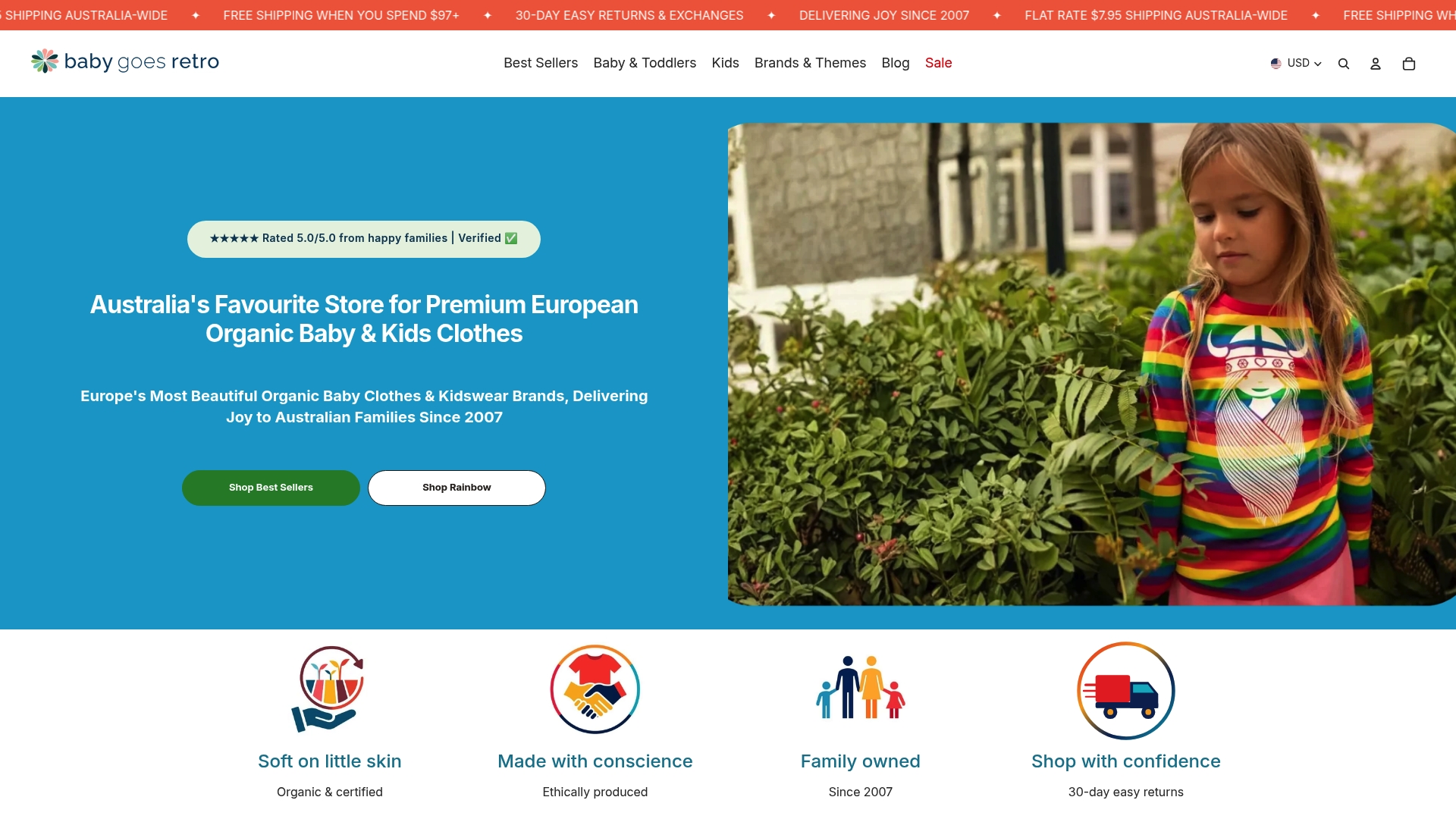
The store stocks elastic-waist joggers, soft shorts, and pull-on trousers from ethical European brands — all designed to be pulled up and down by small hands without help. Organic cotton construction means they wash well, dry quickly, and stay soft through dozens of cycles. For the training phase, that durability matters: you will be washing these a lot.
Shipping is $7.95 flat across Australia, free on orders over $97. Returns and exchanges are open for 30 days, so if the size isn’t right, it’s a straightforward swap.
Browse the full range of easy-on/off toddler bottoms at Babygoesretro and filter by size and style to find what suits your child’s current training stage. ✦ DELIVERING JOY SINCE 2007 ✦ FREE SHIPPING OVER $97 ✦ 30-DAY EASY RETURNS
Sources
- Toilet skills (toilet training) - Continence Health Australia
- Toilet training - Healthdirect Australia
- Toilet training: when & how to do it | Raising Children Network
- Learning to use the toilet - Parenting SA
- Occupational therapy support to toilet training information sheet
- Toilet training - CAHS Child Health
- Pubmed
- Ncbi
For concerns about regression, constipation, or developmental readiness, your GP or local child health nurse is the right first contact.
FAQ
What is the 10–10–10 rule for potty training?
The 10–10–10 rule is a practical check-in routine where parents check for dryness every 10 minutes during active play, praise a dry nappy or pants, and prompt a toilet sit. The specific interval matters less than the consistency — the goal is building a predictable habit loop rather than waiting for the child to self-initiate.
What should a toddler wear during potty training?
Australian guidance recommends elastic-waist trousers or shorts that a child can pull down independently, with no buttons, zips, or poppers. Dungarees, onesies, and stiff jeans are the main things to avoid during the training phase.
Do potty training pants actually work?
Yes, particularly reusable cloth training pants used at home. Raising Children Network notes that training pants are less absorbent than nappies and help children feel wetness, which reinforces learning. Highly absorbent disposable pull-ups are better suited to outings and night use than to active daytime training.
What is a red flag for potty training?
Intense fear of the toilet, consistent withholding of bowel movements, or daytime wetting returning after a clear period of dryness are the main warning signs. If any of these persist, contact your GP, a continence nurse, or a paediatric occupational therapist rather than continuing to push through.
When should you stop using training pants and switch to underwear?
Most children are ready to move to regular underwear once they are reliably initiating toilet trips themselves and having only occasional accidents. The transition is gradual — many families use underwear at home first, then extend to outings as confidence grows.
Recommended
- Colourful Kids Clothes Australia Loves For Real Playground Play
- Best Organic Baby Dungarees Australia | Baby Goes Retro
- How to Wash Baby Clothes Stains | Clever Care Tips
- Why Scandinavian Babywear Works For Aussie Families
0 comments