


Cold water, a gentle cycle, and air-drying (or a low, short tumble) are what actually prevent shrinkage in baby clothes. Most damage happens in the first wash, so getting that first cycle right matters more than anything you do afterwards.
Do:
- Wash on cold or 30°C using a delicate/gentle cycle
- Check the care label before every new garment’s first wash
- Use a mesh laundry bag for socks, mittens and tiny items
- Air-dry flat or on a low hanger whenever you can
Don’t:
- Use hot water or a high-heat tumble dry on cotton knits or wool
- Overload the machine (crowding increases friction and agitation)
- Skip the care label because “it’s just a onesie”
Pro Tip: A slow spin cycle at low revolutions per minute does almost as much good as switching to cold water. Less spin force means less fibre stress.
Key Takeaways
Preventing shrinkage in baby clothes comes down to cold water, gentle agitation, and low-heat drying, applied consistently from the very first wash.
| Point | Details |
|---|---|
| First wash matters most | Most relaxation shrinkage happens in the first wash, so treat new garments with extra care. |
| Cold beats hot | Water below 30°C keeps fibres stable; anything above 60°C causes maximum shrinkage. |
| Agitation is as damaging as heat | Use gentle cycles, mesh bags, and slower spin speeds to reduce mechanical fibre stress. |
| Air-dry or low-heat tumble | Skip high heat in the dryer, or remove items damp and finish flat. |
| Choose pre-shrunk, quality fabrics | Baby Goes Retro’s European organic cotton range is designed to hold its shape wash after wash. |
Table of Contents
- Why do baby clothes shrink in the wash?
- How do you read baby clothes care labels?
- What washing settings actually stop shrinkage?
- Is air-drying or tumble-drying better for baby clothes?
- Which fabrics shrink the most in baby clothes?
- Do pre-shrunk baby clothes actually shrink less?
- How do you unshrink baby clothes safely?
- What should you do the moment clothes shrink?
- What laundry habits cause the most shrinkage?
- What do experienced baby clothing retailers recommend?
- Getting the basics right matters more than any trick
- Keep your baby’s wardrobe in shape with Baby Goes Retro
- Sources
- FAQ
Why do baby clothes shrink in the wash?
Cotton fibres get stretched and combed flat during manufacturing, then held in that stretched state by hydrogen bonds. Add heat and water, and those bonds loosen, letting the fibres spring back to their natural, shorter length. That’s shrinkage. It isn’t fabric “wearing out” or getting damaged in a structural sense; it’s cotton doing what cotton does once the tension holding it in shape disappears, as explained by textile researchers at Swinburne.
Agitation makes it worse. Every time fabric rubs against itself, the machine drum, or other garments, the fibres get knocked further out of alignment. Heat loosens the bonds; movement finishes the job. Picture it as a rubber band that’s been stretched and taped down for months. Warm it slightly and give it a nudge, and it snaps back towards its original shape.
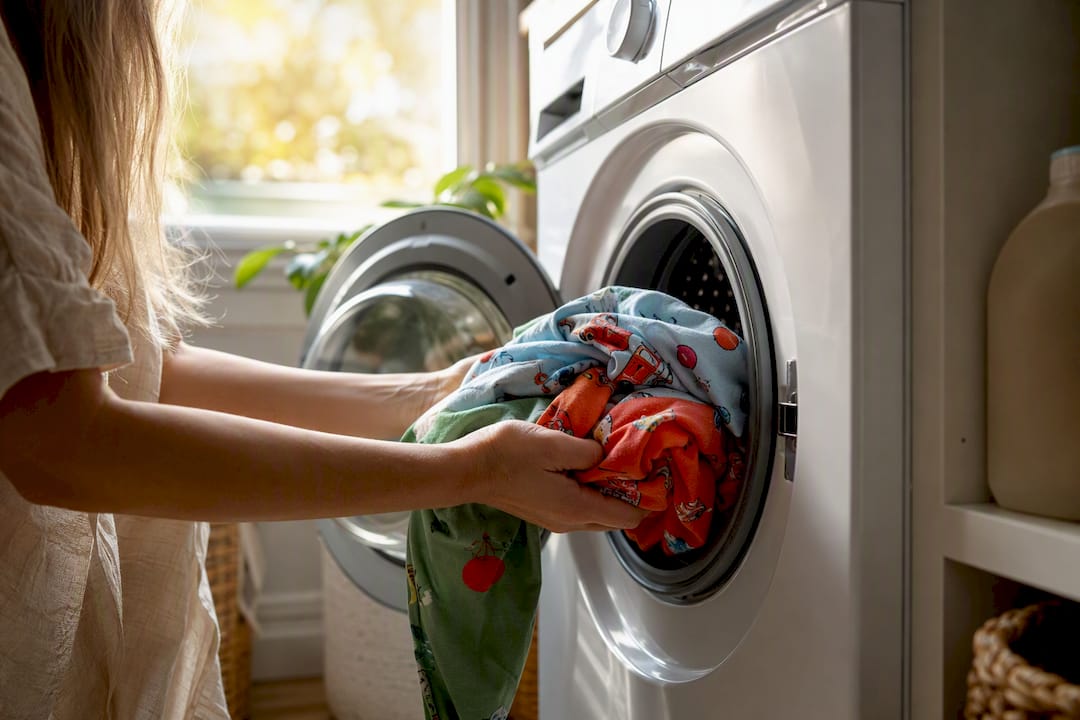
Here’s the part most parents don’t expect: the bulk of the damage happens on wash number one. According to a detailed shrinkage analysis from TextileTuts, typical relaxation shrinkage sits around 1 to 5% in a single wash, and the majority of that contraction happens the very first time a garment meets water and heat. A bodysuit can become smaller after its first wash and tends to maintain its size afterwards.
Water temperature decides how much of that relaxation happens at once:
- Below 30°C (cold): minimal fibre swelling, the safest setting for anything cotton or wool
- 30 to 40°C (warm): cleans better but starts activating relaxation shrinkage in cotton and linen
- Above 60°C (hot): maximum relaxation, and the fastest route to a onesie that no longer fits
Agitation matters just as much as temperature. Textile specialists point out that minimising mechanical action with gentle cycles and mesh bags protects garment dimensions just as effectively as choosing the right water temperature. Heat gets the blame, but a rough spin on lukewarm water can shrink a jumper almost as fast as a hot wash on gentle.
How do you read baby clothes care labels?
Care symbols look cryptic until you know the shorthand. A tub with a number inside tells you the maximum wash temperature. A tub with a hand means hand wash only, no machine, ever. A crossed-out square with circles inside means don’t tumble dry, full stop. A single dot inside the drying symbol means low heat only; two dots mean you’ve got a bit more leeway.
Before you sort a single load, run through this checklist:
- Separate by fabric weight and finish — knits, wool, and anything with embroidery or appliqué go in their own pile, away from heavier cotton basics
- Pull out heavily soiled items for pre-treatment rather than dumping them in with everything else
- Bag the small stuff — socks, mittens, and bibs vanish inside machines or get twisted around zips, so a mesh laundry bag keeps them contained and reduces friction
- Keep nappies (cloth or heavily soiled items) in their own load rather than mixing them with everyday wear
- Close all poppers, zips and Velcro tabs before anything goes in, since open fastenings snag on delicate knits and stretch them out of shape
A few extra seconds of sorting saves you from throwing a hand-wash-only merino cardigan into a hot, tumble-friendly load with the bath towels.
What washing settings actually stop shrinkage?
Run this sequence and you’ll cut shrinkage risk on almost every load:
- Sort first. Separate cottons, knits, wool, and synthetics; pull anything hand-wash-only or heavily soiled aside.
- Treat stains before the wash, not during it. Pre-treating means you don’t need a hotter cycle to compensate for a set-in stain.
- Turn garments inside out and close all fastenings. This protects prints and reduces surface friction.
- Bag delicate or tiny items in a mesh laundry bag.
- Choose cold water (below 30°C) and a delicate or gentle cycle. Appliance-level features like cold-wash programs exist specifically to reduce the mechanical and heat stress that causes shrinkage.
- Drop the spin speed where your machine allows it. A slower spin means less mechanical stress on wet fibres, which are at their most vulnerable right after washing.
- Use a measured dose of a gentle, baby-safe detergent. More product doesn’t mean cleaner; it usually means more residue sitting in the fibres.
Sanitisation is the trickiest trade-off. Washing at high temperatures commonly cited for killing bacteria also triggers maximum fibre relaxation. The Dettol guide to washing baby clothes notes that laundry sanitisers and sunlight drying can achieve a similar hygiene outcome at lower temperatures, which is genuinely useful if you’re dealing with a stomach bug or nappy leak and don’t want to sacrifice a favourite outfit to a hot wash.
Pro Tip: Reserve the 60°C wash for genuinely soiled loads (illness, nappy blowouts) and default to cold or warm sanitiser-assisted washes for everyday wear. You don’t need to boil-wash a onesie just because it’s a baby item.
Is air-drying or tumble-drying better for baby clothes?
Drying does more damage than most parents realise, and it’s often the step nobody thinks to blame. A gentle cold wash followed by a hot tumble dry can undo all that careful washing in twenty minutes.
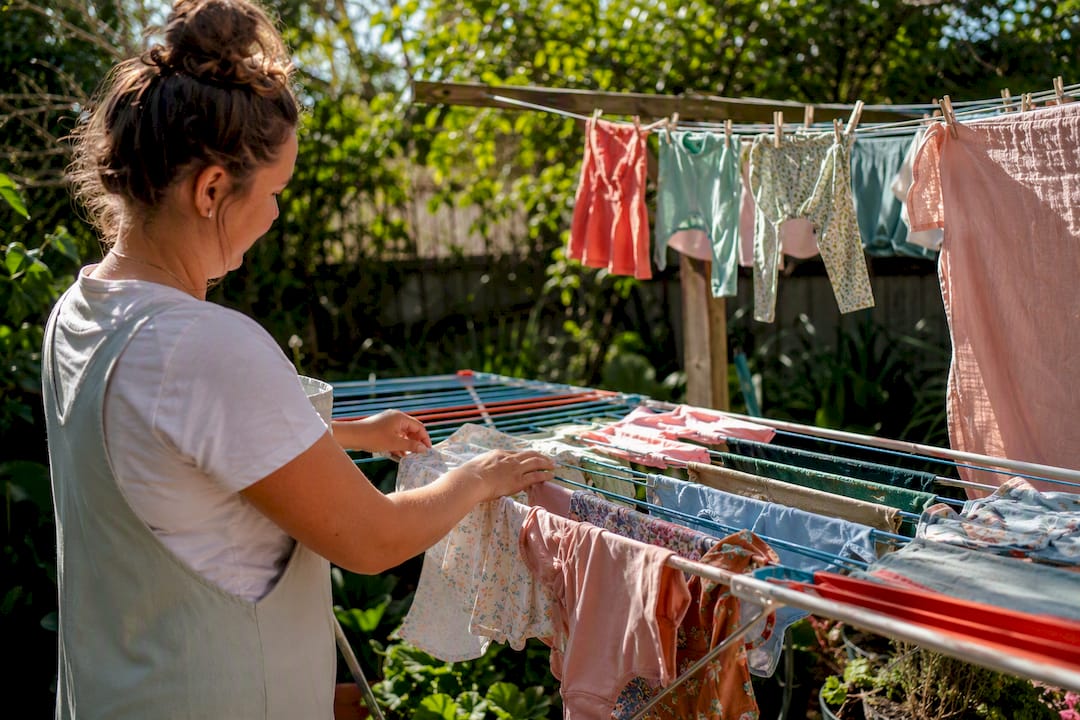
Air-drying wins on shrinkage prevention, full stop. There’s no heat cycling through the fibres, no repeated tumbling knocking them out of shape, and you control exactly how the garment sits while it dries.
If you genuinely need the dryer:
- Use the lowest heat setting your machine offers, ideally a dedicated delicate or baby-clothes cycle
- Keep cycles short, checking at the 10 to 15 minute mark
- Pull items out while they’re still slightly damp and finish drying flat rather than running a full cycle to bone dry
- If your dryer has a moisture sensor, use it. Moisture-sensing settings stop the cycle the moment clothes reach the target dryness, which cuts down on the overdrying that causes so much unnecessary shrinkage
For knits and anything stretchy, lay the garment flat rather than hanging it. A wet jumper on a hanger stretches under its own weight at the shoulders while it dries; laid flat, gravity isn’t working against the shape at all. Baby Goes Retro’s own guide to drying baby clothes safely covers this in more depth if you’re weighing up dryer settings for a specific fabric.
Once dry, fold knits and delicate items rather than hanging them long-term. Hanging small garments for weeks stretches the shoulder seams out of shape, which looks a lot like shrinkage in reverse but is just as annoying.
Pro Tip: Reshape damp garments by hand before laying them flat. Gently stretch the cuffs, hem and neckline back to their original dimensions while the fibres are still pliable. It takes ten seconds and prevents most of the “shrunk in the dryer” panic.
Which fabrics shrink the most in baby clothes?
Different fabrics behave completely differently in the wash, so treat this as your quick reference rather than a one-size-fits-all routine:
- 100% cotton: the most shrink-prone fabric in a typical wardrobe. Cold wash, gentle cycle, air-dry always.
- Cotton blends (cotton/polyester, cotton/elastane): more forgiving than pure cotton, but still wash cold and skip the high-heat dryer setting to protect the elastane’s stretch.
- Knits (jumpers, cardigans): high risk for both shrinkage and shape distortion. Hand wash or use wool/delicate cycle, always dry flat.
- Wool: the highest-risk fabric of all. Hot water and agitation together cause felting, which is permanent and can’t be reversed with a soak. Hand wash in cool water only.
- Synthetics (polyester, nylon blends): lowest shrinkage risk, but still wash cold to protect prints, elastic waistbands and any embellishments.
New garments deserve one extra step regardless of fabric. Since most relaxation shrinkage happens on the first wash, that first cycle is your one chance to get it right; treat every brand-new item as if it’s the highest-risk garment in the load, even if the fabric itself is usually forgiving.
Pro Tip: Wash a new garment on its own or with similar-weight items for its first cycle. This stops it from picking up extra agitation from heavier items and gives you a clean read on how much it actually shrinks before you build outfits around it.
Do pre-shrunk baby clothes actually shrink less?
Buying smart is half the battle. Manufacturers pre-shrink heavier cotton fabrics through a process called sanforization specifically because medium and heavy cottons show the highest shrinkage rates without it. Pre-shrinking reduces residual shrinkage but doesn’t eliminate it entirely, since fabric construction and storage conditions both still play a role.
When you’re choosing garments, look for:
- Cotton blends and finished, reinforced seams over loose single-layer cotton
- Sizing with a bit of ease built in, rather than a snug fit designed to shrink into place
- Brands that mention pre-shrunk or pre-washed fabric on the product page
Baby Goes Retro’s European organic cotton range is built with this in mind, and pieces like the Kite Pig Pannage Long Sleeve Bodysuit hold their shape wash after wash when you follow a cold, gentle routine. Shipping is a flat $7.95 Australia-wide, free over $97, with 30-day returns if a size doesn’t work out. That’s a safety net worth using if you’re unsure about sizing before that all-important first wash.
How do you unshrink baby clothes safely?
Cotton responds well to a fibre-relaxing soak. Wool doesn’t, once it’s felted, so check your fabric before you start.
What you’ll need: lukewarm water, hair conditioner or baby shampoo, two towels, and roughly 30 minutes.
- Fill a basin with lukewarm water and mix in a tablespoon of conditioner or baby shampoo.
- Submerge the shrunken garment fully and let it soak for 20 to 30 minutes. The conditioner temporarily lubricates the fibres, making them more pliable for stretching.
- Remove without wringing. Squeeze gently instead.
- Lay flat on a towel and gently stretch the garment back towards its original dimensions, working the cuffs, hem and neckline.
- Roll it in a second dry towel to pull out excess moisture, then lay flat to air-dry, re-stretching every so often as it dries.
This works well on:
- Cotton and cotton-blend garments
- Loosely knit items caught early
It generally won’t work on:
- Felted wool (the fibres have physically meshed together, and that’s permanent)
- Garments that have shrunk repeatedly over many hot washes, where the fibre structure has fully reset
If you’ve tried reshaping twice with no improvement, stop. Repeated stretching on saturated fibres can cause holes or thinning rather than a rescue.
What should you do the moment clothes shrink?
Speed matters here. Fibres are most responsive to reshaping while they’re still slightly damp, so don’t let a shrunken item sit in the laundry basket for a week before you deal with it.
- Pull it out of the dryer immediately if you catch it mid-cycle, rather than letting it finish and cool completely
- Soak straight away in lukewarm water with a splash of conditioner, following the method above
- Check the care label first to rule out wool or anything marked dry-clean only, since those won’t respond to a home soak
- Reshape gently while damp, then lay flat to dry
If a soak and reshape genuinely doesn’t bring it back, don’t write it off completely. A shrunken bodysuit still works as a keepsake, a doll’s outfit, or a hand-me-down for a smaller sibling down the track. Not every shrunk garment needs to go in the bin.
What laundry habits cause the most shrinkage?
A handful of habits account for almost every “why did this shrink” moment:
- Washing everything on the same hot cycle regardless of fabric — sort by fibre type instead
- Ignoring the care label because the garment looks tough — check it every time, especially on new pieces
- Overloading the machine — clothes need room to move freely, not get crushed and rubbed against each other
- Full tumble-dry cycles on high heat — switch to low heat, short bursts, and pull items out while damp
- Skipping mesh bags for small items — socks and mittens get twisted and stressed far more than larger garments
- Overdosing detergent — excess detergent leaves residue that stiffens fibres and can trap heat against the fabric during drying, which compounds shrinkage risk
- Ignoring spin speed — a fast spin adds mechanical stress right when fibres are wettest and most vulnerable
Fix even three of these and you’ll notice the difference within a few washes.
What do experienced baby clothing retailers recommend?
Baby Goes Retro has been fitting out Australian families with European organic cotton since 2007, and the laundry questions haven’t changed much in that time. Parents want clothes that survive real life: spit-up, grass stains, and a wash cycle squeezed in between naps.
Rotate similar-weight garments through the wash together rather than mixing a heavy jumper with a light muslin wrap. Keep a dedicated mesh bag just for socks and mittens; they’re the items families lose and shrink most often. Store folded rather than hung wherever you can, especially for knits, since hanging stretches small garments out of shape over months of storage.
These habits stretch the life of a garment across siblings, not just one baby. If you’re building a wardrobe with hand-me-downs in mind, pieces like the Kite Koala Time Baby Gift Bundle are worth checking out, backed by the same $7.95 flat shipping (free over $97) and 30-day returns as everything else on the site.
Getting the basics right matters more than any trick
The conventional advice on shrinkage treats every wash as equally risky, which misses the point. Almost all the damage happens in that first cycle, before you even know how a garment behaves. Get the first wash right, cold water, gentle cycle, air-dry, and most of the ongoing battle is already won.
Where most parents go wrong isn’t the washing machine. It’s the dryer. People obsess over water temperature and forget that a hot tumble cycle can undo a perfectly careful cold wash in minutes. If you only fix one habit from this article, drop the dryer heat and pull things out damp.
The other underrated factor is what you buy in the first place. A fitted, unfinished cotton piece was always going to be a gamble in the wash. Choosing well-constructed, pre-shrunk garments from the start removes half the guesswork before you’ve even turned the machine on.
Keep your baby’s wardrobe in shape with Baby Goes Retro
Getting the wash routine right only helps as much as the clothes you’re washing. Baby Goes Retro has spent almost two decades sourcing European organic cotton garments built with proper construction and finished seams, so they hold their shape through the cold-wash, air-dry routine this article recommends, instead of fighting against it. That’s the real difference between a onesie that lasts three siblings and one that’s unwearable after a single hot wash.

Family-run since 2007, Baby Goes Retro ships Australia-wide for a flat $7.95, free over $97, with 30-day easy returns if sizing doesn’t work out. Pieces like the Kite Pear-fect Dungaree Toddler Bundle are designed to survive real toddler life and pass down to the next kid in good shape. Browse the full range at Baby Goes Retro and build a wardrobe that’s easier to wash, not harder.
Sources
For the science behind fibre relaxation and unshrinking, Swinburne’s textile research explainer is the clearest breakdown available. TextileTuts’ shrinkage guide goes deeper into fabric-specific dimensional stability if you want the full technical picture. For sanitisation trade-offs, Dettol’s guide to washing baby clothes covers hygiene without relying purely on heat. If you’re working with recycled or blended fabrics, CZT’s care guide has useful low-temperature washing tips.
- Why some clothes shrink in the wash - and how to ‘unshrink’ them | Swinburne
- Fabric shrinkage & dimensional stability: the complete guide - TextileTuts
- Guide to washing baby clothes — Dettol Australia
- Fabric stability and pre-shrinking research (beltwide proceedings) - Cotton Incorporated
- Does cotton shrink? How to unshrink cotton — Whirlpool
FAQ
How do you stop baby clothes from shrinking?
Wash on cold water with a gentle or delicate cycle, avoid overloading the machine, and skip high-heat tumble drying. Most shrinkage happens on the first wash, so treat new garments carefully from day one.
How should you wash baby clothes so they don’t shrink?
Sort by fabric type, close all fastenings, turn garments inside out, and wash cold using a gentle cycle with a measured dose of mild detergent. Air-dry flat or use a low, short tumble cycle if needed.
Will 100% cotton baby clothes shrink?
Yes. Cotton is one of the most shrink-prone fabrics because heat and water disrupt the hydrogen bonds holding stretched fibres in place, and typical relaxation shrinkage runs 1 to 5% in a single wash, mostly in the first cycle.
Is cotton shrinkage permanent?
Relaxation shrinkage from washing can often be partly reversed with a lukewarm conditioner soak and gentle reshaping, but felted wool and cotton shrunk repeatedly over many hot washes generally won’t respond to rescue attempts.
0 comments