


An electric fabric shaver is the quickest, safest way to remove pilling from kids’ clothes. For light fuzz, a lint roller works in seconds. For a few stubborn pills, small sharp scissors or a disposable razor get the job done. Here is a three-step checklist to start with:
- Inspect the fabric. Check whether it is a delicate knit, a brushed fleece, or a woven cotton. Thinner fabrics need a gentler approach.
- Test in a hidden spot. Try your chosen tool on an inside seam or hem before working across the visible surface.
- Keep the fabric taut. Lay the garment flat on a firm surface and stretch it gently before using any tool.
Pro Tip: For baby garments, skip the razor entirely on your first attempt. Start with a lint roller, then move to a fabric shaver only if pills remain after that pass.
Key takeaways
The fastest, safest way to remove pilling from kids’ clothes is an electric fabric shaver on taut fabric, backed by consistent laundry habits that reduce pilling from the start.
| Point | Details |
|---|---|
| Best removal tool | An electric fabric shaver on taut fabric is the safest and most efficient method for moderate to heavy pilling. |
| Fast alternative | A lint roller clears light fuzz instantly; small scissors handle individual pills without risk of cutting the fabric. |
| Top laundry habit | Turn garments inside out, use a gentle cycle with a garment bag, and line dry to cut pilling frequency. |
| Baby safety reminder | Keep blades away from children, remove snaps before shaving, and check for loose fragments before dressing. |
| Baby Goes Retro | Tightly woven organic cotton garments from Baby Goes Retro are built to last multiple children with correct care. |
Table of Contents
- How to remove pilling from kids’ clothes: methods ranked by safety
- Laundry habits that prevent pilling on kids’ clothes
- Should you de-pill, repair, or replace the garment?
- Why pilling happens and how to buy more pill-resistant kids’ clothes
- Which de-pilling tools are worth buying in Australia?
- Extra safety notes for baby garments and newborn items
- Which fabric types pill most and what to avoid
- How often should you de-pill kids’ clothes?
- Choosing kid-safe products and materials for pill removal
- A retailer’s perspective on caring for ethically made kids’ clothes
- Pill-resistant baby clothes worth keeping in your rotation
- Sources
- FAQ
How to remove pilling from kids’ clothes: methods ranked by safety
Pilling forms when broken fibres tangle from friction during wear and washing. The Spruce identifies fabric shavers, razors, scissors, lint rollers, and sweater stones as the main removal tools. Here is how to use each one safely on children’s and baby garments.
Electric fabric shaver
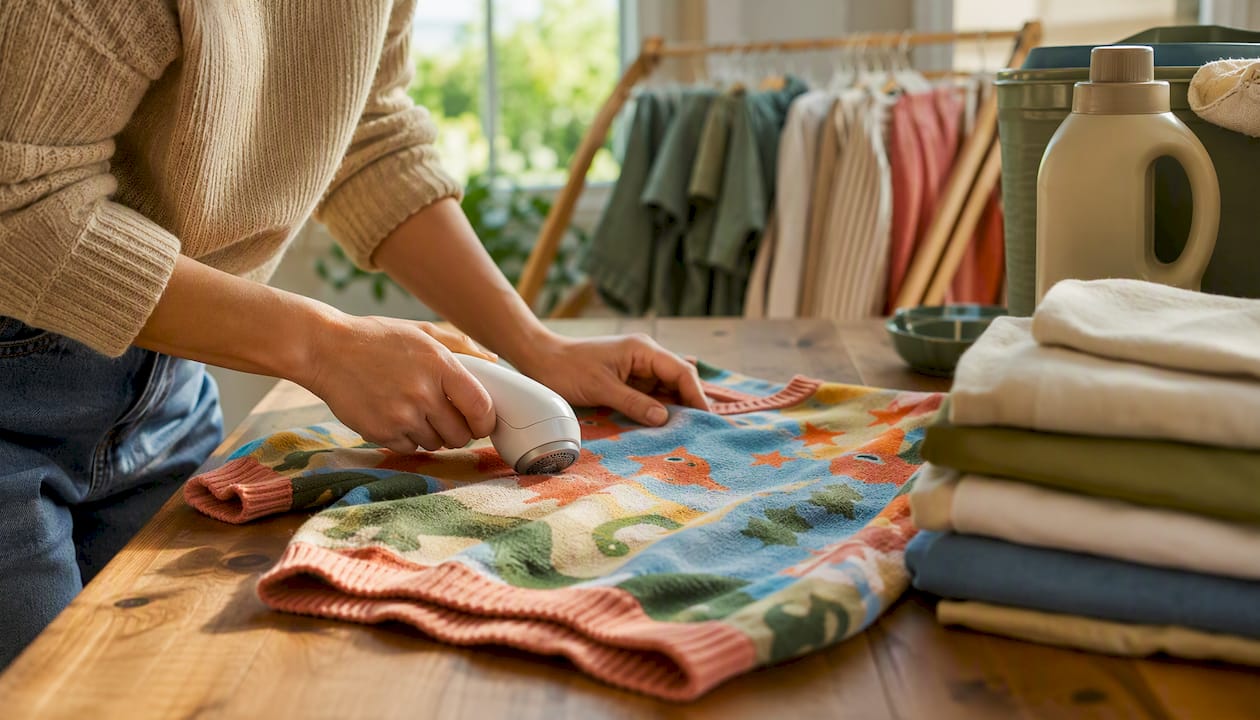
This is the go-to for moderate to heavy pilling. Vogue confirms electric fabric shavers are generally the safest and most efficient method. Lay the garment flat, hold the fabric taut with one hand, and move the shaver in short circular motions. Never press hard. Work around seams and labels slowly, and empty the lint chamber regularly so suction stays strong.
Disposable razor or small scissors
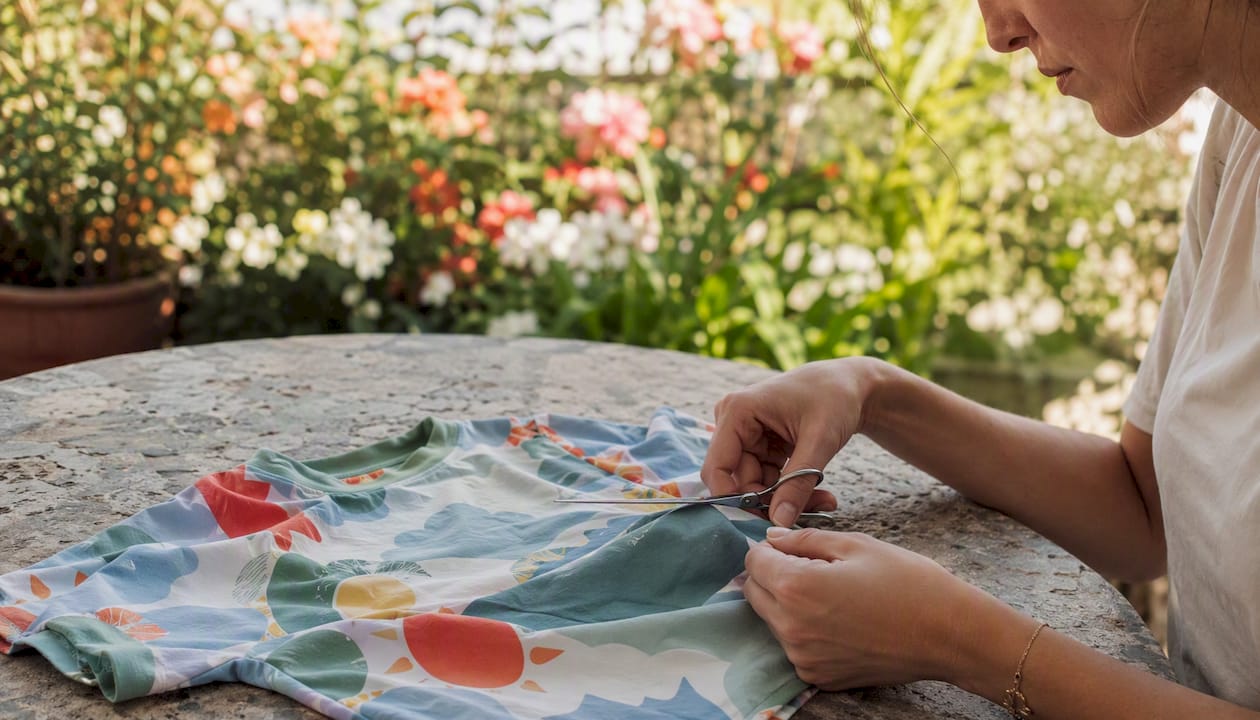
A disposable razor works on a flat, taut surface using very light, short strokes. The risk of cutting the fabric is real, so test on a hidden area first and use a fresh blade. Small, sharp fabric scissors are better for picking off individual pills without dragging the surrounding fibres. Neither tool is ideal for very thin or loosely woven baby fabrics.
Sweater stone or pumice
A sweater stone is a fine-grain abrasive block that lifts pills from delicate knits without blades. Stroke it lightly in one direction across the taut fabric. It is slower than a shaver but gentler on fine merino or organic cotton knits. Always test first.
Lint roller, soft toothbrush, and velcro
A lint roller removes surface fuzz and light pills instantly. Vogue also notes that a soft toothbrush or the hooked side of a velcro strip can lift light pilling from fleece and brushed fabrics. These household options are the safest choice for newborn items.
Pro Tip: Run a lint roller over the garment first to clear loose fuzz, then follow with the fabric shaver for any remaining pills. The two-step approach gives a cleaner result and reduces the number of shaver passes needed.
Safety callout: Keep all blades away from babies and young children during the process. Remove snaps and poppers where possible before using a shaver, and check the garment afterwards for any small fragments before dressing your child.
Laundry habits that prevent pilling on kids’ clothes
Prevention is faster than repair. A few consistent laundry habits cut pilling frequency significantly, especially for the knits and organic cottons that kids wear most.
Bounty Parents recommends turning garments inside out, avoiding tumble drying where possible, using garment bags for knits, and emptying the machine’s lint filter after each wash. Washing terry towelling and knits together is a common mistake: the towelling sheds fibres that cling to knit surfaces and accelerate pilling. Sort them separately.
- Turn all knits and bodysuits inside out before washing.
- Use the gentle or delicate cycle, or hand wash for fine knits.
- Place knits in a mesh garment bag to reduce friction inside the drum.
- Do not overload the machine. Crowded loads create more abrasion.
- Line dry or lay flat. If you must use the dryer, use the lowest heat setting and remove items promptly. For more on safe drying, see drying tips for baby garments.
Lifehacker Australia points out that some detergents contain cellulase enzymes, a plant-based ingredient that helps loosen and remove cotton pills during washing. For baby skin, choose a gentle, fragrance-free formula. Reducing wash frequency also helps: Vogue notes that less frequent washing reduces abrasion and preserves knit structure over time.
Pro Tip: If a bodysuit or top is not visibly soiled, a quick air out is often enough between wears. Fewer washes means less friction, which means fewer pills.
Pilling rating note: Testex textile testing confirms that a pilling rating of 3–4 is considered normal for everyday wear. Some pilling on a well-loved kids’ garment is expected, not a sign of a defective product.
Should you de-pill, repair, or replace the garment?
A quick assessment saves time and money. Work through this checklist before reaching for any tool.
When to de-pill:
- Light to moderate pilling with no holes or thinning fabric
- The garment still fits and has plenty of wear left
- It is destined for a younger sibling or cousin
When to repair:
- Small holes alongside pilling: patch or darn before de-pilling
- Weakened fibres around a seam: reinforce first
When to replace:
- Large holes, structural damage, or fabric so thin it tears under light tension
- The cost of repair or professional attention exceeds the garment’s remaining value
Rough cost guide:
- Lint roller or disposable razor: minimal outlay, already in most homes
- Sweater stone or manual tools: low one-off cost, widely available
- Electric fabric shaver: mid-range one-off purchase, lasts for years
- Professional repair or tailoring: higher cost, worth it for a premium or sentimental piece
A typical de-pilling session on a child’s jumper or bodysuit takes a few minutes with an electric shaver. Scissors or a stone take a little longer. Either way, it is faster than shopping for replacements.
Why pilling happens and how to buy more pill-resistant kids’ clothes
Pilling is a normal physical phenomenon. Friction during wear and washing causes surface fibres to break and tangle into small balls. Testex explains that designers reduce pilling by using higher-twist yarns and tighter weaves, which keep fibres locked in place under friction. Loosely spun blends, particularly those mixing synthetic fibres with natural ones, tend to pill faster because the fibres have more freedom to migrate to the surface.
Buying tips for parents:
- Favour tightly woven organic cottons and higher-quality wools over loosely spun synthetic blends.
- Check fabric descriptions for yarn twist and weave density where listed.
- Look for garments described as designed for active wear or hand-me-down use. See choosing durable organic baby clothes for more guidance.
- Avoid loosely knit fleece blends in high-friction zones like underarms and nappy areas for everyday wear.
Which de-pilling tools are worth buying in Australia?
| Tool | Effectiveness | Safety for babies | Typical price band |
|---|---|---|---|
| Electric fabric shaver | Highest | Good with care | Mid-range, one-off |
| Disposable razor | Effective | Higher cut risk | Budget |
| Sweater stone / pumice | Good for delicate knits | Good | Low to mid |
| Lint roller / tape | Best for light fuzz only | Excellent | Budget |
| Small fabric scissors | Precise for single pills | Moderate | Budget |
What to look for in a fabric shaver:
- Gentle or variable speed settings for delicate fabrics
- A blade guard that sits flush with the surface
- An easy-to-empty lint chamber
- Australian plug and 240V compatibility if corded
Lint rollers and disposable razors are available at most Australian supermarkets. Electric fabric shavers and sweater stones are stocked at larger homewares retailers and online marketplaces. When buying online, check that the product ships from within Australia or carries an Australian plug adaptor to avoid voltage issues.
For parents looking at newborn clothing options that are gentle on fabric and easier to care for, choosing garments with tighter weaves from the start reduces how often you need any of these tools.
Extra safety notes for baby garments and newborn items
Baby garments need a lighter touch than older kids’ clothes. Fabrics are thinner, items are smaller, and the stakes around loose fragments are higher.
Safety checklist:
- Keep all blades and shavers out of reach of children at all times.
- Remove poppers and snaps before running a shaver over a bodysuit.
- Check the garment carefully after de-pilling for any loose threads or small debris before dressing your baby.
- Never use chemical fabric treatments on items that sit against newborn skin.
For detergents, choose fragrance-free, enzyme-based formulas suited to sensitive skin. Lifehacker Australia notes that cellulase-containing detergents can help with cotton pills, but always confirm the formula is appropriate for baby skin before using it on newborn items.
Pro Tip: For very small or very thin newborn garments, skip the electric shaver entirely. A lint roller followed by gentle brushing with a soft toothbrush is the safest combination for tiny items.
At Baby Goes Retro, we recommend starting with the gentlest method and working up only if needed. For any garment you are unsure about, our 30-day returns and exchanges policy means you are never stuck with something that does not work for your family.
Which fabric types pill most and what to avoid
Some fabrics are simply more prone to pilling than others, and knowing which ones to sidestep saves a lot of maintenance time.
Avoid for high-friction kids’ wear:
- Loosely spun acrylic or polyester blends: high pill risk, especially in underarm and nappy areas
- Blended fleece with a low-twist yarn: pills quickly under repeated washing
- Loosely knit wool blends: fine for occasional wear but not for daily rotation
Better choices for durability:
- Tightly woven organic cotton: low pill risk, breathable, and gentle on skin
- Higher-quality merino wool with a tight knit: pills less than loose-knit equivalents
- GOTS-certified organic cotton knits: consistent yarn quality reduces surface fibre migration
For active kids, mess-friendly kidswear made from tightly woven natural fibres holds up better through paint, mud, and repeated washing than synthetic blends.
How often should you de-pill kids’ clothes?
Timing matters. Little Aussie advises waiting until pills are widespread across an area before using an aggressive tool like a fabric shaver. Picking at individual pills constantly can weaken the fabric over time.
A practical schedule for most kids’ garments:
- Light fuzz: use a lint roller after every few wears as needed
- Moderate pilling: de-pill at the start of each season, or when pills become noticeable across the chest, back, or underarms
- Heavy pilling: address before the next wash cycle so pills do not tighten further in the machine
De-pilling before washing is worth the extra step. Pills that go through another wash cycle tend to tighten and become harder to remove cleanly.
Choosing kid-safe products and materials for pill removal
Not every product marketed for fabric care is appropriate for children’s garments, particularly those worn by babies and toddlers.
Safe choices:
- Electric fabric shavers with a blade guard and a lint chamber (no loose blades, no residue)
- Sweater stones and pumice blocks (purely mechanical, no chemicals)
- Lint rollers with standard adhesive tape (check that the adhesive is not petroleum-based for items near baby skin)
- Soft natural-bristle toothbrushes for brushed fabrics
What to avoid:
- Chemical depilatory sprays or fabric stiffeners on any garment worn against baby skin
- Adhesive products that leave a sticky residue on fabric
- Razor blades without a guard on thin or loosely woven baby fabrics
For parents interested in reusable fabric care and low-impact laundry methods, the same gentle-wash principles that protect reusable fabric items apply directly to delicate baby clothes.
A retailer’s perspective on caring for ethically made kids’ clothes
Pilling is the moment most parents consider throwing a garment out. That instinct is understandable, but it is usually the wrong call.
Running Baby Goes Retro since 2007, I have watched families discard perfectly sound garments over surface pilling that a five-minute session with a fabric shaver would have fixed. The garments we stock are made from organic, tightly woven European fabrics precisely because they are built to outlast one child. A little maintenance keeps them in rotation for a second or third sibling, which is the whole point of buying well in the first place.
The parents who get the most from their investment are the ones who treat de-pilling as a normal part of the seasonal wardrobe refresh, the same way you might check for loose buttons or faded colours. It takes almost no time, costs very little, and means a favourite bodysuit or jumper stays wearable for years rather than months. That is good for your budget and good for the planet. See baby clothes built to pass down for more on choosing garments that genuinely go the distance.
Pill-resistant baby clothes worth keeping in your rotation
The best way to spend less time de-pilling is to start with garments built to resist it. Baby Goes Retro stocks organic European baby clothes designed for exactly that: tightly woven, ethically made, and durable enough for hand-me-down use.
Three options worth considering:
The Kite Bunny Print Zip Bodysuit is made from organic cotton with integrated scratch mitts, which reduces the surface friction that causes pilling in the first place. The zip opening makes nappy changes faster and puts less stress on the fabric than popper closures.
The Kite Winter Woodland Bodysuit is a long-sleeve option with a popper crotch opening, designed for layering through cooler months without the bulk that accelerates underarm pilling.
The Kite Pig Pannage Long Sleeve Bodysuit uses the same tightly woven organic cotton construction and holds its shape through repeated washing better than loosely spun alternatives.
✦ FLAT RATE SHIPPING $7.95 ✦ FREE OVER $97 ✦ 30-DAY EASY RETURNS & EXCHANGES ✦
Browse the full range and find something your family will be passing down for years at Baby Goes Retro.
Sources
- Does pilling on a woollen jumper mean poor quality?
- How To Get Rid Of Pilling On Clothes
- Remove fabric pilling
- How to keep your kids’ clothes looking new and stain-free
- The best ways to prevent your clothes from pilling
- Prevent pilling on clothes
FAQ
Can you reverse pilling on clothes?
Yes. Pilling is removable with the right tool. An electric fabric shaver, a sweater stone, or careful use of small scissors can restore a garment’s surface appearance without damaging the underlying fabric.
Does pilling mean poor quality?
Not necessarily. Testex confirms that a pilling rating of 3–4 is considered normal for everyday wear, and even premium fabrics pill depending on fibre type and friction levels.
What is the best tool for removing fabric pills?
An electric fabric shaver is the most effective and safest option for most kids’ garments. For light fuzz, a lint roller is faster; for individual pills, small sharp scissors give the most precise result.
Is pilling on clothes permanent?
No. Pills can be removed at any stage. Little Aussie recommends waiting until pills are widespread before using a shaver, then following up with better laundry habits to slow recurrence.
0 comments