


For chubby or wide baby feet, the socks that work best have stretchy, wide cuffs, a snug (not tight) footbed, and cotton-rich fabric with a touch of stretch. Measure your baby’s foot heel-to-toe before you buy anything, and if the cuff leaves a red groove or you can’t slide a finger under it comfortably, size up or switch styles immediately.
TL;DR:
- Socks for wide or chubby baby feet should have wide or graduated cuffs that do not leave red grooves or marks after removal.
- Proper measurement involves measuring the foot length in centimeters and doing the finger test to ensure the cuff is comfortably loose.
- Material blends with cotton and a small percentage of elastane or nylon provide breathability and stretch, preventing slipping and marks.
- Baby feet grow quickly and unpredictably, so buying smaller, more frequent packs and selecting socks with stretchy cuffs extends wearability.
- Socks with a snug, stretchy footbed, a heel tab, and full-foot grip are best suited for active babies and toddlers, especially once they start cruising or walking.
Table of Contents
- How to measure your baby’s foot for socks that actually fit
- Key sock features that work for wide or chubby feet
- Stage-based recommendations: newborns, crawlers and early walkers
- Practical tricks to keep socks on and avoid tight marks
- What the clinical evidence says about tight sock marks
- Recommended sock brands and sellers for wide baby feet
- How fast babies outgrow socks (and how to buy around it)
- Comparing sock closures: elastic cuffs vs adjustable straps
- Why breathability matters for chubby baby feet
- From Baby Goes Retro: how we choose socks for wide feet
- Shop socks and matching outfits that fit wide feet properly
- Sources
- FAQ
How to measure your baby’s foot for socks that actually fit
Sock sizing charts built around age are one of the most common reasons parents end up with socks that pinch. A six-month-old with wide, chubby feet can easily need a size meant for a nine-month-old, and age-based sizing consistently under-serves babies with wider feet because it assumes an average foot shape that plenty of babies simply don’t have. Measuring properly takes about two minutes and saves you from a drawer full of socks that leave marks.
Here’s the method we recommend to every parent who asks us about fit:
- Stand your baby on a piece of paper, or trace their foot while they’re lying down with their leg bent.
- Mark the very back of the heel and the tip of the longest toe.
- Measure the straight-line distance between the two marks with a ruler, in centimetres.
- Repeat on the other foot. Feet are rarely identical, so use the longer measurement as your baseline.
- Add some wiggle room on top of that number to allow for comfort and growth. This accounts for growth, movement, and the fact that socks shrink slightly with washing.
Once you have that number, ignore the “0 to 6 months” style labels on the packet and look for the actual centimetre range printed on the sock, if there is one. Many European brands print foot-length ranges rather than age brackets, which is far more useful for a baby who runs wide or chubby through the foot and ankle.
Then do the finger test. Slide one finger flat under the cuff, at the widest part of your baby’s ankle. If it goes in easily with room to spare, you’re set. If it’s a struggle, or you notice a red line, a groove, or discolouration when you take the sock off, that sock is too tight and needs to come out of rotation. This single check catches more fit problems than any size chart ever will.
Key sock features that work for wide or chubby feet
The sock aisle can be overwhelming when every pair claims to be “stretchy.” What actually matters for wide or chubby feet comes down to a handful of specific design details, not marketing language.
- Wide or graduated cuffs. Look for ribbing that flares slightly rather than a straight, tight band. A graduated cuff clears a chubby ankle without needing to be stretched to its limit, which is what causes marks in the first place.
- Rolled or folded tops. A rolled cuff spreads pressure over a wider band of fabric instead of concentrating it on one tight elastic line.
- A snug but stretchy footbed. The foot section should hold the sock in place so it doesn’t bunch or slip, while the cuff stays roomier. This combination is what lets a sock stay on without squeezing the leg.
- Grip soles for movement. Anti-slip dots or panels matter once a baby starts pulling up on furniture or cruising, but they’re irrelevant for a newborn who isn’t weight-bearing yet.
- Ribbed or “grow-with-baby” zones. Some designs feature stretch panels built specifically for wider feet, which hold their shape wash after wash instead of losing elasticity in a few weeks.
Material matters just as much as construction. Cotton-rich blends with a small percentage of elastane or nylon give you breathability plus the stretch needed to clear a wide foot without slipping off. Pure cotton with no stretch tends to either grip too hard or fall off within an hour. For colder months, a wool or wool-blend sock adds warmth without needing a tighter weave to stay put, which is genuinely useful for babies who kick blankets off overnight.
When you’re reading a product description online, look past words like “soft” and “cute” and search for the specifics: cuff type, fabric blend percentage, and whether grip is mentioned. If none of that is listed, it’s worth assuming the sock was designed for an average-width foot, not a wide one.
Pro Tip: Check the inside of the cuff seam before you buy, if you can see a photo. A flat, covered seam is far less likely to dig a line into soft baby skin than an exposed elastic band.
Stage-based recommendations: newborns, crawlers and early walkers
Sock needs change fast in the first two years, and buying for the wrong stage is one of the easiest ways to end up with a foot that’s either too cold, too gripped, or both.
- Newborns (0 to 6 months). Warmth is the job here, not grip. Soft terry or roll-top socks in cotton or a cotton-wool blend work well because newborn legs move constantly but never bear weight. Avoid anything with firm elastic, since newborn skin marks more easily and there’s zero benefit to a tight cuff at this stage.
- Crawlers and cruisers (6 to 12 months). This is when longer, crew-length socks start earning their keep, protecting shins from carpet burn and knocks as babies crawl and pull themselves up. A little grip on the sole helps with cruising along furniture, but full-foot traction isn’t necessary yet. Longer cuffs also stay on better through the acrobatics of crawling.
- Early walkers (12 months and up). Once your toddler is properly walking, a fitted footbed paired with full-foot non-slip soles genuinely helps with balance on tile and timber floors. The cuff still needs to be roomy enough to clear a chubby ankle, but the sole should now be doing real grip work, not just decoration.
If you’re ever unsure which stage your baby falls into, size and comfort should win over the label. A young walker with wide feet often does better in a “crawler” style sized up than in a snug “walker” sock that’s technically for their age but cut too narrow through the foot. When in doubt, prioritise the finger test over the box.
Practical tricks to keep socks on and avoid tight marks
Sometimes the fix isn’t a new pair of socks at all. It’s how you’re putting them on and washing them.
- Pull on heel-first. Gather the sock, slide it over the toes, then work the heel section down before smoothing the rest up the leg. This seats the sock properly instead of stretching one section too thin.
- Choose crew over ankle length for chubby calves. A longer sock distributes the stretch over more fabric, so the cuff doesn’t need to work as hard to stay up.
- Try the double-sock trick. A thin cotton sock underneath a slightly looser outer sock can add grip and warmth without needing one very tight pair.
- Look for heel tabs or ankle tabs. These small fabric loops or seams help you position the sock correctly every time, which matters more than it sounds, since a poorly seated sock is far more likely to twist and dig in.
- Wash on a gentle, cooler cycle. Hot washes and tumble drying shrink elastic fibres faster than the fabric around them, which is exactly how a fine-fitting sock turns into a tight one within a month. Community threads full of parents troubleshooting fit problems for toddlers with wider feet repeatedly land on rolled cuffs and gentler washing as the fix, not bigger sizes.
Pro Tip: Turn socks inside out before washing. It protects the outer fabric from friction in the machine and keeps grip soles from picking up lint, which extends the life of the elastic considerably.
What the clinical evidence says about tight sock marks
Sock-line hyperpigmentation is a real, documented condition, even though it’s not something most parents will ever encounter. Case reports describe infants developing linear hyperpigmented bands at the exact spot where a sock elastic sat against the skin, usually after a single episode of a cuff being left on too tight for an extended period.
The mechanism is straightforward: sustained pressure from a tight band irritates the skin, and in some infants that irritation triggers extra pigment production as it heals. Published case descriptions of this pattern consistently point to the same prevention strategy, avoiding excessively tight socks and mittens in the first place, rather than any treatment after the fact.
The reassuring part is that most of these marks fade over weeks to months once the pressure is removed. They’re not dangerous in themselves. That said, a few signs mean it’s worth getting your baby checked by a doctor rather than waiting it out: a mark that isn’t fading after several months, any sign of broken skin or ulceration, or a foot that looks pale, blue-tinged, or cool to touch after a sock comes off, which can point to poor circulation rather than simple pigment change. For everyday sock marks that disappear within an hour of removal, prevention through better-fitting socks is genuinely the whole solution.
Recommended sock brands and sellers for wide baby feet
Not every label makes socks with wider feet in mind, and that’s exactly why hunting through generic multipacks at the supermarket rarely solves the problem. What you want is a seller that actually curates for cuff room, stretch percentage, and grip placement, rather than one that just stocks whatever’s cheapest to import.
Every sock in this collection is chosen for being soft, ethically made, and built to handle the reality of a wriggling, wide-footed baby. Our baby socks collection spans roll-top newborn styles through to grippy toddler socks, sourced from European brands that design for comfort first rather than treating socks as an afterthought accessory. The Kite Steggie Stomp Socks (3-Pack) is a good example of what to look for: a roomy ribbed cuff paired with full-foot grip, which suits an early walker with a wider foot far better than a plain ankle sock ever could.
If you’re comparing sellers, ask three quick questions before you buy: does the listing mention cuff type, does it specify a fabric blend rather than just “cotton,” and does it give a centimetre range instead of only an age bracket? A seller that answers all three is far more likely to have actually thought about fit, rather than just photographing a cute pattern.
How fast babies outgrow socks (and how to buy around it)
Baby feet grow in bursts, not steadily, which is exactly why buying one pack of socks and expecting it to last six months rarely works out. A baby’s foot can grow close to a full size in a matter of weeks during a growth spurt, then plateau for a while before the next jump.
The practical fix is to buy in smaller, more frequent batches rather than stocking up heavily on one size. A three or four pack in the current size, re-checked against the measuring method every four to six weeks, wastes far less money than a dozen pairs that get outgrown before they’re worn out. It also means you’re less likely to keep squeezing a growing foot into a sock that fit perfectly two months ago but now leaves a mark.
Buying slightly ahead on cuff room, rather than on overall length, is another useful habit. A sock with a generous, stretchy cuff has more flexibility to accommodate a slightly bigger foot than one with a snug, fixed-width top, even if the listed size is technically the same. That extra give buys you a few more weeks of wear before you need to size up again.
If you’re building out a sock drawer from scratch, it’s worth pairing the purchase with other basics that follow the same growth pattern, like bodysuits and rompers, so you’re not restocking everything separately on different timelines.
Comparing sock closures: elastic cuffs vs adjustable straps
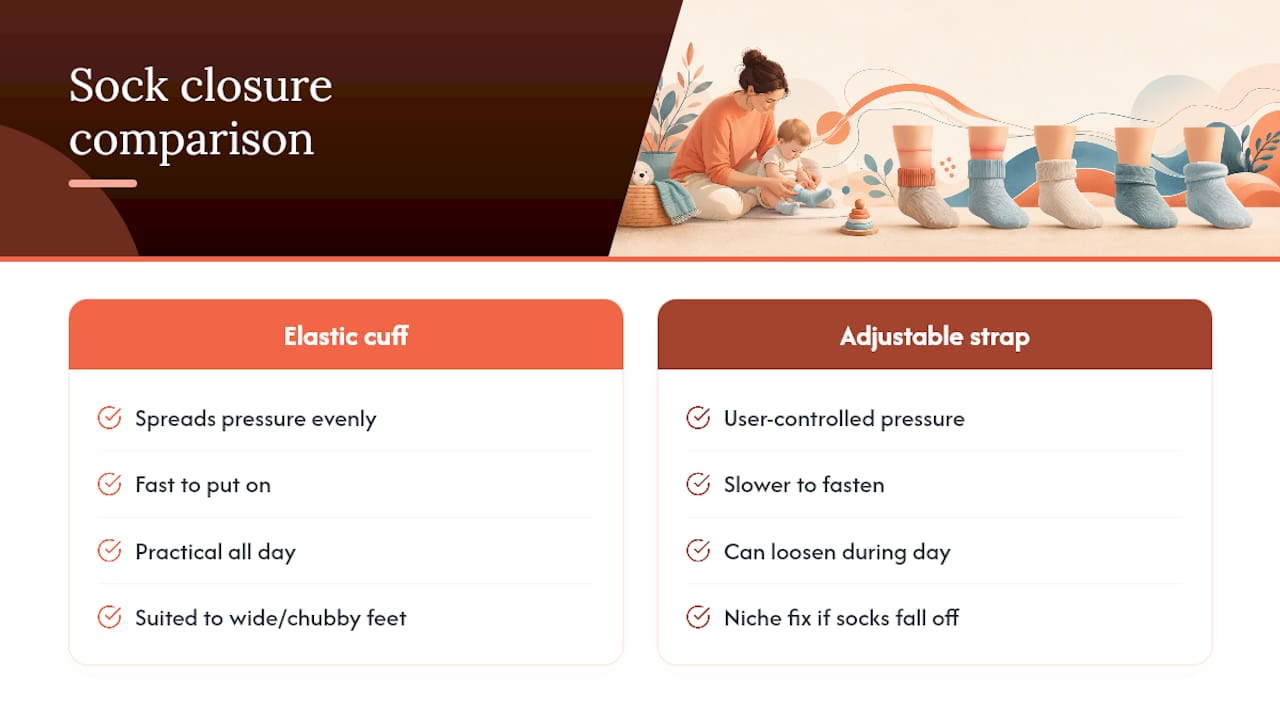
Most baby socks rely on a simple elastic cuff, and for good reason: it’s cheap to manufacture, works without any fiddling from a tired parent, and, when done well, is genuinely the best option for wide feet. The catch is that quality varies enormously. A well-made elastic cuff is graduated and covered, spreading pressure evenly. A poorly made one is a single tight band that digs in exactly the way clinical reports on sock-line marks describe.
Adjustable strap or tab closures show up occasionally, mostly on specialty “stay-on” sock designs aimed at babies who kick socks off constantly. These can work well for very active feet, since you control the tension yourself rather than relying on manufactured elastic. The trade-off is practicality: straps take longer to fasten, can loosen through the day, and add another fiddly step to a nappy change or dressing routine that most parents don’t have time for.
For wide or chubby baby feet specifically, a soft, wide elastic cuff beats an adjustable strap in almost every real-world scenario, provided the elastic itself is quality-made rather than a cheap, narrow band. Straps make more sense as a niche solution for a baby who genuinely won’t keep socks on any other way, not as a first choice for comfort.
Why breathability matters for chubby baby feet
Chubby feet run warmer than you’d expect, simply because there’s more surface area of skin in contact with fabric, and often less airflow around a fuller foot inside a snug sock. That combination makes breathable fabric more important for wide feet, not less.
Cotton-rich blends let moisture escape rather than trapping it against the skin, which matters because damp skin held under pressure is more prone to irritation, including the kind of redness that can precede sock-line marks. A fully synthetic sock might offer more stretch, but it often traps heat and sweat in a way that makes a snug cuff feel tighter over the course of a day, even if the actual fit hasn’t changed.
Merino wool blends are worth considering for cooler months specifically because wool manages moisture well while still insulating, so you don’t need to compensate for cold feet with a tighter-fitting sock. The goal is a fabric that keeps the foot at a comfortable temperature without needing extra tension to feel secure, since tension is exactly what you’re trying to avoid on a wider foot.
From Baby Goes Retro: how we choose socks for wide feet
We’ve been picking out baby clothes since 2007, and socks get more scrutiny from us than most people would guess. Fit comes first: we look for wide, soft cuffs and grip placement that actually matches a baby’s stage, not just a cute print. Every fabric choice gets weighed against how it feels against sensitive skin, because a sock a baby wears all day needs to earn its place in the drawer.
Measure first, using the method above, then compare that number against what you’re looking at in our organic cotton baby clothing range. Shipping is a flat rate across the board, with free shipping available for orders over a certain amount, and purchases come with a 30-day easy returns and exchanges policy if a size doesn’t work out. We’d rather you send something back than keep a sock that leaves a mark.
— Daniel
Shop socks and matching outfits that fit wide feet properly
Baby Goes Retro is the alternative to guessing your way through supermarket multipacks. We hand-pick European brands that build in room through the cuff and softness through the fabric, so you’re not stuck choosing between “stays on” and “comfortable.”
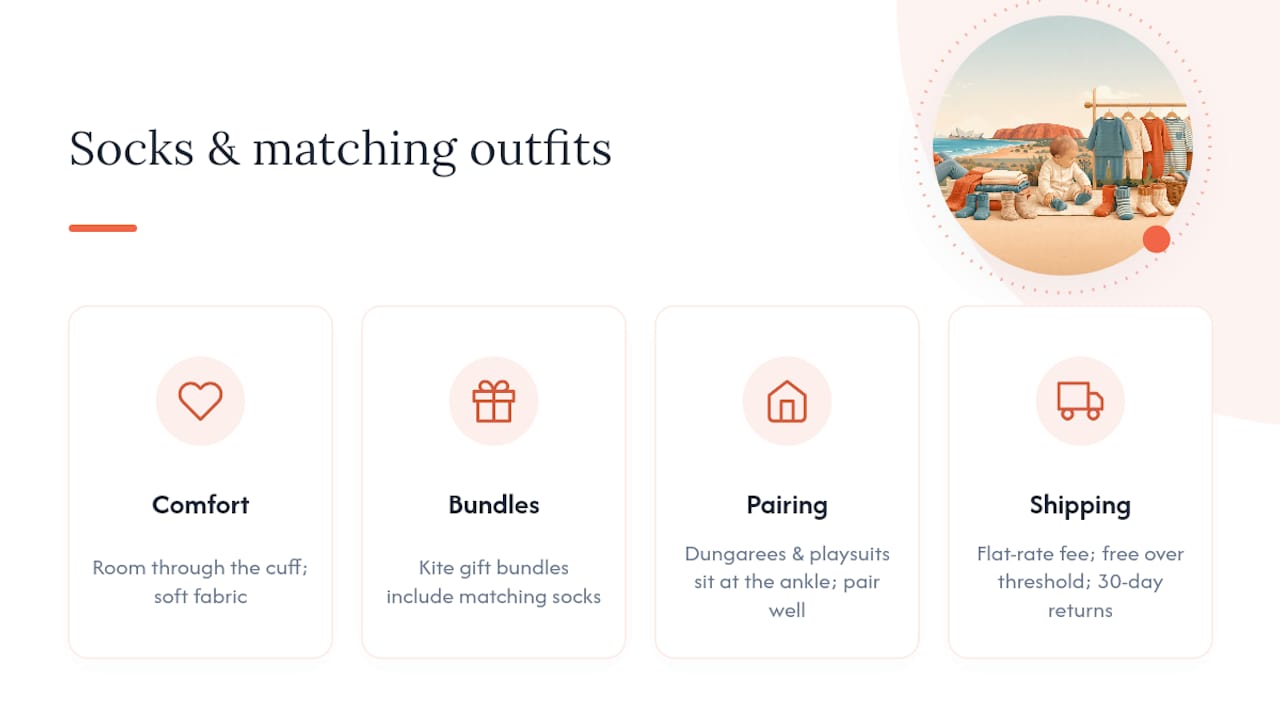
Our baby socks collection covers newborn roll-tops through to grippy toddler styles, and it’s easy to pair socks with the rest of an outfit built the same way. The Kite Little Goose Toddler Gift Bundle comes with matching socks already included, which takes the guesswork out of colour matching entirely. If you’re building a wardrobe rather than shopping one item at a time, bundles like the Kite Koala Time Toddler Gift Bundle and the Kite Pear-fect Dungaree Toddler Bundle pair well with wider-cuffed socks, since dungarees and playsuits sit at the ankle in a way that plain trousers don’t.
For everyday layers, the Kite Pig Pannage Long Sleeve Bodysuit, Frugi Rainbow Print Bodysuits (4-Pack), and Frugi Fun Flowers Bodysuits (2-Pack) round out a soft, practical basics drawer, while the Blade & Rose Honey Bee Romper and DUNS Sweden Clover Playsuit in Radiant Yellow add some genuine colour to warmer days. Orders ship with a flat-rate fee, free shipping on orders over a threshold, and include a 30-day easy returns policy if a size or fit isn’t quite right. Browse the full baby clothes range and measure up before you check out.
Sources
For a deeper look at the clinical side of sock-related skin marks, the case report on mitten-line hyperpigmentation in an infant and the Archives of Disease in Childhood report on sock-line hyperpigmentation both walk through how the condition presents and why prevention through looser cuffs works.
On the practical sizing side, this guide to baby sock sizing explains why age-based charts fall short, and the roundup of stay-on baby socks is a useful reference for the specific fabric blends and grip features worth checking before you buy. If skin sensitivity is a concern beyond socks, ClothME’s guide to fabric for sensitive skin covers material choice in more depth.
- Mitten-Line Hyperpigmentation of an Infant - PMC
- Sock-line hyperpigmentation in infancy | Archives of Disease in Childhood
- Best baby socks that stay on | Mom Loves Best
FAQ
What are the best socks for wide feet?
Socks with a wide, graduated or rolled cuff and a snug, stretchy footbed work best for wide baby feet, since the cuff clears a chubby ankle without needing to stretch tight enough to leave marks. Cotton-rich blends with a small amount of elastane give the right balance of breathability and give, and Baby Goes Retro’s sock collection is built around exactly these features.
What kind of socks stay firmly on my baby’s feet?
Socks with a snug footbed, a heel tab for correct positioning, and crew-length cuffs tend to stay on best, since a longer cuff distributes stretch over more fabric than a short ankle sock. Grip soles help further once your baby is cruising or walking, though they’re not necessary before that stage.
What are some good toddler socks for wide feet?
Look for toddler socks with ribbed or grow-with-baby stretch zones, a roomy cuff, and full-foot non-slip grip if your toddler is walking. The Kite Steggie Stomp Socks combine a wide ribbed cuff with grip soles, which suits a wider toddler foot better than a plain ankle sock.
What kind of shoes are best for babies with wide feet?
Before shoes, a properly fitted wide-cuff sock matters just as much, since a bunched or too-tight sock inside a shoe can undo good shoe sizing entirely. Once your baby is walking, look for shoes with a roomy toe box and adjustable fastenings, and always fit them over the sock your baby will actually wear.
How do I know if my baby’s socks are too tight?
Slide one finger flat under the cuff at the ankle. If it’s a struggle to fit, or you see a red groove or line on the skin after removing the sock, the sock is too tight and it’s time to size up or switch styles, as documented case reports on sock-line marks confirm.
0 comments