


For most toddlers aged 1–4, the right AU clothing size generally corresponds better to the child’s height than their age. A 2-year-old who is about 90 cm tall fits an AU size 2; one who measures about 95 cm fits a size 3. For shoes, measure the longest foot, add 8–10 mm of growth room, and match that total to the foot-length column in the conversion chart below. Standards Australia’s sizing specifications set the formal body-measurement tables that underpin AU clothing labels, and AS 1182-1997 confirms that body measurements, not age, are the correct basis for size selection.
Quick-reference conversions (approximate, height-first):
- AU size 1 → roughly 80–86 cm tall, 10–12 kg
- AU size 2 → roughly 86–92 cm tall, 12–14 kg
- AU size 3 → roughly 92–98 cm tall, 14–16 kg
- AU size 4 → roughly 98–104 cm tall, 16–18 kg
Age is only a rough guide. Many toddlers vary significantly in height for their age, so measuring height first is advisable, using age as a supplementary factor.
Key takeaways
Measure height for clothes and foot length for shoes — those two numbers, updated every 2–3 months, are the foundation of every good sizing decision for a toddler.
| Point | Details |
|---|---|
| Height drives clothing size | Match AU size to height in cm, not age; use chest/waist as secondary checks. |
| Foot length drives shoe size | Measure both feet, use the longer one, and add 8–10 mm growth room. |
| Re-measure every 2–3 months | Toddlers grow fast; a size profile updated regularly prevents most fit problems. |
| Fabric stretch changes the rules | Stretchy knits fit across two sizes; structured wovens need a closer measurement match. |
| Baby Goes Retro | Stocks European organic toddler clothing sized by height, with $7.95 flat shipping and 30-day returns. |
Table of Contents
- Australian toddler size guide: clothing chart by height and weight
- Toddler shoe size chart: AU, UK, US and EU conversions
- How to measure your toddler for clothes and shoes at home
- Fit advice by garment type and building a size profile
- How quickly do toddlers grow, and when should you re-measure?
- Quick fixes for common toddler fit problems
- Why accurate sizing matters more than most parents realise
- Baby Goes Retro: sizing support, easy returns, and ethical kids’ clothing
- Sources
- FAQ
Australian toddler size guide: clothing chart by height and weight
Height is the most reliable starting point for AU toddler clothing sizes. Chest and waist measurements come in as secondary checks, particularly for fitted tops and structured bottoms.
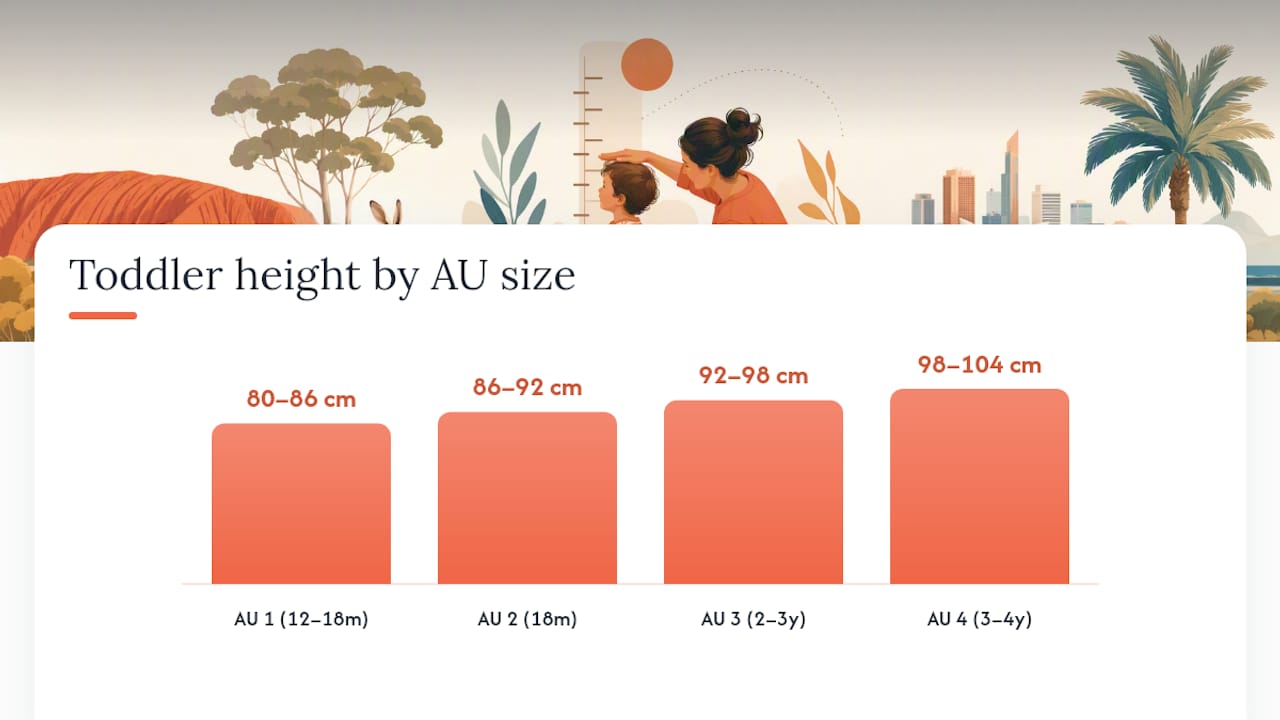
| AU size | Approx. age | Height (cm) | Weight (kg) | Chest (cm) | Waist (cm) |
|---|---|---|---|---|---|
| 1 | 12–18 months | 80–86 | 10–12 | 50 | 48 |
| 2 | 18 months | 86–92 | 12–14 | 52 | 50 |
| 3 | 2–3 years | 92–98 | 14–16 | 54 | 52 |
| 4 | 3–4 years | 98–104 | 16–18 | 56 | 53 |
Height ranges are drawn from Standards Australia body-measurement specifications and cross-referenced with published retail charts from Target Australia and OshKosh/Carter’s Australia.
A few things worth knowing before you lock in a size:
- Age is approximate. A 3-year-old at 100 cm fits a size 4, not a size 3. Height wins.
- Chest over waist for tops. If a child is between sizes, choose the larger chest measurement for shirts and bodysuits.
- Waist over height for bottoms. Slim-build toddlers often need adjustable-waist pants in their height size.
- Fabric stretch changes the equation. Cotton-spandex leggings and jersey knits are forgiving across a 2–3 cm height range. Structured woven fabrics, like denim or canvas, need a closer match to the chest and height measurement.
Pro Tip: If your toddler is right on the border between two sizes, choose the larger one for structured garments and the smaller one for stretchy knits. You’ll get more wear either way.
Toddler shoe size chart: AU, UK, US and EU conversions
Shoe sizing across countries is genuinely inconsistent, and buying the wrong size is one of the most common (and avoidable) frustrations for parents shopping online. The table below maps foot length in centimetres to AU/UK, US, and EU sizes for toddlers.
AU and UK toddler shoe sizes are identical, which simplifies buying from UK-based brands.
Foot-length ranges are based on the First Walkers size guide, which recommends always measuring both feet and using the larger measurement.
Growth room rule: Add 8–10 mm to your toddler’s measured foot length before selecting a shoe size. For school shoes, Surefit recommends 10–12 mm. Too much room (more than 15 mm) increases trip risk and can affect how a toddler walks.
For the measuring steps, see the section below.
How to measure your toddler for clothes and shoes at home
You need: a soft tape measure, a flat hard floor, a blank sheet of A4 paper, and a pencil. That’s it.
Measuring for clothing
- Height: Stand your toddler against a wall with bare feet flat on the floor. Mark the wall at the top of their head and measure from the floor to the mark.
- Chest: Wrap the tape measure around the fullest part of the chest, just under the armpits. Keep it snug but not tight — you should be able to slide two fingers underneath.
- Waist: Measure around the natural waist, roughly at the belly button. Toddlers tend to have a rounded tummy, so measure relaxed, not pulled in.
- Hips (for bottoms): Measure around the fullest part of the hips and bottom.
Write these down. You’ll use them again in 2–3 months.
Measuring for shoes
- Place the sheet of paper on a hard floor.
- Have your toddler stand on it with their heel touching a wall or the edge of the paper.
- Trace around the foot with a pencil held vertically (not angled).
- Measure from the heel mark to the tip of the longest toe.
- Repeat for the other foot. Use the longer measurement.
Pro Tip: Measure feet at the end of the day. Feet swell slightly with activity, so an afternoon measurement gives you the most accurate fit. Morning measurements can run up to 3–4 mm shorter.
The First Walkers guide walks through this tracing method with visuals if you want a step-by-step reference.
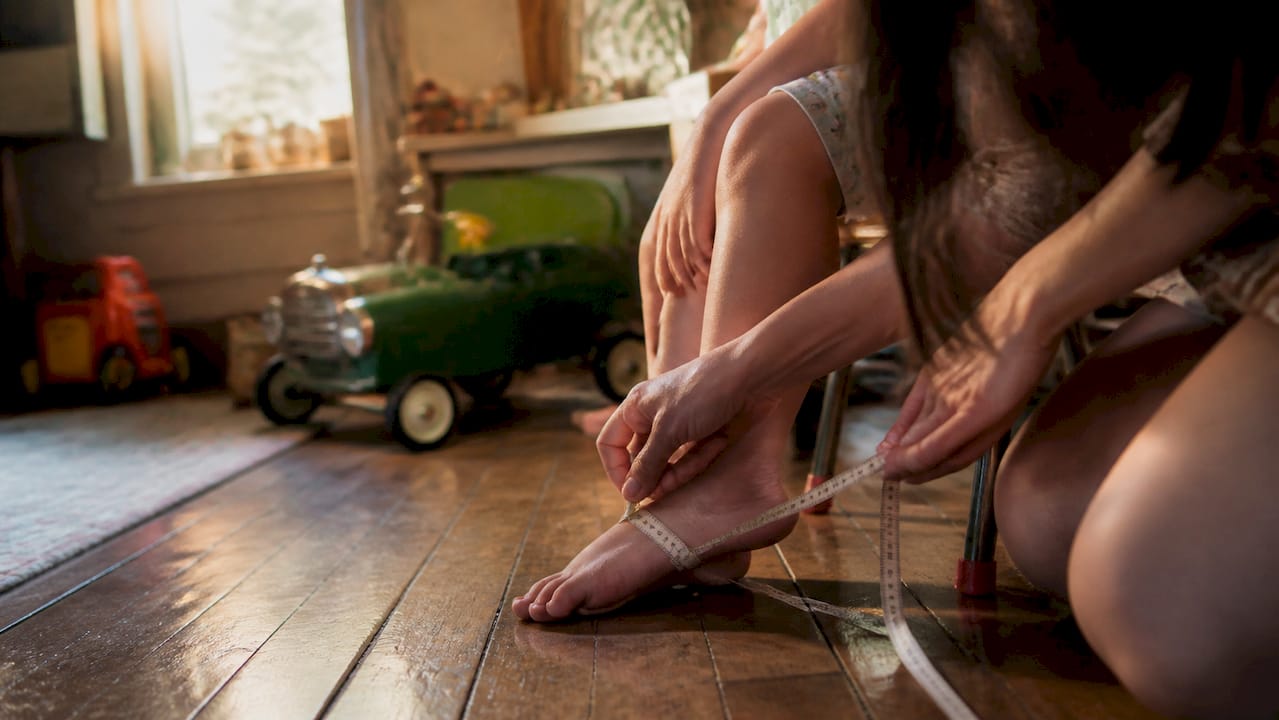
Record everything in a simple size profile: height, chest, waist, foot length, and a note on which brands run large or small. It takes two minutes and saves a lot of guesswork at checkout.
Fit advice by garment type and building a size profile
Different garments need different sizing logic. A one-size-fits-all approach leads to shirts that gap at the chest or pants that drag on the ground.
- Stretchy leggings and jersey knits: Size by height. The stretch compensates for waist and hip variation. Toddler leggings in cotton-spandex blends often fit across two AU sizes comfortably.
- Fitted shirts and bodysuits: Prioritise chest measurement. A shirt that fits the chest but is slightly long in the body is far more comfortable than one that pulls across the shoulders.
- Structured outerwear (jackets, coats): Size up one for layering room. A size 3 jacket over a size 2 jumper needs the extra centimetres. See the Australian winter dressing guide for layering specifics.
- Adjustable-waist pants: Choose by height, then use the adjustable elastic to dial in the waist. These are worth seeking out for slim-build toddlers.
- Dresses: Measure chest and height. A dress that fits the chest but is short in the hem is still wearable; one that fits the hem but pulls across the chest is not.
Your child’s size profile template
Keep a note on your phone or a card in your wallet:
Pro Tip: Note brand-specific quirks as you discover them. European brands, including many stocked at Baby Goes Retro, often size by height with generous chest room, which suits toddlers with a lean build. Jot it down once and you won’t need to second-guess it next time.
How quickly do toddlers grow, and when should you re-measure?
Toddlers grow faster than any other age group outside infancy. Between ages 1 and 4, most children gain roughly 6–8 cm in height per year, but the growth is uneven — spurts happen, and a child can jump a full clothing size in six weeks.
Surefit’s sizing guidance recommends the following schedule:
- Babies and toddlers (0–3 years): Re-measure every 2–3 months.
- Preschoolers (3–5 years): Re-measure every 3–4 months.
- School-age children (5+): Re-measure every 4–6 months.
Signs it’s time to re-measure before your scheduled check:
- Sleeves sit above the wrist bone
- Shirt hems ride up above the navel
- Pants drag on the ground (they’ve grown in the waist but not the leg — common in toddlers)
- Shoes leave red marks on the toes or heel
- Your toddler has changed their gait — shuffling or tripping more than usual
When any of these appear, go back to the measuring steps above and update the size profile.
Quick fixes for common toddler fit problems
Most fit issues have a simple fix before you reach for the returns form.
- Sleeves too short, body length fine: The child has grown in the arms. Size up in tops; look for styles with a slightly longer sleeve cut.
- Waist too tight, length fine: Try adjustable-waist styles or one size up in bottoms. Structured denim is the most common culprit.
- Shirt gaps at the chest: The chest measurement is the limiting factor. Size up in tops and use the chest column, not height, as your guide.
- Shoes slipping at the heel: The shoe is too long. Check the inner length against the foot measurement. More than 15 mm of growth room causes slipping and increases trip risk.
- Shoes causing red marks or blisters: The shoe is too short or too narrow. Measure again — feet can change size faster than you expect during a growth spurt.
- Toddler tripping more than usual: Check both shoe length and the heel counter (the firm back section of the shoe). A collapsed heel counter offers no support and can cause stumbling.
When to stop adjusting and return the item: If a garment restricts movement at the shoulders or crotch, or if a shoe causes any redness after 10 minutes of wear, it is not the right fit. No amount of adjustment fixes a garment that is structurally the wrong size. Use the returns window — that’s exactly what it’s there for. KidSpot’s conversion guide also notes that sizing inconsistency across international brands is common, so keeping notes on which brands run true to size saves time on future orders.
When you do return or exchange, note the specific fit issue in your size profile. “Brand X size 3 — chest too tight at 55 cm” is the kind of detail that pays off every time you shop that brand again.
Why accurate sizing matters more than most parents realise
Getting sizing right from the start is something Baby Goes Retro has thought about since 2007. As a family-run business, we’ve seen firsthand how much frustration comes from buying by age label alone — and how quickly that frustration disappears once parents start measuring.
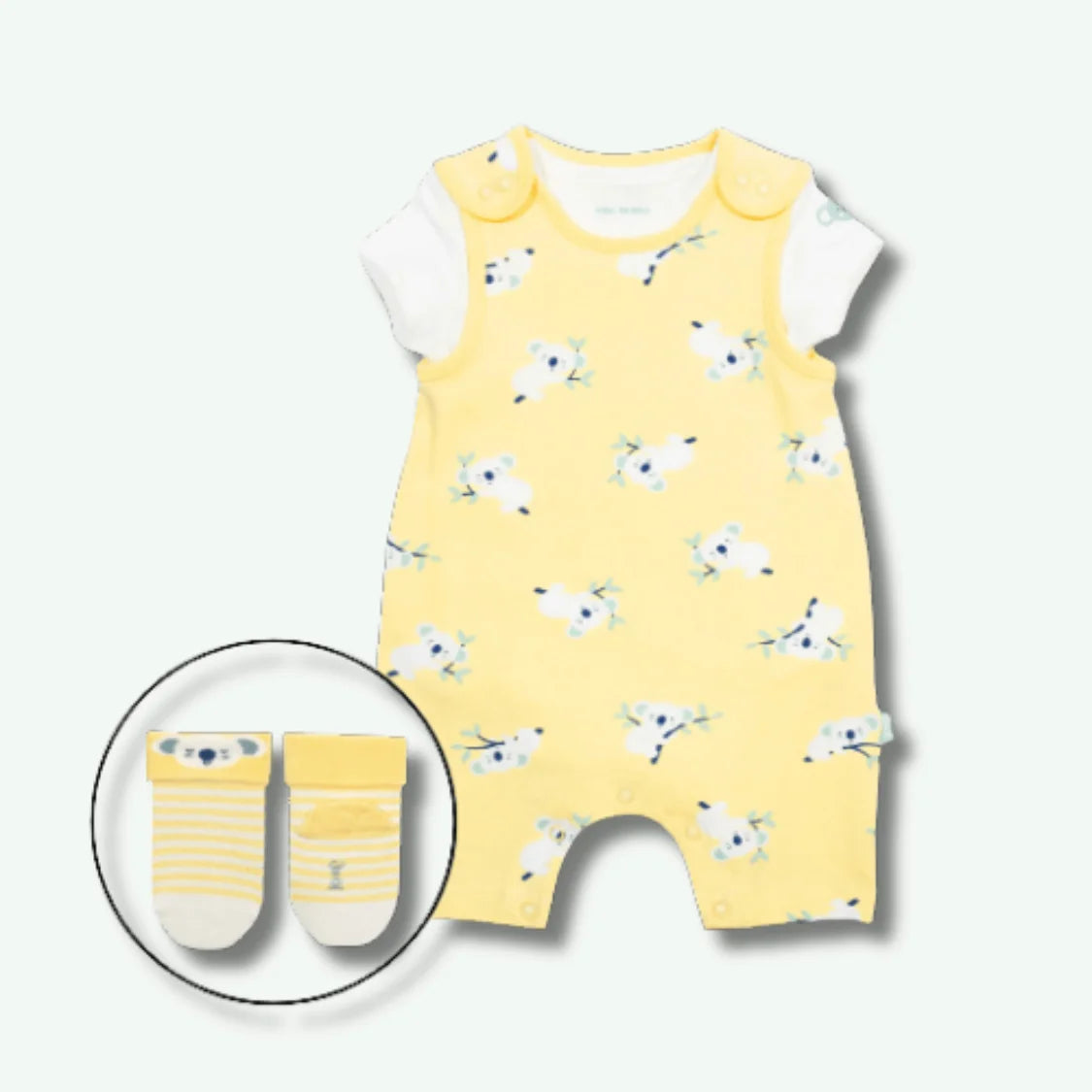
The brands we stock are predominantly European, and they tend to size by height with generous chest room. That suits most Australian toddlers well, but it does mean a size 3 from a European label might fit differently to a size 3 from a mass-market Australian retailer. The size profile habit described in this guide is the single most practical thing you can do to make online shopping for your toddler genuinely reliable.
Our flat-rate shipping is $7.95 Australia-wide, free on orders over $97, and we offer 30-day easy returns and exchanges. If a size doesn’t work, it’s straightforward to swap. But in our experience, parents who measure first and check the brand’s own size chart return far less often.
Baby Goes Retro: sizing support, easy returns, and ethical kids’ clothing
Getting the right fit the first time is easier when the clothes are made to last through growth spurts. Baby Goes Retro stocks premium European organic kids’ clothing — vibrant, durable, and sized by height so the charts in this guide apply directly.
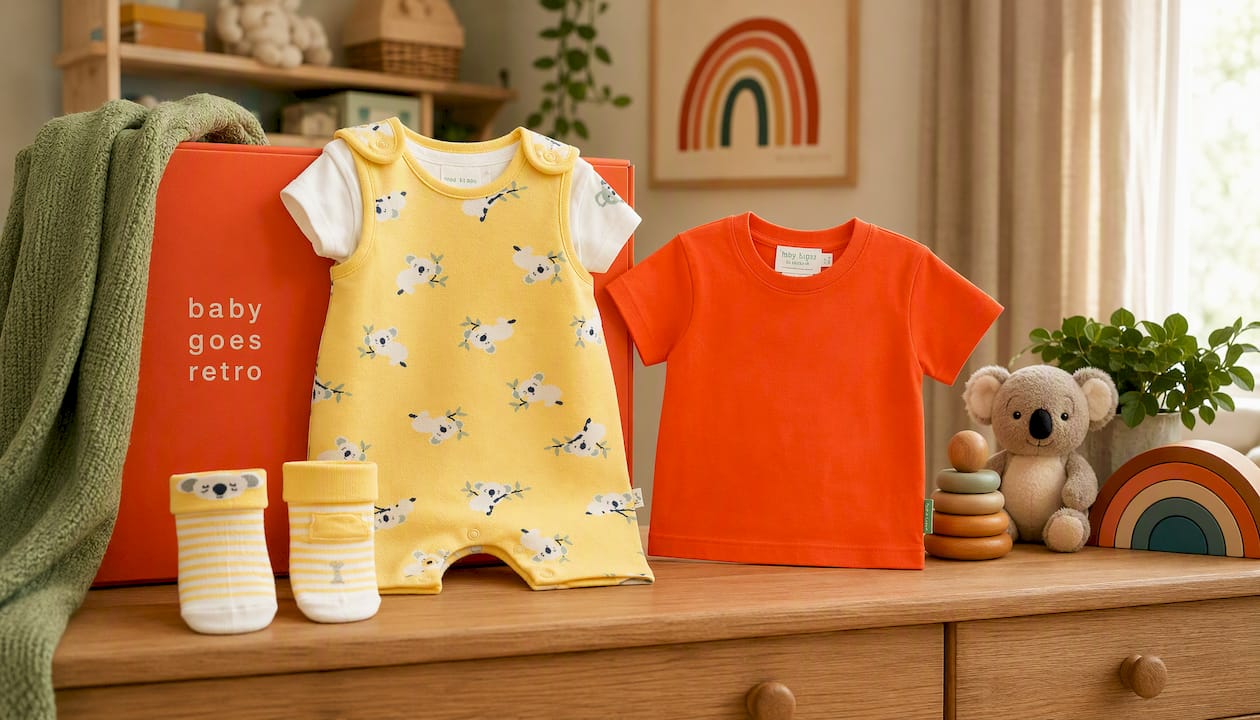
The Kite Pear-fect Dungaree Toddler Bundle is a practical example: adjustable straps, organic cotton, and a cut that accommodates a toddler’s proportions through a full size range. For a bodysuit that fits snugly without restricting movement, the Kite Pig Pannage Long Sleeve Bodysuit is sized by height and made from certified organic cotton.
Flat-rate shipping is $7.95 Australia-wide, free on orders over $97. Returns and exchanges are open for 30 days. If the size isn’t right, swapping is simple. Browse the full range at Baby Goes Retro and use the size profile you’ve built today to shop with confidence.
Sources
- How to Measure Children’s Feet for Shoes | First Walkers Size Guide | First Walkers
- Baby and kids clothes online: Size conversion chart … - Kidspot
FAQ
What size is a 2-year-old in Australia?
Most 2-year-olds fit AU size 2, which corresponds to roughly 86–92 cm in height and 12–14 kg. If your child is taller or heavier than that range, AU size 3 is the better fit.
What size is a 2–3 year clothing label in AU?
A “2–3” label typically covers the AU size 2–3 range, fitting children around 86–98 cm tall. Check the brand’s own height column, as the label spans two AU sizes and the cut varies by brand.
How do I convert US or EU toddler shoe sizes to Australian?
AU and UK toddler shoe sizes are the same number, so an AU 7 equals a UK 7. A US size runs one number higher than AU/UK (AU 7 = US 8), and EU sizes follow the foot-length table above. Always verify against foot length in centimetres rather than relying on the number alone.
What does size 150 mean in Australian children’s clothing?
Size 150 is a height-based label used by some European and Asian brands, indicating a child approximately 150 cm tall. That falls well outside the toddler range (AU sizes 1–4) and corresponds roughly to an Australian size 10–12 for older children.
How often should I measure my toddler’s feet?
Every 2–3 months during the toddler years. Feet can grow half a size or more in that time, and shoes that are even slightly too small can cause discomfort and affect how your toddler walks.
0 comments