


Wash organic cotton on cold (30°C or below), gentle cycle, turned inside out, with a mild detergent, then air-dry. That single habit protects the fibres, locks in colour, and cuts your laundry energy use significantly. According to QUT Textile Research, lower wash temperatures preserve fibre strength and colour, and cold washes handle routine cleaning without any compromise.
Here’s what to do every wash:
- Machine or hand wash? Both work. Machine on gentle/delicate at ≤30°C, or hand wash in cool water with a short soak.
- Turn inside out before loading to protect surface fibres and printed designs.
- Pre-treat stains first with cold water and a gentle pre-treat before the full wash.
- Air-dry wherever possible. If you must use a dryer, lowest heat only, remove while slightly damp.
- Skip fabric softener. It coats fibres and reduces breathability over time.
- Wash full loads to reduce friction, water use, and energy per garment.
Pro Tip: A cold rinse cycle alone can refresh lightly worn organic cotton without a full wash, saving both water and energy.
Key takeaways
Washing organic cotton on cold (≤30°C), gentle cycle, inside out, then air-drying is the single most effective way to preserve fabric quality and reduce laundry energy use.
| Point | Details |
|---|---|
| Cold wash, gentle cycle | Use ≤30°C and a delicate or gentle setting every time for routine washes. |
| First-wash shrinkage risk | Untreated organic cotton typically shrinks 3–5% on first wash; cold plus air-dry keeps it at 2–3%. |
| Air-dry in the shade | Tumble drying is the most damaging habit; line-drying eliminates dryer energy entirely. |
| Mild detergent, no softener | Choose a plant-based or pH-neutral liquid; fabric softener reduces breathability over time. |
| Baby Goes Retro | Stocks ethically sourced European organic cotton pieces designed for repeated gentle-care washing. |
Table of Contents
- How to wash organic cotton: machine and hand-wash steps
- Drying organic cotton and preventing shrinkage
- Which detergents to use and how to treat stains
- Ironing, reshaping, and storing organic cotton
- Reading care labels on organic cotton garments
- Sustainable laundry habits for Australian households
- An honest word from Baby Goes Retro
- Ready-made organic cotton pieces worth caring for
- Sources
- FAQ
How to wash organic cotton: machine and hand-wash steps
Machine washing
- Sort your load. Keep organic cotton away from denim, towels, and anything with exposed zips or velcro, which cause surface abrasion.
- Turn garments inside out. This protects printed or dyed surfaces from friction and fading.
- Use a mesh laundry bag for delicate items, baby bodysuits, and anything with fine knit. A Guppyfriend bag also captures microfibres in mixed loads.
- Select gentle, delicate, or ‘cotton cold’ cycle at 30°C or below. A 40°C wash is acceptable for heavier soiling occasionally, but TURTLEGROOVE’s care guidance does not recommend it for routine washes.
- Choose a low spin speed (800–1000 rpm). High spin stresses seams and distorts knit shapes.
- Load size matters. A full load reduces per-garment wear, but overfilling prevents proper rinsing and increases friction.
Hand washing
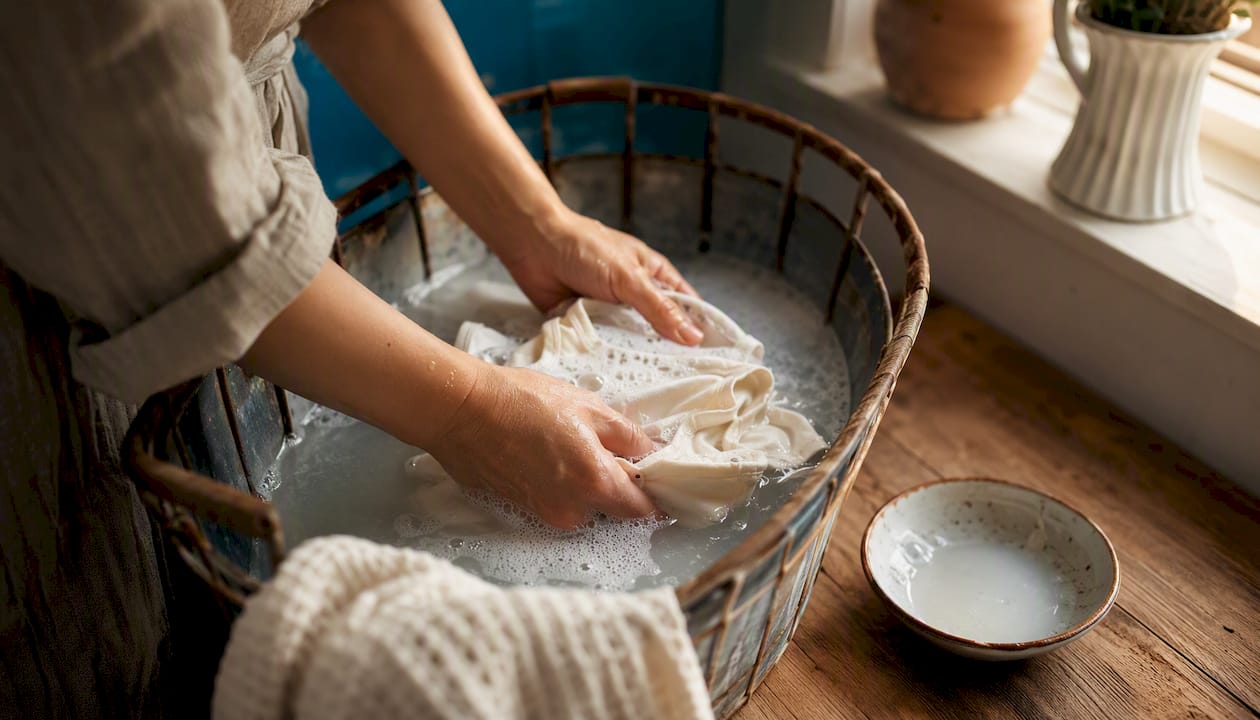
- Fill a basin with cool water and add a small amount of mild liquid detergent.
- Submerge the garment and soak for 10–15 minutes.
- Gently agitate by squeezing the fabric; avoid wringing or twisting.
- Rinse thoroughly in cool water until no suds remain.
- Press water out gently, then reshape the garment immediately while wet.
Australian laundry guidance consistently recommends washing like fabrics together and avoiding abrasive items in the same load, which is especially relevant for fine organic cotton knits.
Pro Tip: Never overdose detergent. Excess residue is harder to rinse out in cold water and can stiffen fibres over repeated washes. Half the recommended dose often works fine for lightly soiled loads.
Drying organic cotton and preventing shrinkage
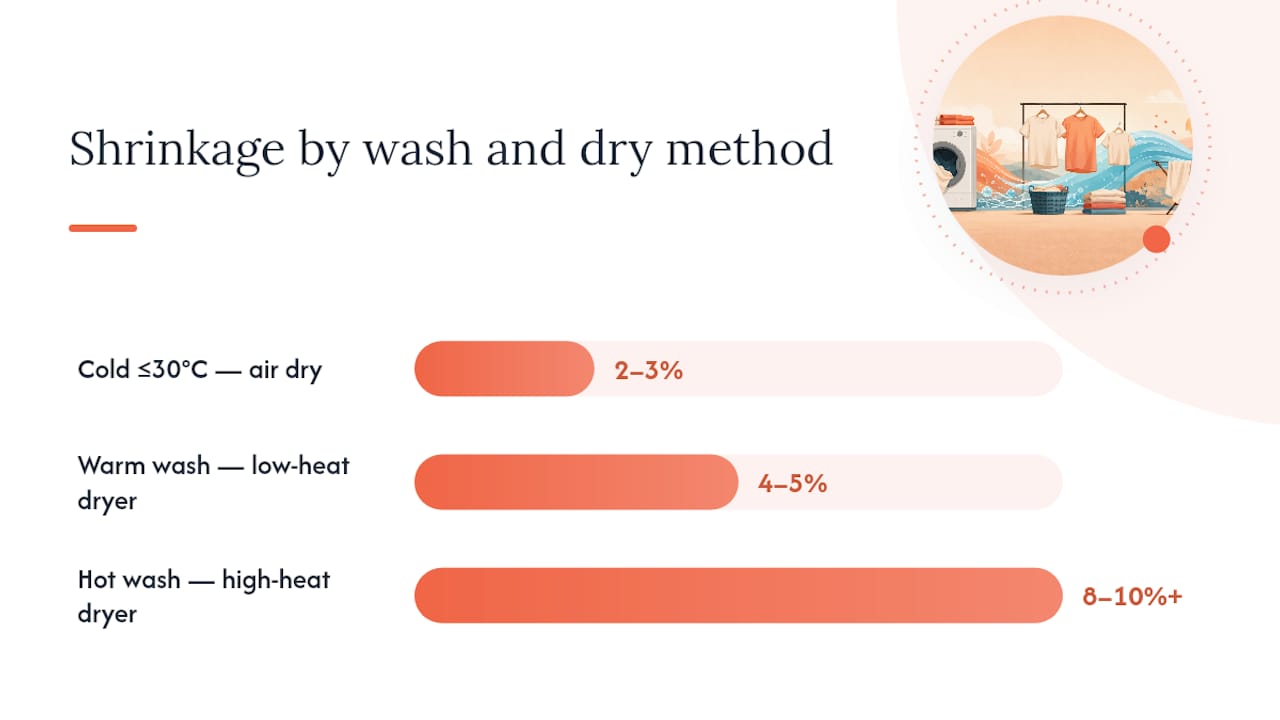
Heat and mechanical tumbling are the two biggest causes of shrinkage in organic cotton. The first wash carries the highest risk because untreated fibres relax and contract when they meet water and heat for the first time. Research from Initibag puts typical first-wash shrinkage for untreated organic cotton at around 3–5%, with hot washing combined with high-heat tumble drying pushing that figure to 8–10% or more for loose knits.
| Wash and dry method | Typical shrinkage |
|---|---|
| Cold wash (≤30°C) + air dry | 2–3% |
| Warm wash + low-heat dryer | 4–5% |
| Hot wash + high-heat dryer | 8–10%+ |
Air-drying in the shade is the simplest way to stay at the lower end of that range. Reepeat’s care guide recommends reshaping garments while damp and drying in the shade to preserve drape and reduce fading, noting that organic cotton often lacks the protective chemical finishes of conventional fabric.
Practical drying steps:
- Reshape seams and hems immediately after washing, while the garment is still damp.
- Dry flat on a clean towel for heavy knits and structured pieces to prevent stretching.
- Hang tees and lightweight tops by the side seams, not the shoulders, to avoid distortion.
- Avoid direct hot Australian sun on dyed garments; UV fading is real, especially on deep colours.
- If using a tumble dryer, select the lowest heat setting, run a short cycle, and remove the item while it is still slightly damp. Reshape and finish air-drying flat.
Quick dos and don’ts:
- ✓ Air-dry in shade
- ✓ Reshape while damp
- ✓ Dry flat for knits
- ✗ High-heat tumble dry
- ✗ Wring or twist wet fabric
- ✗ Leave bunched in the machine after the cycle ends
For parents wondering about the dryer specifically, the Baby Goes Retro dryer guide covers safe drying for baby items in more detail.
Which detergents to use and how to treat stains
Choosing the right detergent
Mild, plant-based or pH-neutral liquid detergents are the best fit for organic cotton. Liquid formulas dissolve fully in cold water, whereas powder detergents can leave undissolved residue on fibres at low temperatures.
Avoid:
- Biological or enzyme-heavy detergents for fine or delicate cotton (enzymes can break down natural fibres over time)
- Optical brighteners, which alter colour and are difficult to rinse out completely
- Chlorine bleach on coloured or untreated organic cotton
- Fabric softener, which coats fibres, reduces absorbency, and traps odour
Oxygen bleach (sodium percarbonate) is acceptable occasionally on white organic cotton items, used at the correct dilution.
Stain removal: step by step
Act fast. The longer a stain sits, the harder it is to shift without harsh chemistry. DRESSFRESH’s organic cotton care guide recommends immediate blotting and cold rinsing, followed by a gentle pre-treat, as the safest approach for untreated organic fibres.
- Blot the stain immediately with a clean cloth. Do not rub.
- Rinse with cold water from the back of the fabric to push the stain out rather than in.
- Apply a gentle pre-treat: a small amount of diluted dish soap, a baking-soda paste, or diluted white vinegar. Test on a hidden seam first.
- Soak briefly in cool water for 15–30 minutes.
- Wash on cold as normal.
For structured garments (blazers, stiffened collars), a professional wet-cleaning service is a better option than home washing. Wet cleaning uses water-based solvents without the harsh chemicals of traditional dry cleaning, making it the more eco-friendly choice for delicate pieces. For everyday baby clothes stains, the blot-and-cold-rinse method handles most incidents well.
Ironing, reshaping, and storing organic cotton
Ironing and finishing
Iron organic cotton on a low-to-medium heat setting, inside out, while the fabric is still slightly damp. Steam helps relax fibres without the direct heat contact that can scorch or flatten the weave. A handheld garment steamer is a gentler alternative and works well for refreshing between washes.
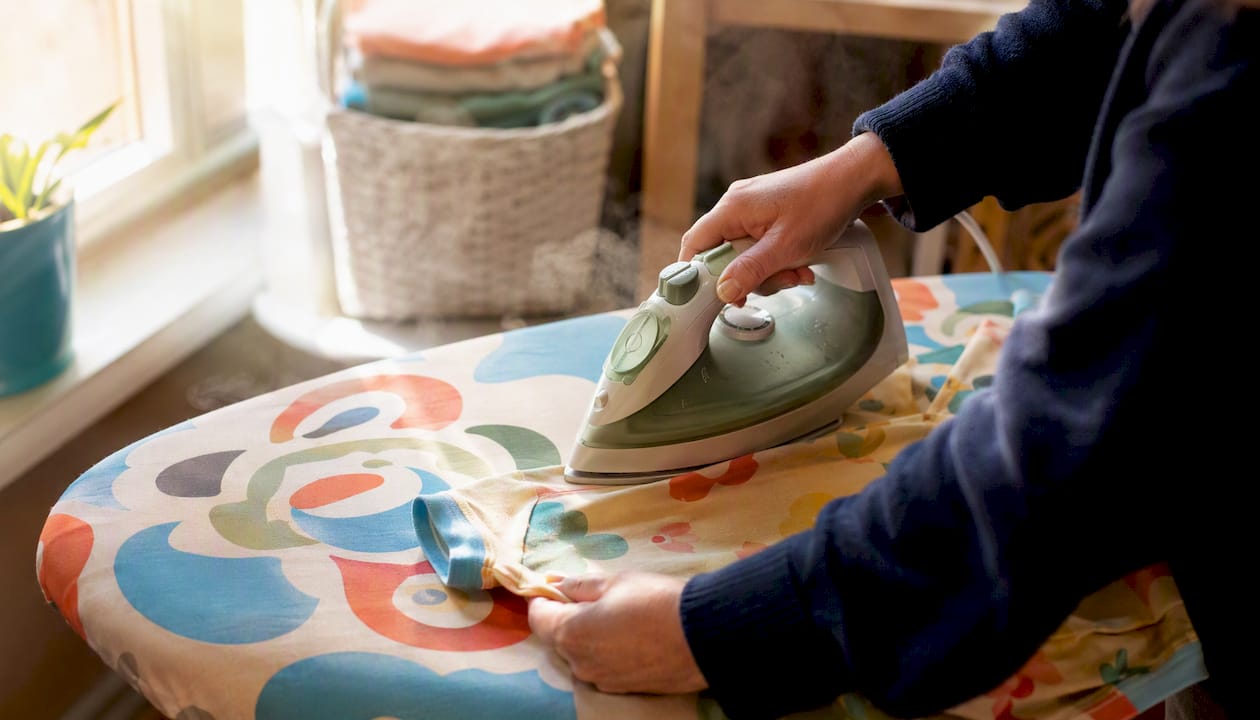
If a garment has shrunk slightly after washing, gently stretch it back to shape while damp and pin or block it flat until dry. This works best within the first wash or two; repeated heat exposure makes shrinkage permanent.
Storage
- Store organic cotton clean. Residual oils and food traces attract moths and cause yellowing over time.
- Fold heavy knits rather than hanging them; hanging causes shoulder stretch.
- Use breathable cotton or linen storage bags rather than airtight plastic, which traps moisture and encourages mildew.
- Natural moth deterrents like cedar blocks or dried lavender sachets work without the chemical residue of mothballs.
Pro Tip: For pilling on well-loved organic cotton pieces, a fabric shaver removes bobbles quickly and restores a near-new surface. Use it before washing, not after, so loose fibres rinse away cleanly.
Reading care labels on organic cotton garments
Care labels are the first source of truth, and brand-specific labels override general rules. Here are the symbols you’ll see most often on organic cotton:
- Washtub with 30 — machine wash, maximum 30°C
- Washtub with hand — hand wash only
- Triangle (empty) — bleaching permitted; crossed triangle — do not bleach
- Square with circle — tumble dry permitted; dot inside = low heat; crossed = do not tumble dry
- Iron with one dot — low iron (up to 110°C); two dots = medium; crossed iron = do not iron
- Circle with P or F — dry clean; crossed circle — do not dry clean
In practice: a label reading “30°C gentle” translates to your machine’s cold or delicate cycle. Lebenskleidung’s care guidance also recommends checking whether a garment is labelled pre-shrunk or sanforized at purchase, as these treatments reduce first-wash shrinkage considerably.
Sustainable laundry habits for Australian households
Cold water is the single biggest sustainability win in the laundry. SOLOS Life’s Australian care guide notes that heating water accounts for up to 90% of wash energy, and switching to cold cuts that energy use by around 60–90% depending on your machine and settings. Modern detergents are formulated to work in cold water, so there’s no cleaning trade-off.
| Habit | Sustainability benefit |
|---|---|
| Cold wash (≤30°C) | Reduces wash energy by up to 90% vs hot |
| Full loads only | Fewer cycles, less water and detergent per garment |
| Air-dry on the line | Eliminates dryer energy entirely |
| Correct detergent dose | Less chemical runoff, better rinsing |
Australian-specific tips:
- Line-dry in the morning or late afternoon to avoid peak UV hours (roughly 10 AM–2 PM), which fade dyed organic cotton faster than tumble drying does.
- A Hills Hoist or similar rotary clothesline keeps garments in shade as it turns, a practical advantage in sunny Australian conditions.
- Reduce washing frequency by spot-treating minor marks rather than running a full cycle. Fewer washes means less fibre wear and lower water use.
Pro Tip: For baby items that need sanitising, a 60°C cycle once in a while is fine, but cold washing with a quality detergent handles routine hygiene for most baby clothing. Reserve higher temperatures for genuine sanitising needs, not every wash.
An honest word from Baby Goes Retro
The care advice in this guide reflects exactly what we recommend to every customer who shops with us. We’ve been sourcing premium European organic baby and kids’ clothing since 2007, and the garments we carry are designed to last through multiple children when cared for correctly. Cold washing, air-drying, and a mild detergent aren’t just good for the planet; they’re what keeps the colours vivid and the fabric soft wash after wash.
If you ever have a question about caring for a specific piece, our team is happy to help. Flat-rate shipping is $7.95 across Australia, free on orders over $97, and we offer 30-day easy returns and exchanges so you can shop with confidence.
Ready-made organic cotton pieces worth caring for
Three pieces from Baby Goes Retro that reward the gentle-care approach above:
The Kite Pig Pannage Long Sleeve Bodysuit is a cold-wash-friendly organic baby bodysuit with popper opening, built for daily wear and repeated gentle cycles without losing its shape.
The Kite Koala Time Baby Gift Bundle brings together a curated set of easy-care organic pieces, a practical choice for new parents who want quality from the first wash.
For active toddlers, the Kite Pear-fect Dungaree Toddler Bundle is made from durable organic cotton that handles the full care routine above without fuss.
All three are ethically sourced, vibrantly coloured, and built to last. ✦ FLAT RATE SHIPPING $7.95 ✦ FREE OVER $97 ✦ 30-DAY EASY RETURNS ✦
Browse the full organic range at Baby Goes Retro and find something worth caring for.
Sources
- Cotton knowledge base – QUT Textile Research
- Does organic cotton shrink? Washing & care guide – Initibag
- How to care for organic cotton clothes & linen | Full guide – Reepeat
- How to care for organic cotton clothing – TURTLEGROOVE
- Organic cotton care guide – DRESSFRESH
FAQ
Can you put organic cotton in the washing machine?
Yes. Wash organic cotton in the machine on a gentle or delicate cycle at 30°C or below, turned inside out, and use a mild detergent. A mesh laundry bag adds extra protection for fine knits and baby items.
Does 100% organic cotton shrink in the wash?
Untreated organic cotton typically shrinks on the first wash. Cold washing and air-drying keeps shrinkage minimal; hot washing combined with high-heat tumble drying can push it higher.
How should I wash organic cotton baby clothes?
Cold water, gentle cycle, mild plant-based detergent, and air-dry in the shade. For genuine sanitising needs (illness, for example), a 60°C cycle occasionally is acceptable, but cold washing handles routine hygiene for most baby garments.
Is organic cotton easy to wash?
Yes, organic cotton is straightforward to care for. The main rules are cold water, gentle cycle, no fabric softener, and air-dry. Following the care label on each garment is the quickest way to get it right every time.
0 comments