


Most babies don’t need a “baby” labelled detergent at all. Choose a fragrance-free, dye-free, low-residue formula, with liquid usually rinsing cleaner than powder, and you’ve covered the essentials. A dedicated baby-specific product earns its place for newborns in the first weeks, babies with diagnosed eczema, or households washing cloth nappies. Beyond the label, careful rinsing and sensible wash habits matter just as much as what’s in the bottle.
TL;DR:
- Most parents can use a fragrance-free, dye-free liquid detergent with minimal ingredients for general baby laundry, regardless of brand claims.
- Powder detergents may leave more residue, especially in hard water, and require thorough rinsing, while liquid formulas rinse out more completely.
- Cloth nappies need a separate, hot, residue-free wash cycle with double rinsing and no fabric softener to prevent skin irritation and build-up.
- Avoid ingredients such as synthetic fragrances, optical brighteners, harsh surfactants, artificial dyes, and certain preservatives, as they can irritate sensitive skin.
- Proper washing involves sorting by soil, treating stains early, and choosing lower temperature cycles to prolong garment life and maintain fabric softness.
Table of Contents
- The baby laundry detergent guide: how to choose a baby-friendly formula
- Which ingredients and additives should you avoid?
- How to wash baby clothes properly, step by step
- Washing cloth nappies and other special items
- Behind this guide: garment care experience at Baby Goes Retro
- Detergent choices for hard water vs soft water
- Environmental impact and eco-friendly detergent options
- Storing baby laundry detergent safely at home
- How often should you wash baby clothes?
- Why the “baby detergent” industry oversells simplicity
- Caring for Baby Goes Retro garments in your laundry routine
- Sources
- FAQ
The baby laundry detergent guide: how to choose a baby-friendly formula
Here’s the part most parents get wrong: they assume “baby” on the label means something regulated or tested differently. It usually doesn’t. Many paediatric dermatologists point out that a fragrance and dye-free “free and clear” detergent does the same job as a premium baby version, and the baby label is often just marketing. What actually matters is the ingredient list, not the packaging.
What to look for on any bottle or box:
- Fragrance-free (not just “unscented”)
- No dyes or colourants
- No optical brighteners
- A short, legible ingredient list, not a wall of chemical names you can’t pronounce
- Minimal preservatives
Format matters more than most parents expect. Liquid detergents rinse out of fabric more completely than powders, which is a real advantage when a newborn’s skin will be pressed against that fabric for hours a day. Powders can be cheaper per wash and work well in hard water, but they’re more prone to leaving residue if you’re not running a thorough rinse cycle. Sheets and strips are handy for travel and cut down on plastic packaging, though they tend to cost more per load and some brands still add fragrance for market appeal, so check the label regardless of format.
Price comparisons only make sense per wash, not per bottle. A $25 concentrated liquid that does 60 washes is cheaper than a $15 bottle that only manages 20, and concentrated formulas also mean less plastic and freight per wash, which matters if you’re trying to keep laundry choices reasonably eco-friendly.
Decision flow for common situations:
- Newborn or known sensitive skin: start with a fragrance-free, dye-free liquid and add an extra rinse cycle for at least the first few months.
- Older baby, no history of reaction: a standard Free & Clear family detergent is fine. There’s no need to keep buying a separate baby product once skin has proven tolerant.
- Cloth nappies: use a dedicated wash routine (covered below) rather than whatever detergent you use for onesies and singlets.
- Diagnosed eczema or contact dermatitis: talk to your GP or a dermatologist about a specific product, and patch test before committing to a full wash load.
Pro Tip: Buy the smallest size of a new detergent first, wash two or three items, and check your baby’s skin over the next 24 hours before committing to a big bottle you might not use.
Most families can stop worrying once skin has shown no reaction for a few weeks. A Free & Clear family detergent is genuinely fine for most babies past the newborn stage, and specialist baby formulas are best reserved for a diagnosed sensitivity rather than used as a default. Fabric choice plays into this too. Naturally soft, breathable fibres like organic cotton generally need less aggressive detergent to stay soft and clean, which is one more reason we lean toward gentler formulas across the board.
Which ingredients and additives should you avoid?
Fragrance-free and unscented are not the same thing, and mixing them up is one of the most common mistakes parents make. “Unscented” can mean a masking agent has been added to cancel out the base chemical smell, while “fragrance-free” means no perfume compounds were added at all. For a newborn, fragrance-free is the safer bet.
Ingredients and additives worth avoiding, or at least questioning:
- Synthetic fragrances and perfume compounds
- Optical brighteners
- Harsh surfactants like SLS or SLES in high concentrations
- Certain preservatives, including quaternium-15
- Artificial dyes
- Added essential oils (natural doesn’t mean non-irritating)
Optical brighteners deserve a closer look because they’re one of the sneakier additives. They’re not dirt-fighting agents at all. They’re a type of dye engineered to cling to fabric fibres and reflect light back, making whites look “whiter” and colours look brighter under normal lighting. Because they’re designed to survive the rinse cycle rather than wash away, they stay in contact with skin longer than most other detergent ingredients, which is why they’re widely flagged as unsuitable for newborn laundry.
Enzymes are a different story, and they’re often unfairly lumped in with harsher additives. They break down protein and starch-based stains, the kind babies produce constantly, and they’re generally safe once properly rinsed. If a baby reacts to an enzyme-based detergent, the irritation is more often caused by fragrance or leftover residue than the enzyme itself.
Fast label-reading flags: if the ingredient list uses vague terms like “parfum” with no further breakdown, or if the front label leans hard on “baby” imagery without listing “fragrance-free” explicitly, treat it as a product to research further before buying.
How to wash baby clothes properly, step by step
Every new garment should go through a wash before it touches your baby’s skin. This isn’t fussy overcaution. Manufacturing dust, sizing agents, and handling residue collect on clothing between the factory and your home, and washing new baby clothes before first wear removes that layer before it sits against a newborn’s skin.
A simple, repeatable routine:
- Sort by soil level and fabric. Heavily soiled items get their own load rather than mixing with lightly worn clothes.
- Treat fresh stains immediately. Blot (don’t rub) liquid spills, rinse under cold water, then soak in a basin with cool water and a small amount of your regular detergent for 15 to 30 minutes.
- Pretreat set-in stains. An enzyme pretreater works well on protein stains like formula or food; for anything else, a dab of the detergent itself rubbed gently into the fabric before washing is usually enough. Test on an inside seam first if the fabric is new to you.
- Choose the right cycle. A gentle or delicate cycle protects knit fabrics and trims; a normal cycle is fine for sturdier cotton basics.
- Match temperature to the job. Warm water lifts most everyday stains without damaging fabric; hot water is worth using occasionally for hygiene, particularly after illness, but check garment care labels first since hot water can shrink some knits.
- Skip the fabric softener and dryer sheets. Both leave a coating that can trap fragrance chemicals against skin and reduce the breathability of natural fibres.
- Add an extra rinse. Most machines have a setting for this, and it’s the single easiest way to strip out leftover detergent that a standard cycle misses.
Pro Tip: If you suspect a detergent is causing redness, rash, or dry patches, stop using it immediately, rewash the affected clothing on an extra rinse with nothing added, and contact your GP if the skin doesn’t settle within a couple of days.
One safety note that’s easy to overlook: laundry pods are a genuine poisoning risk in homes with young children, since their bright colours and squishy texture can resemble sweets to a curious toddler. If you use pods at all, store them somewhere completely out of reach, not just on a laundry shelf a toddler could climb to.
For stubborn stains on tiny clothes specifically, from formula spit to grass-stained knees, a clever, targeted approach beats reaching for stronger detergent every time.
Washing cloth nappies and other special items
Cloth nappies need a completely separate protocol from the rest of the wash pile, and skipping this step is the most common cause of ongoing nappy rash in cloth nappy households. Residue from regular detergent, fabric softener, or insufficient rinsing builds up in nappy fabric over repeated washes, trapping moisture against skin.
The basics that actually prevent rash:
- Wash nappies separately, never mixed into a general baby laundry load.
- Use a hot wash with a mild, residue-free detergent.
- Run a double rinse every time, even if your machine’s standard cycle claims to rinse twice already.
- Skip fabric softener entirely on nappies. It coats absorbent fibres and reduces how well they soak up moisture.
- For reusable nappies, follow the manufacturer’s specific temperature guidance since fabric blends vary.
Plush toys, blankets, and garments with trims or Velcro closures need gentler handling. Use a mesh laundry bag to protect Velcro from snagging other fabrics, and check care labels on trims before using hot water, since some decorative stitching shrinks or puckers at high temperatures. Heavily soiled items, like anything after a stomach bug, deserve an occasional hot sanitising wash, but everyday laundry doesn’t need that intensity. Save the hottest settings for when hygiene genuinely calls for it.
Behind this guide: garment care experience at Baby Goes Retro
Daniel writes Baby Goes Retro’s clothing-care guides with one goal: help Australian parents get more wear out of garments that are genuinely built to last, not just marketed that way. That means paying close attention to how fabric choice interacts with laundry habits, because a detergent recommendation that works for polyester blends can be the wrong call for organic cotton knits or ribbed cuffs.
Ethically made clothing only stays soft and vibrant if it’s washed the way it was designed to be washed. Get the detergent and the temperature right, and a well-made garment will outlast three cheap ones.
Baby Goes Retro has been a family-run business since 2007, sourcing European organic and ethically made baby and kids’ clothing that’s built to handle the reality of childhood, not just look good on a hanger. Shipping is a flat $7.95 Australia-wide, free once your order passes $97, and every purchase comes with 30-day easy returns and exchanges if something isn’t quite right. If you’re shopping for baby clothes suited to sensitive skin, fabric quality and laundry routine work together, not separately.
Detergent choices for hard water vs soft water
Water hardness changes how well any detergent performs, and it’s a factor most baby laundry advice skips entirely. Hard water, common across large parts of Australia depending on your local water supply, contains higher mineral content that can react with detergent to leave a stiffer residue in fabric and reduce lathering.
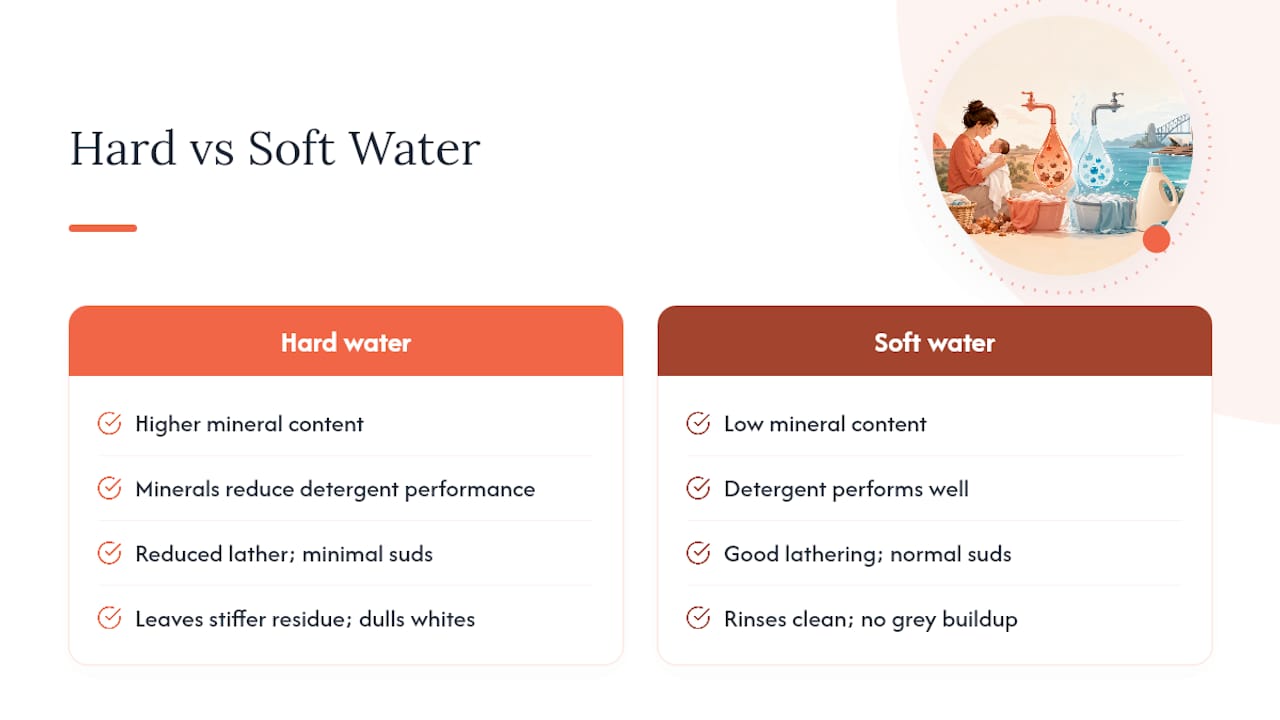
If you’re in a hard water area, a slightly higher detergent dose (within the product’s recommended range, never beyond it) helps counteract mineral interference, and powder detergents often perform better here since some formulas are built to handle mineral content. Liquid detergents can underperform in very hard water because they rely on surfactants that hard water minerals partially neutralise.
Soft water is more forgiving. Standard doses of liquid detergent rinse cleanly, and you’re less likely to see the dull, slightly grey buildup that hard water leaves on white baby clothes over time.
If you’re unsure which category your home falls into, a simple sign is how detergent lathers: minimal suds and a slightly waxy feel on washed fabric usually point to hard water. Adjusting dose and format to match your water type does more for actual cleanliness than switching brands repeatedly and hoping for a better result.
Environmental impact and eco-friendly detergent options
Detergent choice has an environmental footprint that goes beyond what’s in the bottle. Concentrated liquids and powders reduce packaging and transport weight per wash compared to diluted formulas, and sheets or strips cut plastic bottle waste almost entirely, though they typically cost more per load.
Biodegradable surfactants break down more readily in waterways once they leave your washing machine, which matters given that all greywater eventually reaches a treatment plant or, in some cases, local waterways. Phosphate-free formulas are now standard across most of the Australian market, reducing the nutrient load that can trigger algal blooms downstream.
Concentration matters just as much as ingredients. A detergent that requires half the dose per wash uses less packaging, less water in manufacturing, and less freight fuel to reach your laundry, even before you factor in what happens after it goes down the drain. It’s worth checking the recommended dose on any “eco” branded product too, since some concentrated formulas need less than the cap measure suggests, and overdosing wastes money as much as it wastes resources.
Cold and warm wash cycles use meaningfully less energy than hot cycles, so save hot water for the occasions that genuinely need it (illness, cloth nappies, heavily soiled loads) rather than defaulting to it for every wash.
Storing baby laundry detergent safely at home
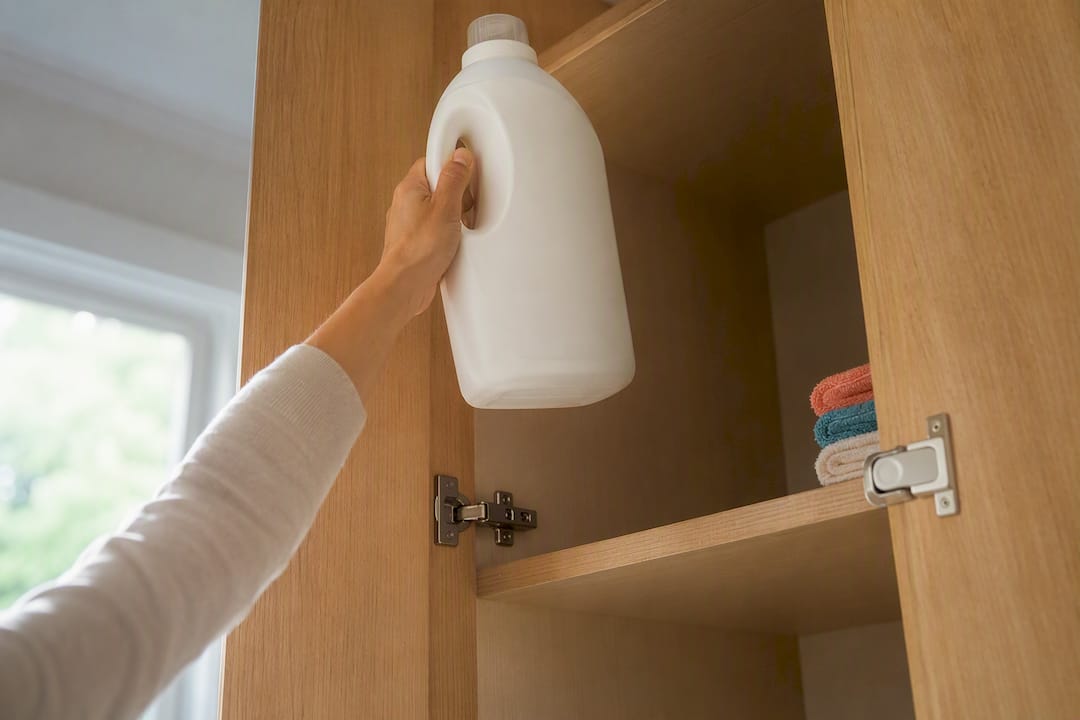
Laundry detergent, in any form, needs to be stored somewhere a crawling baby or curious toddler cannot reach, and that’s a higher shelf or a locked cabinet, not just “out of the way.” Liquid detergents, pods, and concentrated powders are all genuinely dangerous if swallowed, and pods in particular carry a real poisoning risk because their bright colours and soft texture can look like something to eat.
Keep detergent in its original container with the label intact. Decanting into an unlabelled bottle removes the safety information and dosing instructions you’ll want on hand, and it also removes any child-resistant cap the original packaging came with.
Store detergent away from heat sources and direct sunlight, since both can break down active ingredients over time and reduce how well the product actually cleans. A laundry cupboard with a secure latch is ideal. If that’s not available, a shelf well above toddler height, with nothing nearby to climb on, is the next best option.
Once you’ve measured out a dose, don’t leave the cap or scoop sitting with detergent residue on the bench. It only takes a moment for a toddler to find it.
How often should you wash baby clothes?
Daily-worn items like onesies, bibs, and singlets need a wash after every use, simply because they’re in direct contact with skin, spit-up, and nappy leaks throughout the day. Outerwear, cardigans, and jackets that don’t touch skin directly can go several wears between washes unless visibly soiled.
Over-washing is a real thing, and it’s not just about wasted water and detergent. Frequent hot washing and excessive dosing can shorten the lifespan of natural fibres, breaking down the softness that made organic cotton or quality knitwear worth buying in the first place. Washing every item after a single light wear, at a hotter temperature than needed, wears out elastic and fades colour faster than a more measured routine.
A practical rule: wash anything with visible soiling, spit-up, or nappy contact immediately; give lightly worn outer layers a sniff-and-check before assuming they need a wash; and reserve genuinely hot, intensive washes for illness recovery or cloth nappies rather than routine laundry. This keeps hygiene where it matters (against the skin) without accelerating wear on garments that are meant to last through multiple seasons or even a second child.
Why the “baby detergent” industry oversells simplicity
The conventional advice on baby laundry detergent treats the “baby” label as a shortcut, and that shortcut lets people skip the one step that actually matters: reading the ingredient list. Our research keeps pointing to the same conclusion. A fragrance-free, dye-free, low-residue product outperforms a premium “baby” branded bottle that still contains scent compounds or brighteners.
What’s underrated is rinse quality. Parents fixate on brand and price, but an extra rinse cycle on a standard detergent does more for sensitive skin than switching products every few weeks chasing the “right” one. What’s overrated is the assumption that natural or plant-based automatically means gentle. Essential oils marketed as natural can irritate skin just as easily as a synthetic fragrance.
If you take one thing from this guide, prioritise the ingredient list over the label claim, and treat fabric quality as part of the equation, not separate from it. Cheap, poorly made fabric holds residue differently than well-made organic cotton, and that interaction matters more than most detergent marketing admits.
— Daniel
Caring for Baby Goes Retro garments in your laundry routine
Once you’ve settled on a gentle, low-residue detergent, it’s worth matching your wash routine to the garments themselves. The DUNS Sweden Clover Dungarees in Capri Blue and the DUNS Sweden Clover Dungarees in Sulphur Green are both made from organic cotton with vibrant dye work, so turning them inside out before washing protects the printed colour from friction and fading. Wash on a low to medium heat cycle, skip the fabric softener (it dulls organic cotton’s natural softness over time), and let them air dry where possible to keep the fit true.
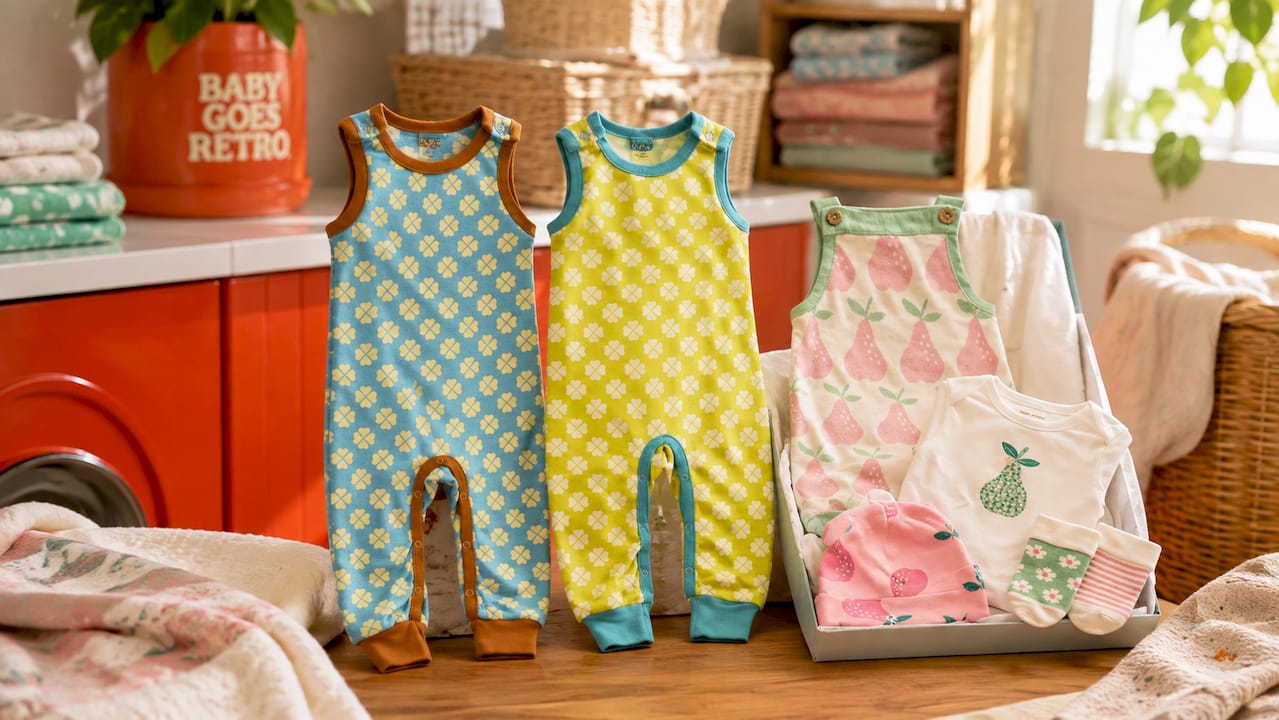
The Kite Pear-fect Dungaree Gift Bundle follows the same rules, and it’s a genuinely easy gift option if you’re shopping for someone else’s baby and want to hand over care instructions along with the outfit. Organic knits and cotton twill both respond well to the fragrance-free, low-residue approach covered throughout this guide, holding their colour and softness through far more washes than a fast-fashion equivalent.
Shipping is available for a flat rate within Australia, and returns and exchanges are accepted within 30 days if the size or colour isn’t quite right. Browse the Clover Dungarees or the gift bundle and pair your new laundry routine with garments actually built to last through it.
Sources
- Baby Laundry Detergent Is Expensive. It’s Also Unnecessary. | Reviews by Wirecutter
- Dressing a newborn | Raising Children Network
- Best laundry powder for baby clothes Australia | Resparkle blog
FAQ
What is the best laundry detergent to use for babies?
A fragrance-free, dye-free liquid detergent with a short ingredient list works well for most babies, and it doesn’t need a “baby” label to do the job properly.
Do babies actually need a different laundry detergent to adults?
Not usually. Most babies do fine on a standard Free & Clear family detergent, with baby-specific formulas reserved for newborns, cloth nappies, or diagnosed skin sensitivities.
What type of detergent is best for washing baby clothes?
Liquid detergent generally rinses cleaner than powder, making it the safer default, though powder can work better in hard water areas if you’re managing mineral buildup.
How do I know if a detergent is irritating my baby’s skin?
Wash a couple of items in the new detergent and watch the skin for 24 hours; redness, dryness, or a rash in that window points to a reaction worth switching away from.
How often should I wash my baby’s clothes?
Wash anything touching skin, like onesies and bibs, after every wear, and save intensive hot washes for cloth nappies or illness recovery rather than everyday laundry.
0 comments