


The best colourful boys outfits pair one hero print or saturated colour with quieter, plain pieces underneath. That formula stops a wardrobe looking chaotic while still delivering the bright, joyful colour boys genuinely love wearing. Prioritise breathable, easy-care fabrics and sensible safety details, especially around drawstrings and nightwear labelling, and shop from a source you trust. A trusted curated selection of practical, vibrant clothing is available for Australian families.
TL;DR:
- Bright, saturated prints should be paired with plain pieces to create balanced, wearable outfits that last through active play and multiple washes.
- Safety and durability hinge on choosing breathable fabrics, proper sun protection, and checking labels for fastenings and care instructions.
- Controlling the ratio of loud to quiet items and repeating key colors in accessories helps style vibrant outfits without clashing.
- Proper washing, turning inside out, and matching similar colors extend the life of bright clothing and maintain their vivid colours.
- Buying higher-quality, organic cotton basics in core colours offers better value and longevity than low-cost, fast-fading alternatives.
Table of Contents
- Best colourful outfit ideas for boys you can put together today
- What makes colourful kids’ clothes safe for active play?
- How do you style bright prints without them clashing?
- How do you wash and store bright kids’ clothes without ruining them?
- Pricing and budget tips for buying colourful boys outfits
- Seasonal considerations for colourful boys outfits
- What size and fit should you buy for colourful boys clothes?
- Why we recommend the pieces we do
- Shop colourful boys outfits at Baby Goes Retro
- Sources
- FAQ
Best colourful outfit ideas for boys you can put together today
You don’t need a stylist to make bright clothes work for an active kid. You need a formula, and a few pieces that do double duty on busy mornings.
Here’s what actually holds up on scooters, at sports carnivals, and through three washes a week:
- Hero-print tee with plain shorts or joggers. A loud dinosaur, rainbow, or retro-stripe tee stays the star, while solid-colour bottoms mean nothing clashes and laundry sorting is simple.
- Matching sets. A sweat top and jogger pair, or tee-and-shorts combo, removes the morning guesswork entirely. Grab one hanger, and the outfit is done.
- Colour-blocked layers. A cardigan or overshirt in a contrasting brights lets you dial colour up or down depending on the day, the weather, or how loud you’re feeling.
- Statement outerwear over a neutral base. A bold raincoat or jacket paired with plain layers underneath means the outfit still reads as colourful even in cooler months.
- Small colour hits through accessories. Socks, hats and bags are the cheapest way to add brightness without buying a whole new outfit.
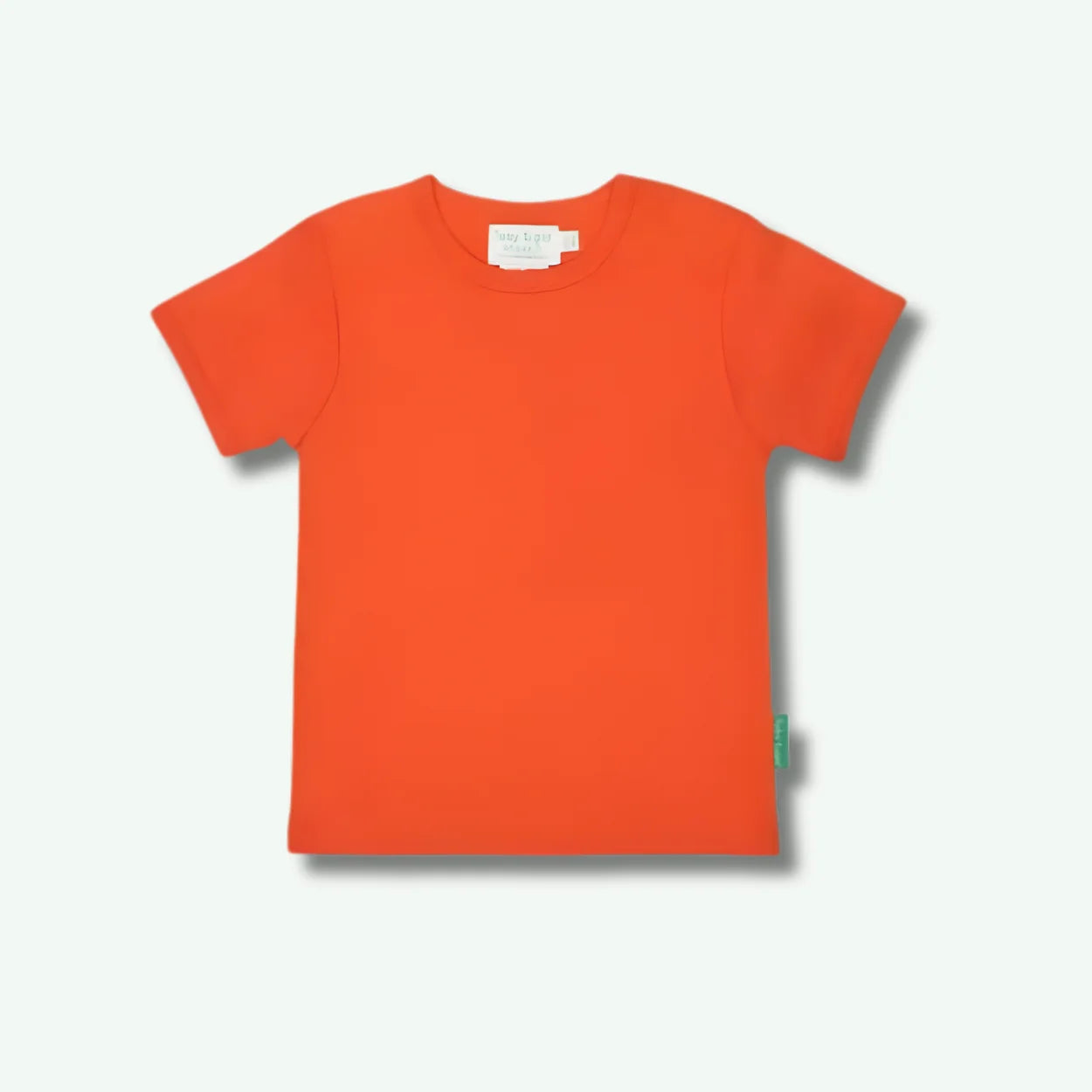
That last point matters more than most parents realise. A pair of playful Pals Socks Rainbow Face & Mr Gray Socks turns a plain grey tracksuit into something a kid actually wants to wear to school, and socks wear out fast enough that buying fun ones is low-risk. Similarly, a piece like the Toby Tiger Orange Tee is a genuine hero item: organic cotton, a strong single colour, and simple enough to pair with almost any bottom in the wardrobe. Both are the kind of building blocks that make vibrant kids fashion sustainable rather than a once-off splurge.
What makes colourful kids’ clothes safe for active play?
Bright doesn’t have to mean risky, but a few checks are worth doing before you buy.
- Fabric and fit: breathable cotton or cotton blends handle sweat and sun better than synthetics, and some stretch in the weave helps with climbing, running and the general chaos of play. For babies, envelope necks and snap or zip fastenings make dressing faster and reduce fuss.
- Sun protection: Australian guidance recommends tightly woven fabric, more skin coverage, and UPF 50+ rated clothing for outdoor sessions. Bright or dark colours can help you spot your kid at the park, but colour alone is not a substitute for shade, hats and proper sun-safe fabric.
- Safety and labelling: the ACCC’s mandatory nightwear standard covers children’s sleepwear in a common range of children’s sizes, and some one-piece garments fall under these rules depending on their design and intended use, so check the label if you’re unsure whether an item is meant for daywear or bed. Separately, the ACCC’s drawstring guidance recommends avoiding long free-ends on hoods and waistbands, and favours snaps, Velcro or sewn-in ties instead.
- Durability and care: read the care label before you buy, not after. Complex finishes that need cold hand-washing or line-drying only are a lot of extra effort for a garment that’s about to meet mud, textas and a rugby ball.
Statistic Callout: Raising Children Network’s own sun-safety guidance is blunt on this point: parents often assume a bright print is doing more sun-protection work than it is. UPF labelling and fabric weave matter more than colour when it comes to actually blocking UV.
How do you style bright prints without them clashing?
The trick isn’t buying less colour. It’s controlling the ratio.
Pick one item to be “loud,” and let everything else stay quiet. If a tee has an orange dinosaur print, put it with plain navy shorts, not a second patterned piece. Then pull one colour out of that print, orange, say, and repeat it somewhere small: socks, a cap, or the trim on a cardigan. That single repeated colour ties the whole outfit together and makes it look deliberate rather than accidental.
Layering works differently depending on age. For toddlers, keep it simple: one bright base layer and one plain outer layer they can manage themselves when they inevitably want to take it off mid-tantrum. For school-age boys, you can be bolder, a colour-blocked jumper over a plain tee gives you flexibility for Australian winter mornings that start cold and end warm.
- Keep one “loud” piece and one “quiet” piece per outfit.
- Repeat a single colour from the print in an accessory or plain layer.
- Use reversible or double-sided pieces to get two looks from one garment.
- Rotate accessories weekly rather than buying new tops constantly.
Pro Tip: Buy plain basics in the same two or three core colours as your child’s favourite prints. That way, any new bright tee automatically has three outfits waiting for it in the wardrobe.
For a deeper run-through of pattern pairing, our guide on mixing prints and colour-blocking covers specific combinations that work well for boys’ wardrobes.
How do you wash and store bright kids’ clothes without ruining them?
Colour holds up when you treat it with a little respect, not a lot of effort.
- Always follow the care label first. It’s there because certain fibres and finishes need specific handling to avoid fading, shrinking or cracked prints.
- Wash similar colours together and turn printed garments inside out to protect the design from friction against the drum.
- Use a gentle cycle and moderate heat. Skip the tumble dryer if the label warns against it, since heat is usually what kills a print’s brightness fastest.
- Treat stains as soon as you spot them rather than letting them set through a full wash cycle.
- Rotate favourite pieces through the wardrobe rather than wearing the same three outfits weekly. Slower wear means longer colour life.
CHOICE’s baby clothing guide backs this up with a simpler point: easy-care cottons with snap or Velcro fastenings save you both time and money over the life of the garment.
Pricing and budget tips for buying colourful boys outfits
Colourful clothing doesn’t have to mean a bigger bill, but it does mean shopping a little smarter.
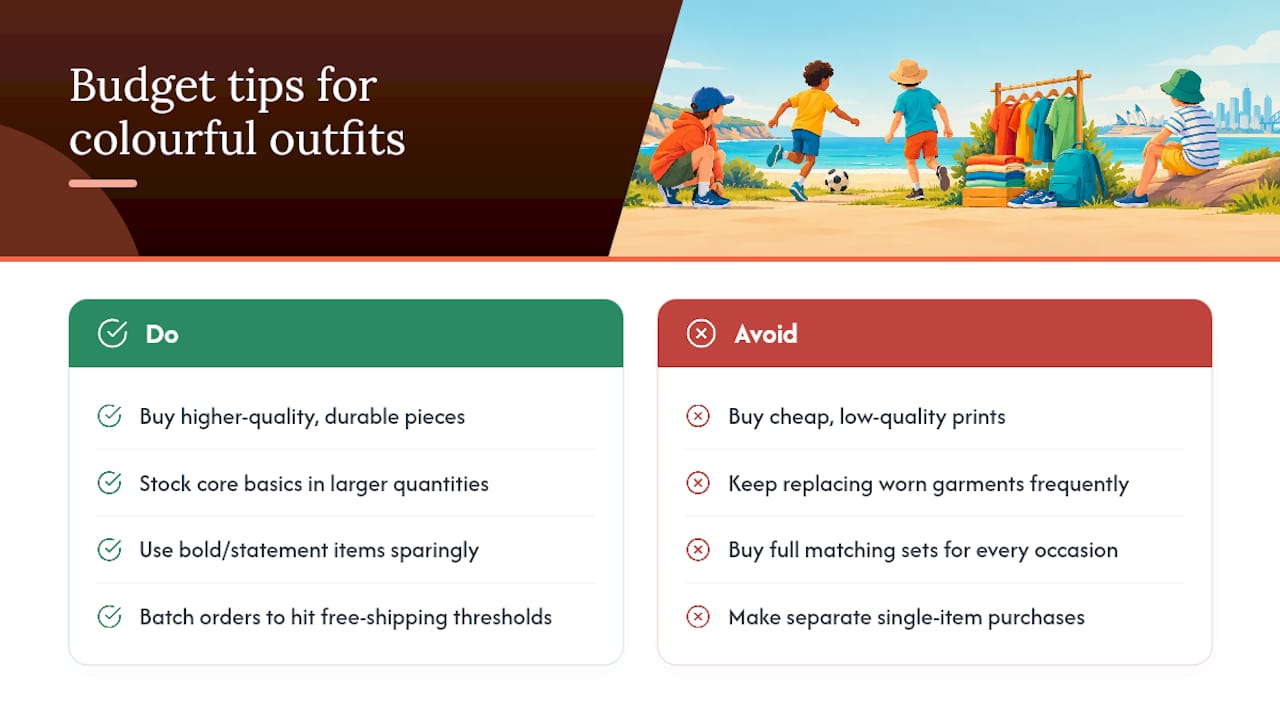
Cheap, low-quality prints tend to fade or bobble within a handful of washes, which means you’re replacing them constantly, and that adds up faster than paying a bit more upfront for something durable. A well-made organic cotton tee that survives a full school term of washing and playground wear is usually better value than three fast-fashion versions that die by week six.
Buy foundation pieces in higher quantities and treat bold statement items as occasional additions. A handful of plain shorts, joggers and long-sleeve tees in core colours stretches every bright tee, jumper or set you own into multiple outfit combinations. That’s a more efficient use of a clothing budget than buying full matching sets for every occasion.
Watch for seasonal transitions, end-of-season sales on outgoing colour ranges are usually the best time to stock up, since kids grow through sizes fast enough that you rarely wear a garment for more than one season anyway. Free shipping thresholds also matter more than people think: Flat-rate shipping and free shipping thresholds apply, so batching a few pieces into one order is often smarter than buying single items across separate purchases.
Seasonal considerations for colourful boys outfits
Colour doesn’t need to disappear once the weather turns.
In warmer months, lightweight cotton in bright single colours or bold prints breathes well and dries fast after sprinkler play or beach trips. In cooler months, layering is your best tool for keeping colour visible without sacrificing warmth: layering lets you add or remove warmth as conditions change through the day, which matters a lot for kids who run hot during play then cool down fast once they stop.
A bright base layer under a plain jumper still shows colour at the collar and cuffs. A colour-blocked raincoat over a neutral outfit keeps the whole look vibrant even on a grey, wet day. Fabric weight matters too: heavier knits and brushed cottons in bold colours work for autumn and winter, while lighter jersey and poplin in the same colour families carry you through spring and summer without needing a whole separate wardrobe.
Retro-inspired palettes have also been showing up more in Australian kids’ fashion lately, with designers leaning into bold, playful prints that suit durable, everyday wear rather than one-off statement pieces. That’s good news for parents: colour is trending toward practical, not just decorative.
What size and fit should you buy for colourful boys clothes?
Fit affects both comfort and how long a colourful piece stays in rotation.
Babies and toddlers do best in styles with envelope necks, snap fastenings and generous stretch, since these make dressing faster and reduce fighting over collars that are too tight. For school-age boys, ease of movement matters more than a slim fit, look for room through the shoulders and knees especially, since that’s where fabric takes the most stress from climbing and running.
Buying slightly ahead of size is common practice for growing kids, but going too large sacrifices the comfort and coordination bright, well-fitted clothing is meant to deliver. A general rule: if a garment needs to be rolled, cuffed, or constantly adjusted, it’s probably not the right size yet, no matter how good the print looks on the hanger.
Checking the brand’s specific size chart matters more than relying on age labels alone, since sizing varies noticeably between European and mainstream Australian labels. For toddlers specifically, soft, non-restrictive fits designed for crawling, climbing and general chaos tend to outperform anything cut for a slimmer, stiller silhouette.
Why we recommend the pieces we do
Parents mostly ask us for two things: colour that doesn’t fade after a month, and clothes their kid can actually move in. Those two demands shape almost every buying decision we make for the shop.
The pieces that earn repeat orders tend to be simple, one bold colour, one strong print, fabric that survives a sandpit. A bright organic tee that gets requested by name at bath time, three washes running, tells you more about quality than any marketing claim ever could.
— Daniel
Shop colourful boys outfits at Baby Goes Retro
This store has been offering vibrant, ethically made European clothing that avoids beige and compromises on comfort. If you’re after the hero-print-plus-plain formula this guide recommends, two pieces are worth starting with right now.
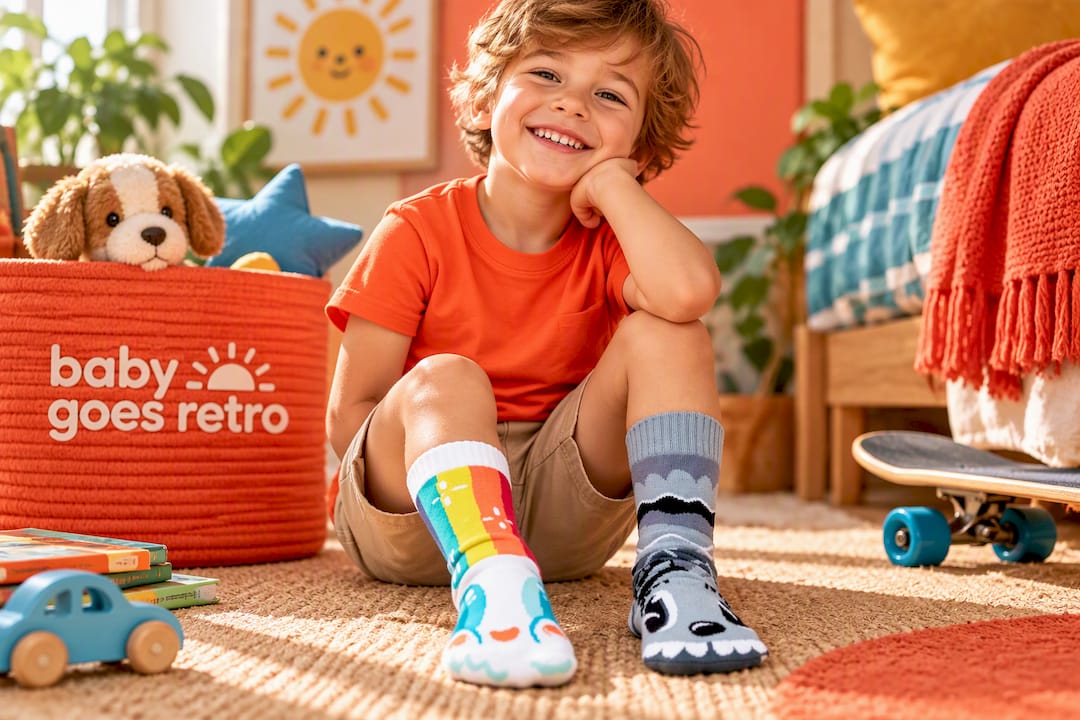
The Pals Socks Rainbow Face & Mr Gray Socks are a fast, low-cost way to add a colour pop to any plain outfit, and they’re durable enough to survive a school term of daily wear. The Toby Tiger Orange Tee is organic cotton, built as a genuine hero piece, and easy to pair with whatever’s already in the wardrobe. Prices are shown in AUD on each product page, and orders ship with shipping options and returns policies described on the retailer’s website.
Browse the full baby clothing range for younger kids, or head to kids tops, bottoms and dresses for school-age sizing. Add your picks to cart and check out today, your order ships fast, and if the fit or colour isn’t right, returns are simple within 30 days.
Sources
- Sun safety | Raising Children Network
- Nightwear for children mandatory standard | Product Safety Australia (ACCC)
- Baby clothing buying guide | CHOICE
FAQ
What are some good colourful clothes for boys?
Hero-print tees, colour-blocked jumpers and bright socks are the easiest entry points because they pair with almost anything already in the wardrobe. Organic cotton pieces like the Toby Tiger Orange Tee work well since one strong colour does the visual work without clashing.
What is the new trend for boys’ fashion?
Retro-inspired palettes and bold, playful prints are showing up more in Australian kids’ collections, favouring durable everyday pieces over one-off statement outfits. The shift is toward colour that’s practical for daily wear, not just occasion pieces.
What are cool kids wearing these days?
Matching sets, colour-blocked layers, and small colourful accessories like socks or hats are common favourites among boys right now. These options let kids show personality through colour while staying comfortable enough for active play.
What are boys wearing lately in terms of style?
Bright single-colour basics paired with one statement print item are a common approach, since it balances individuality with easy mixing and matching. Comfort and ease of movement still tend to matter more to boys than any specific trend, which is why breathable cotton and simple fastenings remain popular.
How much should I expect to pay for quality colourful boys outfits?
Prices vary by brand and garment, and current pricing for Baby Goes Retro’s range is shown in AUD on each product page. Buying durable basics rather than fast-fashion prints tends to save money over a full season of wear, since quality pieces survive more washes without fading.
0 comments