


If a kids’ clothing label leans on words like “eco,” “clean,” or “conscious” without naming a certifier, a fibre percentage, or a test report, treat it as marketing until proven otherwise. The fastest fix is simple: look for a certification number you can check in a public database, such as GOTS, or ask the brand for supplier evidence. The ACCC’s own guidance backs this up, and it’s exactly the standard Baby Goes Retro holds its own range to.
TL;DR:
- Vague marketing terms like “eco” or “sustainable” often lack certification or test reports, so always seek a verifiable certificate number or proof from the brand.
- Brands may showcase a small “conscious” collection made from recycled materials while their main range uses virgin synthetics with no disclosure, misrepresenting their overall sustainability.
- The two most trustworthy certifications for kids’ clothing are GOTS, which verifies organic fiber content with a certificate number, and OEKO-TEX, which tests for harmful substances across all components.
- In-store or online, checking fiber percentages, certification numbers, supplier information, and independent testing reports quickly reveals whether a claim is credible or marketing fluff.
- Misleading claims often rely on visual cues like leaf icons or earthy packaging without certificate details, increasing the importance of verifying such marks through official databases before trusting them.
Table of Contents
- Common greenwashing tactics and red flags to watch for on tags, product pages and ads
- Certifications and marks parents can trust
- How to verify claims quickly: actions to take in-store and online
- A compact point-of-purchase checklist you can use right now
- How Baby Goes Retro sources and verifies claims
- What greenwashing means for kids clothing
- Impact of greenwashing on children and families
- How to report suspected greenwashing in kids clothing
- Why evidence matters more than marketing
- How Baby Goes Retro makes it easier
- Sources
- FAQ
Common greenwashing tactics and red flags to watch for on tags, product pages and ads
Vague language is the number one trick in kids’ fashion marketing, and it works precisely because it sounds reassuring without saying anything checkable. Words like “eco,” “clean,” “natural,” and “sustainable” carry no legal definition on their own. A onesie tagged “made with love and nature” tells you nothing about the cotton, the dye, or the factory floor it came from. The ACCC is explicit that these broad terms are high-risk under the Australian Consumer Law precisely because they overstate a benefit without evidence behind it.
Watch for the “small green corner, big grey warehouse” problem. A brand might launch a 20 piece “conscious collection” made from recycled polyester while its main range of 500 SKUs uses standard virgin synthetics with zero disclosure. The green range becomes the storefront, but it’s not representative of what the company actually produces at scale. Ask yourself: does this sustainable-sounding claim describe one small capsule, or the whole business?
Visual cues do a lot of quiet persuasion. Leaf icons, earthy green packaging, and soft watercolour illustrations of trees create what the ACCC calls an “overall impression” that a product is environmentally sound, even when the actual text says very little. A badge with a leaf and the word “eco” printed on it, without a certifier’s name or number attached, is a brand-designed graphic, not proof of anything.
Selective disclosure is the trickiest tactic because it’s built on truths, just incomplete ones. A brand might proudly state “GOTS certified organic cotton” on the swing tag while staying silent on:
- The exact fibre percentage (is it 100% organic, or blended with conventional cotton?)
- What finishing chemicals were used in dyeing or printing
- Whether independent lab testing was done on the finished garment, not just the raw fibre
- Where the garment was actually cut, sewn, and packaged
Here’s a scenario worth picturing. You’re scrolling a kids’ fashion Instagram ad. The caption reads “Sustainably made for little explorers 🌿” over a photo of a toddler in a green romper. There’s no certification logo, no fibre content listed, and the “shop now” link leads straight to checkout with no sustainability page at all. That’s a textbook combination of vague language, green imagery, and zero verifiable evidence, three flags in one ad.
Certifications and marks parents can trust
Two certifications matter most for children’s clothing, and understanding what each one actually measures saves you from being swayed by a badge that just looks official. GOTS (Global Organic Textile Standard) tracks organic fibre content and covers the entire chain from farming to the finished garment. A product labelled “organic” under GOTS must contain at least 95% certified organic fibres. If it says “made with organic,” that threshold drops to 70%, so the wording genuinely matters. OEKO-TEX STANDARD 100 takes a different angle entirely: it tests for harmful substances across every component of a garment, including buttons, thread, and trims, which makes it especially relevant for anything sitting against a baby’s skin.
Here’s how to separate a real mark from a decorative one:
- Look for a certificate number printed on the tag or listed on the product page.
- Search that number in the certifier’s own public database rather than trusting a logo alone.
- Check that the record shows a valid date range, the correct product scope, and the supplier’s actual name.
- Be wary of any badge with no name attached to a recognised scheme, brand-created “eco seals” are not third-party verification.
- If a certification claim can’t be found anywhere outside the brand’s own website, treat it as unverified.
Pro Tip: Bookmark the GOTS database search page on your phone. It takes about thirty seconds to punch in a certificate number while you’re standing in a shop aisle, and it’s the single fastest way to separate a genuine claim from a nice-sounding one.
For a deeper breakdown of what these two schemes actually cover and where they overlap, Baby Goes Retro has put together a comparison of GOTS and OEKO-TEX for baby clothes that’s worth a read before your next shop.
How to verify claims quickly: actions to take in-store and online
Verification doesn’t need to take long. A few minutes of checking can tell you whether a claim is real or just well-worded.
- Look for specificity first. A trustworthy claim names exactly what changed, such as “30% recycled cotton in the body panel,” rather than a blanket “eco-friendly fabric.”
- Search the certifier database. If a brand cites GOTS or OEKO-TEX, ask for the certificate number and supplier name, then check it yourself rather than taking the tag’s word for it.
- Read the product page properly. Fibre breakdown, country of manufacture, and care and safety labelling should all be listed. If they’re missing, that’s a gap worth questioning.
- Treat QR codes with healthy scepticism. A code that links to a glossy “our sustainability story” page with no data is marketing, not evidence. A code that links to an actual lab report or certificate record is the real thing.
The ACCC’s guidance boils down to four questions worth keeping in your head every time you shop: is the claim clear, is it backed by evidence, is it specific, and could the overall impression mislead a reasonable parent? Legal commentators reviewing the ACCC’s final guidance note that the burden of proof sits with the business making the claim, not the shopper, and that simply belonging to an industry scheme doesn’t automatically satisfy consumer law requirements.
Pro Tip: If a brand can’t answer “what percentage, tested by whom, verified where?” within one email reply, that’s your answer.
A compact point-of-purchase checklist you can use right now
Keep this list in your notes app for your next shop, whether that’s scrolling online at 11pm or standing in a store with a squirming toddler.
- Is there a certification name AND a certificate number, not just a logo?
- Does the product page list a fibre breakdown (e.g. “80% organic cotton, 20% elastane”)?
- Is the claimed benefit explained in plain terms, rather than just labelled “green”?
- Can you identify the supplier or manufacturer, not just the brand name?
- For anything next-to-skin, is there mention of independent chemical testing?
- Is the country of manufacture disclosed?
- Does the brand have a clear, fair returns policy if the garment doesn’t meet expectations?
- Would the claim survive being searched independently, away from the brand’s own site?
Priorities shift depending on the child’s age. For infants and babies, chemical testing and skin safety sit at the top of the list, since their skin is thinner and more absorbent than an older child’s. For school-age kids, durability and genuine recycled content matter more, since the garment needs to survive a lot more wear before it’s outgrown.
The scale of the problem is worth knowing. The ACCC’s internet sweep examined a large number of businesses across multiple sectors and found that a majority made potentially misleading environmental claims, with clothing and shoes among the highest-risk categories. That’s not a fringe issue. It’s the majority of businesses checked.
How Baby Goes Retro sources and verifies claims
Since 2007, Baby Goes Retro has built its range on European brands that back up their claims with paperwork, not just pretty packaging. Every supplier is asked for certificates, independent test reports, and full fibre labelling before a garment lands on the site, because a family business built on trust can’t afford to skip that step. Our founder Daniel has spent years digging into exactly this kind of label literacy, which is why this guide exists in the first place.
Beyond sourcing, the everyday details matter too: flat rate shipping of $7.95 (free over $97)), and 30 day easy returns and exchanges if something isn’t quite right. Small, practical signals, but ones that show a business willing to stand behind what it sells.
What greenwashing means for kids clothing
Greenwashing in children’s apparel happens when a brand implies a garment is more environmentally friendly, ethically made, or chemically safe than it actually is, usually through vague wording, green visuals, or an unverifiable badge rather than real proof. It’s not always an outright lie. More often it’s an exaggeration, a half-truth, or a claim about one small part of the process presented as if it applies to the whole product.
For kids’ clothing specifically, this often shows up as a “natural” label on a cotton-polyester blend, an “eco packaging” claim used to distract from a fast-fashion supply chain, or a leaf logo with no certifier attached anywhere in sight. Because parents are actively looking for safer, gentler options for their children, kidswear brands have a strong incentive to use this language, and unfortunately, that incentive doesn’t always come paired with the evidence to back it up.
Recognising greenwashing in children’s apparel matters more than in most other retail categories, because the purchase decision is tied to a child’s comfort and skin health, not just a fashion preference. That emotional weight is exactly why specific, checkable claims deserve more trust than warm, general ones.
Impact of greenwashing on children and families
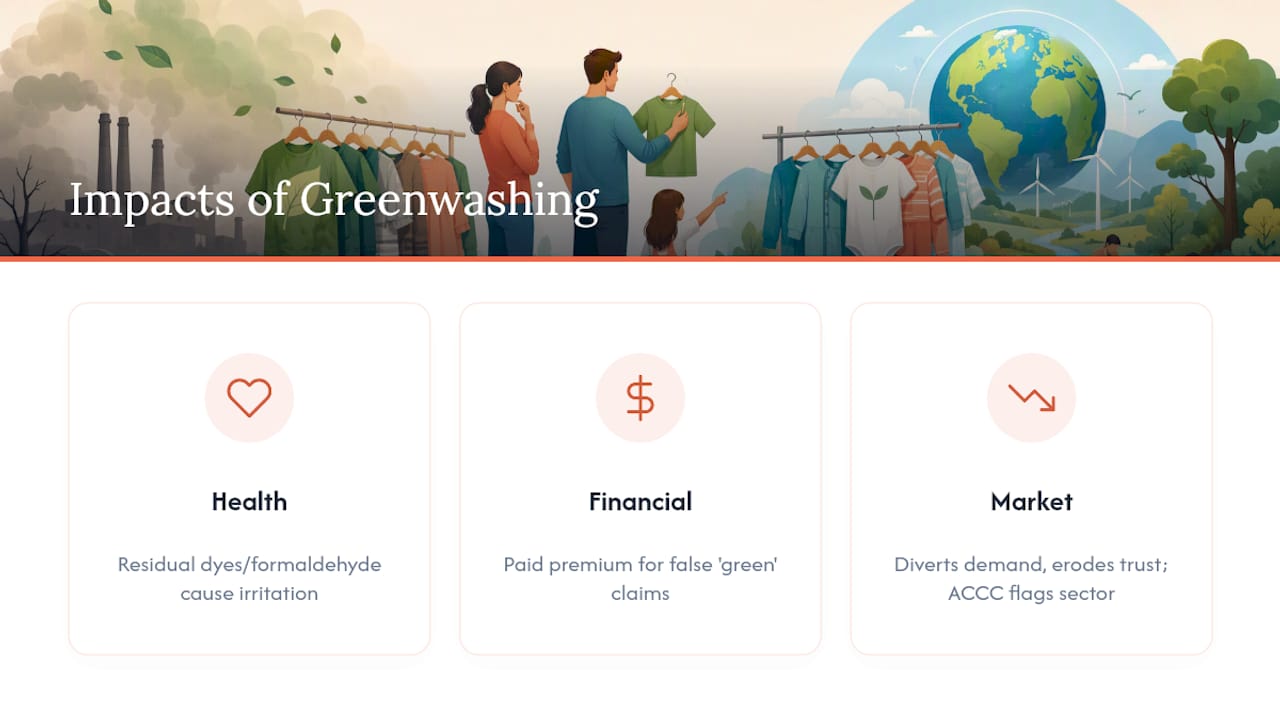
The most immediate impact lands on a child’s skin. Garments marketed as “gentle” or “natural” without genuine chemical testing behind them can still carry residual dyes, formaldehyde based finishing agents, or synthetic blends that irritate sensitive or eczema-prone skin. Parents choosing a product specifically to avoid these issues are, in effect, being sold the opposite of what they think they’re buying.
There’s a financial cost too. Genuinely certified, better-made garments tend to cost more upfront, but they’re usually also better made and last through multiple siblings or hand-me-downs. When a family pays a premium for a product marketed as sustainable but it turns out to be standard fast fashion with a green label stuck on it, that’s money spent on a promise that was never kept.
The broader environmental impact compounds quietly. Every unit sold under a false sustainability claim represents demand that should have gone toward a brand actually investing in better farming, safer dyes, or lower-impact manufacturing. Widespread greenwashing across a sector, and clothing is one of the sectors the ACCC has flagged as high-risk, erodes the market signal that genuinely ethical brands rely on to grow. Parents lose trust in the whole category, which paradoxically makes it harder for legitimate brands to stand out.
How to report suspected greenwashing in kids clothing
If you spot a claim that looks unsubstantiated, misleading, or simply invented, you don’t have to just shrug and move on. The ACCC accepts complaints about misleading environmental or sustainability claims made by Australian businesses, and reports from consumers genuinely feed into their compliance and enforcement sweeps, including the kind of internet sweep that flagged clothing as a high-risk sector.
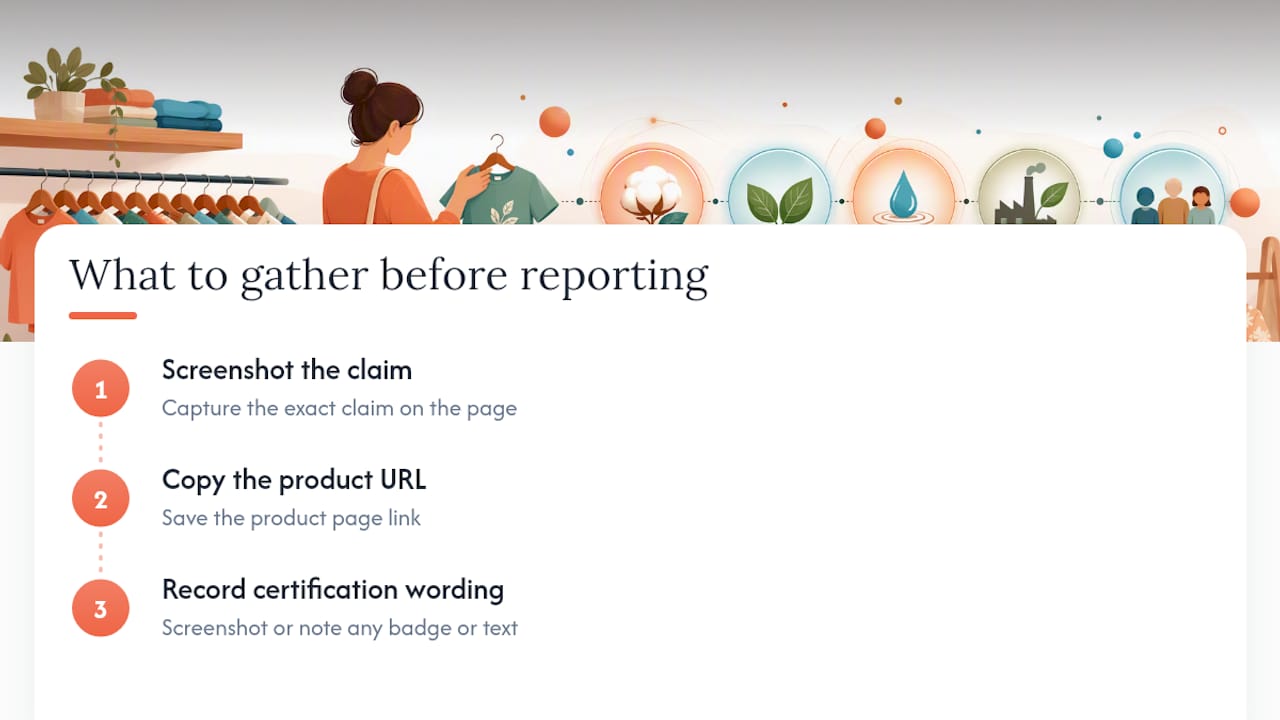
Before reporting, it helps to gather a few basics: a screenshot of the claim, the product page URL, and any certification badge or wording used. Specific evidence makes a complaint far more useful than a general “this feels dodgy” impression.
Beyond the regulator, consumer advocacy groups such as CHOICE also track and publicise misleading marketing claims across retail categories, and they welcome tip-offs from shoppers who’ve spotted something suspicious. Some state-based consumer affairs offices also accept complaints if you’d rather report locally. None of these routes require legal expertise. A clear description of what you saw and where you saw it is usually enough to get a claim looked at.
Why evidence matters more than marketing
Marketing is designed to make you feel something quickly. Evidence is designed to be checked slowly. That tension is at the heart of every greenwashing claim I’ve dug into while researching this piece, and honestly, the brands worth trusting are the ones that seem almost uninterested in making you feel anything at all. They just hand you the certificate number and get out of the way.
My real takeaway is this: the moment a sustainability claim asks for your trust instead of offering you proof, that’s the moment to pause. Genuinely ethical brands tend to over-share the boring details, fibre percentages, supplier names, test dates, because they know those details hold up under scrutiny.
If you’re pressed for time, use a shop’s own filters to browse only certified organic or independently tested items rather than reading every tag by hand. It’s a small habit that saves a lot of second-guessing at checkout.
— Daniel
How Baby Goes Retro makes it easier
Every product page on the Baby Goes Retro site is built to answer the exact questions this guide has walked through, fibre breakdown, certification details, and supplier provenance, without you needing to dig or email to ask.
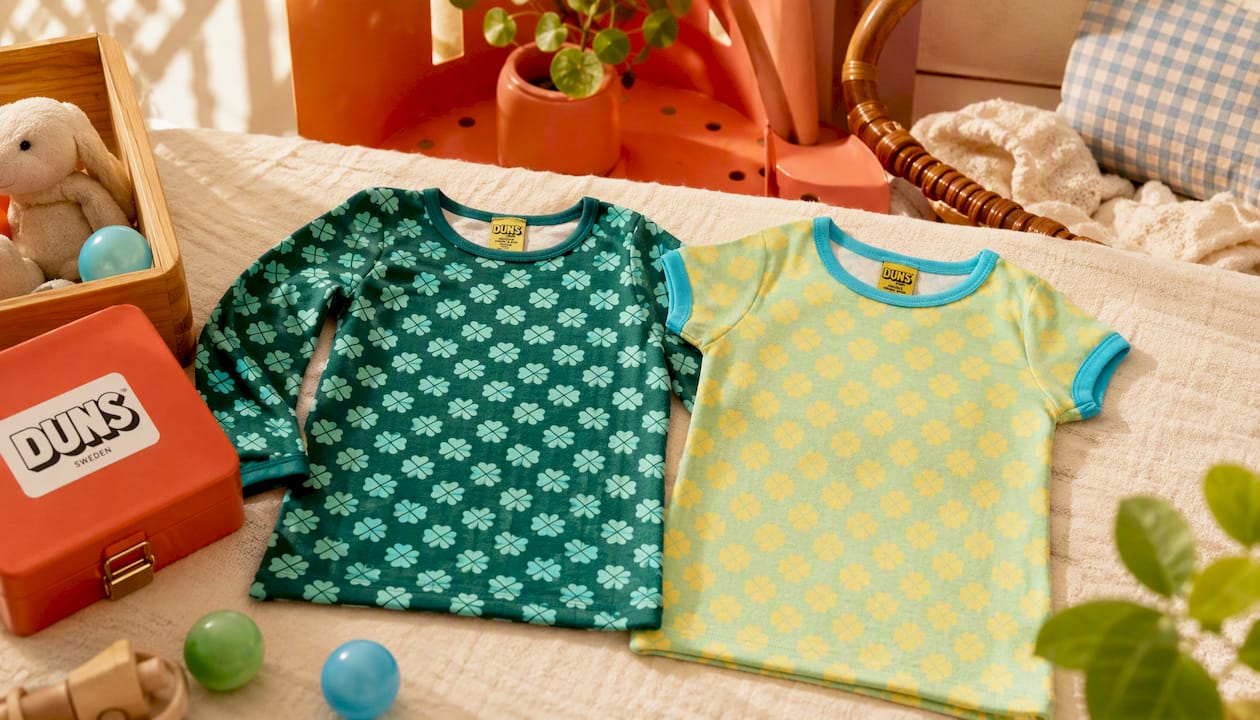
Take the DUNS Sweden Clover Long Sleeve Top in Bistro Green. It’s made from GOTS certified organic cotton, soft enough for daily wear and built to survive the wash cycle abuse that comes with actual childhood. Or the DUNS Sweden Clover Tee in Green Ash, a lightweight, next-to-skin option that’s exactly the kind of certified basic worth reaching for when chemical safety is the priority.
Every order ships for a flat $7.95 across Australia, or free once your cart passes $97, and if something’s not quite right, Baby Goes Retro offers 30 day easy returns and exchanges, no fuss, no fine print. Browse the range, filter by certified organic pieces, and see for yourself what a fully transparent product page actually looks like.
Sources
For anyone wanting to check a claim independently, start with the ACCC’s internet sweep findings and its guidance for businesses on environmental claims. The GOTS certified supplier database lets you verify organic claims directly, while OEKO-TEX’s official site covers chemical safety testing. For broader sustainable shopping habits beyond kidswear, ClothME’s practical shopping guide is a useful companion read.
- Making environmental claims — a guide for business (ACCC guidance page)
FAQ
What are some common signs of greenwashing in kids’ clothing?
Vague words like “eco” or “natural” with no fibre percentage, green leaf imagery with no named certifier, and a tiny “conscious collection” sitting inside an otherwise standard range are the clearest signs.
Which brands are known for greenwashing?
Rather than naming specific brands, the ACCC’s internet sweep found clothing and shoes were among the highest-risk sectors overall, so scepticism is warranted across the category rather than toward any single label.
What are the six sins of greenwashing?
The concept originated from sustainability research firm TerraChoice and generally covers hidden trade offs, no proof, vagueness, false labels, irrelevance, and the lesser of two evils, though definitions of the exact list vary between sources.
Is H&M still greenwashing?
Fast fashion retailers, including major global chains, have faced ongoing scrutiny over sustainability marketing claims in multiple markets; rather than relying on any single brand’s reputation, always check for a verifiable certificate number in a database like GOTS before trusting a claim.
How can I quickly check if a kids’ clothing certification is real?
Search the certificate number in the certifier’s own public database, such as the GOTS supplier database, rather than trusting a logo printed on the tag or website.
0 comments