


Here is the short version: before your baby arrives, you need a safe sleep surface, an approved infant car seat, nappies, a handful of sleepsuits and singlets, feeding basics, a thermometer, and a simple bathing kit. Everything else can wait. Tresillian puts it plainly — new parents are often swamped by marketing pressure, and sticking to absolute basics then adding items as your baby grows is the more practical path.
Use this priority guide to decide what to buy now and what to leave for later:
- Must-have before baby arrives: safe sleep surface (cot or bassinet), approved rear-facing infant car seat, nappies and wipes, 5–7 sleepsuits and singlets, feeding essentials (nursing bra or bottles and steriliser), digital thermometer, baby bath and soft towels.
- Buy before baby: nappy rash cream, waterproof mattress protector, fitted cot sheets (x2), baby sleeping bag, change mat, nappy bag, gentle baby wash.
- Nice-to-have: baby monitor, bouncer, muslin wraps (extra), nursing pillow, white-noise machine.
- Buy later: activity gym, highchair, teething toys, baby carrier (can wait a week or two until you know your preference).
Three Australian services worth bookmarking right now: Pregnancy, Birth and Baby (helpline 1800 882 436), the Australian Breastfeeding Association (helpline 1800 686 268), and healthdirect for after-hours health questions.
Pro Tip: Don’t buy every size at once. Newborns can skip size 000 entirely if they arrive above 4 kg — ask your midwife at the 36-week check what size range to stock up on.
Key takeaways
A safe sleep surface, an approved car seat, nappies, a small clothing starter set, and feeding basics are the five things every Australian newborn needs before anything else.
| Point | Details |
|---|---|
| Safe sleep comes first | A firm, flat mattress with a fitted sheet and waterproof protector is all the bedding your newborn needs. |
| Car seat before birth | An AS/NZS 1754-compliant rear-facing seat, professionally installed, is required before leaving hospital. |
| Nappy quantities | Expect 6–8 disposable nappies per day; cloth nappy starters typically need 18–24 nappies. |
| Clothing: less is more | Stock 4–5 sleepsuits and 5–6 singlets in size 000, choose natural fibres, and wash everything before first wear. |
| Baby Goes Retro for clothing | Organic cotton rompers and zip suits from ethical European makers, with flat-rate shipping and 30-day returns. |
Table of Contents
- How do you set up a safe nursery for a newborn?
- What newborn clothes do you actually need?
- Why fabric and fit matter more than you think
- What feeding gear do you need before baby arrives?
- How many nappies do you need and what goes in the nappy bag?
- What bathing and skincare items does a newborn need?
- What do you need for getting out and about with a newborn?
- What health and safety items should you keep at home?
- What should you pack in your hospital bag?
- What Australian paperwork and services do you need in the first weeks?
- What’s safe to buy second-hand and what should you buy new?
- What are the nice-to-have extras worth considering?
- What parents often get wrong about newborn prep
- Organic newborn clothing, delivered with care
- Sources
- FAQ
How do you set up a safe nursery for a newborn?
A firm, flat sleep surface is the single most important item in your nursery. A cot, bassinet, or portacot all work — the key is that the mattress fits snugly with no gaps at the sides, sits firm (not soft), and is covered with a tight-fitting fitted sheet and a waterproof protector underneath. That’s it for bedding. No pillows, no bumpers, no loose blankets.
Australian safe-sleep guidance focuses on reducing the risk of Sudden Unexpected Death in Infancy (SUDI). The core rules: baby sleeps on their back, face and head uncovered, in their own safe sleep space, in the same room as you for the first 6–12 months. An infant sleeping bag (with a fitted neck and armholes, no hood) replaces loose blankets and keeps the sleep environment simple.
Safe sleep means: back to sleep, face uncovered, in a safe cot, in your room. A firm, flat, well-fitting mattress with a waterproof protector and a fitted sheet is all the bedding your newborn needs.
For the change station, a change mat placed on a low dresser or dedicated change table near the cot saves time during night feeds. Keep nappies, wipes, and cream within arm’s reach so you never have to step away from the baby. A bedside bassinet in your room for the first weeks means fewer steps at 3 AM and is worth the investment if your budget allows.
Pro Tip: Buy two fitted sheets and two waterproof protectors. When one set is in the wash at 2 AM after a blowout, you’ll be very glad you did.
What newborn clothes do you actually need?
The short answer: less than you think, but in the right sizes. Most newborns move through size 000 (0–3 months) and into size 00 (3–6 months) faster than parents expect, so buying a mountain of tiny clothes is rarely worth it.
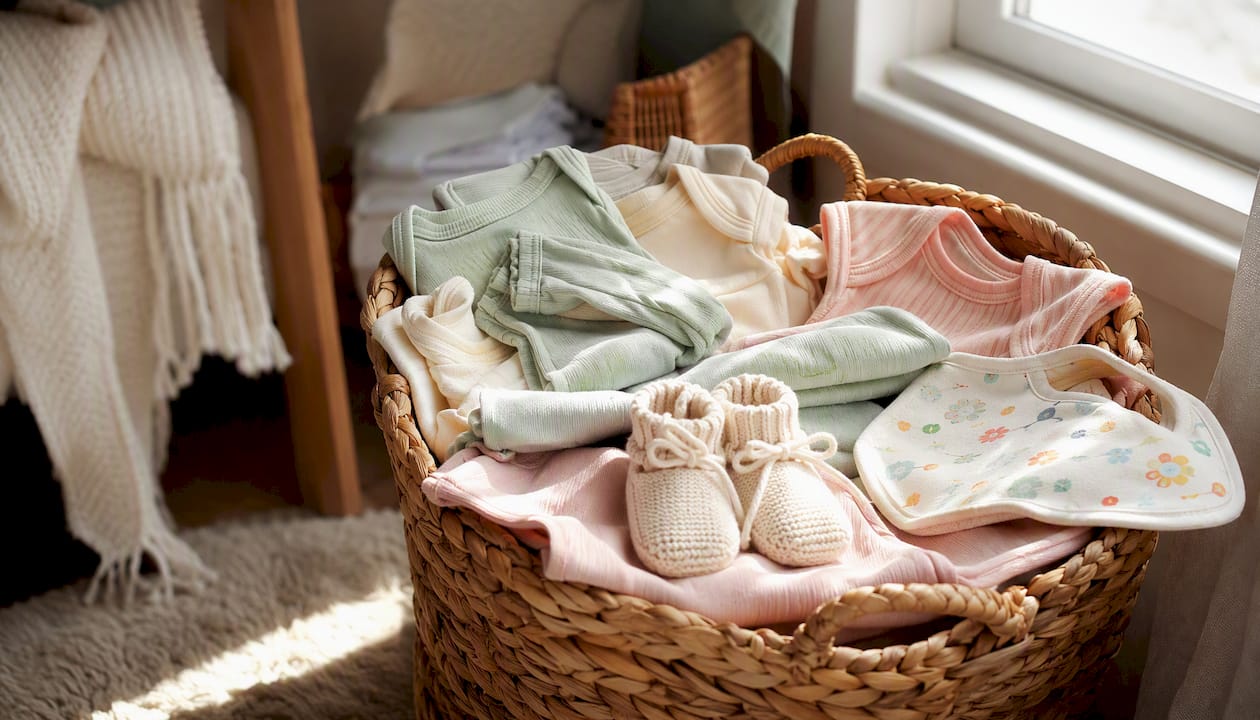
| Item | Size 000 (qty) | Size 00 (qty) |
|---|---|---|
| Sleepsuits / zip suits | 4–5 | 3–4 |
| Singlets / bodysuits | 5–6 | 4–5 |
| Cardigans or light jackets | 2 | 2 |
| Hats | 2 | 1 |
| Socks | 3–4 pairs | 3 pairs |
| Bibs | 4–5 | 4–5 |
| Baby sleeping bags (tog-rated) | 1–2 | 1–2 |
For fabric, cotton and other natural fibres are the clear choice for newborn skin. They breathe well, wash easily, and are far less likely to irritate sensitive skin than synthetic blends. Organic cotton goes one step further by avoiding harsh chemical finishes during manufacturing.
A few features that genuinely matter day-to-day:
- Zip suits over snap suits for night changes — one zip is faster than six snaps at 3 AM. See the zip vs snap guide for a full breakdown.
- Envelope necklines on singlets and bodysuits so you can pull them down over the body (not up over the head) after a nappy blowout.
- Low fire hazard labelling on all rompers and sleepwear sold in Australia — this is a legal requirement, so check the label before buying.
- Avoid clothing with decorative beading, drawstrings, or ties, which create choking and strangulation risks.
Always wash new clothes before first wear to remove manufacturing residues. Dress your baby in one more layer than you are wearing — newborns can’t regulate their temperature the way adults can.
Pro Tip: Buy second-hand cotton clothing freely — it’s safe, already soft from washing, and a fraction of the price. Save your budget for new items where safety matters most: car seats, mattresses, and anything with a harness.
Why fabric and fit matter more than you think
At Baby Goes Retro, we’ve been sourcing newborn clothing from ethical European makers since 2007. One thing that becomes obvious quickly: the difference between a well-made organic cotton romper and a cheap synthetic one isn’t just about feel. It’s about how many times it survives a 60°C wash, whether the zip still runs smoothly after 50 uses, and whether the dye holds its colour without fading into something grey and sad by week three.
The Raising Children Network’s guidance on dressing a newborn backs what we’ve seen in practice: natural fibres, easy-access fastenings, and safety-compliant labelling are the three things worth paying attention to when you’re building a starter wardrobe.
Practical checklist for choosing newborn clothing:
- Organic or natural-fibre fabric (cotton, bamboo-cotton blends)
- Zip or envelope-neck openings — avoid fiddly buttons on tiny garments
- Flat seams that won’t press into soft skin
- No decorative strings, beads, or hood drawstrings
- Low fire hazard label on all sleepwear
- Neutral or bright colours that don’t require separate washing
On sizing: buy a mix of 000 and 00, and keep receipts or choose a retailer with a clear returns policy. Baby Goes Retro offers 30-day easy returns and exchanges so you’re not stuck with a size your baby skips entirely.
Pro Tip: A few high-quality pieces in rotation beat a drawer full of mediocre ones. Three good zip suits you wash every two days will outlast ten cheap ones that pill after a fortnight.
What feeding gear do you need before baby arrives?
Whether you plan to breastfeed, bottle feed, or both, having the basics ready before birth means one less thing to sort out in the first exhausted days.
Breastfeeding essentials
- 2–3 well-fitted nursing bras (buy in the last trimester when your size is closer to post-birth)
- Breast pads (washable or disposable)
- Nipple cream (lanolin-based options are widely available in Australian pharmacies)
- A breast pump — manual for occasional use, electric for regular expressing
- Milk storage bags or containers (BPA-free, clearly labelled with date and volume)
- Nursing pillow (optional but genuinely useful for long feeds)
The Australian Breastfeeding Association runs a 24/7 helpline (1800 686 268) staffed by trained counsellors. If feeding is painful or your baby isn’t latching well in the first days, call them before you assume something is wrong — most early issues are fixable with the right support.
Expressed breastmilk keeps for up to 4 days in the fridge (at or below 4°C) or up to 3 months in a standard freezer. Label every container with the date expressed and use the oldest first.
Bottle feeding essentials
- 4–6 bottles (start with a smaller size for newborns)
- Slow-flow teats appropriate for newborn age
- Bottle brush
- Steriliser (electric steam, microwave, or cold-water method all work)
- Formula storage container if using powdered formula
Pro Tip: Even if you plan to exclusively breastfeed, having one or two bottles and a manual pump on hand is worth it. Engorgement, a return to work, or a partner wanting to help with a night feed are all situations where they come in handy.
For feeding schedule guidance and local support, healthdirect and your maternal and child health nurse are the most reliable first contacts.
How many nappies do you need and what goes in the nappy bag?
Expect around 6–8 disposable nappies per day in the newborn period. If you’re using cloth nappies, a starting stash of 18–24 nappies gives you enough to wash every second day without running out.
Home change station basics:
- Change mat with a waterproof cover
- Nappy bin with a lid (reduces odour significantly)
- Nappies, wipes, and rash cream within arm’s reach
- A small basket for spare clothes nearby
For the nappy bag, keep it simple for short outings: 3–4 nappies, a portable change mat, wipes, one spare outfit, and a couple of disposal bags. You don’t need to pack for a week-long expedition every time you leave the house.
If you’re using cloth nappies, a wet bag for soiled nappies is a practical addition to the bag. For cleaning guidance and safe product choices, check the product labels and rinse nappies before washing to avoid residue build-up.
What bathing and skincare items does a newborn need?
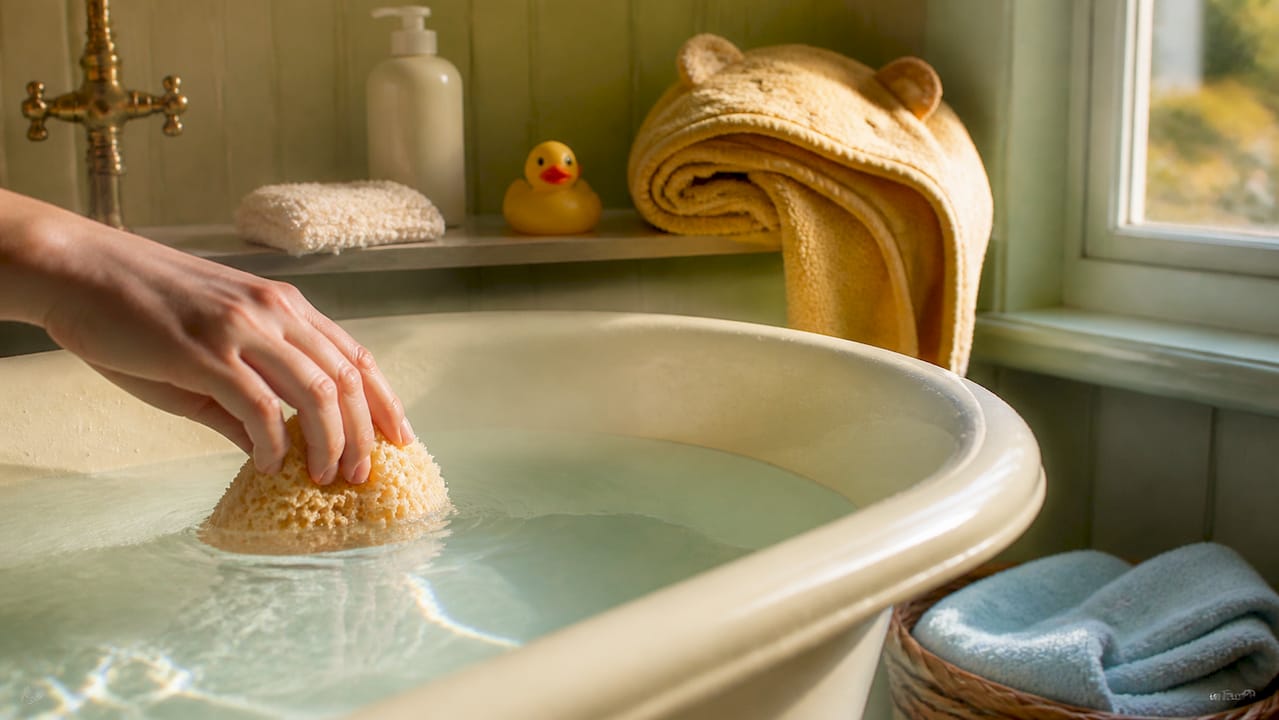
Newborns don’t need much. A baby bath (or a clean sink with a non-slip mat), two soft hooded towels, a gentle fragrance-free baby wash, a few soft washcloths, and a bath thermometer to check water temperature (aim for 37–38°C) covers the basics. Soft-tipped nail scissors or a nail file round out the kit — newborn nails grow fast and can scratch their own face.
What to avoid:
- Talcum powder (inhalation risk for newborns)
- Adult soaps, shampoos, or lotions with fragrances or harsh chemicals
- Any product not specifically formulated for newborn skin
Newborn skin is thinner and more permeable than adult skin. Fragrance-free, pH-neutral products designed for babies are the safest choice for the first months. If a rash appears and doesn’t clear within a few days, see your GP rather than trying multiple products.
Bathing frequency is a common question. Two to three times a week is plenty for a newborn — daily bathing can dry out their skin. Between baths, a warm damp cloth for the face, neck folds, and nappy area keeps things clean.
Pro Tip: Lay everything out before you run the bath. Once your baby is in the water, you can’t leave them unattended — not even for a second.
What do you need for getting out and about with a newborn?
The two non-negotiables for leaving the house are a correctly installed infant car seat and a pram or carrier. Everything else is helpful but secondary.
- Infant car seat: must meet AS/NZS 1754 and be rear-facing. Have it professionally installed before your due date — many hospitals won’t let you leave without one fitted correctly.
- Pram or stroller: look for a model that reclines fully flat for newborns, has a sun canopy, and folds without needing both hands. Lightweight frames are worth the extra cost if you use public transport or have a small car boot.
- Baby carrier or wrap: useful from birth for short trips, hands-free errands, and settling a fussy baby. Check that the carrier supports the newborn’s spine in a natural “M” position.
- Portable change mat: a foldable waterproof mat takes up almost no space and saves you from using questionable surfaces in public bathrooms.
- Weather layers: a light muslin wrap for summer shade, a warm bunny rug or jacket for cooler days.
Pro Tip: Hire or borrow a pram before committing to a purchase if you can. What feels easy to fold in a showroom can feel very different at a busy car park with a screaming baby in your arms. A one-week trial tells you more than any review.
What health and safety items should you keep at home?
A small home health kit means you’re not scrambling at midnight when your baby feels warm.
- Digital rectal or axillary thermometer (the most accurate options for newborns)
- Saline nasal drops (for blocked noses — newborns are obligate nose-breathers)
- Soft-tipped nail scissors or a nail file
- Basic first-aid kit (sterile gauze, antiseptic wipes, bandages)
- Infant health record / blue book (given at birth — keep it safe and bring it to every appointment)
Routine health checks in the first months happen at birth, 1–4 weeks, 6–8 weeks, and 6 months. These appointments are free through your state’s child health services and are the best time to raise any concerns about feeding, growth, or development.
Urgent signs in a newborn: If your baby is under 3 months old and has a temperature above 38°C, go to your nearest emergency department or call 000. Other urgent signs include difficulty breathing, a high-pitched or unusual cry, a rash that doesn’t fade under pressure, or a baby who is unusually limp or unresponsive. When in doubt, call healthdirect on 1800 022 222 for immediate nurse-led advice.
Your state’s child health clinic and the Royal Women’s Hospital (Victoria) or Women’s and Children’s Hospital (South Australia) publish free parent resources online and run phone support lines for the early weeks.
What should you pack in your hospital bag?
Pack your hospital bag by 36 weeks. Split it into two sections: one for you, one for baby.
For you:
- Your hand-held pregnancy record (antenatal card)
- Comfortable, loose clothing for labour and recovery (2–3 changes)
- Maternity pads (hospitals often provide some, but bring your own supply)
- Toiletries and lip balm (labour rooms are dry)
- Phone charger and snacks
- Medicare card and any private health insurance details
For baby:
- 2 singlets (size 000)
- 1 nightgown or going-home outfit
- 1 warm jacket or bunny rug
- 1 hat
- Disposable nappies (a small pack — hospitals usually supply some but not always enough)
Hospital guidance from the Women’s and Children’s Hospital recommends bringing singlets, a nightgown or outfit, a shawl or blanket, nappies, and a correctly installed infant capsule for the trip home. Most hospitals provide a Parent Pack with the forms you’ll need for birth registration and Medicare enrolment.
Pro Tip: Pack baby’s going-home outfit in a small zip-lock bag at the top of the hospital bag. When you’re tired and ready to leave, you don’t want to dig through everything to find one tiny outfit.
What Australian paperwork and services do you need in the first weeks?
The Parent Pack given at hospital contains most of the forms you need. Use it to:
- Register the birth with your state’s Births, Deaths and Marriages registry (usually within 60 days of birth)
- Complete the Newborn Child Declaration to enrol your baby with Medicare through Services Australia
- Apply for Parental Leave Pay via Services Australia if you’re eligible
Trusted support services to save in your phone now:
- Pregnancy, Birth and Baby: 1800 882 436 — 24/7 midwife and nurse helpline
- Australian Breastfeeding Association: 1800 686 268 — 24/7 breastfeeding counsellors
- healthdirect: 1800 022 222 — 24/7 nurse-on-call
- Your local maternal and child health service — book the first appointment before you leave hospital if possible
Pro Tip: Scan or photograph every form in the Parent Pack before you hand them in. Having digital copies means you’re not stuck if a form goes missing or you need to reference details later.
What’s safe to buy second-hand and what should you buy new?
Not everything needs to be brand new, but some items carry real safety risks if bought second-hand.
Safe to buy second-hand:
- Cotton clothing (wash thoroughly before use)
- Wooden furniture like dressers or bookshelves (check for recalls on the ACCC Product Safety website)
- Baby baths, bouncy seats (check for wear and missing parts)
- Muslin wraps and blankets
Always buy new:
- Car seat — you can’t verify its crash history, and safety standards change
- Cot mattress — second-hand mattresses carry a higher SUDI risk due to bacterial build-up
- Anything with a harness or restraint system
- Breast pump components that contact milk (tubing, valves, flanges)
Check the ACCC Product Safety website before buying any second-hand baby product to confirm it hasn’t been recalled. Avoid clothing with strings, beads, or decorative ties regardless of whether it’s new or pre-loved.
Huggies Australia’s baby checklist is a useful cross-check for your own buying list, particularly for pram, car seat, and bedding basics.
Pro Tip: Spread purchases across your second and third trimesters rather than buying everything at once. You’ll have a clearer sense of what you actually need, and you won’t be assembling furniture at 38 weeks pregnant. Baby Goes Retro offers flat-rate shipping at $7.95 (free over $97) and 30-day returns, so ordering clothing closer to your due date carries no risk.
What are the nice-to-have extras worth considering?
These items don’t belong on a must-buy list, but many parents find them genuinely useful once feeding and sleep patterns settle.
- Baby monitor: useful if your home is large or you want to sleep in a different room during naps
- Bouncer or rocker: a safe place to put baby down while you eat or shower — test before buying, as some babies love them and some don’t
- Dedicated electric steriliser: faster than microwave bags once you’re sterilising multiple bottles a day
- Extra muslin wraps: endlessly useful for swaddling, shade, burp cloths, and impromptu change mats
- Breastfeeding pillow: reduces strain on your back and arms during long feeds
- Simple toys for 2–3 months: a black-and-white contrast card or a soft rattle — newborns don’t need much stimulation in the first weeks
Hire or borrow larger items like a swing or a baby gym before committing to a purchase. Babies’ preferences are unpredictable, and a $200 swing that your baby refuses to sit in is a frustrating waste of space.
What parents often get wrong about newborn prep
Most first-time parents over-buy. The marketing around newborn gear is relentless, and it’s easy to confuse “available” with “necessary.” After nearly two decades of watching parents prepare for babies, the pattern is consistent: the families who buy the basics, wait to see what their specific baby needs, and add items deliberately end up less stressed and less cluttered than those who stock every gadget before the birth.
The clothing category is where this shows up most clearly. Parents often buy too many items in size 000, too few in size 00, and too many in synthetic fabrics that don’t hold up to repeated washing. The practical reality is that a newborn in the first weeks needs clean, soft, easy-to-change clothing more than it needs a coordinated wardrobe. A small collection of well-made organic cotton pieces that survive 80 washes will serve you far better than a drawer full of novelty outfits that pill after three wears.
There’s also a tendency to treat the hospital bag as a test of preparedness — packing for every possible scenario rather than the most likely one. Most births in Australian public hospitals follow a fairly predictable path. Two changes of clothes for you, two singlets and one going-home outfit for baby, your pregnancy record, and a correctly installed car seat covers the vast majority of situations.
The one area where parents genuinely under-prepare is support services. The Australian Breastfeeding Association, Pregnancy, Birth and Baby, and your local child health nurse are free, staffed by trained professionals, and available around the clock. Saving those numbers before birth costs nothing and can make an enormous difference in the first weeks.
Organic newborn clothing, delivered with care
When it comes to the clothing part of your new baby essentials, Baby Goes Retro has been helping Australian families dress their babies well since 2007. The range covers organic cotton rompers, zip suits, bodysuits, and accessories from ethical European makers — vibrant, durable pieces designed to survive the wash cycle as well as they survive the day.
Flat-rate shipping at $7.95 (FREE over $97) ✦ 30-DAY EASY RETURNS & EXCHANGES ✦ DELIVERING JOY SINCE 2007
Whether you’re building your starter wardrobe or looking for a practical gift bundle for a friend’s new arrival, the range has you covered. The DUNS Sweden organic romper is a good starting point — soft, well-made, and sized for real newborns. Browse the full newborn and baby range at Baby Goes Retro to find sizes, check current stock, and order with confidence.
Sources
- Tresillian
- Pregnancy, Birth and Baby
- Raising Children Network — how to dress a newborn
- healthdirect — your baby and the first few weeks
- Women’s and Children’s Hospital — coming to hospital
- Huggies Australia — baby checklist
FAQ
What are the absolute must-haves for a newborn in Australia?
A safe sleep surface (cot or bassinet with a firm mattress), an approved rear-facing infant car seat, nappies, a few sleepsuits and singlets in natural fibres, feeding basics, a digital thermometer, and a simple bathing kit cover everything a newborn genuinely needs in the first weeks.
How many nappies should I have ready before my baby arrives?
Stock 50–60 disposable nappies to start, based on an average of 6–8 per day in the newborn period. If you’re using cloth nappies, 18–24 nappies gives you enough to wash every second day without running out.
What size baby clothes should I buy before birth?
Buy mostly size 000 (0–3 months) with a few size 00 (3–6 months) pieces. Babies above 4 kg at birth may skip 000 almost entirely, so check with your midwife at your 36-week appointment before buying in bulk.
What Australian support services are available for new parents?
Pregnancy, Birth and Baby (1800 882 436), the Australian Breastfeeding Association (1800 686 268), and healthdirect (1800 022 222) all run 24/7 helplines. Your local maternal and child health nurse provides free routine checks at birth, 1–4 weeks, 6–8 weeks, and 6 months.
Is it safe to buy second-hand baby items?
Cotton clothing, wooden furniture, and baby baths are generally safe to buy second-hand if they’re in good condition and haven’t been recalled. Always buy a new car seat and a new cot mattress — you can’t verify the safety history of either, and a second-hand mattress carries a higher SUDI risk.
Recommended
- What Baby Clothes to Pack in Your Hospital Bag
- Newborn Baby Clothes Checklist: Cotton, Pants, Socks and more
- Newborn Clothing Guide: First 3 Months | Baby Goes Retro
- How to Choose the Perfect Newborn Baby Gift, Baby Goes Retro
0 comments