


Rinse the stain cold, blot it (never rub), pretreat with a baby-safe detergent or a gentle vinegar-and-water mix, then soak anything set-in in an oxygen whitener overnight before washing. Choose fragrance-free, dermatologically tested products for sensitive skin, and test any natural bleach on an inside seam first. Skip the dryer until you’ve checked that the stain is fully gone. That single sequence handles most of what a baby throws at you, literally.
TL;DR:
- Quickly treating fresh stains with cold water and appropriate pretreatments helps prevent set-in marks and reduces the need for soaking later.
- Blood stains must always be rinsed with cold water, as hot water sets the protein and makes removal more difficult.
- Oxygen whitening solutions are effective for yellowed or heavily set-in stains when soaked for 10 to 16 hours, but should never be mixed with chlorine bleach.
- Checking stains before drying is essential, as heat in the dryer can permanently lock in the stain, making it nearly impossible to remove.
- Using durable, colorfast fabrics that withstand repeated washing is crucial to maintain stain resistance and prolong the lifespan of baby clothes.
Table of Contents
- How do you remove stains from baby clothes fast?
- What’s the best method for each type of baby stain?
- Are natural remedies safe for baby clothes, or should you use a commercial product?
- How long should you soak set-in or yellow baby stains?
- Should you dry baby clothes before checking the stain is gone?
- Why Baby Goes Retro pays close attention to fabric care
- Our take: most parents overcomplicate stain removal
- Choose clothes that survive the stain fight, not just the stain remover
- Where to go for more on stain removal and baby laundry
- Sources
- FAQ
How do you remove stains from baby clothes fast?
The first half hour after a stain lands decides whether it comes out easily or becomes a permanent souvenir. Move fast and you’re mostly winning already.
- Remove solids first. Scrape off any leftover food, poo, or spew with a spoon or the edge of a butter knife. Blot, don’t rub. Rubbing pushes the stain deeper into the fibres.
- Rinse from the back. Turn the fabric inside out and run cold water through it from behind, pushing the stain back out the way it went in rather than through the weave.
- Apply a small amount of baby-safe liquid detergent or a stain bar directly to the mark and leave it to work for a few minutes before rinsing again.
- Decide your next move. A fresh, light stain usually just needs a normal wash. Anything set-in, greasy, or yellowed needs a soak, which we cover below.
A basic stain kit on the change table saves a huge amount of stress: a stain bar, a small spray bottle of water, a soft toothbrush for working paste into fabric, and a basin for quick soaks. Keep it stocked and within arm’s reach of wherever most disasters happen.
Pro Tip: Keep a spray bottle of cold water and a stain bar in your nappy bag too. Treating a stain on the go, even roughly, beats waiting hours until you’re home and the mark has dried in.
What’s the best method for each type of baby stain?
Different stains behave differently, and treating them all the same way is where most parents go wrong. Milk proteins need cold water. Grease needs warmth. Blood needs neither hot water nor hesitation.
- Milk, formula, and spit-up: Rinse cold immediately. Newborn skin can be sensitive, so an enzyme-free detergent is the gentler starting point; if the stain has already dried, switch to an enzyme pretreat, since enzymes are what break down the milk proteins that cause set-in marks.
- Poo and urine: Scrape off solids, then soak the item in cold water before it goes anywhere near your regular laundry. Handle soiled items separately from the rest of the wash until they’ve had their first rinse, for hygiene as much as stain control.
- Baby food (tomato, berry, curry): Treat the moment you notice it. These are a mix of protein and pigment, so an enzyme pretreat lifts the base stain, and a stint in the sun afterwards can fade what’s left. Sunlight can help fade tomato and food stains but may fade colours, so save it for whites and pale prints.
- Oil and grease: These respond to warmth, not cold. If the care label allows it, wash in the warmest safe temperature with a grease-cutting gentle detergent. Cold water on an oil stain often just sets it.
- Blood: Cold water only, always. Hot water cooks the protein in blood into the fabric, making it nearly impossible to shift. Soak in cold water, then treat with an enzyme detergent before washing.
Whatever the stain, the underlying flow rarely changes: act fast, remove the excess, pretreat, pick the right wash temperature, then check before drying. If a mark survives the first wash, don’t throw the item in the dryer out of frustration. Repeat the soak and wash cycle once or twice more before giving up, and go gentler on delicate or hand-knitted pieces, where a full soak might be safer than scrubbing.
Are natural remedies safe for baby clothes, or should you use a commercial product?
Both work. The question is which one suits the stain, the fabric, and your baby’s skin.
White vinegar, baking soda, and a light hydrogen peroxide solution can lift stains and brighten whites without harsh chemicals. Vinegar in the rinse cycle helps cut soap residue and odour. Baking soda paste, worked in with a soft toothbrush, tackles residual smell and light staining. Hydrogen peroxide is a genuine bleach, though, even in a mild form, so testing on a hidden seam before applying it anywhere visible is not optional on coloured or printed fabric.
- Vinegar: safe on almost all colours, gentle enough for everyday use.
- Baking soda: safe as a paste or added to the wash, low risk of fading.
- Hydrogen peroxide: effective on stubborn stains, but always spot-test first.
A commercial baby detergent earns its keep when you want consistency without the guesswork. Look for products that are dermatologically tested and fragrance-free, and choose enzyme-free if your baby has particularly reactive skin, or an enzyme formula if you’re mainly fighting protein-based stains like milk or spit-up. In Australia, options like Euky Bear Baby Laundry Liquid are marketed specifically for this, with manufacturer guidance to apply a small amount directly onto problem stains before washing.
Indicative Australian pricing: baby-specific laundry liquids and stain removers generally cost about a dozen Australian dollars for a household-sized bottle, positioning them close to standard detergents while targeting sensitive skin specifically.
How long should you soak set-in or yellow baby stains?
Yellowed onesies pulled from storage are usually old milk or spit-up that’s bonded to the fibres over time, and a quick wash won’t remove it. Oxygen-based soaking will.
- Dissolve an oxygen whitening powder in warm water per the label instructions, avoiding chlorine bleach entirely, since mixing the two is both ineffective and potentially dangerous.
- Fully submerge the garment, making sure every part of the fabric is under the solution, not just floating on top.
- Soak for 10 to 16 hours, which is the range commonly recommended for stubborn, set-in, or yellowed stains. Overnight is usually the easiest window.
- Agitate gently partway through if the label allows it, then rinse thoroughly and run a normal wash.
- Check the stain before drying. If it’s still visible, repeat the soak rather than tumble drying and locking it in permanently.
Test a hidden seam before the first full soak on anything precious. For genuine heirloom pieces, hand-knitted items, or anything you’re nervous about, a professional cleaner is a safer bet than experimenting.
Should you dry baby clothes before checking the stain is gone?
Never. Heat is the one mistake that turns a treatable stain into a permanent one, because it essentially cooks the residue into the fibres. Hold the item up to natural light and check both sides before it goes anywhere near a dryer or gets tumble dried at all.
- Hang whites in direct sun. It’s a genuinely effective natural whitener for lingering food and milk stains.
- Hang coloured or printed garments in the shade instead. Direct sun fades saturated dyes fast.
- Store only fully dry items. Any lingering damp invites mildew and its own stains.
- Skip acidic cardboard boxes for long-term storage. Use breathable fabric bins with a moisture absorber tucked inside.
Pro Tip: If you’re packing away clothes for a future sibling, do one final oxygen soak before storage, even on items that look clean. It stops “invisible” milk residue from turning yellow months later.
Why Baby Goes Retro pays close attention to fabric care
Baby Goes Retro has been sourcing premium European organic baby and kids’ clothing since 2007, and stain survival is something we think about at the buying stage, not just the laundry stage. Curated, ethically made fabrics tend to hold their colour and structure through repeated washing far better than cheap synthetics, which matters when you’re soaking, scrubbing, and rewashing the same onesie for the third time this month.
Our fabric guide for Australian parents walks through what different weaves and materials can handle, and our clever care tips for tiny clothes go deeper into stain-by-stain fabric handling. All orders ship for a flat $7.95 AUD, free over $97, with 30-day easy returns if a fit or fabric isn’t right.
Our take: most parents overcomplicate stain removal
The internet loves to sell parents on the miracle stain remover, the secret ingredient, the product that “changes everything.” Having pulled through the research on this, the honest verdict is duller and more useful: speed beats cleverness every time. A mediocre pretreat applied within minutes outperforms a brilliant one applied after the stain has dried and set for a day.
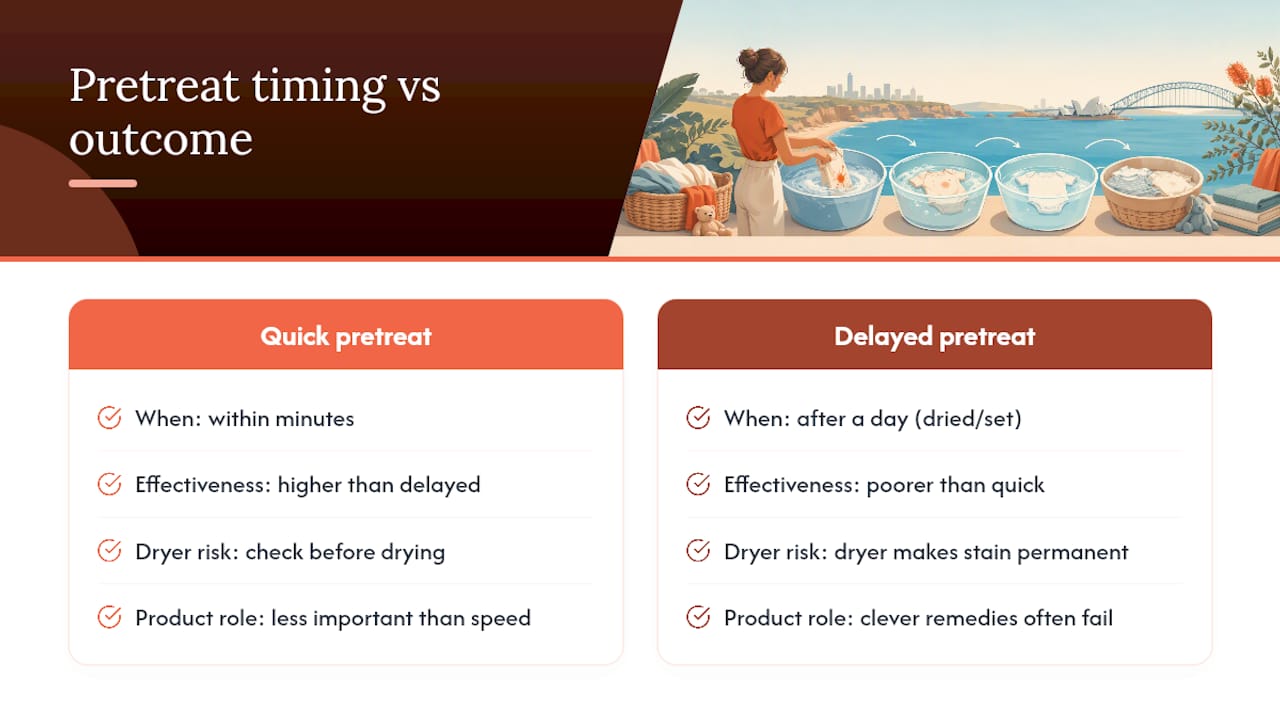
Where conventional advice actually falls short is the drying step. Plenty of guides cover pretreating in detail, then gloss over the fact that a single accidental trip through the dryer undoes all of it. That’s the moment most stains become permanent, and it’s the easiest one to control.
If you take one thing from this: build the habit of checking before drying, every single time, no exceptions. Everything else, natural or commercial, vinegar or oxygen powder, is secondary to that one discipline. Get the sequence right and the specific product matters a lot less than people think.
— Daniel
Choose clothes that survive the stain fight, not just the stain remover
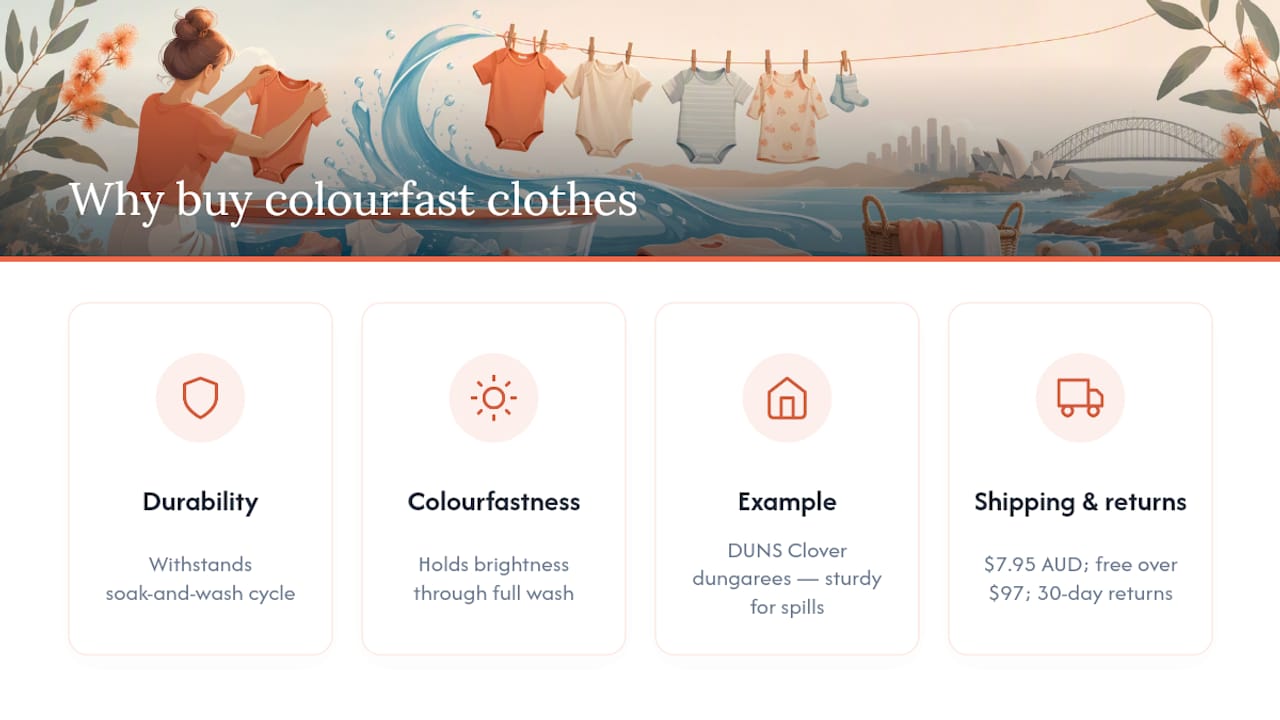
Even the best stain routine has its limits if the fabric underneath is flimsy or fades after two washes. That’s where what you buy matters as much as how you wash it. Colourfast organic garments are built to handle the soak-and-wash cycle described above without losing shape, colour, or softness, so your stain-fighting effort doesn’t go to waste on a garment that won’t last the season.
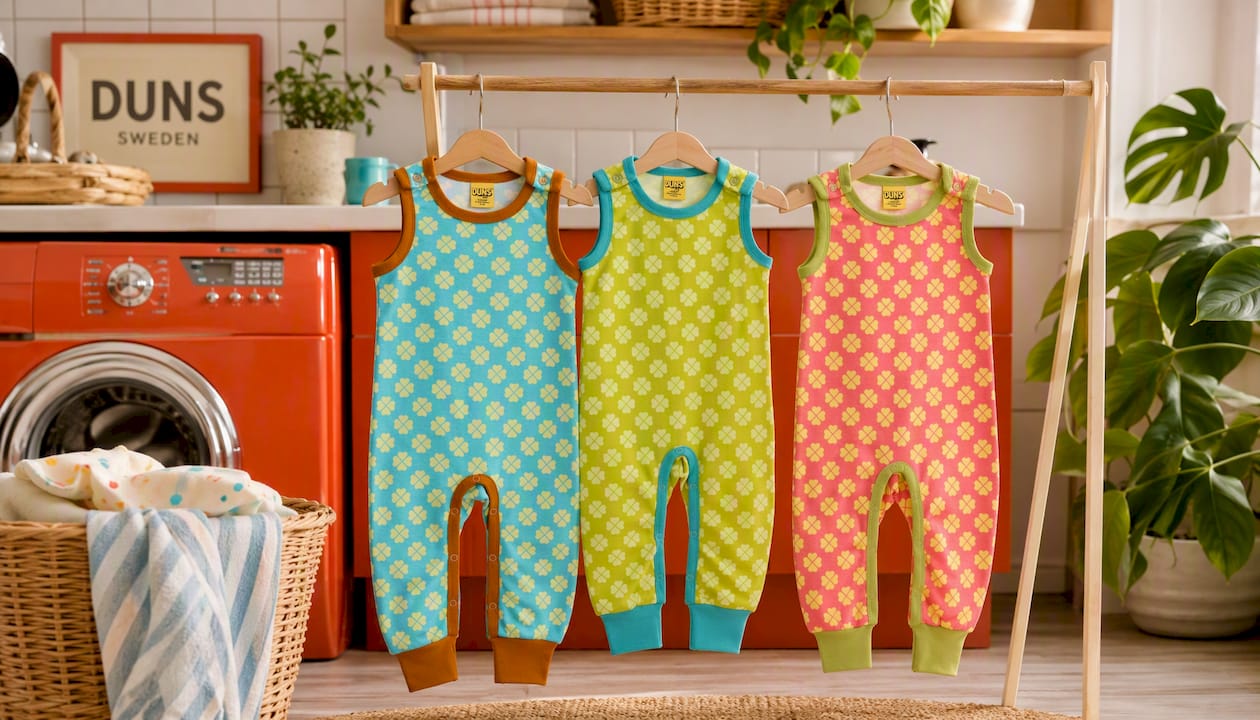
The DUNS Sweden Clover Dungarees in Capri Blue are a genuine everyday-wear option, sturdy enough for crawling, spills, and repeat oxygen soaks without the colour dulling. The Sulphur Green colourway holds its brightness through a full wash cycle just as well, and if you want something bolder, the Hot Pink dungarees prove vibrant colour and stain resilience aren’t mutually exclusive.
Shipping is a flat $7.95 AUD, free over $97, with 30-day easy returns if anything doesn’t fit right. Browse the full organic baby clothing range and pick a few pieces built to handle whatever your baby throws at them.
Where to go for more on stain removal and baby laundry
For safety-focused laundry and product guidance, Product Safety Australia is a solid starting point. For everyday stain routines, Bounty Parents’ expert advice and Dreft’s stain-removal guide cover the fundamentals well.
Sources
- Product Safety resources on laundry and stains
- Bounty Parents – expert advice on removing baby stains
- Dreft — tips on how to remove stains from baby clothes
FAQ
How do you get rid of tough, set-in stains on baby clothes?
Soak the item fully submerged in an oxygen-based whitening powder dissolved in warm water for 10 to 16 hours, then wash as normal and check the stain before drying. Repeat the soak once or twice if any trace remains.
How can you remove yellow stains from a baby’s stored clothes?
Yellowing is usually old milk protein that’s bonded to the fabric over time, and it responds well to the same overnight oxygen soak used for set-in stains. Always test a hidden seam first if the garment is coloured.
What’s a good stain remover for baby clothes?
An enzyme-based baby detergent works well on protein stains like milk, spit-up, and food, while a dermatologically tested, fragrance-free option such as Euky Bear Baby Laundry Liquid suits everyday sensitive-skin use.
What stain remover is safe for babies with sensitive skin?
Look for fragrance-free, dermatologically tested formulas, and choose enzyme-free if your baby’s skin reacts easily; otherwise a standard enzyme baby detergent handles most food and milk-based stains without issue.
0 comments