


Pack versatile basics, day outfits, sleepwear, layers, and two travel-day spares, then let laundry access decide the quantities. If you can wash every two to three days, two day outfits and two sleep outfits cover most trips. If there’s no laundry in sight, plan closer to three outfits a day. Durable organic basics are a solid pick if you’d rather buy travel-ready pieces than dig through drawers.
TL;DR:
- Packing two to three outfits per day is ideal if laundry access is available, halving your clothing volume compared to packing for no washing.
- In the absence of laundry, plan for roughly three outfits daily, including extra for messes and accidents, to avoid running out of clean clothes.
- Prioritize multi-use, quick-dry, breathable fabrics and versatile items like bodysuits, rompers, and zip suits to minimize packing and simplify laundry.
- Carry essential feeding and sleep items such as bibs, bodysuits, and familiar sleepwear, using small storage solutions to prevent scattered messes.
- Confirm laundry options at the destination beforehand, as laundry access significantly influences how much clothing you need and packing efficiency.
Table of Contents
- The baby travel clothing list at a glance
- Clothing by category: the everyday pieces to prioritise
- Sleepwear: match layers to room temperature, not the calendar
- Feeding and change essentials: outfits that survive mess
- Weather and layering: dress for the destination, not the departure
- How many outfits to actually pack
- Packing techniques that actually save space
- What to pack in your carry-on for travel day
- Why durable organic basics work for travel
- A packing habit worth stealing
- Travel-ready basics from Baby Goes Retro
- Sources
- FAQ
The baby travel clothing list at a glance
Every baby travel clothing list works better when it’s split into two piles: what stays with you on the journey, and what gets buried in the checked bag until you arrive. Mixing the two is how parents end up digging through a suitcase in an aircraft toilet at 30,000 feet.
Carry-on essentials:
(keep these within arm’s reach)
- Two full outfit changes for the journey itself (one for baby, one spare in case the first doesn’t survive)
- Nappies and wipes for the trip duration plus a generous buffer, delays happen
- One or two muslins, they double as burp cloths, sun shade, and impromptu towel
- A light layer for temperature swings between the terminal, the plane, and the car
- A spare sleep outfit, in case bedtime lands mid-journey
- A small stain stick or wipe and a couple of zip-lock bags for anything soiled
Checked-bag essentials:
(the bulk of your trip)
- Day outfits sized to your laundry plan (more on that below)
- Sleepwear matched to expected room temperature
- A packable rain jacket and a sun hat
- Swimwear, if the destination calls for it
- Socks, and shoes for babies who are walking
- Laundry supplies: a small bottle of detergent or a handful of detergent sheets
Multi-use items earn their space twice over. A muslin is a burp cloth, a pram shade, a makeshift towel, and a swaddle in a pinch. Bandana bibs and convertible rompers work the same way, cutting down on the total number of items without cutting down on function. Confirming laundry facilities before you fly is, according to family travel specialists, the single biggest factor in how much clothing you actually need.
Clothing by category: the everyday pieces to prioritise
Bodysuits and onesies do more work than any other item in the bag. They layer under rompers on cool mornings, stand alone in the heat, and snap open for quick nappy changes without a full undress. Prioritise a handful of these over a wardrobe of single-purpose outfits.
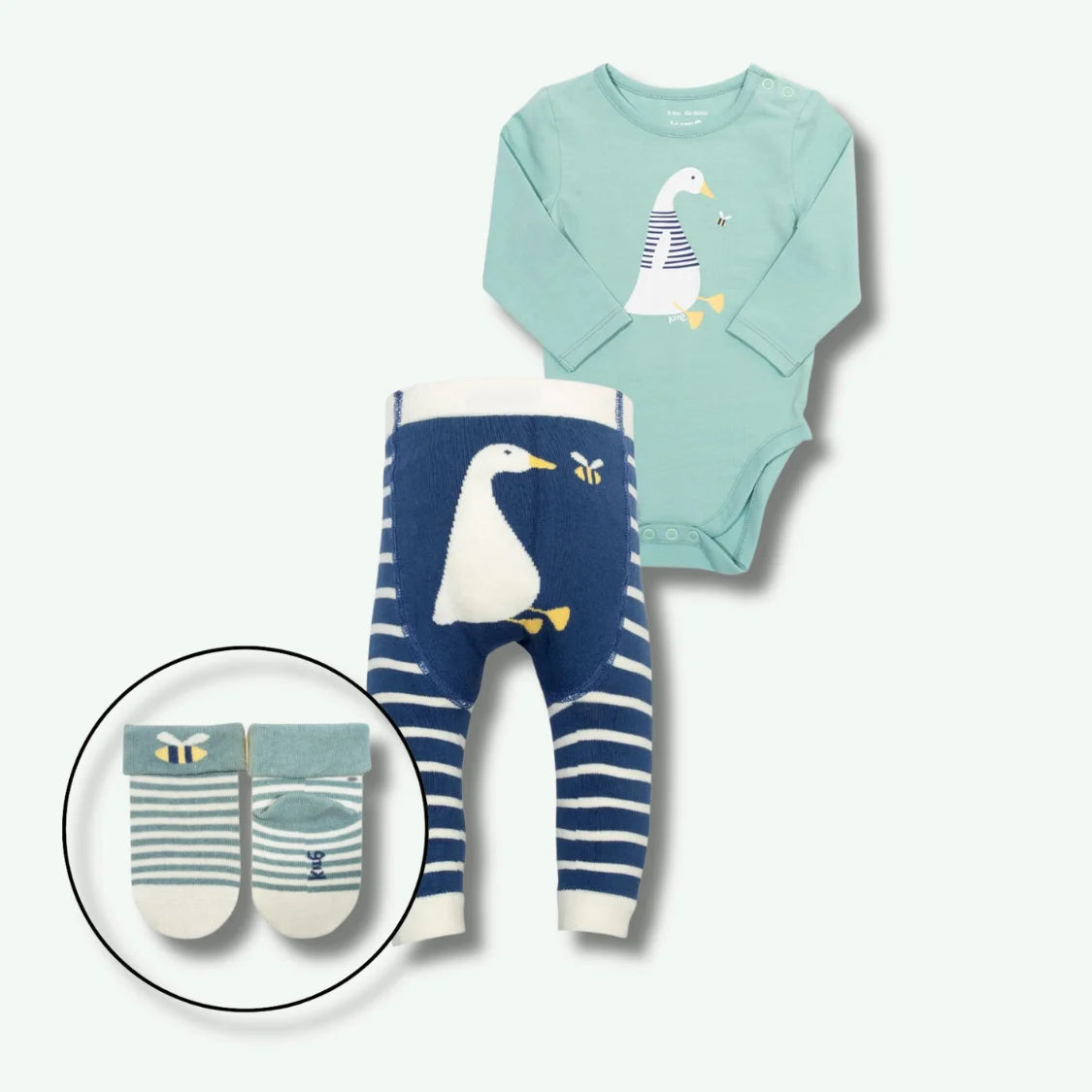
Rompers and zip suits are worth the extra dollar for travel specifically because of the fastenings. A zip that runs from collar to ankle means a 2am nappy change happens without waking the whole cabin, or the whole house. Poppers and snaps work too, but count how many you’d need to undo half asleep before you pack a dozen of them.
Bottoms should stay soft, stretchy, and forgiving of car seat straps and pram harnesses. Leave the stiff denim at home. For walkers, one or two pairs of lightweight, soft-soled shoes beat a suitcase full of options, babies grow out of shoes fast enough without you packing for a growth spurt that hasn’t happened yet.
Fabric choice matters more on the road than at home. Quick-dry, breathable fabrics forgive spills, get through hand-washing in a hotel sink, and dry overnight on a towel rail. Heavy cotton or anything with a lining takes twice as long to dry and triples your laundry stress.
A few packing hacks worth stealing:
- Roll socks into pairs and tuck them inside shoes, dead space becomes storage space
- Store bibs and spare nappies in a small cube or pouch so they don’t scatter through the bag
- Pack one extra bodysuit per day than you think you need. Babies find mess.
- Choose outfits in similar colour families so mismatched leftovers still work as a combo
Sleepwear: match layers to room temperature, not the calendar
Forget the season on the calendar. The room your baby sleeps in is what decides the sleepwear, and that room might be a heated apartment in a cold city or an un-airconditioned guesthouse in the tropics. Sleep specialists recommend choosing garments using TOG guidance based on actual room temperature rather than what month it is at home.
A warmer TOG sleeping bag suits a cool room; a lighter one or just a cotton onesie suits anywhere warm. Check the room’s temperature the first night and adjust from there rather than guessing before you leave.
Bring the same sleep sack or pyjamas your baby wears at home if you can fit them in. Familiar sleepwear acts as a physical cue that bedtime is bedtime, even in a room that smells wrong and has the wrong curtains. Pack at least one spare sleep outfit for the inevitable overnight leak, and keep a comfort item, a small muslin or soft toy, in the same bag every night. Always put baby down on a firm, flat sleep surface, wherever you are.
Pro Tip: Pack the sleep sack in your carry-on, not the checked bag. If luggage goes missing, bedtime shouldn’t be the thing that falls apart.
For a longer look at matching layers to temperature, see Baby Goes Retro’s guide on dressing your baby for sleep.
Feeding and change essentials: outfits that survive mess
Feeding and nappy changes are where a clean outfit turns into laundry in under sixty seconds. The trick isn’t packing more outfits, it’s packing the right accessories to intercept the mess before it reaches the clothes.
- Bring three or four bandana bibs. They catch drool and dribble all day and wash in minutes.
- Pack two or three spare vests or bodysuits specifically for post-feed swaps, cheaper and smaller than a full outfit.
- Carry two muslins minimum, one for burping, one as a spare, they also double as a quick towel or shade.
- Tuck in a small stain stick and a few travel detergent sheets to treat a mark the moment it happens, before it sets.
Feeding and sleeping items are the genuine non-negotiables of any baby packing list. As one Australian airline’s travel team puts it, almost everything else can be bought at the destination if you run short, but you don’t want to be hunting for bibs at 6am on day one.
Weather and layering: dress for the destination, not the departure
Layering solves more travel problems than any single garment can. Use a simple three-layer rule: a breathable base layer against the skin, an insulating layer for warmth, and a waterproof outer layer for wind or rain. Peel layers off as the day heats up, add them back as it cools.
For hot destinations, lightweight, breathable fabrics beat anything heavy or synthetic, cotton and linen blends let air move and dry fast after a wash. Baby Goes Retro’s own notes on dressing for 30°C days cover this in more depth if you’re heading somewhere tropical.
Sun protection deserves its own line items:
- A wide brim hat that shades the face, ears, and neck, not just the top of the head
- UPF swimwear or a rash vest for beach or pool days
- Baby-safe sunscreen, used from six months of age onward per standard guidance
- A compact, packable rain jacket that folds down small but still blocks wind and drizzle
How many outfits to actually pack
This is the number every parent actually wants, and it comes down to one question: will you have access to a washing machine?
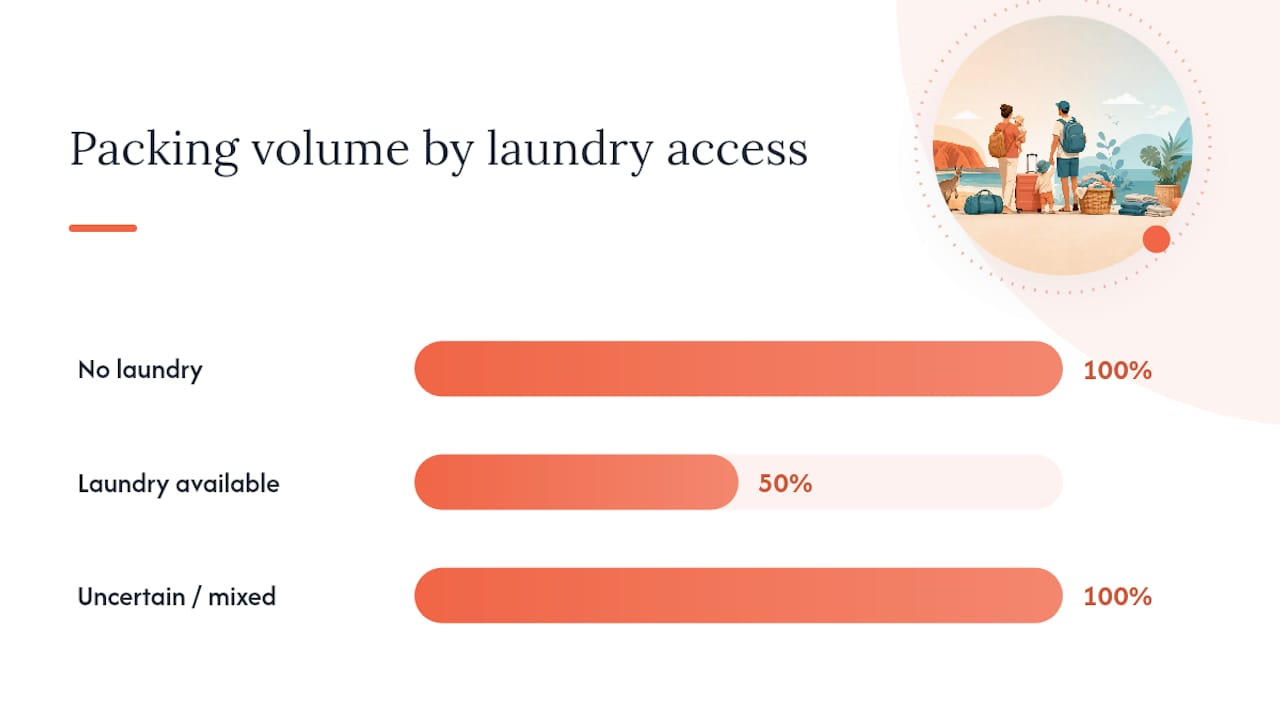
- No laundry access: plan for roughly three outfits per day, one day outfit, one sleep outfit, one spare for accidents. Pack nappies and wipes generously since buying more mid-trip isn’t always convenient.
- Laundry available: two day outfits and two sleep outfits, then wash every two to three days. This approach generally halves your clothing volume compared to not having laundry access.
- Uncertain or mixed: pack for the no-laundry scenario but bring detergent sheets, if a machine turns up, you’ve got backup for a lighter pack next time.
The laundry question is the single biggest lever on your luggage weight. Confirm it before you pack, not after you’ve already stuffed the suitcase. If the answer is yes, a minimalist two-outfit approach genuinely holds up across most trip lengths. If the answer is no, err generous rather than sorry, running out of clean nappies on day four of a remote stay is a far bigger headache than an extra kilo in the bag.
Before you zip the suitcase shut, run through three quick checks: is there a washing machine at the destination, can you buy nappies and formula locally, and does the destination sell sunscreen if you forget it?
Packing techniques that actually save space
Rolling clothes rather than folding them is the single easiest space-saver in this whole guide, and it works especially well on small, soft baby garments that don’t crease the way adult clothes do. Packing cubes sorted by category, one cube for day outfits, one for sleepwear, one for bibs and muslins, mean you can grab a single cube for a day trip without unpacking the entire suitcase.
- Roll, don’t fold, for anything under toddler size
- Swap single-purpose items for multi-use ones: a muslin replaces a burp cloth, a towel, and a sunshade in one piece of fabric
- Stuff soft items like socks or bibs into shoes to use dead space
- Keep a tiny standalone laundry kit, detergent sheets and a travel line, so you’re never caught out mid trip
Pro Tip: Pack one cube per day of the trip rather than by category if you’re staying somewhere without much storage space. Grab, dress, go, no rummaging.
What to pack in your carry-on for travel day
Travel day gets its own rules because you can’t reach the checked bag mid flight. Keep everything you might need within arm’s reach.
- Nappies and wipes for the full journey plus a solid buffer for delays
- Two complete outfit changes, spills and blowouts happen at the worst possible times
- One or two muslins for mess, warmth, or shade
- A spare sleep layer in case bedtime falls during the trip
- A couple of bibs
- Small plastic bags to seal away anything soiled until you can deal with it properly
Dress baby in comfortable, easy-fastening layers for the trip itself, think snap-front bodysuits and soft pants rather than anything with buttons down the back. If your baby sleeps well in a particular sleep outfit at home, pack that exact one for flight naps, the familiarity does real work in an unfamiliar seat. Aircraft cabins swing from stuffy to freezing depending on the vents above you, so a light layer that’s easy to add or remove beats a single thick jumper every time.
Why durable organic basics work for travel
Daniel, a Baby Goes Retro contributor, has spent plenty of time helping parents build practical wardrobes rather than aspirational ones, and travel is where a garment’s real quality shows. A cheap synthetic onesie pills and stretches out after three washes in a hotel sink. A well-made organic cotton one keeps its shape and softness through the whole trip and well beyond it.
- Organic cotton and similar natural fibres tend to dry faster than heavy synthetics, useful when you’re hand-washing in a basin
- Softer fabrics sit better against sensitive travelling skin that’s already dealing with new climates and new water
- Durable basics outlast a single trip, so the cost per wear drops the more you travel
Baby Goes Retro has been a family-run outfit since 2007, and everything on the site ships with 30-day easy returns if a size guess goes wrong before departure. Shipping across the range is a flat $7.95, free over $97, so building out a travel wardrobe doesn’t blow the budget on freight. Browse the baby clothes collection for the everyday pieces this list keeps coming back to.
A packing habit worth stealing
My own rule of thumb, after seeing how most families actually pack, is simple: bring two to three days of clothing and plan to wash every two to three days wherever that’s possible. It’s less luggage, less stress, and less time spent sitting on a suitcase trying to force the zip closed.
If you land somewhere and realise you’re short a onesie or a hat, buy it there. Favour muslins, bandana bibs, and convertible outfits over anything single-purpose, they’ll save your suitcase more than any packing cube will.
— Daniel
Travel-ready basics from Baby Goes Retro
This site offers curated bundles that provide a ready-made set of travel basics in one order, serving as an alternative to piecing together a travel wardrobe item by item.
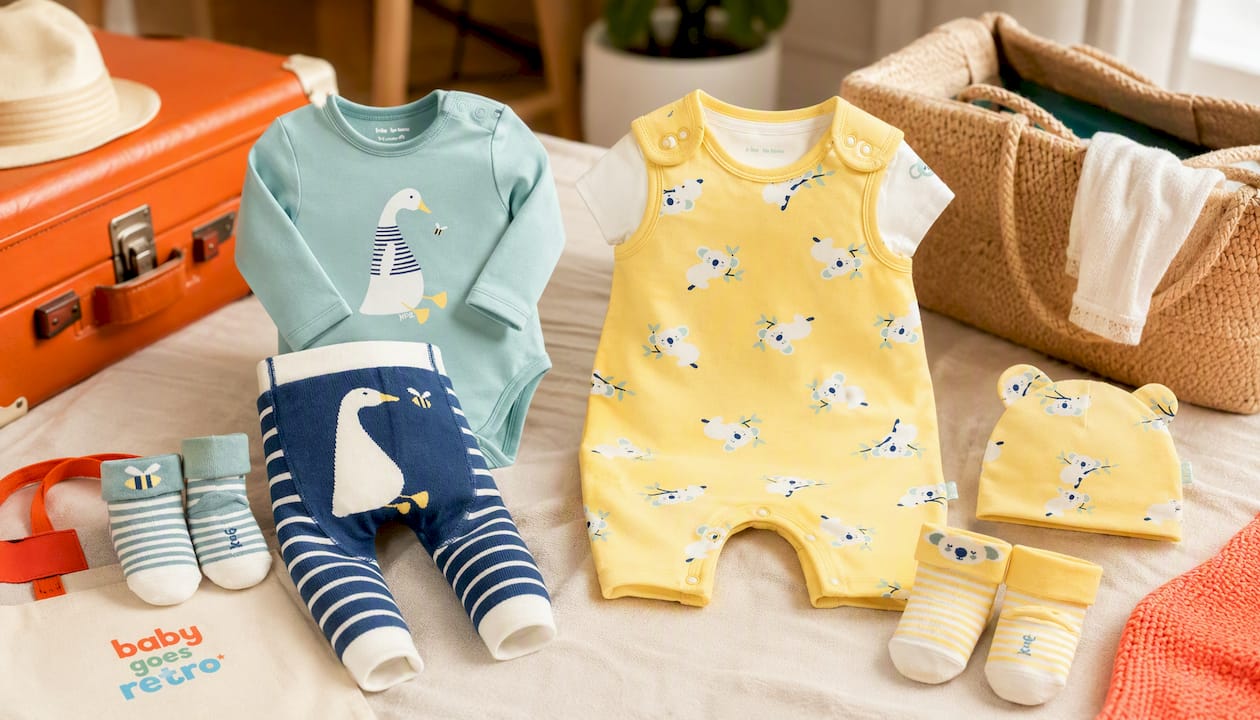
The Kite Little Goose Baby Gift Bundle pulls together soft, durable essentials that suit exactly the kind of quick-dry, easy-fastening pieces this guide keeps pointing to. The Kite Koala Time Baby Gift Bundle offers a second colourway and mix, handy if you’re packing for a longer trip and want variety without hunting through separate product pages. Both bundles help reduce the guesswork of matching sizes and styles piece by piece, addressing decision fatigue on a baby travel clothing list.
Beyond the bundles, the full baby clothes range covers bodysuits, rompers, dungarees, and socks for babies, while the kids clothes collection covers tops, bottoms, and dresses for older siblings tagging along. Every order ships for a flat $7.95, free over $97, backed by 30-day easy returns and exchanges if a size doesn’t work out before you fly. Head to the baby clothes collection and build your travel wardrobe around pieces that’ll outlast the trip.
Sources
- Packing Light With a Baby: Minimalist Travel Guide 2026 | BabyTravel UK
- Things you need for travel with toddlers and babies | Qantas Travel Insider
FAQ
What is the 5-4-3-2-1 packing rule?
It’s a rough formula some travellers use to cap clothing volume, roughly five tops, four bottoms, three pairs of socks, two pairs of shoes, one jacket, adapted loosely for the trip length. For babies, the same logic applies but scaled down further and tied to laundry access rather than a fixed formula, since nappy changes and mess make baby clothing needs less predictable than an adult’s.
What should my baby wear on a flight?
Comfortable, layered clothing with easy fastenings works best, think a snap-front bodysuit under a soft romper rather than anything fiddly. Pack a spare outfit and a light layer in your carry-on, cabin temperatures swing between stuffy and cold depending on the vents.
What should I pack for travelling with my baby?
The core list covers day outfits, sleepwear, layers, sun protection, and two travel-day spares, with quantities set by whether you’ll have laundry access. Feeding and sleep items are the genuine non-negotiables, since most other items can be bought at the destination if needed. Bundles like the Kite Little Goose Baby Gift Bundle from Baby Goes Retro can cover several of these categories in one purchase.
What is the 3-3-3 rule for packing?
Definitions vary by traveller, but a common version suggests three tops, three bottoms, and three pairs of shoes for a short trip. It’s built for adult wardrobes rather than babies specifically, so treat it as a loose starting point rather than a strict baby packing formula.
How many outfits does a baby need for a week-long trip?
If laundry is available, two day outfits and two sleep outfits cover most days, washed every two to three days. Without laundry access, plan closer to three outfits per day to avoid running short on clean clothes mid trip.
0 comments