


Turn every printed garment inside out, wash it cold at 30°C or below on a gentle cycle with a mild liquid detergent, and skip the dryer when you can. Never use bleach or fabric softener, and never let an iron touch a print directly. Get those five habits right and a favourite dinosaur tee or rainbow romper from a brand like Baby Goes Retro will still look sharp long after the sizing tags become a joke.
TL;DR:
- Washing printed kids’ clothes at 30°C or below on a delicate cycle preserves prints better than higher heat or vigorous agitation.
- Turning garments inside out before washing significantly reduces mechanical damage to the print, even more than using premium detergents.
- Using liquid, non-biological detergent without softeners or bleach prevents ink deterioration and maintains print quality over multiple washes.
- Air drying or tumble drying on the lowest heat setting minimizes heat damage, while drying in direct sunlight can fade colors over time.
- Treating stains immediately with gentle blotting extends print lifespan and reduces the need for full washes, further preserving the garment’s appearance.
Table of Contents
- Caring for prints on kids’ clothes: the wash routine that works
- How do I get stains out without wrecking the print?
- What’s the safest way to dry and iron printed clothes?
- How should I store and mend printed kids’ clothes?
- Screen print, DTG, DTF, HTV or sublimation: does the print type change the care?
- What Daniel and Baby Goes Retro have learned about printed kids’ clothes
- How often should you actually wash printed kids’ clothes?
- The habit that actually protects prints, and the one that’s overrated
- Printed socks and tees built to survive real laundry
- Sources
- FAQ
Caring for prints on kids’ clothes: the wash routine that works
Most print damage happens in the wash, not on the playground. The drum agitates, the heat softens the ink, and the wrong detergent scrubs at a surface that was never built for scrubbing.
Start by sorting. Printed garments shouldn’t share a load with jeans, zippers, or anything with buckles or Velcro, because that hardware acts like sandpaper against a print every time the drum turns. Keep prints together, and keep them away from anything heavy or rough.
Set the machine to 30°C or below and choose the gentle or delicate cycle. Cold water and slow agitation are the two biggest levers you have, because heat and hard mechanical action are what break down ink films over time, leading to the cracking and peeling every parent has seen on a once-crisp tee.
Reach for a liquid detergent rather than powder, ideally one formulated for delicates or colours, and skip anything “biological” with enzymes. Powder doesn’t always dissolve fully in cold water, and undissolved granules behave like fine abrasive against a print through an entire cycle, a problem detailed in printer guidance on caring for printed shirts.
Then there’s the single easiest habit of all: turn every printed item inside out before it goes in the machine. It takes about two seconds and creates a physical barrier between the print and the drum, the fabric, and everything else tumbling around it.
- Sort printed garments away from jeans, jackets, and anything with hardware.
- Wash at 30°C or below on gentle or delicate.
- Use liquid, non-biological detergent, never powder.
- Turn every printed piece inside out, every time.
- Pop small items like printed socks into a mesh laundry bag so they don’t stretch, snag, or vanish behind the drum.
If you’re not sure what a care label is telling you, our guide to reading clothing care labels breaks down the symbols so you’re never guessing.
Pro Tip: Stick a small laminated card above the laundry basket with “Inside out, 30°C, no softener” written on it. Kids old enough to sort their own washing will follow a picture faster than they’ll follow a lecture.
How do I get stains out without wrecking the print?
Fast action matters more than force. The moment you spot a stain, blot off any solid mess rather than rubbing it, since rubbing pushes the stain deeper into the fibres and drags grit across the print surface.
- Turn the garment inside out and rinse the stain from the reverse side under cold running water.
- Dab a small amount of mild liquid detergent onto the mark and work it in gently with a soft cloth, never a scrubbing brush.
- Rinse thoroughly and leave it to air dry rather than tossing it straight into a full load.
- For set-in stains, a diluted oxygen-based stain remover is safe to use sparingly, applied away from the print itself. Chlorine bleach is off the table entirely, on prints or anywhere near them.
Spot-cleaning does more than save one garment. Treating small stains as they happen, rather than waiting for a full wash, can cut the number of full wash cycles a garment goes through by a meaningful margin, and fewer full washes means less cumulative abrasion on the print over the life of the piece. Our tips on washing out baby clothes stains go deeper on tackling specific mess types like food and grass.
What’s the safest way to dry and iron printed clothes?
Air drying is the gold standard for anything with a print on it. Lay heavier pieces like hoodies and jumpers flat, or hang them over a clothes horse rather than pegging by the hood or shoulders, which stretches the fabric right where the print sits.
If a tumble dryer is your only option, use the lowest heat setting or an air-only cycle, and pull garments out while they’re still slightly damp. Domestic dryers on a standard cycle can reach 70 to 75°C, which is more than enough heat to soften and damage a water-based ink film. Finishing the last bit of drying naturally on a rack avoids that risk entirely.
Sun drying outdoors is fine for a quick dry, but avoid leaving printed garments in direct, prolonged sunlight, since UV exposure fades colour unevenly. Rotate the garment or flip it during drying so one side doesn’t cop all the sun.
When it comes to ironing, always work from the reverse side, or lay a pressing cloth over the front, and keep the iron on a low setting. Direct heat, especially with steam, can soften the ink layer enough to flatten, distort, or transfer it onto the ironing board itself.
- Dry flat or on a rack, never pegged by the shoulders or hood.
- Tumble dry on lowest heat only, and pull items out damp.
- Limit direct sun exposure; rotate garments during outdoor drying.
- Iron inside out or use a pressing cloth, low heat, no direct steam.
Pro Tip: If a jumper comes out of the wash a bit misshapen, reshape it gently while it’s still damp and let it dry flat. Waiting until it’s bone dry to fix the shape rarely works.
For a deeper look at dryer settings by fabric type, our guide on whether baby clothes can go in the dryer covers the trade-offs in more detail.
How should I store and mend printed kids’ clothes?
Folding matters more than most parents realise. Fold printed garments so the print sits on the outside of the fold where possible, and use a sheet of tissue paper between layers for a favourite or hand-me-down piece you want to keep pristine. Repeated folding along the same crease line, print-side in, is a slow but steady way to crack ink over months of storage.
Hang heavier printed items like jackets and dresses on padded hangers rather than folding them into a drawer, which stops shoulder seams stretching out of shape.
- Fold prints outward, using tissue between layers for special pieces.
- Hang heavier garments on padded hangers instead of folding.
- Mend loose threads as soon as you spot them, and reinforce seams under stress before they tear near a print.
- Store off-season clothes in a cool, dry, breathable container. Skip vacuum-sealed bags, since the compression can crease prints permanently.
Screen print, DTG, DTF, HTV or sublimation: does the print type change the care?
Not every print behaves the same way, and knowing which one you’re dealing with changes how carefully you need to treat it.
Screen print feels slightly raised and rubbery to the touch. It’s durable but prone to cracking if it’s exposed to repeated high heat, whether from the dryer or the iron.
DTG (direct to garment) sits flush with the fabric, almost soaked into the fibres. It handles washing reasonably well but is sensitive to fabric softener, which coats fibres and weakens how well the ink grips them over time.
DTF (direct to film) and HTV (heat transfer vinyl) both sit as a distinct layer on top of the fabric, often with a slight sheen. These are the most heat-sensitive of the group and the most prone to edge-lift and cracking, so hand washing or a mesh bag is worth the extra effort for anything with vinyl or foil detail.
Sublimation prints are dyed directly into synthetic fibres, so they tend to be the most colourfast of the lot and rarely crack or peel, though they can still fade with excessive sun exposure.
- Screen print: durable, but avoid high heat.
- DTG: soft and flush, avoid softener.
- DTF and HTV: most heat-sensitive, hand wash where possible.
- Sublimation: colourfast, watch sun exposure instead of heat.
With correct care, industry guidance puts a well-made print at 50 or more washes before it noticeably degrades, against as few as 10 to 15 washes under rough handling. If a brand-new garment shows cracking or peeling within its first handful of washes, that’s usually a production flaw rather than a care mistake, and it’s worth photographing the damage and contacting the seller.
What Daniel and Baby Goes Retro have learned about printed kids’ clothes
A reputable family-run store has been sourcing organic, ethically made kids’ clothing since 2007, and every printed piece in its catalogue gets chosen with exactly this kind of wear and tear in mind. Editorial lead Daniel has spent years watching which garments hold their colour and which fall apart after a term of daycare, and the pattern is always the same: care habits matter more than the price tag on the tee.
The checklist worth pinning up: inside out, 30°C, gentle cycle, mild liquid detergent, air dry. Five habits, no exceptions.
Shipping costs a flat rate with free delivery available over a certain purchase amount, and if a print doesn’t hold up to expectations, a 30-day returns policy is offered.
How often should you actually wash printed kids’ clothes?
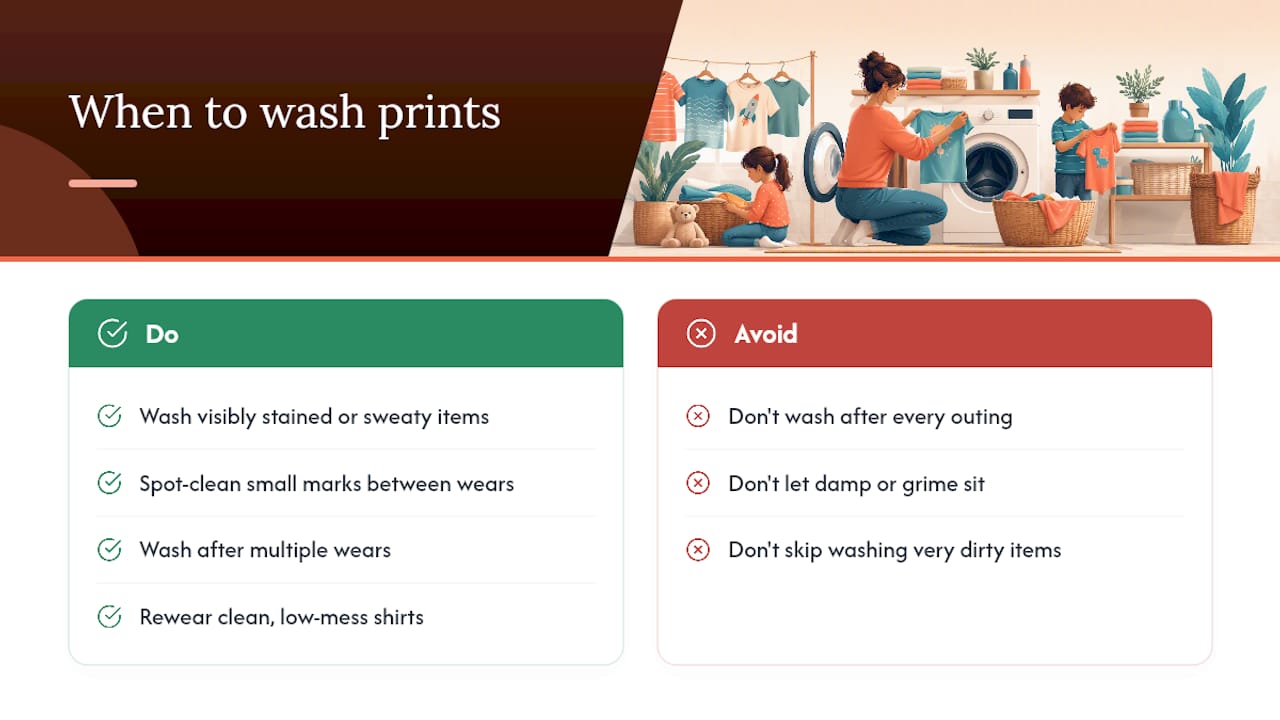
Wash printed garments only when they’re genuinely dirty or worn, not on autopilot after every single outing. Kids’ clothes get thrown in the wash out of habit far more often than out of necessity, and every extra cycle is another round of drum friction and detergent exposure the print has to survive.
A tee that’s been worn for a few hours of low-mess play, with no stains and no strong odour, can usually go back in the drawer for a second wear rather than straight into the basket. Save the full wash for genuine mess, and use spot-cleaning for the small marks in between, as covered earlier. This one shift in habit, washing based on actual need rather than routine, does more for print longevity than any detergent choice ever will.
That doesn’t mean letting things pile up either. A garment that’s visibly stained, sweaty, or has been worn multiple times should go through a proper wash rather than sitting in a hamper for a week, since set-in grime and prolonged damp both cause their own kind of damage. The rule of thumb is simple: wash for cleanliness, not for calendar days, and reach for a spot clean whenever a full cycle isn’t strictly needed.
The habit that actually protects prints, and the one that’s overrated
Parents get told to buy special detergents, invest in delicate wash bags, and follow elaborate label instructions to the letter. Some of that helps. Most of it isn’t where the real damage happens.
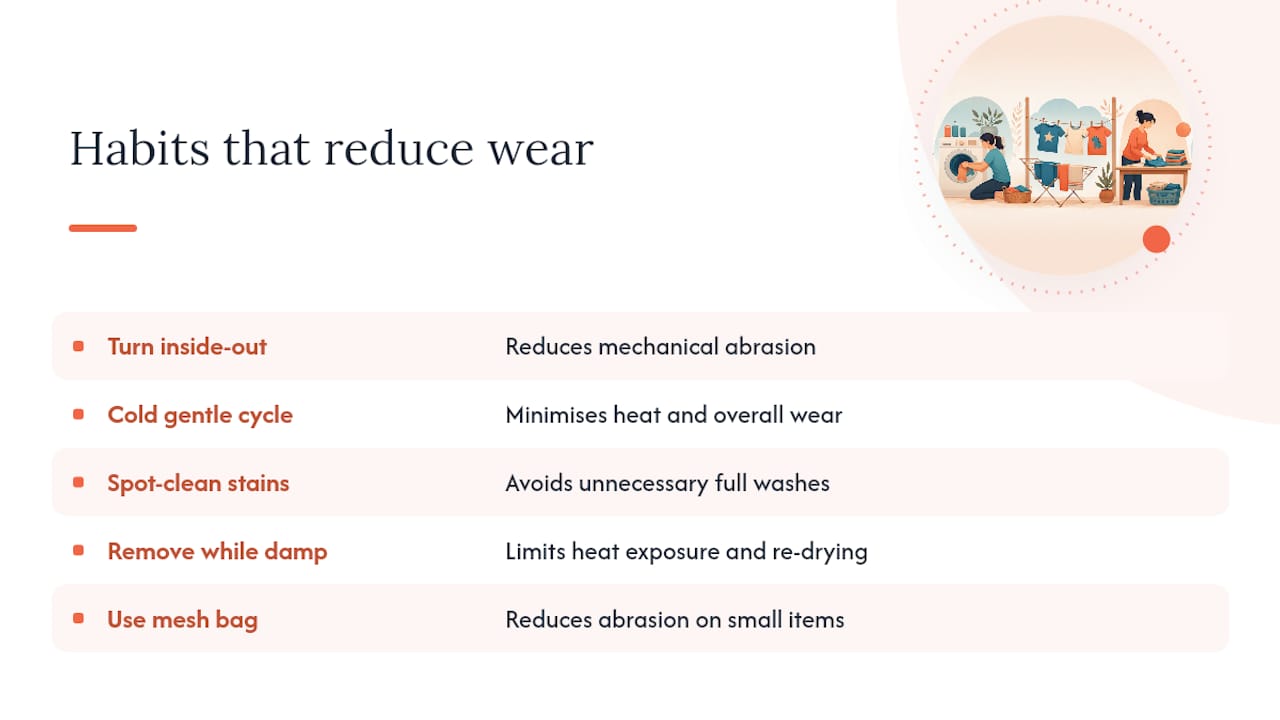
The single biggest factor in how long a print survives is whether it goes inside out into a cold, gentle cycle, every time, without exception. That one habit does more work than any premium detergent ever will, because it directly addresses the mechanical abrasion that wears prints down, not just the chemistry.
Where conventional advice falls short is treating every wash the same. Spot-cleaning a small stain instead of running a full load, pulling items from the dryer while still damp, using a mesh bag for socks and small items, these are small time-saving tweaks that add up to noticeably longer print life over a school year. They’re also the habits busy parents actually stick to, because none of them take more than a few extra seconds.
If you only change one thing after reading this, make it the inside-out rule. Everything else is refinement on top of that foundation.
— Daniel
Printed socks and tees built to survive real laundry
Some prints are made to fade fast. Others are made to survive a household of actual kids, which is the whole point of the Kite Pear-fect Print Socks (3-Pack) and the DUNS Sweden Clover Tee in Green Ash, both stocked because they hold their colour and shape through the kind of washing routine this guide sets out.
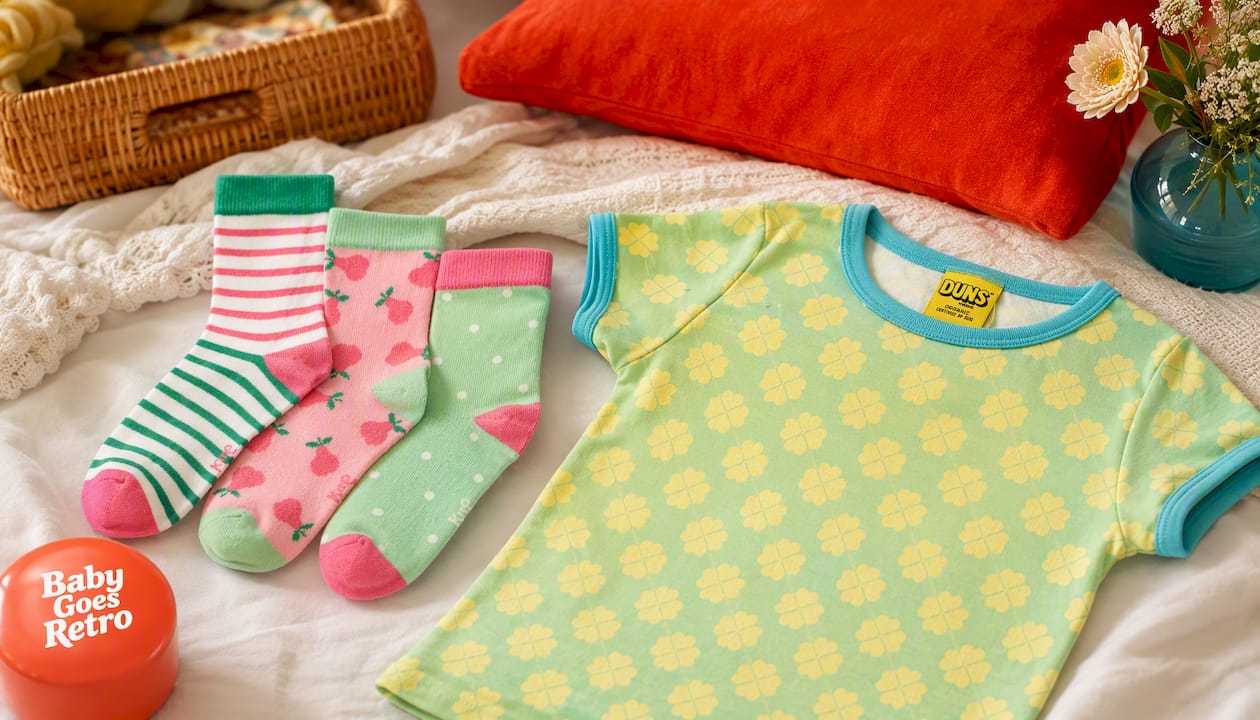
Before you buy any printed piece, check the fabric and care label, and favour sellers who spell out clear washing guidance rather than leaving you guessing. Baby Goes Retro has been a family-run business bringing organic, ethically made European kids’ clothing to Australian wardrobes since 2007, with every printed piece chosen to handle real washing, not just look good on a hanger.
Every order ships for a flat rate, with free shipping available over a certain amount, and a 30-day returns and exchanges policy is provided. Browse the full range in kids clothes or start with baby clothes if you’re shopping for the littlest ones, and grab a print that’s built to survive the wash, not just look good in the store.
Sources
- Twillpress — wash & care policy
- Live Ink — how to wash screen printed or embroidered clothes
- TShirtPlus blog — wash and care printed t-shirt
- Printable Press — how to wash and care for screen printed shirts
FAQ
Should shirts with prints be washed inside out?
Yes, always. Turning a printed shirt inside out before washing creates a barrier between the print and the drum, fabric, and any other items in the load, which is one of the most effective habits for extending print life.
What is the 3-3-3 rule for clothes?
The 3-3-3 rule isn’t a laundry care standard for printed garments specifically, and definitions of it vary depending on the source. For printed kids’ clothes, the more reliable rule is the one covered in this guide: inside out, 30°C, gentle cycle, mild liquid detergent, air dry.
How do you wash clothes that have prints on them?
Turn the garment inside out, wash on a cold, gentle cycle at 30°C or below, and use a mild, liquid, non-biological detergent rather than powder. Skip fabric softener and bleach entirely, and air dry where you can rather than relying on the tumble dryer.
Why is my shirt print peeling off?
Peeling is almost always caused by heat, whether from a hot wash, a high-heat dryer, or direct ironing, all of which soften the ink and weaken its grip on the fabric. If a brand-new garment starts peeling within its first few washes, that usually points to a production issue rather than anything you did in the laundry, and it’s worth contacting the seller with photos.
0 comments