


Size up when a garment leaves red marks after just an hour, when snaps strain or pop, or when your baby cannot kick or reach freely. Run the two-finger test at the neck, waist, and thigh before anything else. Never size up sleepwear the same way, though. Snug-fitting nightwear is a safety rule, not a style choice. For daywear, choosing stretchy, movement-friendly basics can make the next size up an easy switch.
TL;DR:
- Babies show clear signs of outgrowing clothes through persistent skin marks, strained snaps, restricted movement, or limbs riding up, not just calendar age.
- Clothing size labels are approximate; measuring your baby’s weight and length regularly offers a more reliable guide for sizing than age-based tags.
- Check fit at the neck, chest, sleeves, and crotch in seconds using the two-finger test, ensuring fabric isn’t too tight on skin or limbs.
- Fabric with stretch and natural fibers like organic cotton extend a garment’s usefulness by accommodating growth and supporting motor development.
- Sleepwear must fit snugly for safety, while daywear should allow movement, making proper fit vital for comfort, safety, and physical progress.
Table of Contents
- Clear signs your baby has outgrown an item
- How do baby clothing sizes actually work?
- Where to check fit first: neck, chest, sleeves, and nappy area
- When does a baby’s growth pattern call for a size up?
- Which fabrics and features make sizing up easier?
- Practical wardrobe and laundry tips that reduce waste
- Why sleepwear is different: the safety exception
- Why Baby Goes Retro backs movement-friendly fit
- A quick story about a onesie that wasn’t fooling anyone
- Ready to size up? Start with pieces that move with your baby
- Sources
- FAQ
Clear signs your baby has outgrown an item
Babies can’t tell you their overalls are too tight, so the fabric has to do the talking. A few visual and physical cues tell you it’s time to size up baby clothes, and most of them show up the moment you undress your baby, not while they’re wearing the outfit.
Check for these signs every time you change or bathe your baby:
- Red or indented marks on the skin around the neck, waist, or thighs that don’t fade within a few minutes of undressing.
- Snaps or poppers under strain, gaping between closures, or fabric that looks stretched tight across the chest and belly.
- Restricted kicking or rolling — if your baby seems to fight the fabric to move their legs or arms, the garment is working against them.
- Squashed toes or fingers in footed suits or mittened sleeves, where the fabric has run out of room before their limbs have.
- Sleeves or pant legs riding up past the wrist or ankle, sometimes called “high-waters” once they start creeping toward the elbow or shin.
None of these signs need a tape measure to spot. They’re the kind of thing you notice in two seconds flat while doing up a onesie, and that’s exactly the point. A baby who’s outgrown their clothes isn’t subtle about it, even if the calendar says they’re still meant to be in that size for another month.
Pro Tip: Check fit at the start of a growth spurt, not the end. If two or three items in a row show the same tight spot, it’s not that one garment shrank. It’s your baby.
How do baby clothing sizes actually work?
Age labels on baby clothes are a rough guess, not a guarantee. The number “0 to 3 months” on a tag tells you what the average baby that age might wear, but plenty of babies blow past that estimate in weeks. The American Academy of Pediatrics recommends choosing clothing by weight and length rather than age, and checking fit regularly as your baby grows.
In Australia, sizes typically run in this order: 000, 00, 0, 1, and 2, each tied to a height and weight band rather than a strict age. A common size chart maps them roughly like this:
| Size | Approximate height | Approximate weight |
|---|---|---|
| 000 | Fits smallest babies, usually newborn size | Suitable for smallest newborns |
| 00 | Slightly bigger than newborn size | Suitable for very young infants |
| 0 | Fits younger infants | Fits younger infants |
| 1 | Fits older infants | Fits older infants |
| 2 | Fits toddlers | Fits toddlers |
These bands come from Target Australia’s baby size chart, and they illustrate something worth remembering: size 000 covers roughly the first two months, while size 1 stretches across most of a baby’s second year. Newborn sizes are brief by design. Bigger sizes last longer because growth slows down.
Brand sizing isn’t consistent either. A “0” from one label can fit like a “00” from another, which is why measurement-based guides recommend weighing and measuring your baby rather than trusting the tag alone. During the fast growth months, check your baby’s height and weight every four to six weeks and compare against the chart, not the label from last time you shopped. If you’re stocking up for the 6 to 12 month range, that longer window means fewer size changes and more value per outfit.
Where to check fit first: neck, chest, sleeves, and nappy area
Four zones tighten up before the rest of the garment, and checking them in order takes about thirty seconds.
- Neck. Slide two fingers flat between the fabric and your baby’s skin. If they barely fit, or the collar leaves a mark, the neckline has maxed out.
- Chest and belly. Look at snap placement. Straining poppers or a gap between snaps when closed both signal the body of the garment is too small.
- Sleeves and legs. Check where the cuff sits. Wrists and ankles peeking well past the fabric, or footed pyjamas that squash toes flat, mean length has run out.
- Nappy area and crotch. This is the first spot to fail on rompers and bodysuits. If snapping the crotch closed pulls the shoulder seams up toward the neck, size up now.
The two-finger test works at each of these points: neck, thigh, and waist. If you can’t comfortably fit two fingers between skin and fabric without stretching it, the item is too tight for daily wear.
Pro Tip: Do the sleeve and leg check with your baby lying flat, not sitting up. Fabric that looks fine bunched up looks very different once a leg is fully extended.
When does a baby’s growth pattern call for a size up?
The first six months move fast, then things slow down. Most babies grow through several sizes in their first year, with the fastest changes happening before the six-month mark and a noticeable slowdown after. That’s why newborn and 000 sizes often last mere weeks, while a size 1 or 2 can carry a toddler through several months at a stretch.
A few practical rules make this easier to manage:
- Keep one size up already in the cupboard for your baby’s current stage, so you’re never caught out mid-growth spurt.
- Buy everyday basics like bodysuits and leggings a size ahead, since they get the heaviest wear and the shortest lifespan per size.
- Save special-occasion outfits for the current size only, since there’s less risk of your baby “living” in them daily.
- Reassess after any growth spurt, not just on a set schedule. Growth spurts often arrive in short, intense bursts rather than a steady climb, so a garment that fit perfectly last week can be tight within days.
If your baby is sitting right between two sizes, don’t assume you have to jump straight to the bigger one for everything. Our guide to dressing babies between 000 and 00 covers which pieces to size up first and which can wait.
Which fabrics and features make sizing up easier?
Stretch matters more than most parents expect. Fabric blends with a small percentage of elastane or a stretchy viscose mix give a garment several extra weeks of useful life before it’s genuinely outgrown, because the fabric moves with your baby instead of fighting them.
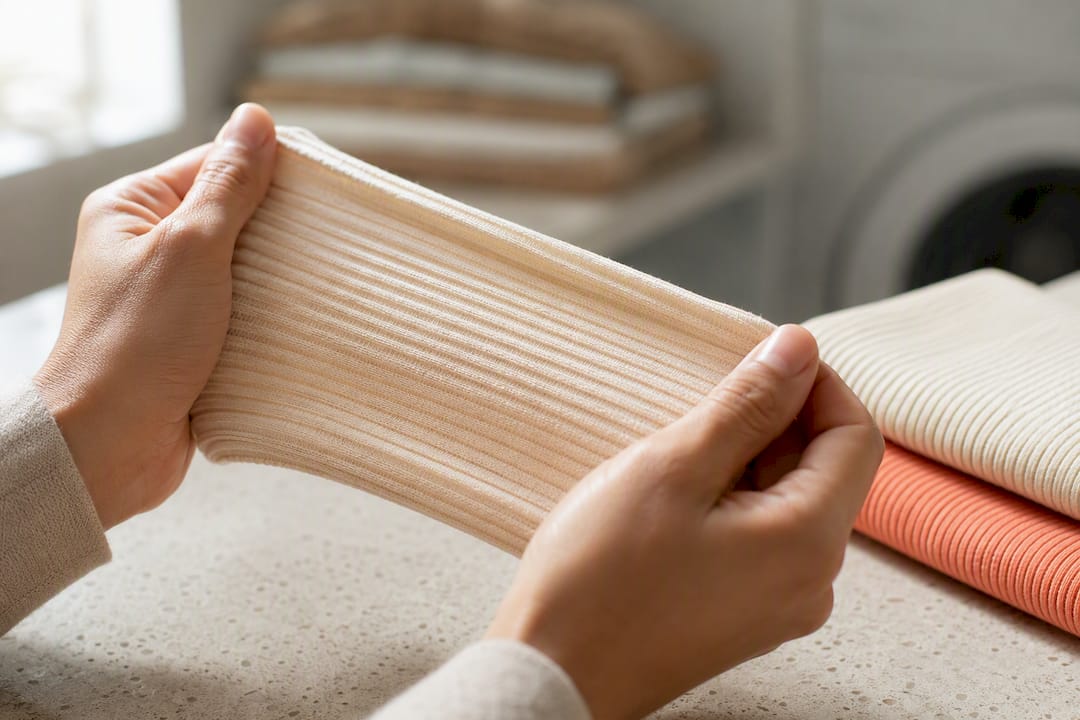
Stiff, tightly woven cotton is the opposite. It holds its shape rigidly, which sounds durable but actually forces you to size up sooner, since there’s no give left once your baby grows even slightly.
Look for these features when choosing what to buy next:
- Breathable natural fibres like organic cotton, which regulate temperature and don’t trap heat the way synthetic blends can.
- A touch of stretch in the fabric composition, giving recovery after washing and more room for movement day to day.
- Envelope necklines that stretch over the head without a fight, especially useful once your baby is wriggly and unimpressed by dressing time.
- Long cuffs on sleeves and legs, which fold up for a newborn and unfold as your baby grows, buying extra weeks in the same size.
- Zip closures on outerwear and sleep suits, which go on faster than a row of snaps when you’re dressing a squirming toddler at 6am.
Paediatric physical therapy commentary points out that restrictive clothing limits the kind of motor practice babies need to roll, reach, and eventually crawl. Loose, breathable fabric isn’t just comfortable. It gives your baby’s hands and feet the freedom to actually use them.
Practical wardrobe and laundry tips that reduce waste
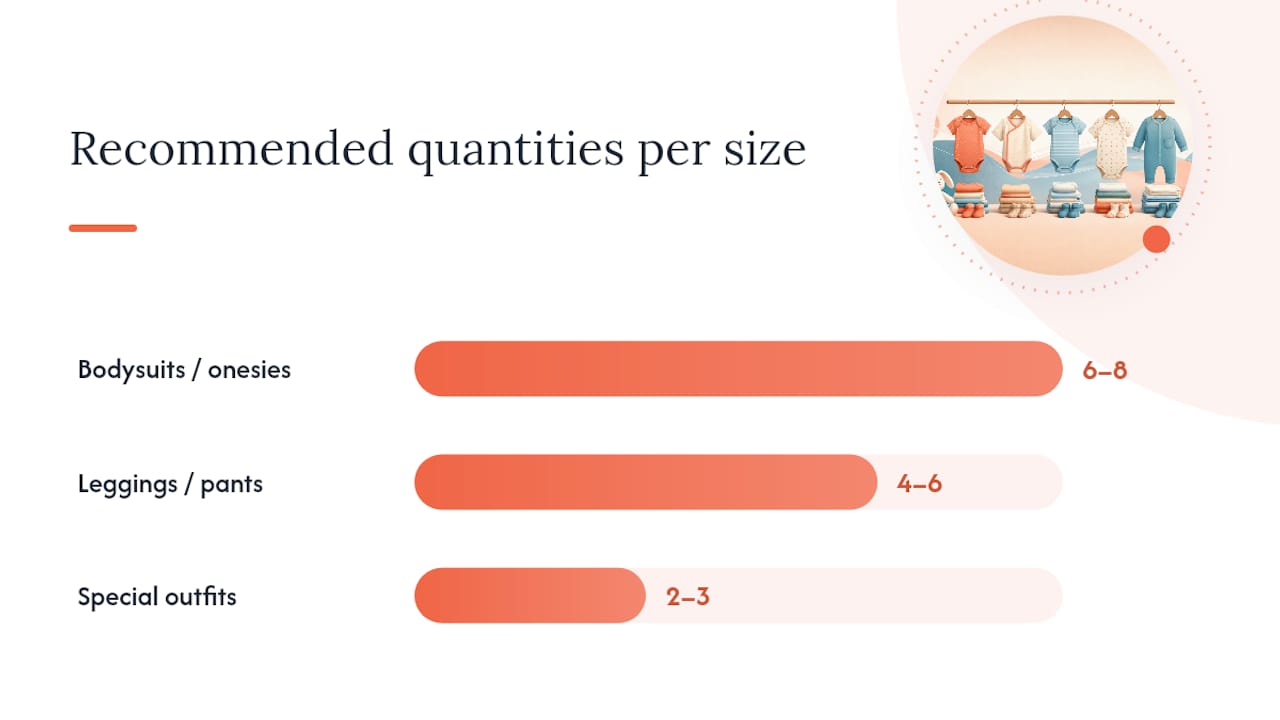
You don’t need twenty of everything, but you do need enough that laundry day isn’t a crisis. As a rough guide, aim for six to eight bodysuits or onesies per size, four to six pairs of leggings or pants, and two or three special outfits you’re not relying on for daily wear.
Laundry habits matter more than people realise when it comes to how long a size actually lasts:
- Wash in cool water and avoid the dryer’s high heat setting, since heat is the main cause of shrinkage in cotton knits.
- Turn prints and darker colours inside out before washing to protect the fabric surface and colour over repeated washes.
- Avoid overloading the machine, since crammed loads cause more friction and fabric fatigue than a properly sized load.
- Buy repeat-wear basics one size up rather than the exact current size, since they’ll fit properly within weeks anyway and last longer overall.
- Resist buying too far ahead. One size up is sensible. Three sizes up usually means the outfit sits in a drawer until it’s already the wrong shape for the season.
This approach lines up with what most parenting guides on sizing suggest: buy for the size your baby is about to be, not the size they were last month. It saves money and stops your cupboard filling with clothes that never quite get worn.
Why sleepwear is different: the safety exception
Every rule above flips when it comes to sleepwear. Daywear should give room to move. Nightwear needs to fit snugly, and that’s not a style preference. Product Safety Australia’s guidance on children’s nightwear warns that oversized sleepwear can pose suffocation and entanglement risks, since loose fabric can ride up, twist, or cover a baby’s face during sleep.
That means the same “size up if it’s tight” logic doesn’t apply overnight. A safe sleeper should sit close to the body without restricting breathing or movement, and footed pyjamas that run too long in the leg are a genuine hazard, not just an inconvenience.
If a sleep suit is genuinely too small (snug at the shoulders, straining at the crotch snap), size up for safety and comfort. But don’t size up simply for extra room the way you might with a jumper. Our guide to dressing your baby for sleep breaks down what a properly fitted sleep suit should look like season by season.
Why Baby Goes Retro backs movement-friendly fit
Some brands focus on clothes that move with your baby, not against them. Quality pieces are often sourced from ethically made European organic brands, chosen for softness on sensitive skin and durability through the everyday chaos of crawling, spills, and repeat washing.
That focus on quality shows up in the details:
- Organic cotton and natural fibre blends that breathe and stretch, supporting the free movement paediatric guidance points to.
- Cuts designed with room in the shoulders, hips, and crotch, so a baby isn’t fighting the fabric to reach or roll.
- Construction built to handle regular washing without the fabric fatigue that forces early sizing up.
Many online stores ship for a flat rate around $7.95 or offer free shipping once a cart passes a certain amount, with 30 day easy returns and exchanges if a size guess doesn’t land right the first time.
A quick story about a onesie that wasn’t fooling anyone
A friend once swore her six-month-old was “still a 00,” right up until the poppers on a onesie gave way mid nappy change. The fabric had been straining for a fortnight. She’d just been reading the age label instead of the fit.
That’s the trap. It’s easy to trust the tag and miss what’s happening at the snaps and seams. The fix isn’t complicated: keep one size up sitting in a drawer for exactly this moment, so you’re never scrambling when the two-finger test tells you it’s time. If you want a head start on what that next size should look like, our size-sorted shop makes the jump easy.
— Daniel
Ready to size up? Start with pieces that move with your baby
Sizing up doesn’t need to mean a full wardrobe overhaul. Some brands design cuts with extra room through the shoulders, hips, and crotch from the start, so the jump between sizes feels less like guesswork and more like a natural next step.
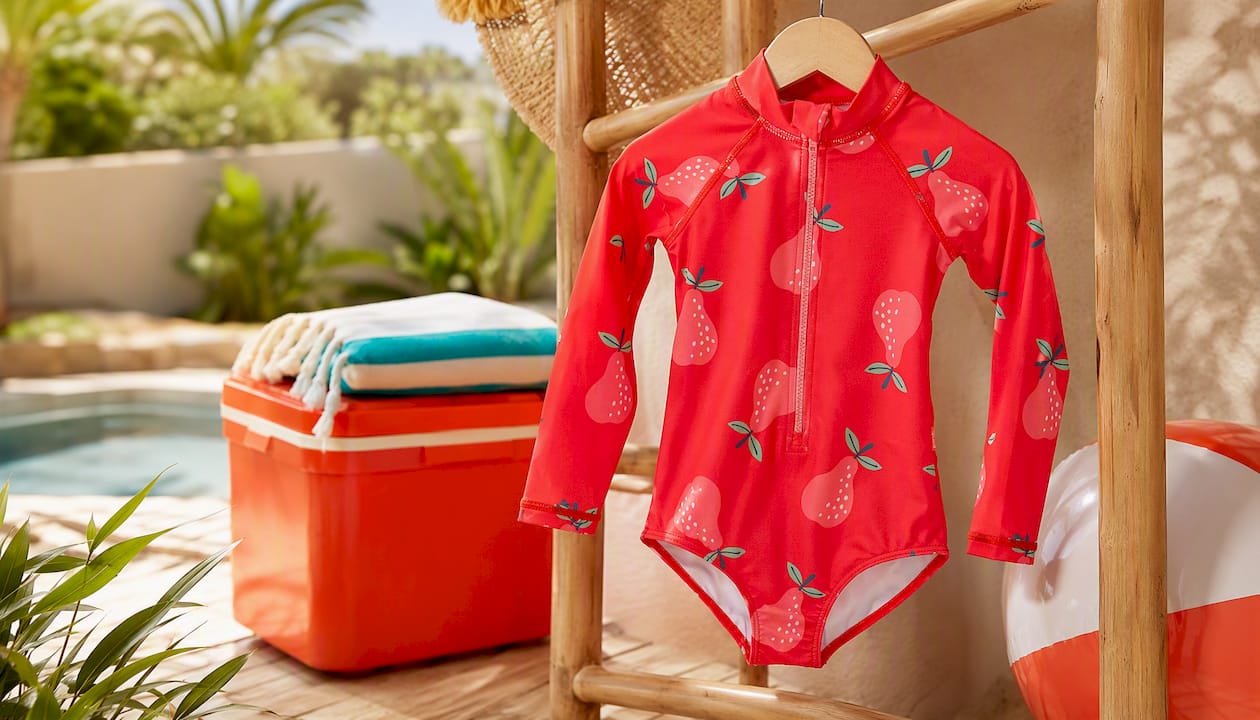
Swimwear is a good example of where fit really counts, since a suit that’s too tight restricts kicking in the water just as much as a onesie restricts crawling on the floor. The Kite Pear-fect Print Swimsuit is cut generously through the legs and shoulders for exactly that reason, letting your baby splash freely instead of fighting a snug seam. Many stores offer flat rate shipping around $7.95, free shipping over a certain cart value, and 30 day easy returns if the size doesn’t land right the first time. Browse the size-sorted collection and pick the next size up with confidence.
Sources
- Children’s nightwear guide — Product Safety Australia
- Dressing your newborn — Healthy Children (American Academy of Pediatrics)
- Best baby clothes for development — The Moving Peanut
- Baby size chart — Target Australia
FAQ
Is it better to size up baby clothes than to size down?
Yes, for daywear. Slightly loose clothing allows free movement and motor development, while tight clothing leaves marks and restricts kicking and reaching. Sleepwear is the exception, since it needs a snug fit for safety.
Will size 0 to 3 months fit a newborn?
Often, but not always. Many newborns start in a 000 size and move into 0 to 3 months within a few weeks, so check length and weight against the chart rather than assuming the label matches your baby’s age.
Does 6 month baby clothing mean size 3 to 6 or 6 to 9 months?
It depends on the brand, which is exactly why measurement matters more than the label. Size labels often overlap between brands, so check the height and weight guide on the tag rather than relying on the number alone.
Is 0 to 3 months too big for a newborn?
For some newborns, yes, particularly smaller or premature babies who fit better in a 000 size first. If sleeves and legs are noticeably long or the neckline gapes, drop down a size rather than sizing up prematurely.
0 comments