


EU baby sizes are simply your child’s length in centimetres, not their age. To find the right fit, measure your baby from crown to heel and match that number to the garment’s EU size, sizing up if you’re stuck between two. Every brand cuts slightly differently, so always check the specific brand size chart before you buy.
TL;DR:
- EU sizes are based on length in centimetres, so measuring your baby accurately is essential because age labels are only approximate guides.
- Garments from different brands and fabrics can fit differently, with cotton shrinking after washing and stretchy fabrics forgiving size mismatches.
- When in doubt between two sizes, sizing up is safer, especially for seasonal layering or if your baby has a unique growth pattern.
- Proper measurement and checking each brand’s specific chart ensures the best fit rather than relying solely on general size conversions.
- For seasonal layering, size up in winter clothes to accommodate additional layers, but stick to measured size for lightweight summer pieces.
Table of Contents
- What do EU sizes mean, and how do they convert to Australian sizes?
- How do you measure your baby for an accurate EU size?
- Does every EU 68 fit the same? Brand and fabric factors that change the fit
- Quick reference: what does EU 68, 74 or 92 actually mean?
- Who checks these sizes for you, and how does Baby Goes Retro help?
- What if your baby is premature or outside the average size range?
- How should you size for layering through the seasons?
- Why measuring beats guessing every time
- Shop-ready picks: EU-sized pieces worth knowing your measurements for
- Sources
- FAQ
What do EU sizes mean, and how do they convert to Australian sizes?
An EU size of 68 doesn’t mean “3 months old.” It means the garment is cut to fit a child who measures roughly 68 centimetres from the top of the head to the heel. This is the whole logic behind European baby clothing sizing, and once it clicks, converting sizes gets a lot less confusing.
The numbers climb in steps of 6 centimetres, so you’ll see 50, 56, 62, 68, 74, 80 and onward. Retailers such as C&A pair these centimetre sizes with age bands, showing that EU 56 sits around 0 to 1 month, EU 68 covers roughly 3 to 6 months, and EU 74 fits closer to 6 to 9 months. Those age hints are a rough guide only. Length is what the garment is actually built around, which is why a chunky 4 month old and a lean 7 month old can wear the exact same EU size.
Here’s how EU sizes line up against approximate Australian sizing and age bands:
Treat this as a starting point rather than gospel, because conversion tables linking EU, US, UK and Australian sizes are approximate by nature. The garment’s own centimetre measurement is always the more reliable number.
A few situations where sizing up makes sense:
- Your baby is between two EU sizes on the chart.
- You’re layering for winter and need room for a jumper underneath.
- The fabric is 100% cotton and prone to some shrinkage after washing.
- You’re buying a gift and don’t know the baby’s exact measurements yet.
How do you measure your baby for an accurate EU size?
Guesswork is the enemy of good sizing. A proper measurement takes two minutes and saves you from returns later.
- Lay your baby flat on their back on a firm surface, like a change table or the floor with a towel down. Standing measurements aren’t reliable for babies and toddlers, since they wriggle and slouch.
- Gently straighten one leg and mark the floor or surface at the crown of the head and at the heel.
- Measure the distance between those two points in centimetres. That figure is your EU size starting point.
- For fitted pieces like rompers or dungarees, wrap a soft tape measure around the chest at its widest point, and around the hips too, since chest and hip measurements matter as much as length for a comfortable fit.
- Compare your numbers against the brand’s own chart, not just a general EU conversion table.
Pro Tip: Write your baby’s measurements and the date on your phone. Babies grow fast, and a measurement from three months ago won’t help you when you’re shopping today. Re-measure every couple of months, especially under 12 months old.
Does every EU 68 fit the same? Brand and fabric factors that change the fit
Not quite. Sizing charts give you a strong starting point, but the finished garment is where brands start to differ. Northern European labels often run a touch more generous than southern European ones, which is one reason two brands’ EU 74 can feel different on the same baby.
Fabric behaviour matters just as much as the cut. A few things worth knowing before you check out:
- 100% cotton pieces can shrink slightly in the wash, so a snug fit at purchase might get snugger. Simple wash and dry adjustments help protect against this.
- Stretch-knit fabrics forgive a size mismatch better than woven cotton, which holds its shape.
- For one-piece outfits and rompers, check sleeve and leg length specifically. A baby with long limbs for their weight might need to size up even if their chest measurement fits the smaller size.
- When in doubt between two sizes, sizing up is the safer call, especially for anything worn through a season of growth.
Quick reference: what does EU 68, 74 or 92 actually mean?
Sometimes you just want the answer without reading the whole chart again. Here’s a fast lookup for the sizes that come up most often:
- EU 56 – newborn to 1 month, roughly AU 000.
- EU 62 – 1 to 3 months, roughly AU 00.
- EU 68 – 3 to 6 months, roughly AU 0.
- EU 74 – 6 to 9 months, roughly AU 1.
- EU 80 – 9 to 12 months, roughly AU 1.
- EU 86 – 12 to 18 months, roughly AU 2.
- EU 92 – 18 to 24 months, roughly AU 2.
- EU 98 – around 2 to 3 years, roughly AU 3.
- EU 104 – around 3 to 4 years, roughly AU 4.
- EU 110 to 140 – covers roughly 4 to 10 years, moving up through AU 4 to AU 10.
Worked example: you measure your baby lying flat and get 71cm crown to heel. That sits between EU 68 and EU 74, so you’d lean toward EU 74, especially if you’re buying for the coming season rather than right now. Always double check the product size chart before adding to cart, since the number on the swing tag is only the starting point.
Who checks these sizes for you, and how does Baby Goes Retro help?
Getting EU sizing right isn’t complicated once you understand it’s about length, not age, but it does take a bit of care the first few times you shop European brands. That’s the gap this guide is built to close.
Sizing charts are a starting point, not a guarantee. The most reliable fit comes from measuring your own baby and checking that number against the specific brand’s chart, because a 68 from one label and a 68 from another can sit differently on the same child.
This guide is built to help close the gap for parents buying European organic kids’ clothing in Australia. Every product page carries its own size guidance so you’re never left guessing which brand runs generous and which runs snug. Shopping is backed by flat $7.95 Australian shipping, free over $97, and 30 day easy returns and exchanges, so if a size doesn’t land quite right, fixing it is simple. For anything approaching toddler sizing, the toddler size guide picks up where this one leaves off.
What if your baby is premature or outside the average size range?
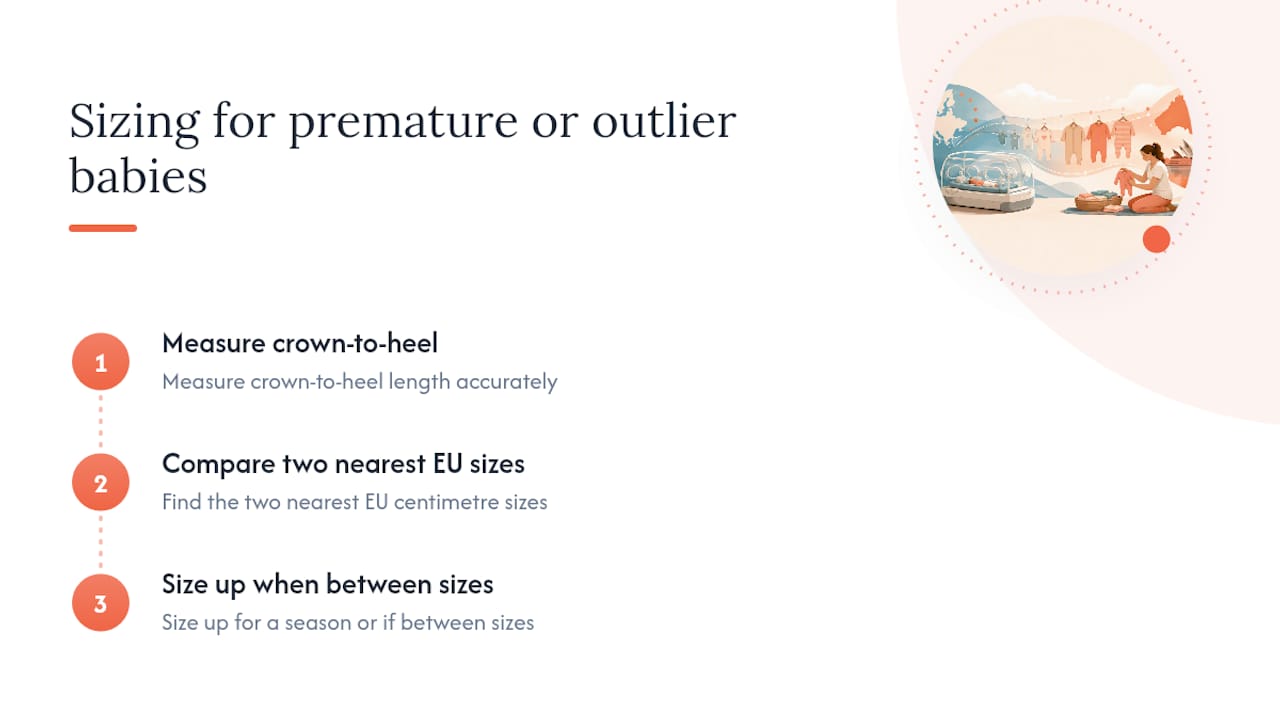
Charts are built around average growth curves, and plenty of babies sit outside them, especially those born early or who run noticeably smaller or larger than their peers. If your baby was premature, don’t default to age-based sizing at all. Go straight to length. A baby born at 34 weeks might still measure close to a newborn size chart at three months old, well below the EU 62 or EU 68 you’d expect for that age.
The same logic applies to babies who are simply on a bigger or smaller frame than average. A tall, lean nine month old might measure into EU 80 territory rather than the EU 74 the age chart suggests, while a compact toddler might still be comfortable in EU 86 well past their first birthday. Neither situation is unusual. It just means the age hints on packaging are a rough guide, and the centimetre figure is the number that actually does the work.
If you’re unsure where your baby sits, measure them properly using the crown-to-heel method, then look at the two closest EU sizes on the chart rather than the one matched to their age in months. For premature bubs particularly, it’s worth re-measuring more often than the every-couple-of-months rule that applies to typically growing babies, since catch-up growth can move quickly once it starts. When a baby sits right on the border between two sizes and you’re buying for a season rather than a single event, the size-up rule still applies. Room to grow beats a snug fit that’s outgrown in six weeks.
How should you size for layering through the seasons?
Winter and summer wardrobes ask different things of the same EU size. A romper that fits perfectly as a standalone piece in summer might feel tight over a singlet and jumper in winter, which is why layering deserves its own thought rather than just following the chart.
For cooler months, consider sizing up one step from your measured size if the piece is going to sit over other layers, particularly dungarees, overalls, and anything with a fitted waist or cuffs. A pair of DUNS Sweden dungarees, for instance, needs enough room in the leg and body to sit comfortably over a bodysuit and leggings without pulling at the shoulders.
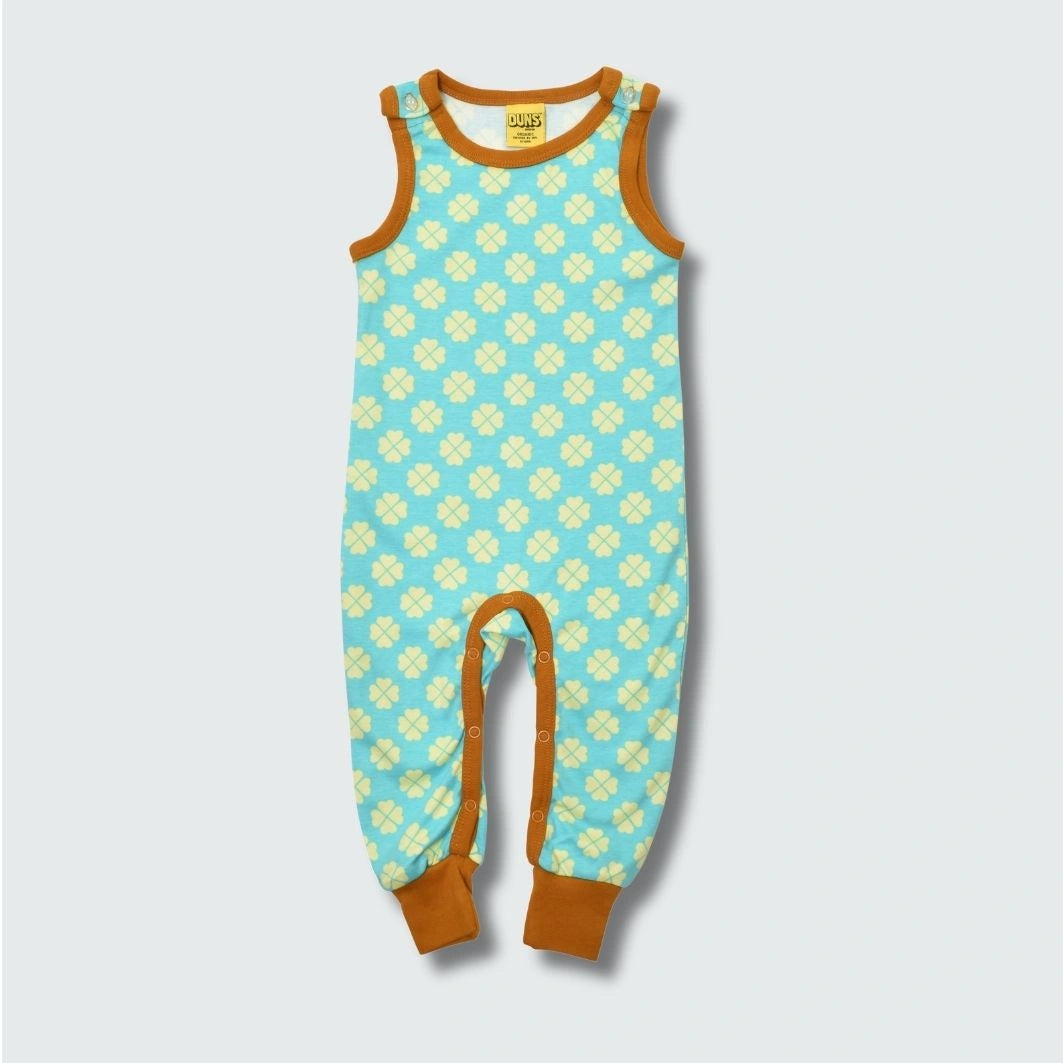
Summer pieces, on the other hand, are usually worn closer to the body with fewer layers underneath, so your true measured size is the safer bet rather than automatically sizing up. Lightweight cotton playsuits and rompers fall into this category. Swimwear and rash vests are worth checking separately again, since they’re designed to sit snugger than everyday clothing for practical reasons.
The other seasonal factor is growth timing. If you’re buying winter woollens in autumn for wear three months later, factor in the growth your baby will do in that window, not just their measurements today. That’s often the difference between a jacket that fits in June and one that’s already snug.
Why measuring beats guessing every time
Most parents default to age on the label because it feels simpler, and that’s exactly the habit worth breaking. Age is a proxy, and a rough one at that, while a centimetre measurement taken properly at home is the actual data point every EU size chart is built on. The research backs this plainly: measurement-first sizing outperforms age-based guessing because children on the same birth date can differ by several centimetres in length by six months old.
Where conventional advice falls short is in treating the age hint on a swing tag as instruction rather than suggestion. It’s a rough average, not a fit guarantee, and leaning on it too heavily is how so many parents end up with a drawer of “worn twice” outfits that never quite fit right. The brand variation point gets underplayed too. Two garments labelled EU 74 from different labels can differ meaningfully in cut, and no conversion chart, including the one further up this page, can account for that on its own.
If there’s one habit worth prioritising above all else, it’s this: measure your baby properly every couple of months, keep that number somewhere you’ll actually check it, and treat every purchase as a comparison against the brand’s own chart rather than a universal EU standard. That single habit solves more sizing headaches than any table ever will.
— Daniel
Shop-ready picks: EU-sized pieces worth knowing your measurements for
Once you’ve got your baby’s crown-to-heel number sorted, shopping European brands stops being a guessing game. A few current favourites show exactly how EU sizing plays out in real garments.
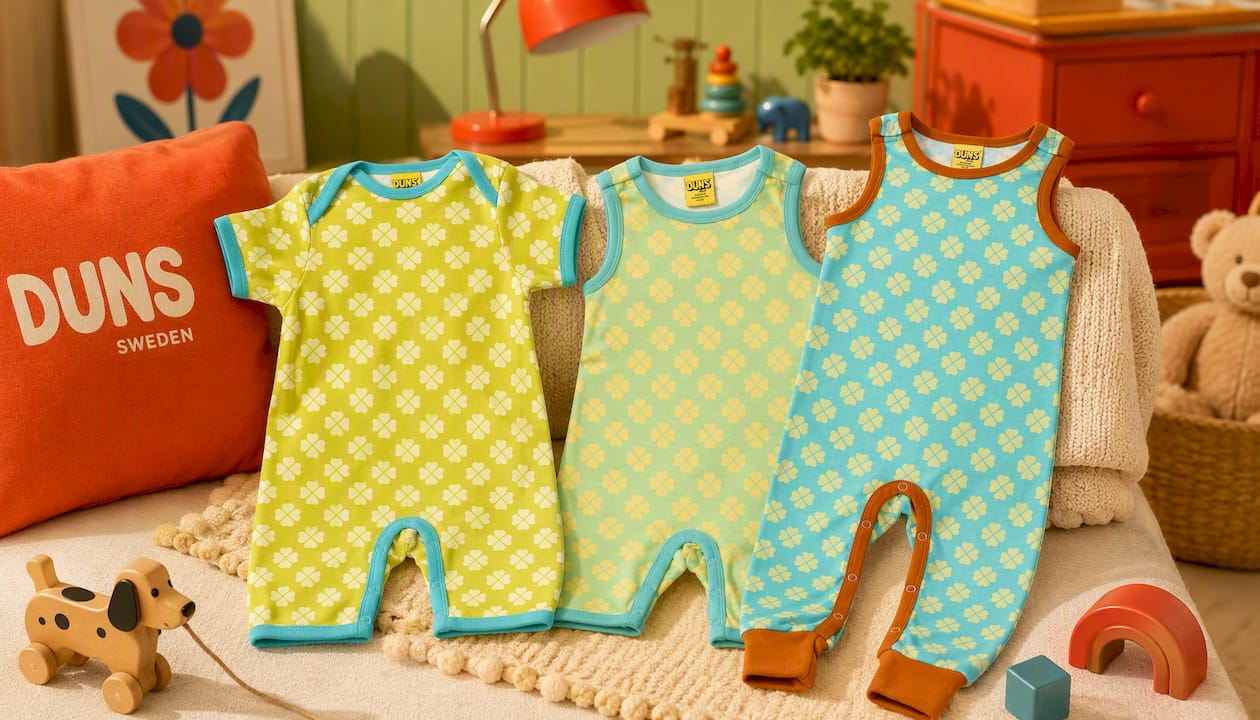
The DUNS Sweden Clover Playsuit in Sulphur Green is a relaxed-fit piece that suits babies sitting comfortably at their measured EU size, with enough room through the body for a singlet underneath on cooler days. The DUNS Sweden Clover Playsuit in Green Ash runs true to its EU chart too, and works well as either a standalone summer piece or layered for shoulder-season weather. For dungarees, the DUNS Sweden Clover Dungarees in Capri Blue is worth checking leg length against your baby’s measurements specifically, since dungarees show up length differences more than a simple bodysuit does.
Each product page carries its own size chart, so you can cross-check your baby’s measurements before buying rather than after. Shipping and return details vary, so please check the retailer’s site for current policies. Measure once, check the chart, and shop with confidence.
Sources
FAQ
What is EU size in Australian sizing?
EU baby sizes are based on the child’s length in centimetres, while Australian sizes typically use age-style labels like 000 or 00. As a rough guide, EU 56 sits around AU 000, EU 68 around AU 0, and EU 92 around AU 2, but always check the brand’s own chart for the closest match.
Does 6 months mean size 3 to 6 or 6 to 9?
It depends on the brand, but most EU charts place a 6 month old between EU 68 (labelled roughly 3 to 6 months) and EU 74 (labelled roughly 6 to 9 months). Measuring your baby’s actual length is far more reliable than relying on the age label alone.
What size is EU 140 in Australian children’s clothes?
EU 140 corresponds to a child roughly 140cm tall, which typically lines up with around AU size 10 and an age range of roughly 9 to 10 years. Always confirm against the specific brand’s chart, since sizing can shift slightly at these larger sizes.
What is baby size 6 in EU sizing?
There’s no standard “size 6” in EU baby sizing since EU sizes are labelled by centimetres, not a simple number scale. If you’ve seen “size 6” on a chart, it’s likely referring to a specific brand’s internal numbering, so check that brand’s own size guide, such as Baby Goes Retro’s size guide, for the exact centimetre equivalent.
0 comments