


Formaldehyde does turn up in baby clothing, but the research shows it’s usually well below safety limits, and one wash typically fixes it. A retail study found the chemical in around 20% of samples tested, with most results sitting far under the ACCC’s interim reference limit of 30 mg/kg for infant garments. The single most useful thing you can do: wash new clothes before they touch your baby’s skin, and look for OEKO‑TEX Standard 100 Class I labelling when you shop.
TL;DR:
- Most formaldehyde in baby clothes remains well below safety limits and is removed by washing new garments before use.
- Labels claiming “wrinkle-free,” “permanent press,” or “no-iron” often indicate higher formaldehyde residue, so washing is especially important for these items.
- Retail testing shows about 20% of baby clothing samples contain detectable formaldehyde, but levels are generally well under regulatory thresholds.
- Babies are more sensitive to chemical exposure, but the primary concern is inhalation of off-gassed fumes rather than skin contact, making washing effective.
- Choosing garments with OEKO‑TEX Standard 100 Class I or GOTS labels significantly reduces the risk of formaldehyde exposure.
Table of Contents
- What formaldehyde is doing in baby clothes in the first place
- How common is formaldehyde in baby clothes, really?
- Is formaldehyde exposure actually risky for babies?
- How to spot and reduce formaldehyde exposure from baby clothes
- What to look for when you’re buying: a quick checklist
- Why you can trust this guidance
- Three rules I’d want every new parent to know
- Safer picks that fit this advice
- Sources
- FAQ
What formaldehyde is doing in baby clothes in the first place
Formaldehyde isn’t added to baby clothes for no reason. Manufacturers use it as part of resin treatments that stop fabric from creasing, a process that produces “wrinkle-free” or “permanent press” garments that come out of the wash looking crisp without an iron in sight. It’s a cheap, effective way to make cotton behave more like polyester, and it’s been standard practice in parts of the textile industry for decades.
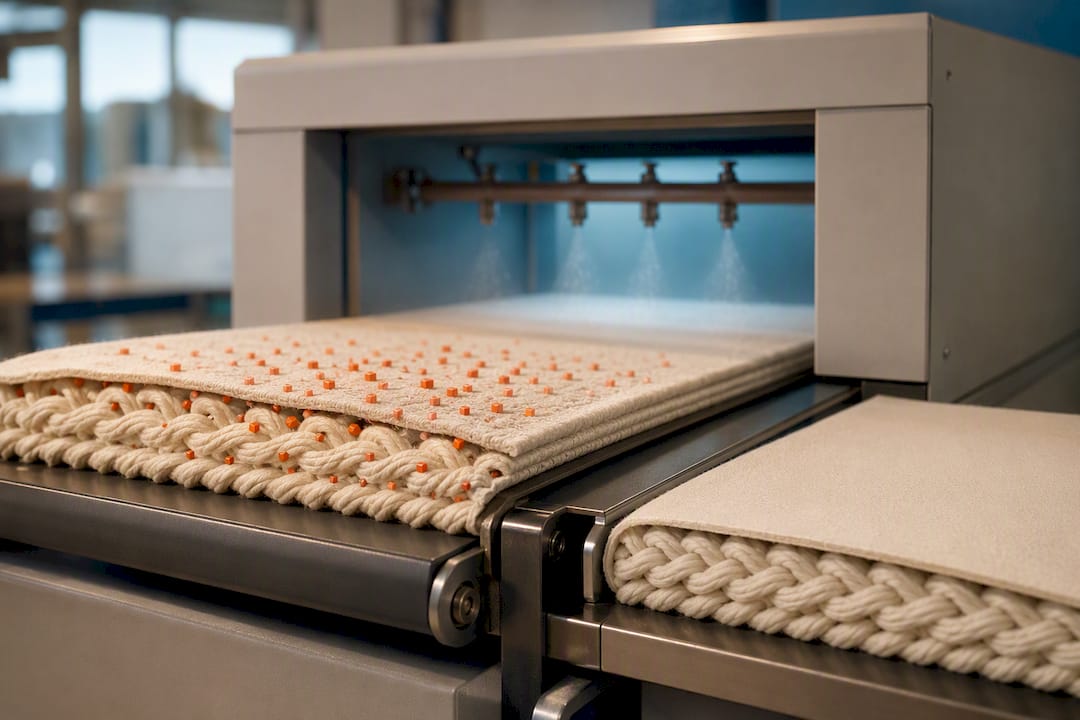
The chemistry matters here. Formaldehyde-based resins bond to cotton fibres during finishing, and that bond isn’t always permanent. Heat, humidity, and the natural sweat and moisture from a wearer’s skin can cause some of it to release slowly over time, a process textile chemists call off-gassing. That’s why a garment can test differently a month after manufacture compared to fresh off the production line.
A few label clues tend to flag a garment as more likely to carry formaldehyde residue:
- “Wrinkle-free” or “wrinkle-resistant” claims
- “Permanent press” or “easy-care” wording
- “No-iron” cotton, particularly on woven shirts and dresses
- Stiff, unusually smooth-feeling new fabric, especially in cotton-poly blends
None of this means every wrinkle-free onesie is dangerous. It means these are the garments worth washing before anything else touches your baby’s skin.
How common is formaldehyde in baby clothes, really?
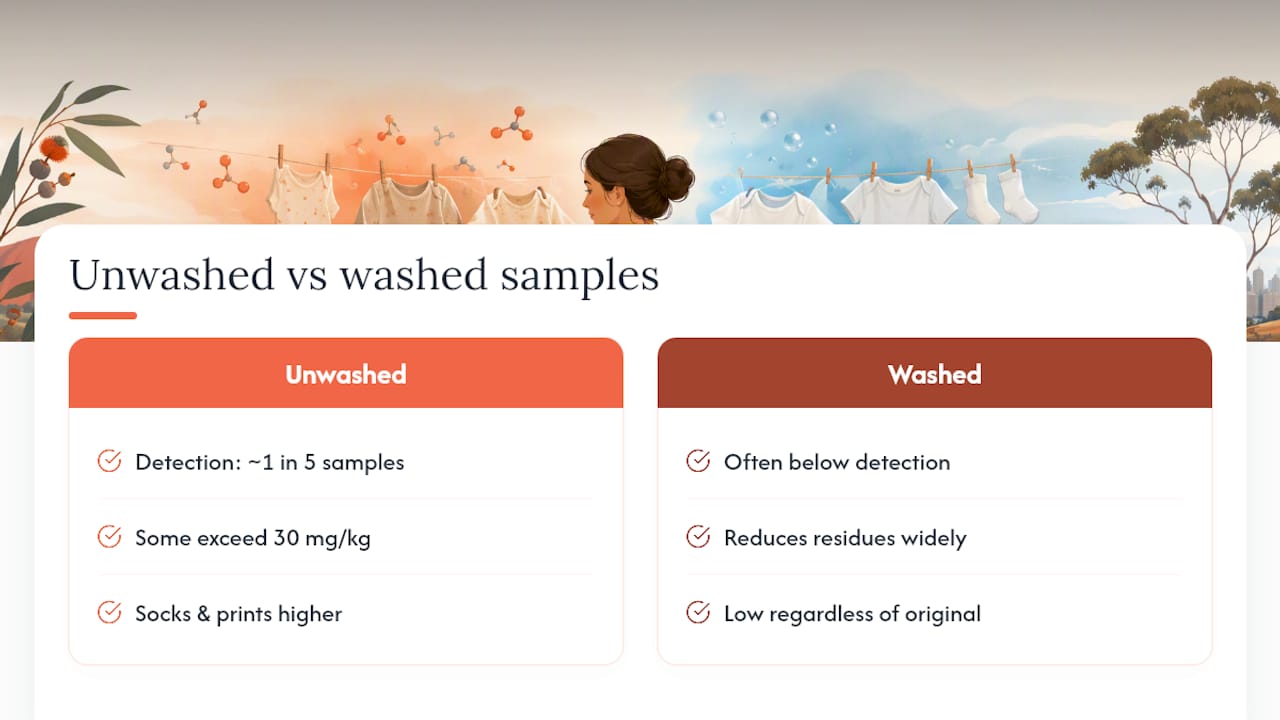
The honest answer sits between “rare” and “everywhere.” A peer‑reviewed analysis of retail garments detected formaldehyde in about one in five samples tested, with detectable concentrations in a subset of items, typically well under the regulatory limits.
The number that matters most: Australia’s interim reference limit for infants’ clothing sits at 30 mg/kg, meaning the average detected level in that study was less than a third of the threshold, though some individual garments exceeded it.
The ACCC sets tiered limits depending on how a garment is worn: 30 mg/kg for infants’ clothing and clothing for people with sensitive skin, 100 mg/kg for garments that sit against skin more generally, and 300 mg/kg for fabrics with minimal skin contact. OEKO‑TEX applies similarly strict thresholds for its Class I category, which covers products for babies and toddlers under three.
Item type matters too. Socks and heavily dyed or printed pieces have shown higher residues in some studies, likely because dye fixation and colourfast treatments sometimes rely on formaldehyde-releasing agents. The encouraging finding across the research: washed samples very often tested at levels too low to detect at all, regardless of how high the unwashed reading had been.
Is formaldehyde exposure actually risky for babies?
Babies aren’t just small adults when it comes to chemical exposure. Their skin is thinner and more permeable than an adult’s, they have a much higher skin-surface-to-body-weight ratio, and a baby wrapped in a wrinkle-resistant onesie for eight hours has far longer continuous contact than an adult wearing the same fabric for a few hours at the office.
The acute effects are well documented and mostly minor: skin irritation, contact dermatitis in sensitive infants, and occasionally respiratory symptoms in children with existing sensitivities. These reactions tend to show up as redness or rash in areas of sustained fabric contact, like waistbands, collars, or sock elastic.
“Formaldehyde is classified as carcinogenic to humans by inhalation,” notes the long-term hazard context from the International Agency for Research on Cancer. That classification is worth knowing, but it’s based overwhelmingly on inhalation exposure, such as industrial settings or off-gassing building materials, not skin contact with clothing.
Here’s where perspective matters. The exposure route that concerns toxicologists most is airborne, not textile contact. Clothing-based formaldehyde exposure is a real but comparatively minor contributor, and the doses measured in retail garment studies generally sit below conservative risk thresholds. That doesn’t mean every result is fine, and a chemically sensitive baby can react at lower levels than average. It means the practical response isn’t panic, it’s a wash cycle and a bit of label awareness.
How to spot and reduce formaldehyde exposure from baby clothes
You don’t need a chemistry degree to cut your baby’s exposure meaningfully. A few habits do most of the work.
Pro Tip: If a brand-new garment has a sharp, chemical smell that lingers even after airing it out overnight, treat that as a signal to wash it twice before use, not once.
- Check the label before you buy. Skip “wrinkle-free,” “permanent press,” or “no-iron” claims for anything that sits against your baby’s skin for long stretches, especially sleepwear.
- Wash before first wear, every time. One wash removes most surface-level formaldehyde in the majority of cases studied, and Australian product safety guidance specifically recommends washing new textiles before first use.
- Use hot water where the fabric allows it. Heat helps release residual chemicals faster than a cold cycle, though check the care label first so you don’t shrink or damage delicate organic cotton.
- Choose a fragrance-free, gentle detergent. This avoids layering a second irritant onto skin that might already be sensitive from the fabric itself.
- Run a second rinse cycle for items with a lingering smell. It costs you nothing but a bit of water and gives genuinely reassuring peace of mind.
- Line dry rather than machine dry where practical. Fresh air circulation helps disperse any last traces of off-gassed chemical.
Formaldehyde isn’t the only finish worth watching. Stain-resistant claims can indicate PFAS treatments, and “antimicrobial” or “odour-resistant” labelling usually means a chemical additive rather than a fabric property, so treat both the same way you’d treat a wrinkle-free label: wash first, ask questions if reactions persist.
If your baby develops a rash that doesn’t clear after you’ve switched detergents and washed the garment twice, that’s worth a chat with your GP. Persistent reactions, or an usually strong chemical smell that survives repeated washing, are the two signs that warrant professional textile testing rather than more laundry. Testing labs use standardised extraction methods such as ISO 14184 to measure formaldehyde in mg/kg, the same units regulators use, so a lab result gives you a genuinely comparable number against the ACCC’s thresholds.
For everyday laundering routines that work well on delicate baby fabrics, our guide on removing stains from baby clothes covers detergent choices and wash settings in more detail.
What to look for when you’re buying: a quick checklist
Certifications aren’t marketing fluff when they’re the right ones — for example, parents can find valuable advice about choosing sustainable, safe newborn items in this eco friendly newborn toys guide. Two labels are worth prioritising for infant clothing specifically.
- OEKO‑TEX Standard 100 Class I tests finished garments against hundreds of regulated and unregulated substances, and Class I applies the strictest limits reserved for baby and toddler items under three years old.
- GOTS (Global Organic Textile Standard) focuses on organic fibre content and environmentally responsible processing through the supply chain, giving you assurance about how the fabric was grown and made. Our breakdown of GOTS versus OEKO‑TEX explains what each one actually tests for.
A word of caution: an “eco” or “organic” label alone doesn’t guarantee zero chemical finishes. Some certifications focus on fibre origin rather than every finishing agent applied afterwards, so a garment marketed as organic can still carry a wrinkle-resistant treatment unless the certification specifically screens for it. Second-hand baby clothes are generally a safe bet too. Most finishing chemicals have already broken down through repeated washing by the time a garment reaches a hand-me-down pile, provided you give it one more wash before use.
Why you can trust this guidance
We have curated European organic baby and kids’ clothing since 2007, with a focus on quality and sensitive skin. Our selection considers sensitive skin and ethical production, as well as style.
This article draws on ACCC testing standards, peer‑reviewed exposure studies, and OEKO‑TEX and GOTS certification frameworks, cross-checked against the practical realities of dressing a baby every day. If you want to go deeper on certifications before you shop, our GOTS certified organic baby clothes guide and our notes on choosing clothes for sensitive skin walk through the detail. Every order ships with our standard $7.95 flat rate, free over $97, and 30‑day easy returns if something isn’t right.
Three rules I’d want every new parent to know
Strip away the study details and it comes down to three habits. Wash new clothes before first wear, every single time, no exceptions for “it looks clean.” Favour OEKO‑TEX Class I or GOTS labelling for anything going near a newborn’s skin. And keep wrinkle-finish or permanent-press fabric away from sleepwear, where contact time is longest and skin is most relaxed.
If a rash shows up and doesn’t settle after a wash and a detergent change, see your GP or a dermatologist rather than guessing. Formaldehyde in clothing is one small risk among the hundred small risks that come with raising a baby, and it happens to be one of the easiest to manage. A wash cycle and a bit of label reading covers most of it.
— Daniel
Safer picks that fit this advice
There’s real comfort in knowing exactly what you’re putting on your baby, and that’s the whole reason Baby Goes Retro exists. Rather than guessing at supermarket labels, you’re choosing from European brands picked specifically for sensitive skin and ethical, transparent production.
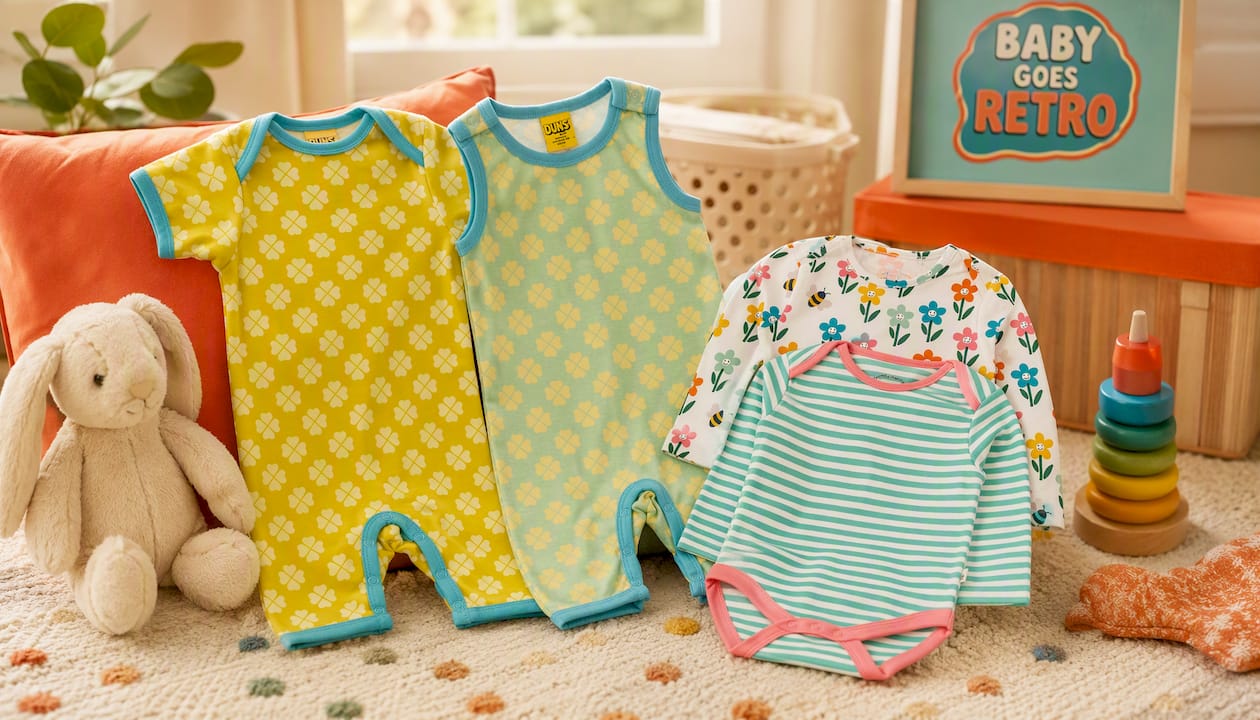
The DUNS Sweden Clover Playsuit in Sulphur Green and its sibling colourway, the DUNS Sweden Clover Playsuit in Green Ash, are soft cotton playsuits without wrinkle-resistant finishes, exactly the kind of everyday piece this article recommends. If you’re stocking up on basics, the Frugi Fun Flowers Bodysuits (2-Pack) gives you two easy layering pieces at once. Browse the full range of organic baby clothes if you want more options, or check out kids tops, bottoms and dresses as your little one grows. Whatever you choose, wash it before first wear, as we’ve covered throughout this guide, and remember every order comes with $7.95 flat rate shipping, free over $97, plus 30‑day easy returns if the fit or fabric isn’t quite right. Add it to your cart and get it washing before bedtime.
This article is general information, not a substitute for advice from a qualified doctor. Consult a qualified healthcare professional about your own circumstances before acting on anything here.
Sources
- No formaldehyde found in clothing | ACCC
- Early-Life Exposure to Formaldehyde through Clothing - PMC
- Global Standard — OEKO‑TEX information
- Safety guidance on concentrations of particular chemicals in certain consumer goods | ACCC Product Safety
FAQ
Is it safe to wear new clothes with formaldehyde on them?
Most detected levels sit well under Australia’s interim reference limits, so brief wear generally isn’t a major concern, but washing first removes most residue and is the safer default for babies.
Can you wash formaldehyde off clothes?
Yes. Research on retail garments found that washed samples very often tested with no detectable formaldehyde after a single cycle, regardless of how much was present beforehand.
How do I know if clothing has formaldehyde?
Check for “wrinkle-free,” “permanent press,” or “no-iron” labelling, and note any sharp chemical smell in new fabric. Home checks aren’t precise, so professional lab testing using standardised methods is the only way to get an exact mg/kg reading.
What materials should I avoid in baby clothes?
Steer clear of wrinkle-resistant or permanent-press finishes on sleepwear, and be cautious with stain-resistant or antimicrobial claims, which usually signal added chemical treatments rather than a natural fabric property.
Does OEKO‑TEX certification guarantee a garment is formaldehyde-free?
OEKO‑TEX Standard 100 Class I applies strict limits designed specifically for baby and toddler items, making it one of the most reliable labels to look for, though no certification claims to eliminate every possible trace chemical.
0 comments