


Many “eco” labels on baby and kids’ clothing are marketing, not proof. Before you buy, check for specific, verifiable evidence: a named certification with a checkable number, a full material breakdown, and a brand that will actually answer when you ask “how do you know?” Trusted signals to look for include GOTS, OEKO‑TEX Standard 100, and clear guidance from the Australian Competition and Consumer Commission. Below, we break down the tactics, the checks, and a quick shopping checklist you can use today.
TL;DR:
- Most eco labels on kids’ clothing are marketing claims, so verify certifications like GOTS, OEKO‑TEX, or GECA with checkable certificate numbers.
- Greenwashing tactics include vague language, misleading imagery, selective disclosure, and unsubstantiated claims about recycled or biodegradable materials.
- Reliable certifications cover entire supply chains, so ask for specific product certificates and cross-check claims against official databases.
- Durable, well-made garments with high-quality finishes often have a greater environmental impact than trendy “sustainable” labels or marketing buzzwords.
- Focus on transparency, specificity, and product longevity to choose genuinely sustainable kids’ clothing rather than falling for superficial eco branding.
Table of Contents
- What greenwashing in kids clothing actually looks like
- Common greenwashing tactics parents should learn to spot
- How to verify a brand’s sustainability claims
- A quick shopping checklist for parents
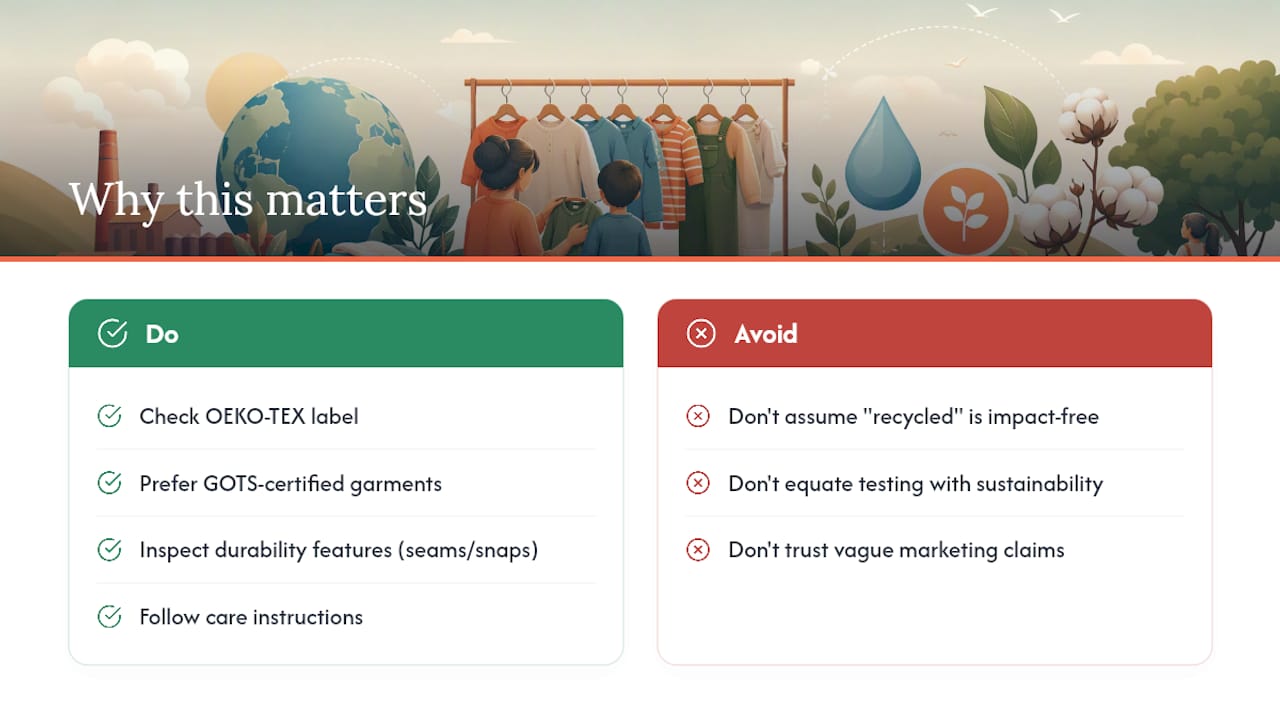
- Why this matters: health, microplastics and durability
- Why you can trust this guide
- Our take: what actually matters when you’re shopping
- A transparent option worth checking
- Where to verify claims yourself
- Sources
- FAQ
What greenwashing in kids clothing actually looks like
Greenwashing in kids clothing usually falls into three buckets: false claims, quiet omissions, and paltering, which is when a brand tells the truth about one thing to distract from a bigger, less flattering truth, as explained in this guide to ocean-safe skincare. A “green” range might sit inside a much larger, entirely conventional collection, with the leafy branding doing all the heavy lifting.
RMIT’s submission to the Senate inquiry into greenwashing calls out omission and paltering as the two most common tricks in the textiles, clothing and footwear sector, and for good reason. A tag can legally say “made with recycled materials” without stating what percentage, or mention one eco‑friendly fibre while staying silent on the dye, the elastic, the buttons, and the plastic packaging it arrived in.
Blended fibres make this worse. A “bamboo” romper is often bamboo viscose blended with polyester or spandex, processed with chemicals that never make it onto the swing tag. Undisclosed finishes (stain guards, wrinkle resistance, flame retardants) can introduce substances parents would want to know about before dressing a baby in them. And “green” imagery, leaves, earth tones, a little planet icon, tells you nothing about what’s actually in the garment.
Here’s what this actually means for your child’s wardrobe:
- Unknown chemicals: finishes and dyes aren’t always disclosed on the label, so “natural” can hide synthetic treatments.
- Degraded durability: cheaper blended fabrics used to chase a “sustainable” price point often wear out faster, which defeats the purpose entirely.
- Microplastic shedding: synthetic and recycled synthetic fibres shed microfibres in the wash, whether the marketing calls them “eco” or not.
- Compromised trust: once you learn a brand fudges one claim, every other claim on that swing tag becomes suspect.
None of this means every brand using the word “sustainable” is lying to you. It means the word alone is worth nothing without something behind it, and that “something” is what the rest of this guide helps you find.
Common greenwashing tactics parents should learn to spot
Kidswear brands tend to lean on a handful of tricks, over and over, because they work. Once you can name them, they get a lot easier to spot on a hangtag or a product page.
- Vague, unqualified language. Words like “eco‑friendly,” “green,” or “conscious” carry no legal weight and no fixed meaning. The ACCC’s internet sweep of 247 businesses across eight sectors found textiles and footwear ranked as the second worst offender, with a high proportion of brands making concerning environmental claims according to the ACCC that lacked evidence.
- Self‑issued logos and leaf badges. A brand can design its own “green certified” style stamp and place it right next to a real certification mark, banking on you not knowing the difference between the two.
- Nature imagery standing in for evidence. Watercolour leaves, forest photography, a dewy meadow background: none of it is a substantiated claim, and the ACCC has explicitly warned that imagery alone can mislead when there’s nothing to back it up.
- The token “eco” capsule. A brand runs one small organic range alongside a much larger, entirely conventional collection, then lets the halo from that one range colour how you see the whole store.
- Selective disclosure on materials. “Made with recycled fabric” might describe only the main panel of a garment, while the ribbing, thread, and lining are standard synthetics that go unmentioned.
- Fibre‑name confusion. Recycled polyester and ECONYL (regenerated nylon) get lumped together as “recycled,” but they come from different waste streams with different footprints, and neither one stops shedding microplastics.
- Geographic ambiguity. “Made in Europe” sounds reassuring, but it can mean final stitching only, with fabric milled and dyed somewhere with far less oversight.
- Undefined “biodegradable” claims. Almost anything breaks down eventually under the right conditions. Without stating what those conditions are (industrial composting, landfill, home compost) and how long it takes, the claim is meaningless.
Spotting even three or four of these on a single product page is a strong signal to keep looking, not buying.
How to verify a brand’s sustainability claims
Certifications only help if you know what each one actually covers, because they don’t all measure the same thing, and mixing them up is exactly how well‑meaning parents get misled.
GOTS (Global Organic Textile Standard) covers the whole supply chain: organic fibre content, restrictions on hazardous chemicals in processing, and social criteria for workers. It’s the closest thing to a holistic sustainability check in kidswear, and you can search certified suppliers directly to confirm a specific product or supplier holds it.
GECA (Good Environmental Choice Australia) runs its own Textiles and Leather standard, assessing environmental and social impact across the product’s life, from material sourcing through manufacturing to end‑of‑life.
Ethical Clothing Australia accreditation is different again: it verifies that local manufacturing complies with Australian workplace law, which is your best on‑the‑ground check when a brand claims ethical or local production. The accreditation register lets you confirm a brand is actually on the list, rather than just saying it is.
OEKO‑TEX Standard 100 is the one people mix up most often. It tests the finished product for harmful substances, which is a genuine safety check, but it says nothing about organic content, water use, dyes’ environmental impact, or labour conditions. A brand that leans on OEKO‑TEX to imply broad sustainability is stretching what the certification actually proves.
Practical verification steps:
- Ask for the certificate number and check it against the certifying body’s own database, not just a logo on the website.
- Confirm the scope: does the certificate cover this specific product line, or just the company as a whole?
- Be wary of any percentage claim (“made with recycled materials”) that doesn’t state an actual percentage.
- Cross‑check “made in” claims against where dyeing and finishing happened, not just final assembly.
Pro Tip: Email the brand and ask one direct question: “What percentage of this specific garment is [claimed material], and can you send the certificate number?” A brand with nothing to hide will answer within a day or two. Silence, or a vague non‑answer, tells you everything.
For a deeper walkthrough of what each label covers, our guide to ethical fashion certifications breaks it down further, and our piece on organic clothing myths tackles a few of the assumptions parents make about the word “organic” itself.
A quick shopping checklist for parents
You don’t need a chemistry degree to shop well. You need four habits, repeated every time you’re tempted by a swing tag that says “eco.”
- Ask for the full material breakdown, not just the headline fibre. A “70% organic cotton, 30% elastane” tag tells you far more than “organic cotton” alone.
- Search the certification database directly rather than trusting the logo. GOTS, GECA, and Ethical Clothing Australia all maintain public registers you can check in under a minute.
- Look at the whole garment, not just the fabric: trims, thread, dye process, the swing tag itself, and the packaging it ships in all count toward the real footprint.
- Favour durability over buzzwords. A well‑made piece that survives three kids and a dozen washes beats a trendy “sustainable” print that pills after one season, every time.
The ACCC’s own guidance makes a point worth repeating here: a single positive attribute, one recycled component, one organic panel, rarely tells you anything about a garment’s overall sustainability. Fibre origin, percentage of claimed materials, processing, trims, and end‑of‑life options all matter together, not in isolation.
Cost‑per‑wear is the simplest gut check available to you. A $60 romper that lasts through two children and gets handed down again works out cheaper, and lighter on the planet, than a $25 fast‑fashion version replaced four times over the same period. Our baby clothing fabric guide walks through which fabrics actually hold up to that kind of wear.
Why this matters: health, microplastics and durability
Kids’ clothing sits closer to skin than almost anything else they own, worn for longer stretches, washed more often, and chewed on more than any adult would admit to doing with their own jumper. That’s why the gap between a real claim and a marketing one carries more weight here than it might for a pair of adult jeans.
Recycled polyester is a genuine improvement on virgin plastic in terms of raw material use, but it still sheds microfibres every time it goes through the wash, and those fibres persist in waterways long after the garment itself is gone. A “recycled” claim on a synthetic garment is not the same as a claim that it’s free of ongoing environmental impact, and treating the two as interchangeable is one of the more common blind spots parents fall into.
Safety testing and sustainability certification are also not the same thing, even though marketing often blurs them together. OEKO‑TEX Standard 100 checks a finished product for harmful substances, which matters enormously for something touching a baby’s skin. GOTS goes further, auditing organic content and social conditions across the whole supply chain. A garment can pass one and say nothing about the other.
Durability deserves equal billing here. A cheaply made garment that falls apart after six washes generates more waste than a well‑constructed one, no matter how many recycled fibres went into it. Correct care instructions, reinforced seams, and quality snaps are unglamorous, but they’re a genuine sustainability indicator that marketing copy rarely bothers to mention.
Why you can trust this guide
We have observed greenwashing language evolve for close to two decades, not just noticed it trending this year. We curate rather than mass‑stock, and every product page is built to show what’s actually in a garment: fibre breakdown, care instructions, and origin, not just a leaf icon.
Our contributor Daniel has written specifically on the myths parents fall for around “organic” labelling and on PFAS in kids clothing, covering the chemical questions that swing tags rarely answer. That’s the same standard we hold our own product listings to: material percentages stated plainly, country of origin named, and no invented certification marks dressed up to look official.
Shipping across Australia is available with affordable flat rates and easy returns and exchanges if a fit or fabric doesn’t work out.
Our take: what actually matters when you’re shopping
Most greenwashing advice online obsesses over lifecycle assessments and carbon footprints, numbers that are genuinely hard for any shopper to verify from a swing tag. That’s not where I’d tell a parent to spend their attention. The research backs a simpler priority: chase specificity, not virtue.
A brand that tells you it’s “committed to the planet” has given you nothing, no matter how sincere it sounds.
The conventional advice to “look for eco certifications” undersells how many logos are self‑issued nonsense. Learn three real ones (GOTS, GECA, Ethical Clothing Australia) and ignore everything else until proven otherwise. Durability matters just as much as any fibre claim. A garment that survives a second child does more for the planet than most sustainability taglines ever will.
— Daniel
A transparent option worth checking
Reading a product page critically is a habit, and the fastest way to build it is to practise on listings that actually give you something to check. Baby Goes Retro writes its product pages with that in mind: fibre breakdown, care instructions, and origin details sit alongside the photos, not buried in a separate policy page you’d never think to click.
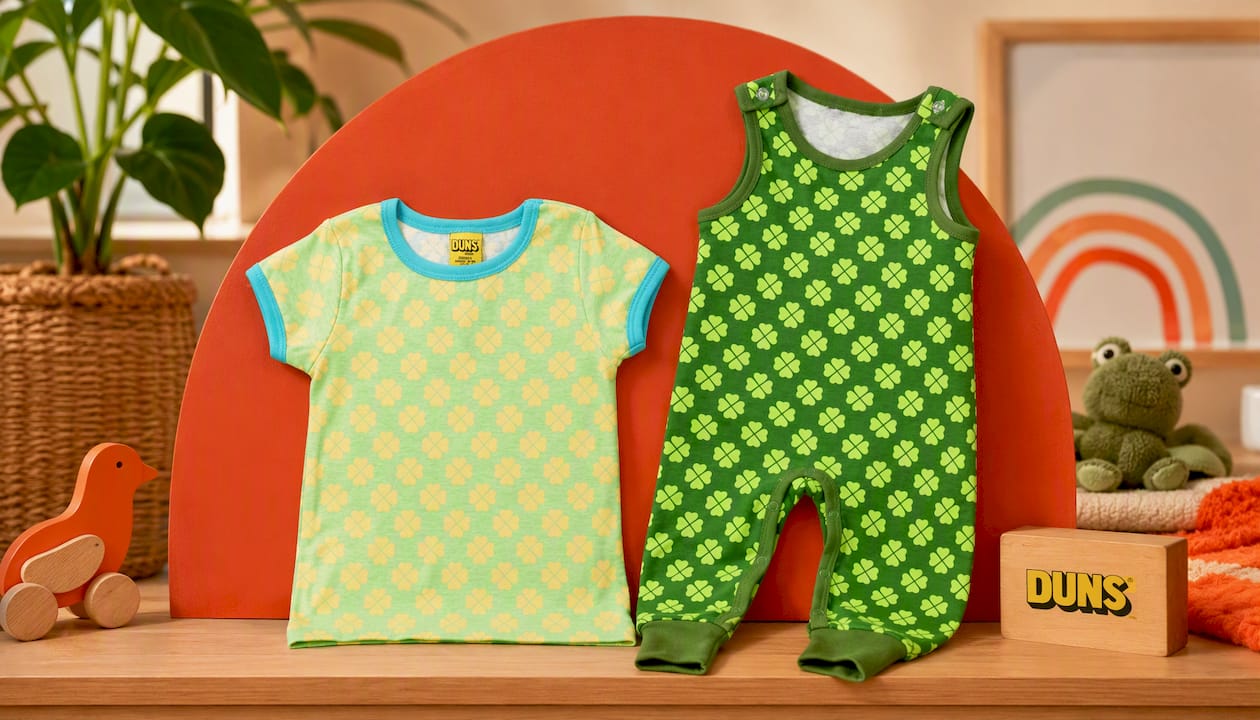
Take the DUNS Sweden Clover Tee in Green Ash as an example. It’s a straightforward organic cotton tee with the material composition stated on the page, so you’re not left guessing whether “organic” means 100% or 10%. The DUNS Sweden Clover Dungarees in Treetop Green work the same way, with fit and fabric details laid out clearly enough that you can apply the exact checklist from this guide before you add it to your cart.
Run through the checks yourself on either listing: check the fibre percentage, note the country of origin, and see whether the sizing and care details are specific enough to trust. Shipping is a flat $7.95 anywhere in Australia, free once your order passes $97, and every purchase comes with 30‑day easy returns and exchanges if the size or fabric isn’t quite right. Browse the current range and see how the same standard applies across the collection.
Where to verify claims yourself
You don’t have to take any brand’s word for it, including ours. The ACCC’s report on greenwashing sets out what Australian regulators expect from environmental claims, and it’s worth a skim if you want the regulator’s own language on what counts as misleading. The RMIT submission to the Senate inquiry goes deeper into why the textile sector specifically struggles with omission and paltering.
For certifications themselves, GOTS maintains a public database of certified suppliers, GECA publishes its Textiles and Leather standard in full, and Ethical Clothing Australia keeps a register of accredited local manufacturers. Bookmark whichever one matches the claim you’re trying to check.
Sources
- Greenwashing by businesses in Australia (ACCC)
- Submission on greenwashing in textiles, clothing and footwear (parliamentary/RMIT submission)
- Ethical Clothing Australia — accreditation
- GECA Textiles & Leather standard
FAQ
Which fashion brands are greenwashing?
Rather than naming individual brands, the ACCC’s internet sweep found textiles and footwear were among the worst-performing sectors overall, with a majority of businesses making unverifiable environmental claims. Any brand using vague language without certificate numbers or material percentages deserves the same scrutiny, regardless of size or reputation.
Is Zara accused of greenwashing?
Major fast‑fashion retailers have faced ongoing criticism and regulatory scrutiny over “conscious” or “eco” collections marketed alongside vastly larger conventional ranges. The core issue raised is usually the same one covered in this guide: a small certified line doesn’t tell you anything about the sustainability of the rest of the store.
What is a famous example of greenwashing?
Well‑known cases across industries typically involve a company promoting one flattering environmental attribute (a recycled fabric, a “natural” ingredient) while omitting far larger negative impacts elsewhere in the product or supply chain, which is exactly the omission and paltering pattern RMIT flagged in textiles.
Is H&M still greenwashing?
Fast‑fashion retailers with dedicated “conscious” collections have faced repeated scrutiny for vague sustainability language and self‑defined “green” scoring systems that aren’t independently verified. The safest approach for any brand, H&M included, is to check for a named, checkable certification rather than trusting an in‑house green label.
What’s the difference between OEKO‑TEX and GOTS?
OEKO‑TEX Standard 100 tests a finished garment for harmful substances, which is a safety check. GOTS audits the entire supply chain for organic fibre content and social conditions, making it the more holistic sustainability certification of the two.
How can I tell if a kids’ clothing certification is real?
Search the certifying body’s own public database (GOTS, GECA, or Ethical Clothing Australia all maintain one) using the certificate number listed on the product, rather than trusting a logo alone.
0 comments